Explore institutional access →

2 min. read

Part 9

Instrument Makers in USA

Yamaha Music Products

Instrument Makers in USA

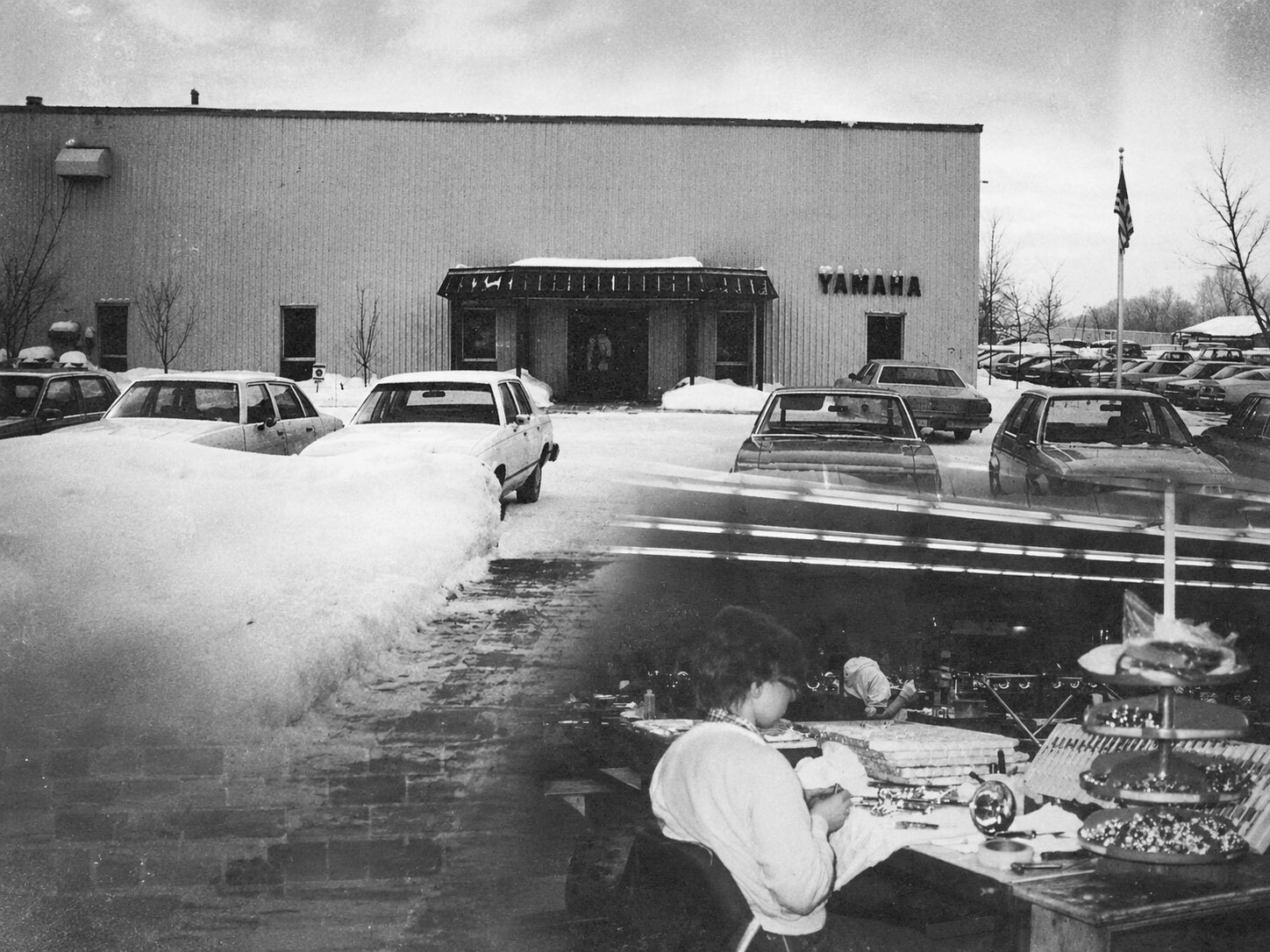
Yamaha Music Products – Grand Rapids, Michigan

When a Yamaha trumpet, trombone, cornet or flugelhorn is sold in the United States, it is in the great majority of cases an instrument from the Grand Rapids factory. Imports of finished products from Japan — about 20% of the total for brass instruments — are mostly top-of-the-range models of these instruments or else instruments not in the Grand Rapids production programme, such as horns, tubas, euphoniums etc.

Together with that first group of brass instruments — the main object of this article — the Grand Rapids factory also produces woodwind: flutes, saxophones and clarinets. Counting woodwind and brass together, the factory has an annual capacity of up to 70'000 instruments.

It was pointed out to me with satisfaction (no doubt justified) that "when we started up production here eleven years ago, as a Japanese firm we had to prove ourselves in every way. Now the ice is broken!" Mr. Tom Williams, whom I interviewed, added, "This factory is also a part of our large corporate family. We are aware of the responsibility associated with that because our reputation is closely linked to that of our sister companies."

But let us get back to making brass instruments. The main components are series produced in Japan. These then come to Grand Rapids, where the individual instruments are assembled, adjusted and finally lacquered or silver plated; I was told that all this accounts for 60-70% of the value of the finished product. It is above all valves, mouthpipes, bell sections and mouthpieces that are imported. In some departments these figures should eventually change in favour of the American share of production; in others — trumpet valves, for example, for which Japan by herself can meet a large part of the world-wide demand — no change is expected.

As already mentioned, the main preoccupation is the quality of instruments produced. Great importance is therefore attached to employees' training. Time studies, carried out by specialist consultants, are generally used as a basis for in-house studies. Individual employees' performance is then monitored for three months; this provides the basis for a suitable average. Those who produce less, but whose work is careful and reliable, have nothing to fear from this because experience has shown that good people usually produce above average so long as they feel free and not tied to a norm. According to this hypothesis the shortcomings of their slower working colleagues is soon compensated for — and high quality is still preserved.

I was assured that with this work atmosphere the firm has a very low turnover of personnel. This was not always so, however, for to begin with some employees cared little for the demand of quality. All the more reason to be proud of the workforce today. Until 1979 the Grand Rapids factory, Yamaha's first in the United States, produced organs as well as wind instruments. These are now in Thomaston, Georgia, and another factory produces the well known Everett pianos.

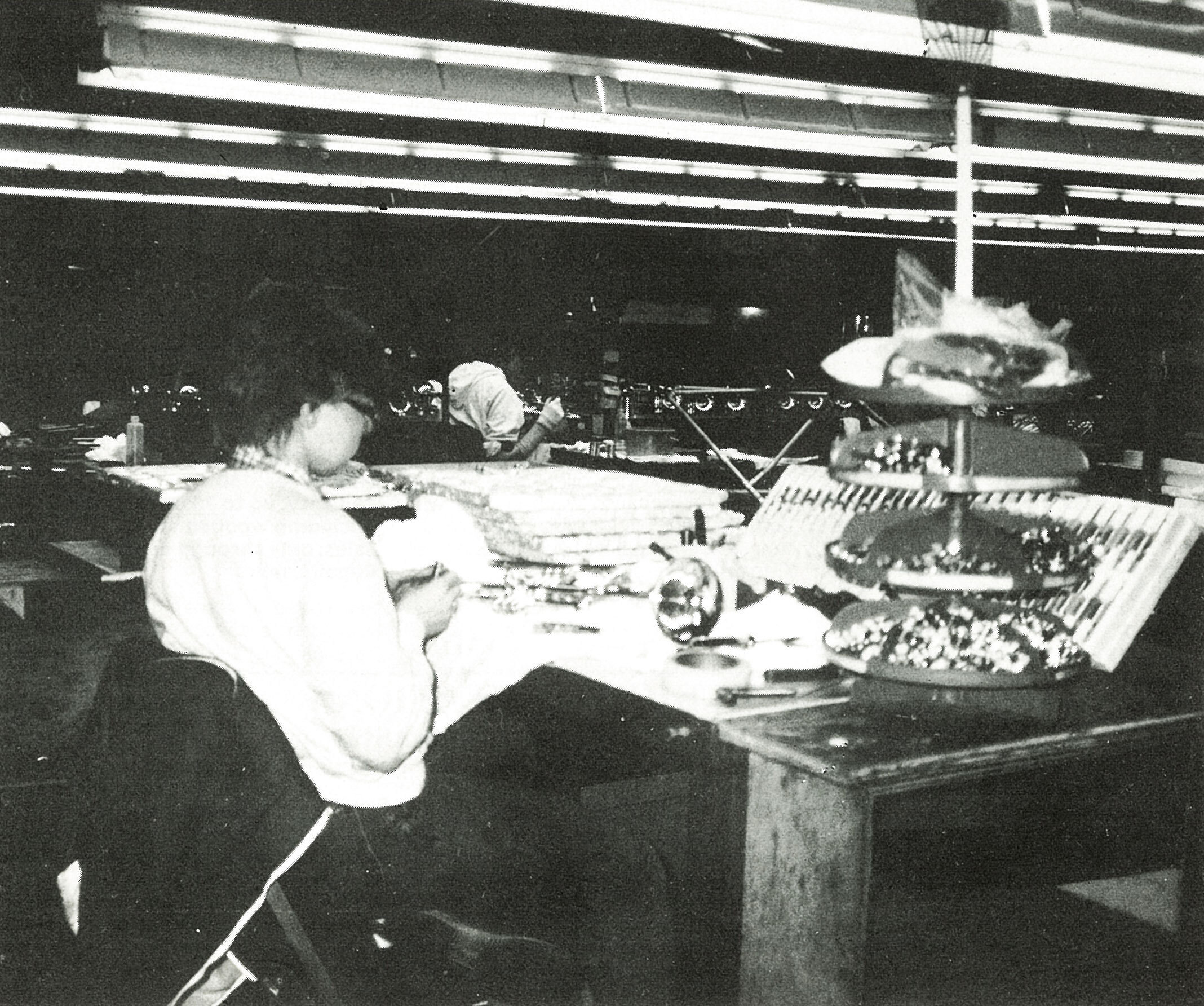
Final assembly of a trumpet

Final assembly of a trumpet

Apart from corporate decisions, for which Japan is responsible, Grand Rapids is the central authority for publicity, marketing policy and sales relating to Yamaha Musical Products in the United States. Experience shows that 80% of sales are concentrated in the period July to September, a fact which necessitates very considerable storage capacity. All sales are to dealers; the factory itself has no sales licence of its own. The extensive dealer network is the source of information for the company management. Views and suggestions so obtained, plus contributions from musicians, provide a constantly updated picture of the market situation and customers' wishes. Of course, there is constant contact with the Yamaha companies in Japan especially since, as I was told, all the equipment is examined and evaluated every few years by Japanese technicians. Jean-Pierre Mathez wrote a detailed article on the Yamaha parent company in Japan, which appeared in BRASS BULLETIN 40.

Inside the Grand Rapids factory I was pleasantly impressed by the relative peace and quiet. Employees here wear no uniforms, unlike in Japan, but white gloves are sometimes to be seen. Separate well insulated rooms, looking rather like boxes, are built into the large building. In one of these I was able to watch finished instruments being examined by a musician; in others I saw top-of-the-range instruments being adjusted in complete isolation. Compared with the student instruments these involve a considerably greater amount of hand work, such as hand-lapped valves and slides. All in all, a significant part of the man-hours involved is still spent in soldering work.

At the time of my visit work was proceeding on a new employee training programme, known as the "Pi System", abbreviated from "Productivity Improvement", "Productivity Index" and "Personal Improvement". The employees should share in the benefits which the management hopes to gain from this, according to the all-important motto: "We want our co-workers to grow like us. Therefore we try to increase their knowledge. They will return this to the company."

Yamaha Musical Products

3050 Breton Road S.E.
P.O. Box 7271
Grand Rapids, Michigan 49510, USA
President: Stan Stitgen
Interview with Tom Williams
Production Manager
Employees: 150
Capacity: up to 70'000 a year (including woodwind)
Sales: only through dealers
Repairs: none

Brass Bulletin 55, III / 1986 pages 81–84

All content is protected by copyright © Brass Bulletin 1986–2026

Share this article

Facebook LinkedIn
Loading…

Questions & Answers

How the Digital Edition works

What does the Digital Edition include?

The Digital Edition brings together the articles already digitized as searchable online texts—not simply as scans or PDF files—along with their original illustrations, notes, authorship, issue information, and available translations. Related-article suggestions currently include only this digitized material.

Are the digital articles identical to the originals?

We preserve the original text, language, illustrations, captions, footnotes, and editorial context as faithfully as possible. The presentation is adapted for comfortable online reading, and obvious transcription or scanning errors may be corrected. The substance and character of the published article remain unchanged.

Which languages are available?

Brass Bulletin was published in English, French, and German throughout its history. Italian and Spanish translations were added from issue No. 60 onward.

On the Italian and Spanish sites, articles from issues 1–59 are therefore shown in English by default.

How often are new articles added?

New articles are added almost daily, with approximately one complete issue digitized each week. The pace may vary depending on the preparation, image work, and editorial checking required.

Why aren’t all articles available digitally?

The complete Brass Bulletin collection contains 1,246 articles published between 1971 and 2003. The full index is already available online, allowing readers to discover every article in the collection, including those whose complete text has not yet been digitized.

Digitization began in February 2026. Each article is carefully prepared for online reading, checked, and connected to its issue, authors, subjects, and illustrations. At the current pace of digitization, the complete collection is expected to be available online by February 2028.

Why do some references mention articles that are not available yet?

References in the original articles are preserved even when the material they point to has not yet been digitized. This keeps the historical and editorial record intact. As more issues are added to the Digital Edition, an increasing number of these references will lead to articles that can be read online.

Can I suggest an article or report a transcription error?

Yes. If there is an article you would particularly like to see digitized, or if you notice a possible transcription error or missing detail, please contact us. Reader feedback helps us improve the Digital Edition and prioritize useful connections within the archive.

How can I support Brass Bulletin?

Your support helps fund the preparation, verification, and online publication of the complete collection.

Subscribe to the Digital Edition

Prefer to support us without subscribing?

Make a donation

How is the digitization progressing?

We’re gradually making the Brass Bulletin available online, article by article. You can read newly digitized articles as soon as they’re ready, even before an entire issue is complete.

Visit our Digitization Roadmap to browse recent additions and see estimated availability for upcoming issues. These estimates follow our recent pace and may change.

Search Brass Bulletin.