Ofrezca Brass Bulletin en su universidad, conservatorio o biblioteca Descubra el acceso institucional

2 min de lectura

Parte 9

Instrument makers in USA

Yamaha Music Products

Instrument makers in USA

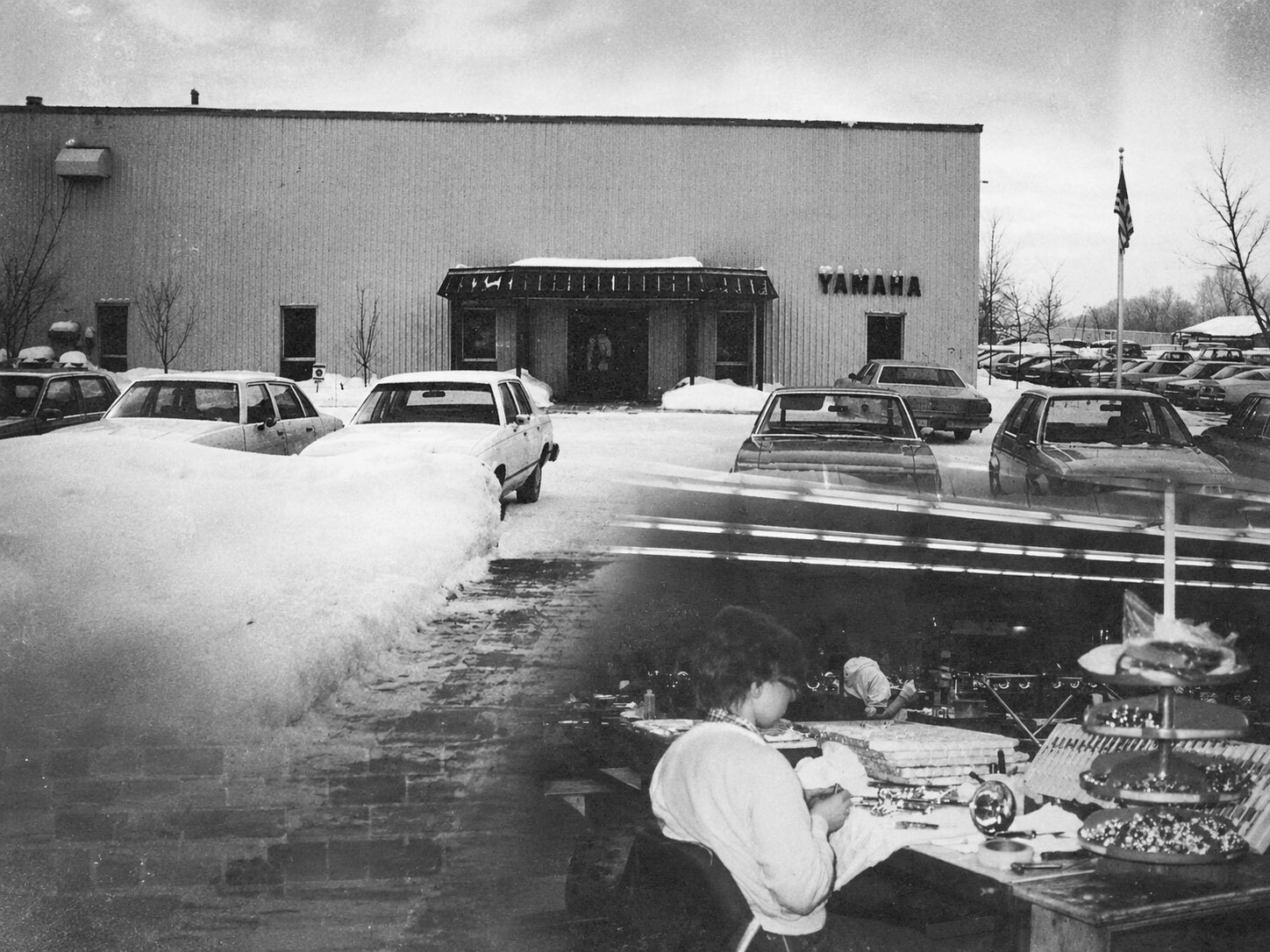
Yamaha Music Products – Grand Rapids, Michigan

When a Yamaha trumpet, trombone, cornet or flugelhorn is sold in the United States, it is in the great majority of cases an instrument from the Grand Rapids factory. Imports of finished products from Japan — about 20% of the total for brass instruments — are mostly top-of-the-range models of these instruments or else instruments not in the Grand Rapids production programme, such as horns, tubas, euphoniums etc.

Together with that first group of brass instruments — the main object of this article — the Grand Rapids factory also produces woodwind: flutes, saxophones and clarinets. Counting woodwind and brass together, the factory has an annual capacity of up to 70'000 instruments.

It was pointed out to me with satisfaction (no doubt justified) that "when we started up production here eleven years ago, as a Japanese firm we had to prove ourselves in every way. Now the ice is broken!" Mr. Tom Williams, whom I interviewed, added, "This factory is also a part of our large corporate family. We are aware of the responsibility associated with that because our reputation is closely linked to that of our sister companies."

But let us get back to making brass instruments. The main components are series produced in Japan. These then come to Grand Rapids, where the individual instruments are assembled, adjusted and finally lacquered or silver plated; I was told that all this accounts for 60-70% of the value of the finished product. It is above all valves, mouthpipes, bell sections and mouthpieces that are imported. In some departments these figures should eventually change in favour of the American share of production; in others — trumpet valves, for example, for which Japan by herself can meet a large part of the world-wide demand — no change is expected.

As already mentioned, the main preoccupation is the quality of instruments produced. Great importance is therefore attached to employees' training. Time studies, carried out by specialist consultants, are generally used as a basis for in-house studies. Individual employees' performance is then monitored for three months; this provides the basis for a suitable average. Those who produce less, but whose work is careful and reliable, have nothing to fear from this because experience has shown that good people usually produce above average so long as they feel free and not tied to a norm. According to this hypothesis the shortcomings of their slower working colleagues is soon compensated for — and high quality is still preserved.

I was assured that with this work atmosphere the firm has a very low turnover of personnel. This was not always so, however, for to begin with some employees cared little for the demand of quality. All the more reason to be proud of the workforce today. Until 1979 the Grand Rapids factory, Yamaha's first in the United States, produced organs as well as wind instruments. These are now in Thomaston, Georgia, and another factory produces the well known Everett pianos.

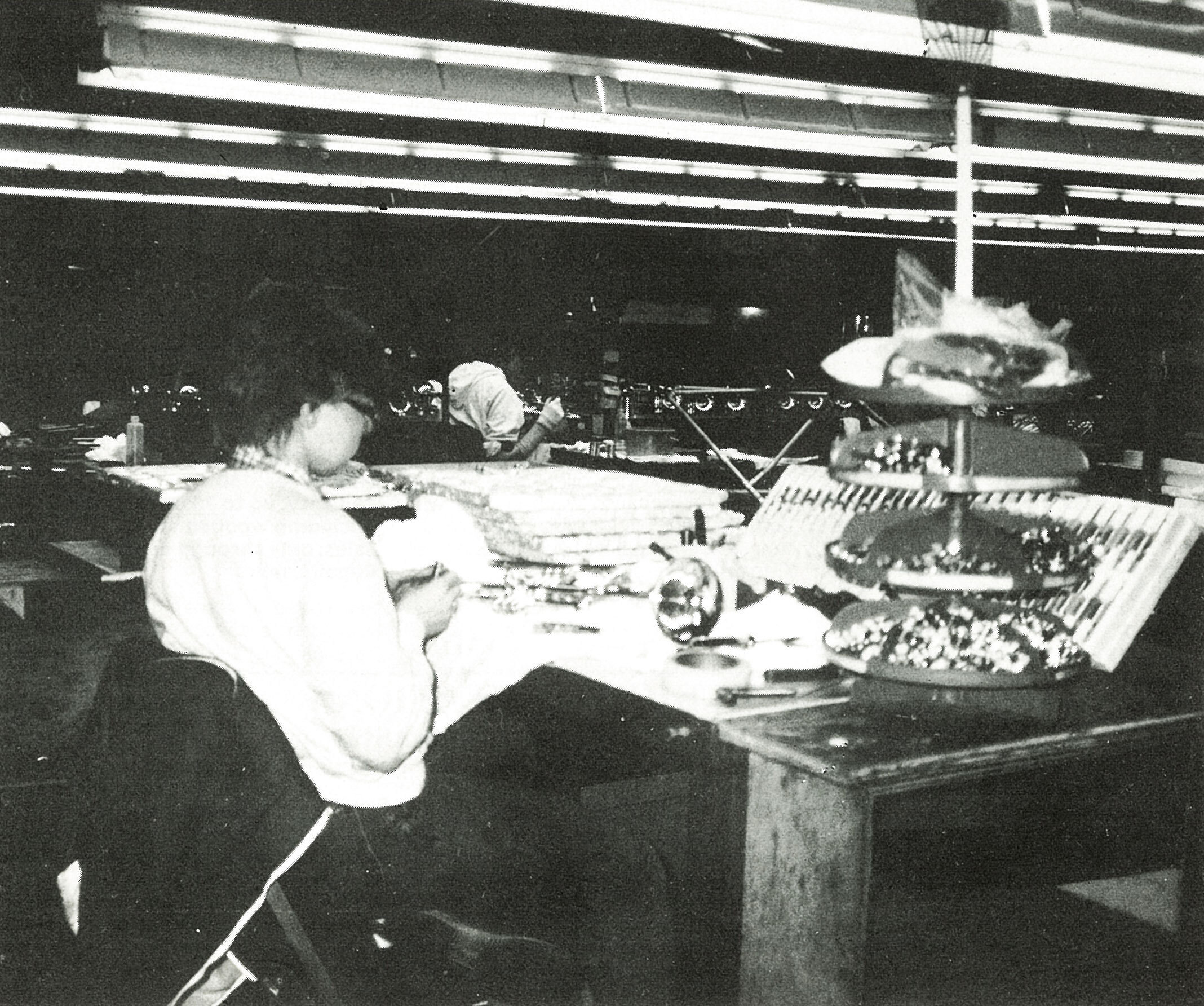
Final assembly of a trumpet

Final assembly of a trumpet

Apart from corporate decisions, for which Japan is responsible, Grand Rapids is the central authority for publicity, marketing policy and sales relating to Yamaha Musical Products in the United States. Experience shows that 80% of sales are concentrated in the period July to September, a fact which necessitates very considerable storage capacity. All sales are to dealers; the factory itself has no sales licence of its own. The extensive dealer network is the source of information for the company management. Views and suggestions so obtained, plus contributions from musicians, provide a constantly updated picture of the market situation and customers' wishes. Of course, there is constant contact with the Yamaha companies in Japan especially since, as I was told, all the equipment is examined and evaluated every few years by Japanese technicians. Jean-Pierre Mathez wrote a detailed article on the Yamaha parent company in Japan, which appeared in BRASS BULLETIN 40.

Inside the Grand Rapids factory I was pleasantly impressed by the relative peace and quiet. Employees here wear no uniforms, unlike in Japan, but white gloves are sometimes to be seen. Separate well insulated rooms, looking rather like boxes, are built into the large building. In one of these I was able to watch finished instruments being examined by a musician; in others I saw top-of-the-range instruments being adjusted in complete isolation. Compared with the student instruments these involve a considerably greater amount of hand work, such as hand-lapped valves and slides. All in all, a significant part of the man-hours involved is still spent in soldering work.

At the time of my visit work was proceeding on a new employee training programme, known as the "Pi System", abbreviated from "Productivity Improvement", "Productivity Index" and "Personal Improvement". The employees should share in the benefits which the management hopes to gain from this, according to the all-important motto: "We want our co-workers to grow like us. Therefore we try to increase their knowledge. They will return this to the company."

Yamaha Musical Products

3050 Breton Road S.E.
P.O. Box 7271
Grand Rapids, Michigan 49510, USA
President: Stan Stitgen
Interview with Tom Williams
Production Manager
Employees: 150
Capacity: up to 70'000 a year (including woodwind)
Sales: only through dealers
Repairs: none

Brass Bulletin 55, III / 1986 páginas 81–84

Todo el contenido está protegido por derechos de autor © Brass Bulletin 1986–2026

Compartir este artículo

Facebook LinkedIn
Cargando…

Preguntas y respuestas

Cómo funciona la edición digital

¿Qué incluye la edición digital?

La edición digital reúne los artículos ya digitalizados como textos legibles y consultables en línea —no simplemente como escaneos o archivos PDF— junto con sus ilustraciones originales, notas, autoría, información del número y traducciones disponibles. Las sugerencias de artículos relacionados incluyen actualmente solo este material digitalizado.

¿Los artículos digitales son idénticos a los originales?

Conservamos con la mayor fidelidad posible el texto original, el idioma, las ilustraciones, los pies de imagen, las notas y el contexto editorial. La presentación se adapta para facilitar la lectura en línea y pueden corregirse errores evidentes de transcripción o escaneado. El contenido y el carácter del artículo publicado permanecen inalterados.

¿Qué idiomas están disponibles?

Brass Bulletin se publicó en inglés, francés y alemán a lo largo de toda su historia. Las traducciones al italiano y al español se añadieron a partir del número 60. Por este motivo, en los sitios italiano y español los artículos de los números 1 a 59 se muestran en inglés de forma predeterminada.

¿Con qué frecuencia se añaden nuevos artículos?

Se añaden nuevos artículos casi a diario, con aproximadamente un número completo digitalizado cada semana. El ritmo puede variar según el trabajo de preparación, tratamiento de imágenes y revisión editorial necesario.

¿Por qué no están disponibles todos los artículos en formato digital?

La colección completa de Brass Bulletin contiene 1.246 artículos publicados entre 1971 y 2003. El índice completo ya está disponible en línea y permite descubrir todos los artículos de la colección, incluidos aquellos cuyo texto íntegro todavía no ha sido digitalizado.

La digitalización comenzó en febrero de 2026. Cada artículo se prepara cuidadosamente para la lectura en línea, se revisa y se vincula con su número, sus autores, sus temas y sus ilustraciones. Al ritmo actual de digitalización, se prevé que la colección completa esté disponible en línea en febrero de 2028.

¿Por qué algunas referencias mencionan artículos que todavía no están disponibles?

Las referencias de los artículos originales se conservan aunque el material al que remiten aún no haya sido digitalizado. De este modo se mantiene intacto el contexto histórico y editorial. A medida que se incorporen más números a la edición digital, un número creciente de estas referencias conducirá a artículos que podrán leerse en línea.

¿Puedo sugerir un artículo o informar de un error de transcripción?

Sí. Si hay algún artículo que le gustaría especialmente ver digitalizado, o si detecta un posible error de transcripción o algún dato que falta, póngase en contacto con nosotros. Los comentarios de los lectores nos ayudan a mejorar la edición digital y a establecer prioridades útiles dentro del archivo.

¿Cómo puedo apoyar a Brass Bulletin?

Su apoyo ayuda a financiar la preparación, verificación y publicación en línea de la colección completa.

Suscríbase a la Edición Digital

¿Prefiere apoyarnos sin suscribirse?

Haga una donación

¿Cómo avanza la digitalización?

Estamos poniendo Brass Bulletin a disposición de los lectores en línea, artículo por artículo. Pueden leer los artículos recién digitalizados en cuanto estén listos, incluso antes de que se complete un número entero.

Consulten nuestro calendario de digitalización para descubrir las últimas novedades y las fechas estimadas de disponibilidad de los próximos números. Estas estimaciones se basan en nuestro ritmo reciente y pueden cambiar.

Busca en Brass Bulletin.