Explore institutional access →

3 min. read

Part 3

Instrument Makers in USA

C. G. Conn Ltd. Abilene, Texas

Instrument Makers in USA

C. G. Conn Ltd

Back to quality

Conn is probably the oldest name in brass instrument making in the United States.

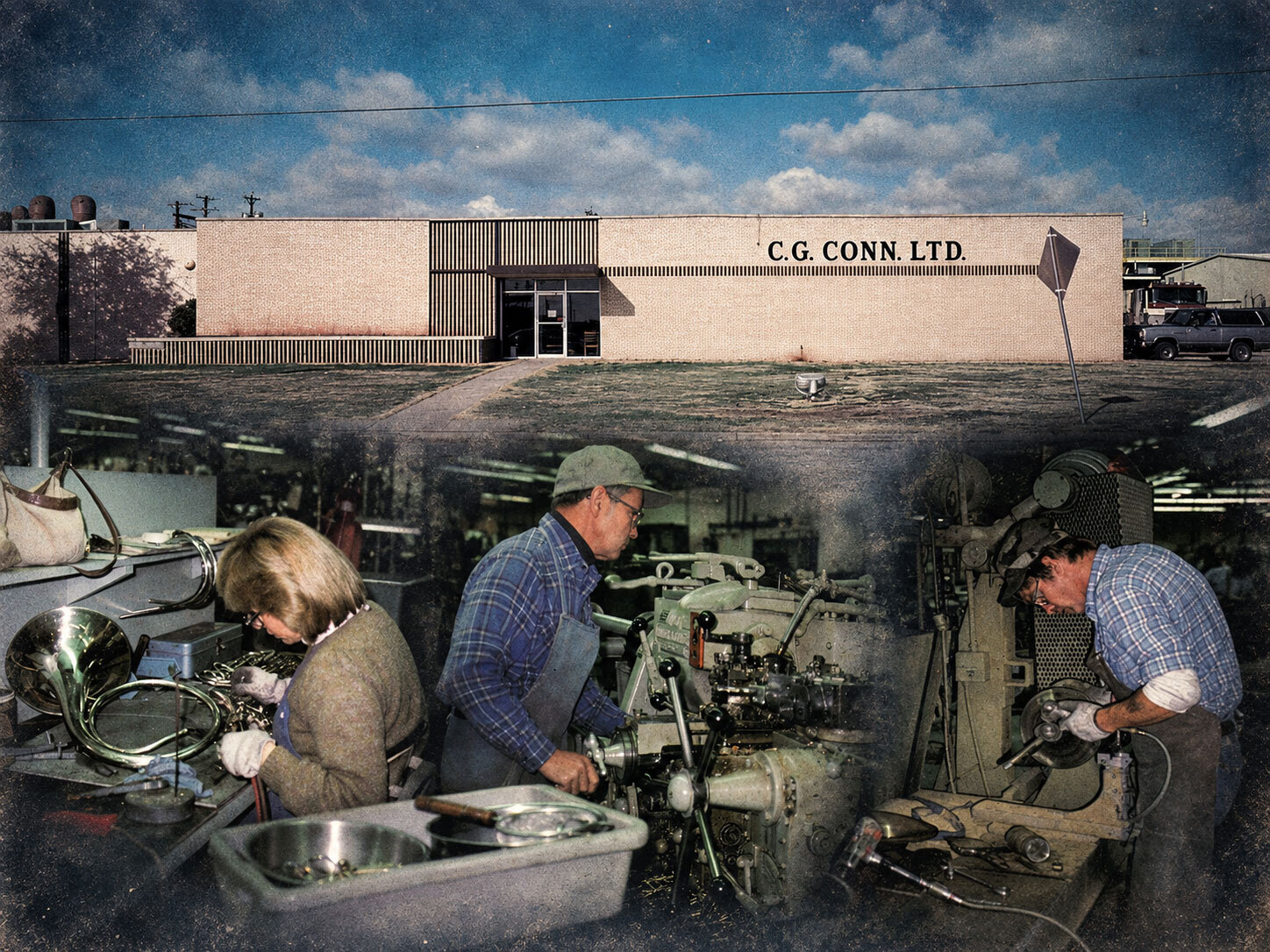
In 1875 the first Conn, Charles Gerard, a good cornet player, patented a mouthpiece with a rubber rim which he had developed for his own use after suffering a lip injury. In the same year in Elkhart, Indiana, he and his partner Eugen Dupont founded the firm of Conn-Dupont which, in addition to these mouthpieces, was soon making instruments as well. In 1887, his business now called the C.G. Conn Company, he took over the well known firm of Isaac Fiske in Worcester, Massachusetts. Business was excellent for twenty years until Conn’s fortunes changed and he gave up. In 1915 he sold his company to Carl D. Greenleaf, who carried it on as C.G. Conn Ltd. Mail order gave way to the use of specialist retailers, production was rationalised and in some areas production lines were introduced. In 1980 the business was taken over by MacMillan, the printers and publishers, who moved the factory to Abilene, Texas, for reasons of cost.

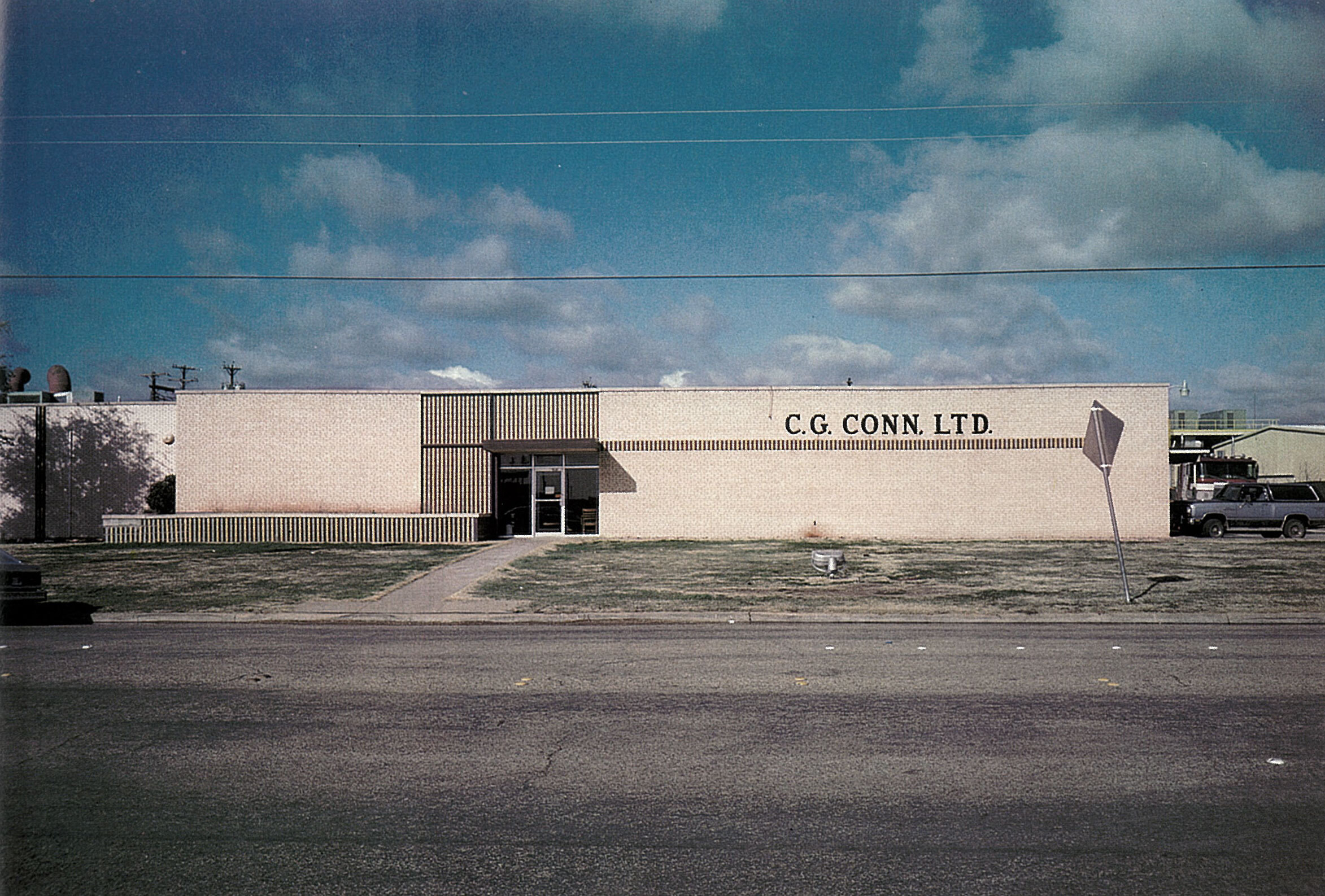
The company premises

The company premises

Since 1980 the firm has belonged to the Mardan Corporation of Elkhart, Indiana. The present owner, Mr. Daniel J. Henkin, can state with satisfaction that he has succeeded in winning back the ground lost in the preceding ten years.

Conn’s brass instruments are produced in three locations. Production of top-of-the-line models is concentrated in Abilene while production of student instruments is divided between the remaining capacity in Abilene and the two Nogales works: Nogales, Sonora, Mexico, makes components and the neighbouring town of Nogales, Arizona, USA, checks and assembles them. Student trumpets and cornets (as well as saxophones, flutes and piccolos) come from Nogales, other student instruments from Abilene. Conn points out that all components are made in the company’s own factories — the fibreglass sections for the light-weight sousaphones, for example, are made at the case factory in Goshen, Indiana.

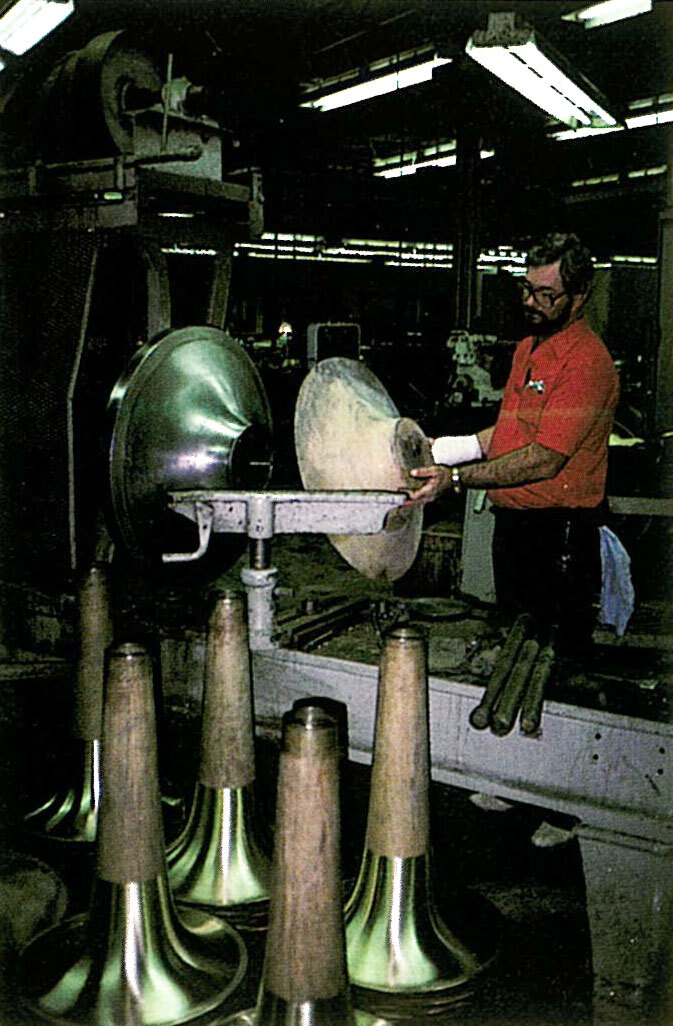
Foreman with a finished bell and the steel template
Foreman with a finished bell and the steel template

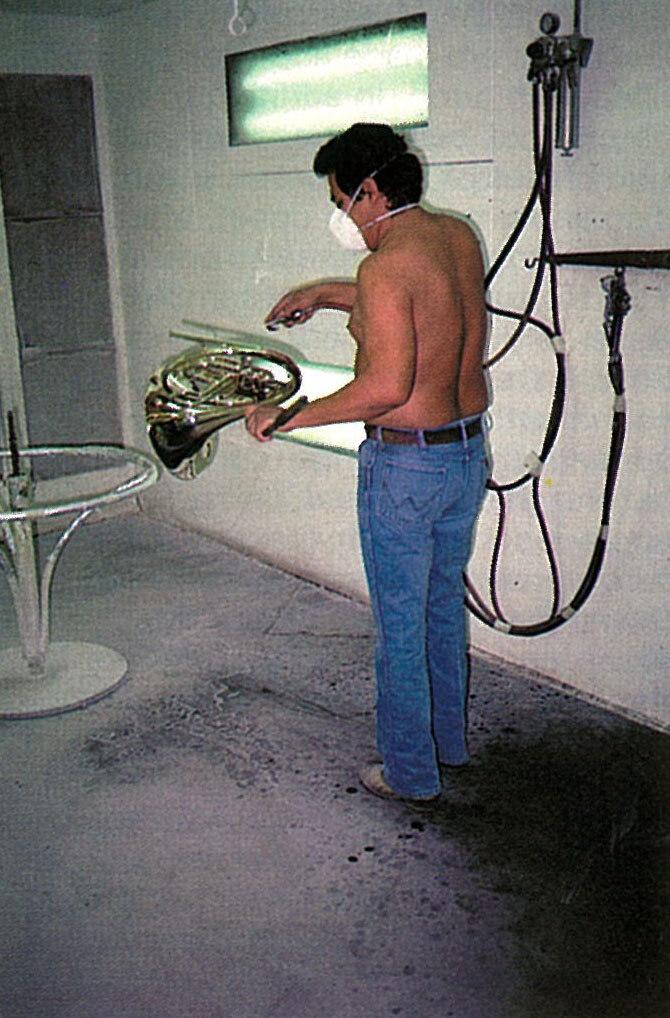
Lacquering a horn
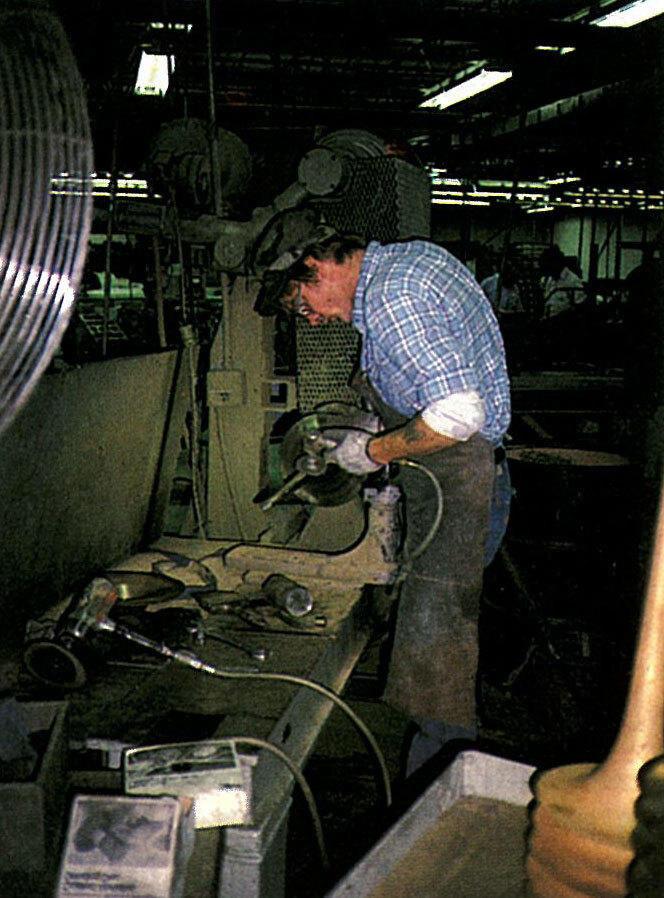
Lacquering a horn

Polishing a bell

Polishing a bell

The Abilene factory is a long single-storey building. In the Machine Product Department small parts such as inner and outer slides, ferrules, braces etc. are made exclusively on fully automated lines in batches of more than 1500. With mouthpieces, for example, only the backbore remains to be cut. Next comes the Fabrication Department, where conical tubes are made and then bent while filled with pitch. In addition to this large batches of bell sections are produced; two pieces of sheet brass, cut to size (a disc and a truncated cone), are shaped, welded together, annealed and adjusted. The instruments are assembled in the Assembly Department, polished in the Buffing Department and cleaned in ultra-sound baths. They are then disassembled and the openings carefully sealed before the individual parts receive an epoxy lacquer finish. Next they are passed between infrared panels which bake the sprayed-on lacquer at a temperature of around 150°C (300°F). The Final Assembly Department re-assembles, adjusts and checks the finished instruments.
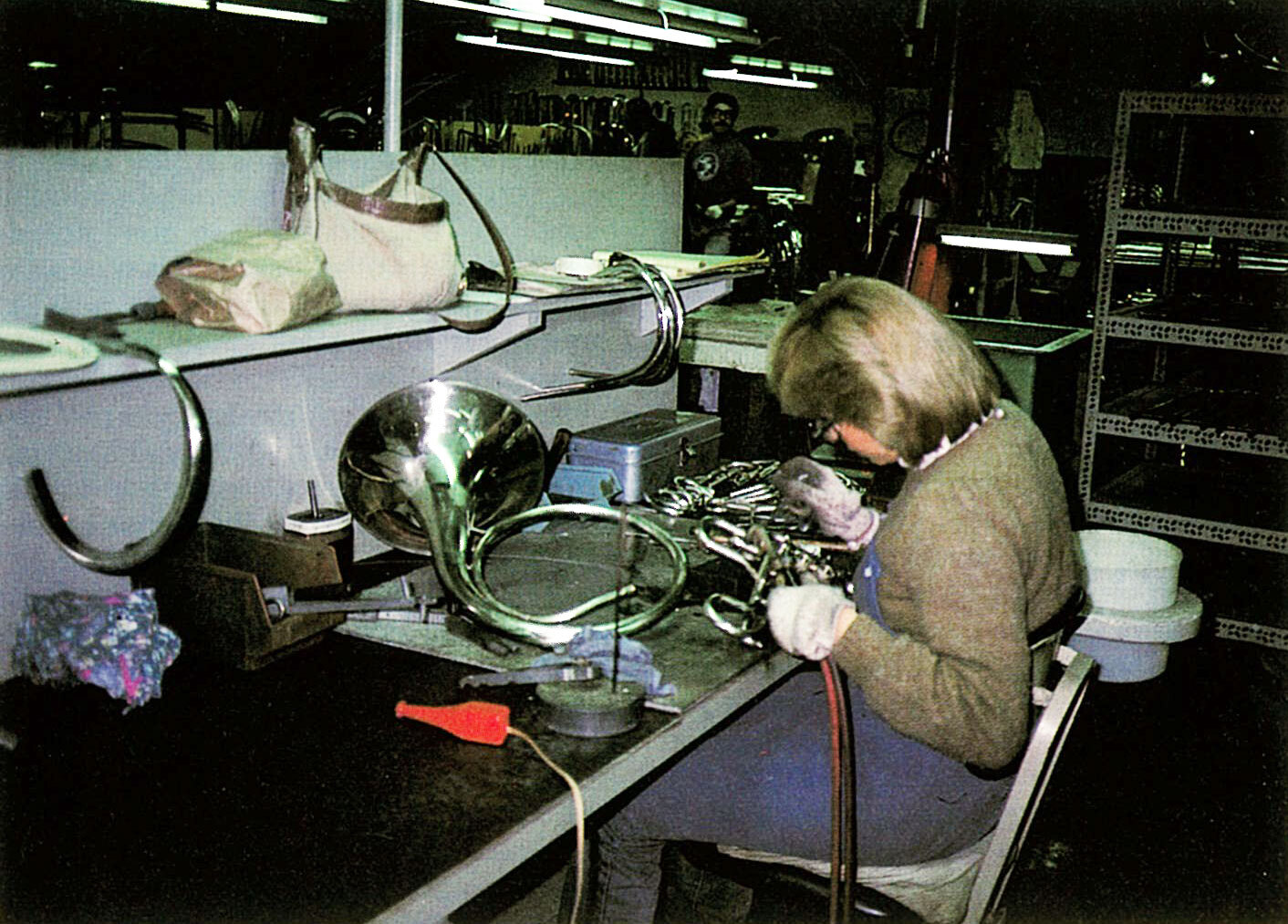
Soldering work on a horn

Soldering work on a horn

The employees are local. Moves from one department to another are rare, most employees staying where they were apprenticed on first joining the company. Officials were kind enough to show me a copy of the firm’s union agreement, which covers relationships between the firm and its employees in great detail. The agreement covers all those involved in production, from the caretaker to the specialists and supervisors, the individual points to be applied without discrimination in respect of sex, age, race, colour, creed, origin, physical and mental disability or union membership.
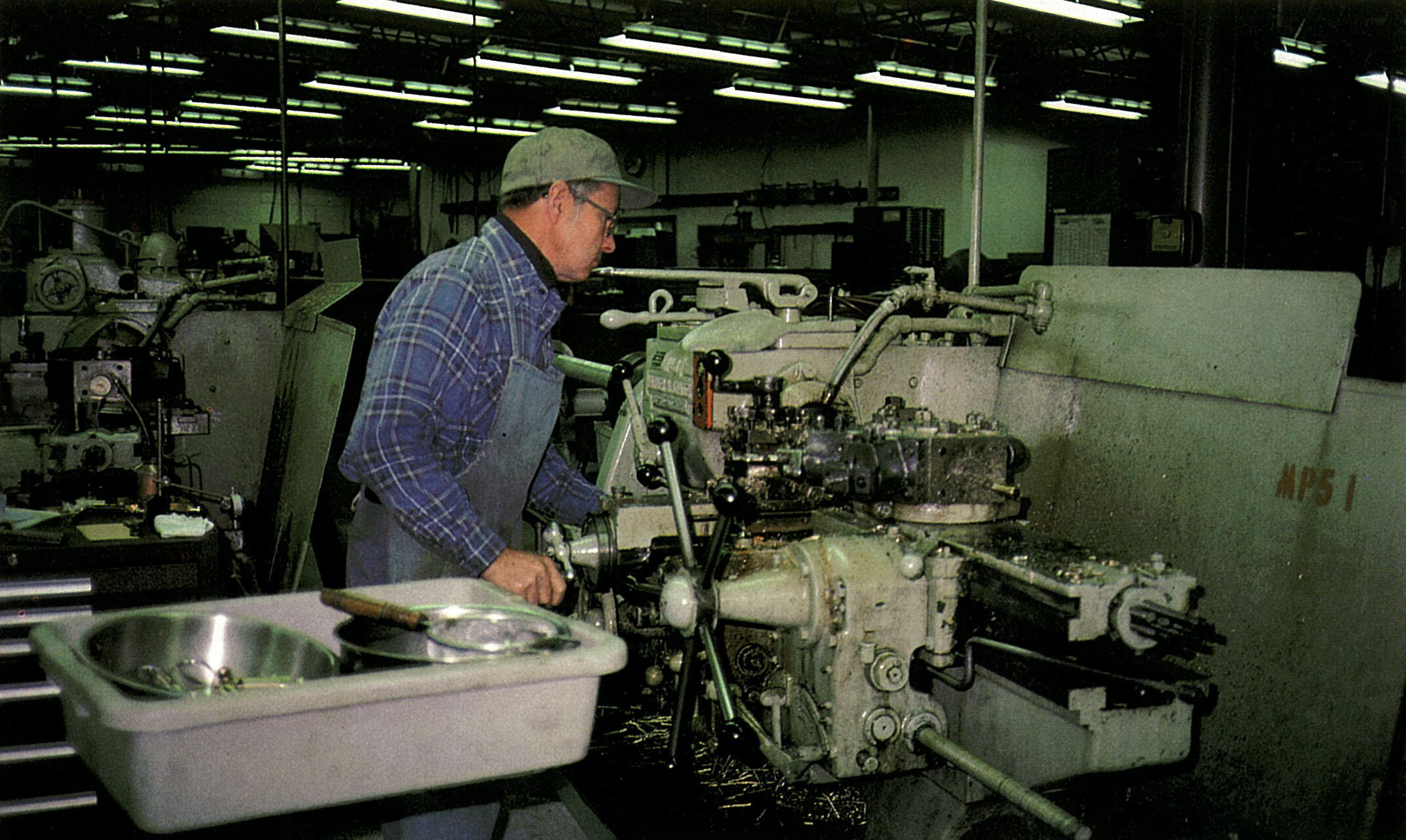
Small-scale series work on the lathe

Small-scale series work on the lathe

A new employee is confirmed in his job after sixty days’ probation. The normal working week is forty hours, Monday to Friday. Hourly rates with premiums for shift work are agreed in advance for three-year periods for each individual work process and for the probationary period and for subsequent periods of employment of two or six months or more. The ratio between the pay-rates for the simplest and the most demanding jobs is approximately 1:2. The union renounces the use of strikes and the company renounces the use of lockouts. There is a precisely defined arbitration procedure for dismissals and disputes. The individual employee’s seniority within the firm is very important since, in the event of layoffs, the ‘‘last-in-first-out’’ rule applies. Annual leave is one to two weeks per year in the first two years, rising to three weeks in the ninth year, plus ten paid holidays a year, one of which is the employee’s own birthday. Conn and the union have equal control over the employees’ pension fund, which provides a modest pension in old age and in the event of invalidity.

These details are very brief, of course, but they do give some idea of the conditions of employment in a company of this kind in the southern U.S.


C.G. Conn Ltd.
5520 North First Street Abilene, Texas, 79603

Interview with: Lyndia Oman, General Manager

Employees: 125
Production: 12’000 - 15’000 instruments per year

The firm of C.G. Conn Ltd. belongs to the Mardan Corporation of Elkhart, Indiana, which also includes the following companies:

C.G. Conn Ltd., Abilene and Nogales
Artley Flutes, Nogales, Arizona
Goshen Case, Goshen, Indiana
Scherl + Roth, Cleveland, Ohio
Continental Music, Atlanta, Georgia, and Reno, Nevada
King Music Company, Cleveland, Ohio

Brass Bulletin 51, III / 1985 pages 54–58

All content is protected by copyright © Brass Bulletin 1985–2026

Share this article

Facebook LinkedIn
Loading…

Questions & Answers

How the Digital Edition works

What does the Digital Edition include?

The Digital Edition brings together the articles already digitized as searchable online texts—not simply as scans or PDF files—along with their original illustrations, notes, authorship, issue information, and available translations. Related-article suggestions currently include only this digitized material.

Are the digital articles identical to the originals?

We preserve the original text, language, illustrations, captions, footnotes, and editorial context as faithfully as possible. The presentation is adapted for comfortable online reading, and obvious transcription or scanning errors may be corrected. The substance and character of the published article remain unchanged.

Which languages are available?

Brass Bulletin was published in English, French, and German throughout its history. Italian and Spanish translations were added from issue No. 60 onward.

On the Italian and Spanish sites, articles from issues 1–59 are therefore shown in English by default.

How often are new articles added?

New articles are added almost daily, with approximately one complete issue digitized each week. The pace may vary depending on the preparation, image work, and editorial checking required.

Why aren’t all articles available digitally?

The complete Brass Bulletin collection contains 1,246 articles published between 1971 and 2003. The full index is already available online, allowing readers to discover every article in the collection, including those whose complete text has not yet been digitized.

Digitization began in February 2026. Each article is carefully prepared for online reading, checked, and connected to its issue, authors, subjects, and illustrations. At the current pace of digitization, the complete collection is expected to be available online by February 2028.

Why do some references mention articles that are not available yet?

References in the original articles are preserved even when the material they point to has not yet been digitized. This keeps the historical and editorial record intact. As more issues are added to the Digital Edition, an increasing number of these references will lead to articles that can be read online.

Can I suggest an article or report a transcription error?

Yes. If there is an article you would particularly like to see digitized, or if you notice a possible transcription error or missing detail, please contact us. Reader feedback helps us improve the Digital Edition and prioritize useful connections within the archive.

How can I support Brass Bulletin?

Your support helps fund the preparation, verification, and online publication of the complete collection.

Subscribe to the Digital Edition

Prefer to support us without subscribing?

Make a donation

How is the digitization progressing?

We’re gradually making the Brass Bulletin available online, article by article. You can read newly digitized articles as soon as they’re ready, even before an entire issue is complete.

Visit our Digitization Roadmap to browse recent additions and see estimated availability for upcoming issues. These estimates follow our recent pace and may change.

Search Brass Bulletin.