Rendete Brass Bulletin disponibile nella vostra università, nel vostro conservatorio o nella vostra biblioteca Scoprite l’accesso istituzionale

2 min di lettura

Parte 9

Instrument Makers in USA

Yamaha Music Products

Instrument Makers in USA

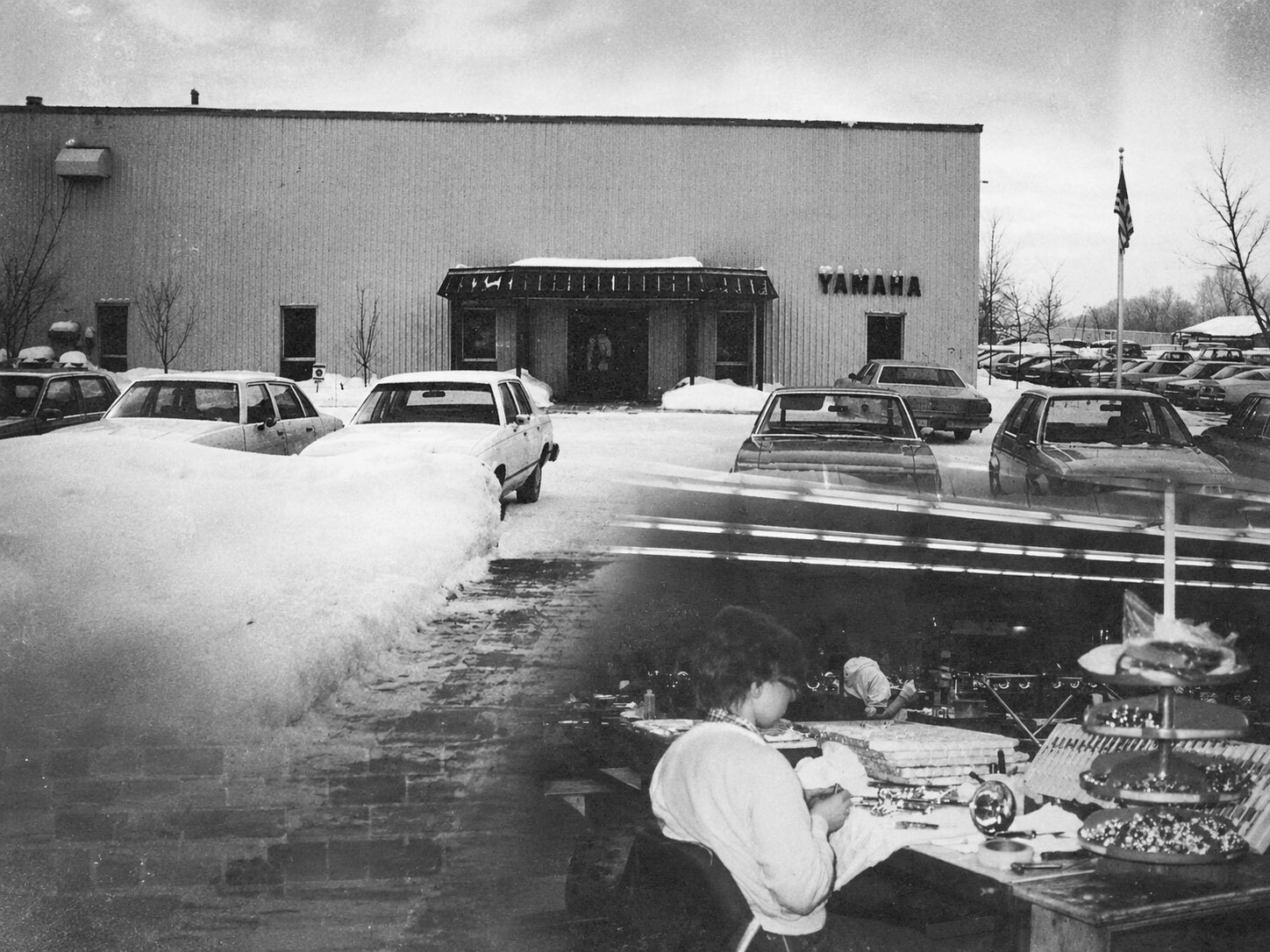
Yamaha Music Products – Grand Rapids, Michigan

When a Yamaha trumpet, trombone, cornet or flugelhorn is sold in the United States, it is in the great majority of cases an instrument from the Grand Rapids factory. Imports of finished products from Japan — about 20% of the total for brass instruments — are mostly top-of-the-range models of these instruments or else instruments not in the Grand Rapids production programme, such as horns, tubas, euphoniums etc.

Together with that first group of brass instruments — the main object of this article — the Grand Rapids factory also produces woodwind: flutes, saxophones and clarinets. Counting woodwind and brass together, the factory has an annual capacity of up to 70'000 instruments.

It was pointed out to me with satisfaction (no doubt justified) that "when we started up production here eleven years ago, as a Japanese firm we had to prove ourselves in every way. Now the ice is broken!" Mr. Tom Williams, whom I interviewed, added, "This factory is also a part of our large corporate family. We are aware of the responsibility associated with that because our reputation is closely linked to that of our sister companies."

But let us get back to making brass instruments. The main components are series produced in Japan. These then come to Grand Rapids, where the individual instruments are assembled, adjusted and finally lacquered or silver plated; I was told that all this accounts for 60-70% of the value of the finished product. It is above all valves, mouthpipes, bell sections and mouthpieces that are imported. In some departments these figures should eventually change in favour of the American share of production; in others — trumpet valves, for example, for which Japan by herself can meet a large part of the world-wide demand — no change is expected.

As already mentioned, the main preoccupation is the quality of instruments produced. Great importance is therefore attached to employees' training. Time studies, carried out by specialist consultants, are generally used as a basis for in-house studies. Individual employees' performance is then monitored for three months; this provides the basis for a suitable average. Those who produce less, but whose work is careful and reliable, have nothing to fear from this because experience has shown that good people usually produce above average so long as they feel free and not tied to a norm. According to this hypothesis the shortcomings of their slower working colleagues is soon compensated for — and high quality is still preserved.

I was assured that with this work atmosphere the firm has a very low turnover of personnel. This was not always so, however, for to begin with some employees cared little for the demand of quality. All the more reason to be proud of the workforce today. Until 1979 the Grand Rapids factory, Yamaha's first in the United States, produced organs as well as wind instruments. These are now in Thomaston, Georgia, and another factory produces the well known Everett pianos.

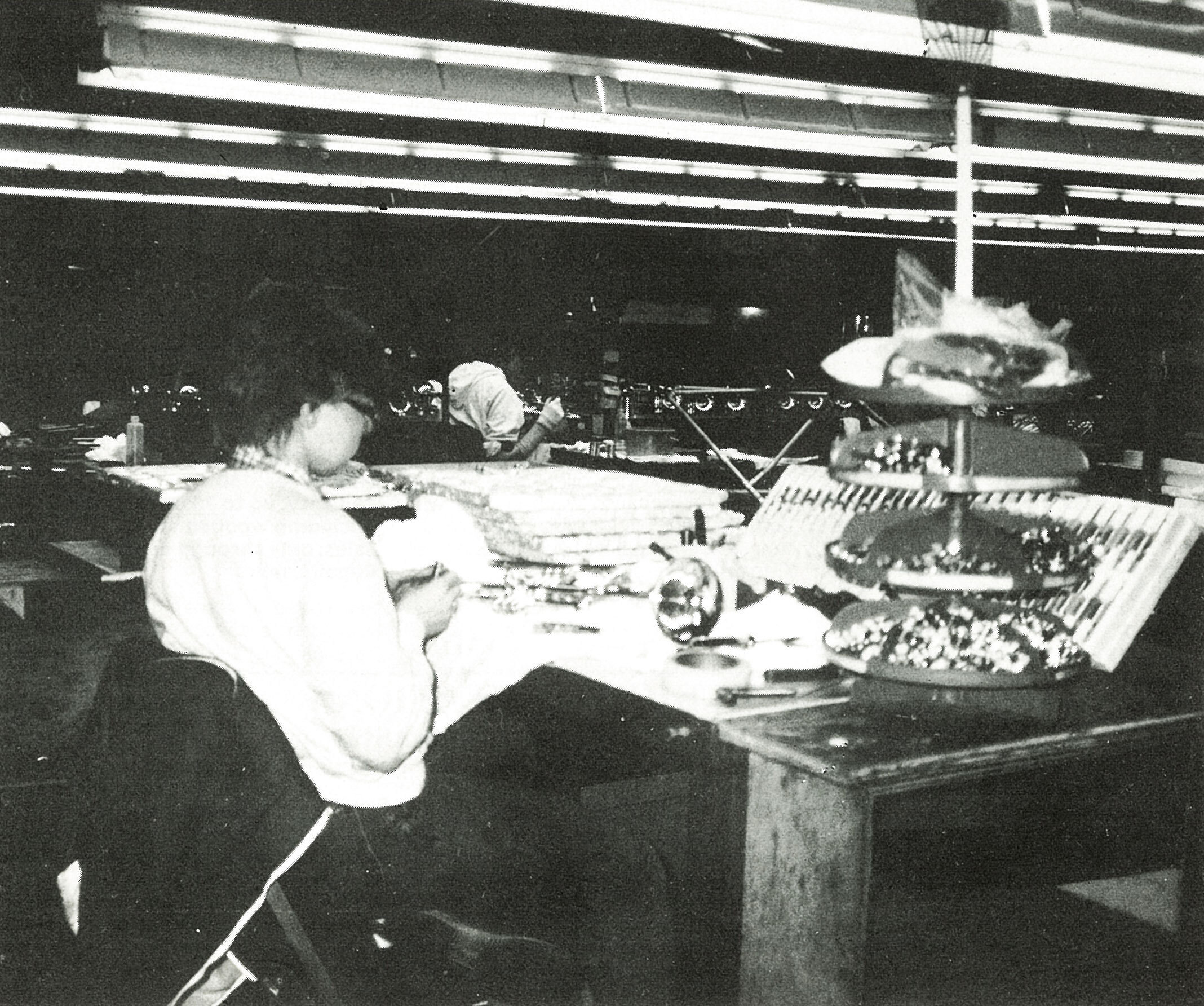
Final assembly of a trumpet

Final assembly of a trumpet

Apart from corporate decisions, for which Japan is responsible, Grand Rapids is the central authority for publicity, marketing policy and sales relating to Yamaha Musical Products in the United States. Experience shows that 80% of sales are concentrated in the period July to September, a fact which necessitates very considerable storage capacity. All sales are to dealers; the factory itself has no sales licence of its own. The extensive dealer network is the source of information for the company management. Views and suggestions so obtained, plus contributions from musicians, provide a constantly updated picture of the market situation and customers' wishes. Of course, there is constant contact with the Yamaha companies in Japan especially since, as I was told, all the equipment is examined and evaluated every few years by Japanese technicians. Jean-Pierre Mathez wrote a detailed article on the Yamaha parent company in Japan, which appeared in BRASS BULLETIN 40.

Inside the Grand Rapids factory I was pleasantly impressed by the relative peace and quiet. Employees here wear no uniforms, unlike in Japan, but white gloves are sometimes to be seen. Separate well insulated rooms, looking rather like boxes, are built into the large building. In one of these I was able to watch finished instruments being examined by a musician; in others I saw top-of-the-range instruments being adjusted in complete isolation. Compared with the student instruments these involve a considerably greater amount of hand work, such as hand-lapped valves and slides. All in all, a significant part of the man-hours involved is still spent in soldering work.

At the time of my visit work was proceeding on a new employee training programme, known as the "Pi System", abbreviated from "Productivity Improvement", "Productivity Index" and "Personal Improvement". The employees should share in the benefits which the management hopes to gain from this, according to the all-important motto: "We want our co-workers to grow like us. Therefore we try to increase their knowledge. They will return this to the company."

Yamaha Musical Products

3050 Breton Road S.E.
P.O. Box 7271
Grand Rapids, Michigan 49510, USA
President: Stan Stitgen
Interview with Tom Williams
Production Manager
Employees: 150
Capacity: up to 70'000 a year (including woodwind)
Sales: only through dealers
Repairs: none

Brass Bulletin 55, III / 1986 pagine 81–84

Tutti i contenuti sono protetti dal diritto d’autore © Brass Bulletin 1986–2026

Condividi questo articolo

Facebook LinkedIn
Loading…

Domande e risposte

Come funziona l’edizione digitale

Che cosa comprende l’edizione digitale?

L’edizione digitale riunisce gli articoli già digitalizzati sotto forma di testi leggibili e ricercabili online — non semplicemente come scansioni o file PDF — insieme alle illustrazioni originali, alle note, agli autori, alle informazioni sul numero della rivista e alle traduzioni disponibili. I suggerimenti di articoli correlati comprendono attualmente solo questo materiale digitalizzato.

Gli articoli digitali sono identici agli originali?

Conserviamo il più fedelmente possibile il testo originale, la lingua, le illustrazioni, le didascalie, le note e il contesto editoriale. La presentazione viene adattata per una lettura confortevole online e gli evidenti errori di trascrizione o scansione possono essere corretti. Il contenuto e il carattere dell’articolo pubblicato rimangono invariati.

Quali lingue sono disponibili?

Brass Bulletin è stato pubblicato in inglese, francese e tedesco nel corso di tutta la sua storia. Le traduzioni italiane e spagnole sono state aggiunte a partire dal numero 60. Sui siti italiano e spagnolo, gli articoli dei numeri da 1 a 59 vengono quindi mostrati in inglese per impostazione predefinita.

Con quale frequenza vengono aggiunti nuovi articoli?

Nuovi articoli vengono aggiunti quasi ogni giorno, con circa un numero completo digitalizzato ogni settimana. Il ritmo può variare in base al lavoro di preparazione, elaborazione delle immagini e verifica editoriale necessario.

Perché non tutti gli articoli sono disponibili in formato digitale?

La collezione completa di Brass Bulletin comprende 1.246 articoli pubblicati tra il 1971 e il 2003. L’indice completo è già disponibile online e consente di scoprire tutti gli articoli della collezione, compresi quelli il cui testo integrale non è ancora stato digitalizzato.

La digitalizzazione è iniziata nel febbraio 2026. Ogni articolo viene accuratamente preparato per la lettura online, verificato e collegato al relativo numero, agli autori, agli argomenti e alle illustrazioni. Al ritmo attuale di digitalizzazione, la collezione completa dovrebbe essere disponibile online entro febbraio 2028.

Perché alcuni riferimenti citano articoli che non sono ancora disponibili?

I riferimenti presenti negli articoli originali vengono conservati anche quando il materiale a cui rimandano non è ancora stato digitalizzato. In questo modo si preserva l’integrità storica ed editoriale della rivista. Man mano che nuovi numeri vengono aggiunti all’edizione digitale, un numero crescente di questi riferimenti condurrà ad articoli leggibili online.

Posso suggerire un articolo o segnalare un errore di trascrizione?

Sì. Se desiderate che un determinato articolo venga digitalizzato, oppure se notate un possibile errore di trascrizione o un’informazione mancante, contattateci. I riscontri dei lettori ci aiutano a migliorare l’edizione digitale e a stabilire priorità utili all’interno dell’archivio.

Come posso sostenere Brass Bulletin?

Il vostro sostegno contribuisce a finanziare la preparazione, la verifica e la pubblicazione online dell’intera collezione.

Abbonati all’Edizione digitale

Preferite sostenerci senza abbonarvi?

Fate una donazione

Come procede la digitalizzazione?

Stiamo rendendo Brass Bulletin disponibile online gradualmente, articolo per articolo. Potete leggere gli articoli appena digitalizzati non appena sono pronti, anche prima che un intero numero sia completato.

Consultate il nostro calendario di digitalizzazione per scoprire le ultime aggiunte e le date di disponibilità stimate dei prossimi numeri. Le stime si basano sul nostro ritmo recente e possono cambiare.

Cerca in Brass Bulletin.