Explore institutional access →

2 min. read

Part 10 – End

Instrument Makers in USA

E.K. Blessing Co. Inc

Instrument Makers in USA

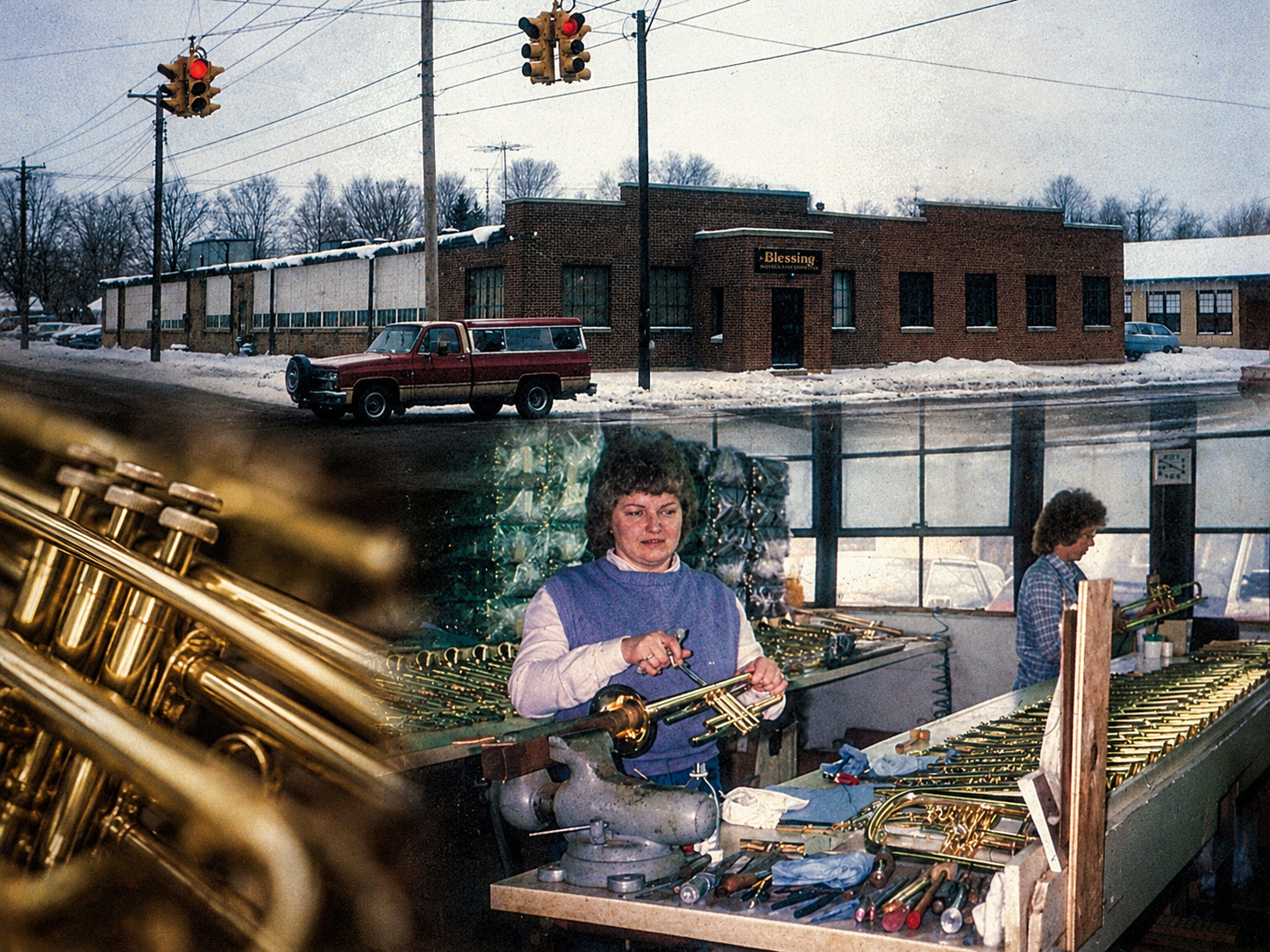
In the McDonald’s in Elkhart there are two large display cases of musical instruments and large photographs of instrument factories, Elkhart visiting cards, as it were. The concentration of many musical instrument makers there is still characteristic of the little town.

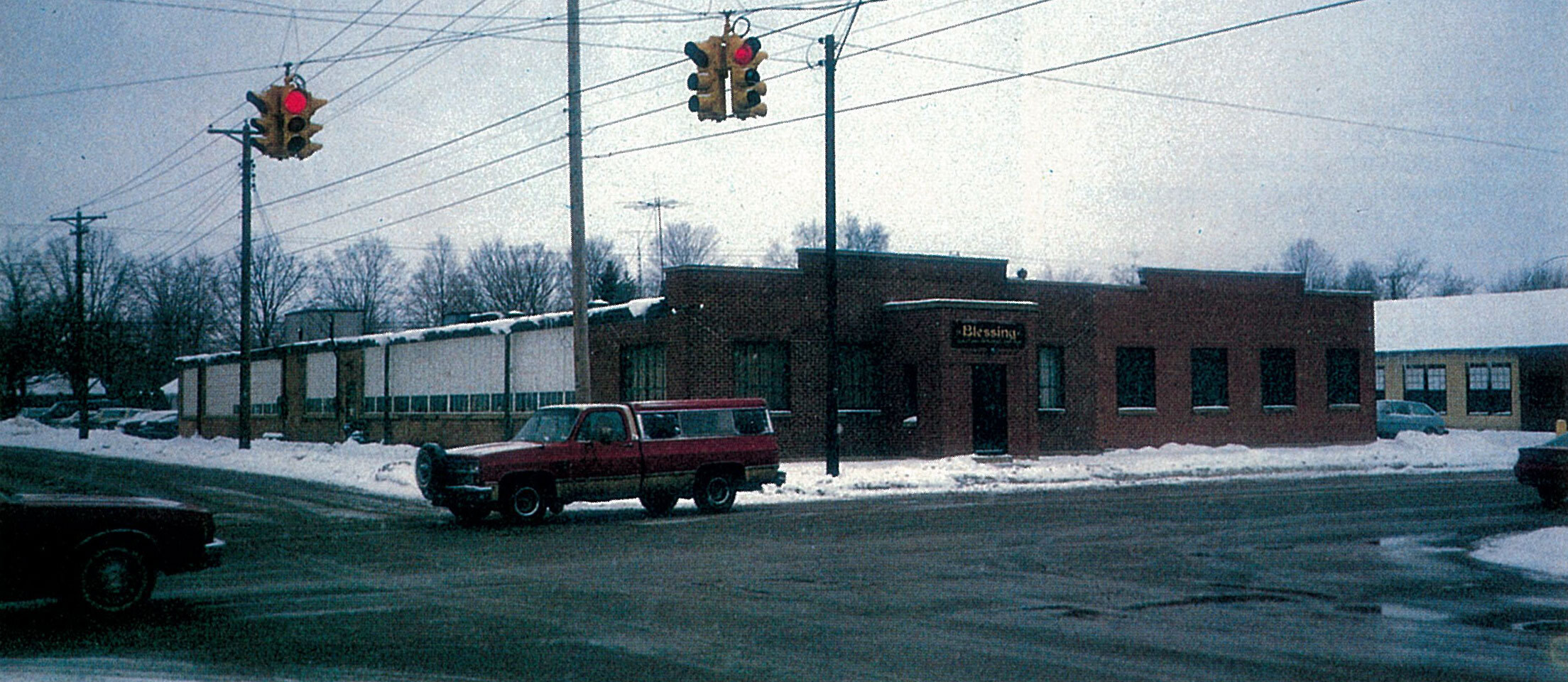
The firm of E.K. Blessing is one of the few of these to have remained in private hands. Brass and woodwind are produced: a wide range of cornets, flugelhorns, valve and slide trombones and tubas, as well as mouthpieces, in brass; mainly piccolos, flutes and clarinets in woodwind. Customers range from beginners to demanding professionals. Top-of-the-range trumpets, for example, are offered in no less than six versions — something to meet everyone’s wishes, in other words. “These instruments bear comparison with any on the market, even the best. Their musical qualities are outstanding,” Mr. Merle Johnson, the owner, explained to me as he gave me the opportunity to learn something about the well run business during my visit to the factory. He met my many questions with some reserve, saying, “Everybody in this sector manufactures basically in a very similar way; there are a few improvements here and there and everyone has his little secrets about that!”

Towards its customers, on the other hand, the firm is very open. “For any musician who plays one of our instruments and has a problem with it we will happily schedule a personal meeting any time. We repair our instruments, of course, if a mishap occurs.”

Almost all components are made in the company factory. An exception is silver plating, which goes to the specialised firm of Andersen’s, also operating in Elkhart.

E.K. Blessing Co. Inc.  Elkhart, Indiana

E.K. Blessing Co. Inc.  Elkhart, Indiana

Instruments in current production are tested by Mr. Johnson’s son, Randy; newly developed ones are further evaluated by professional musicians.

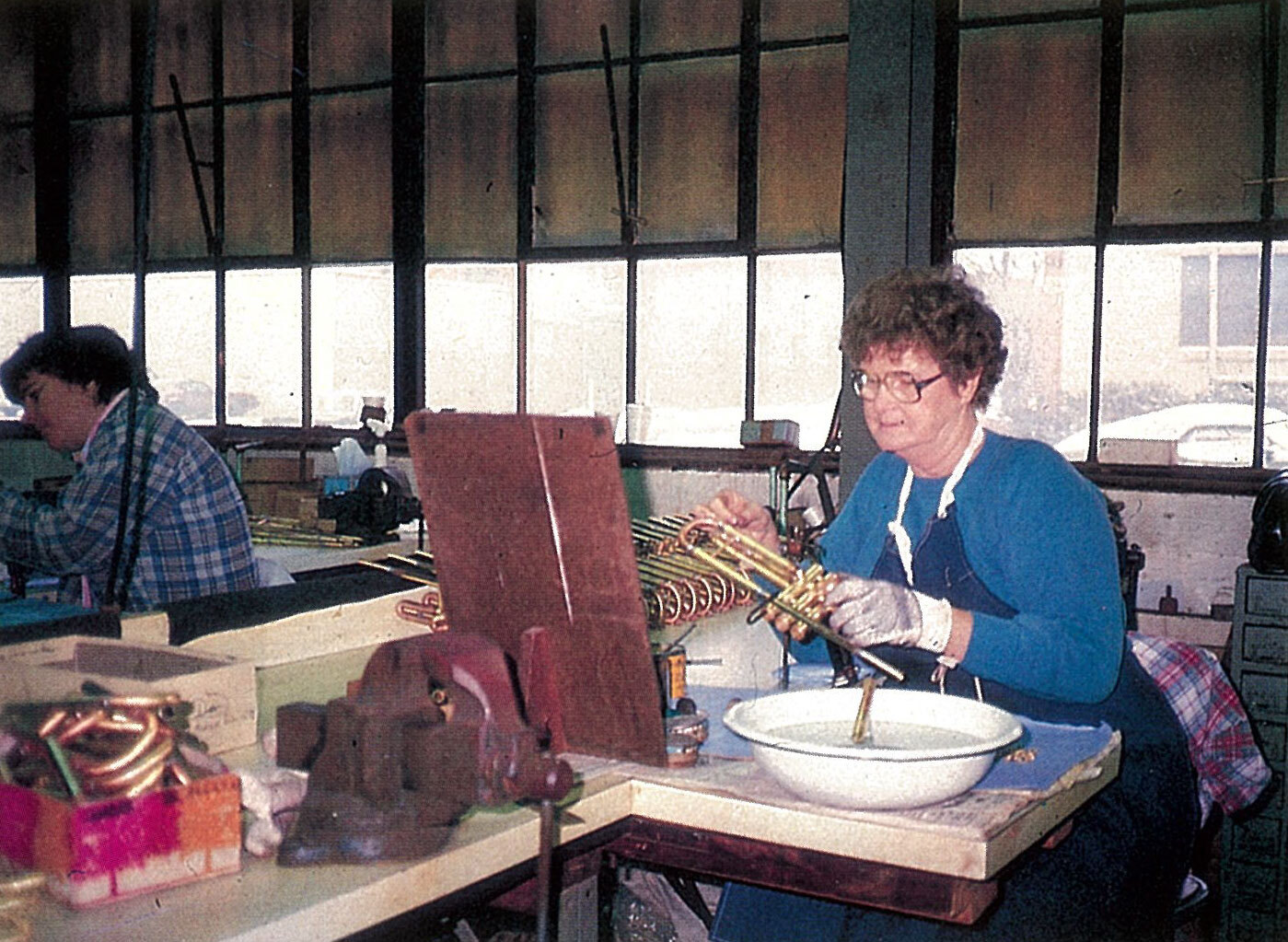
The sixty or so employees have almost all been trained within the firm itself.

We prefer people who know nothing about anything; that way we can get them used to our methods! We have very little turnover because of our good retirement scheme.
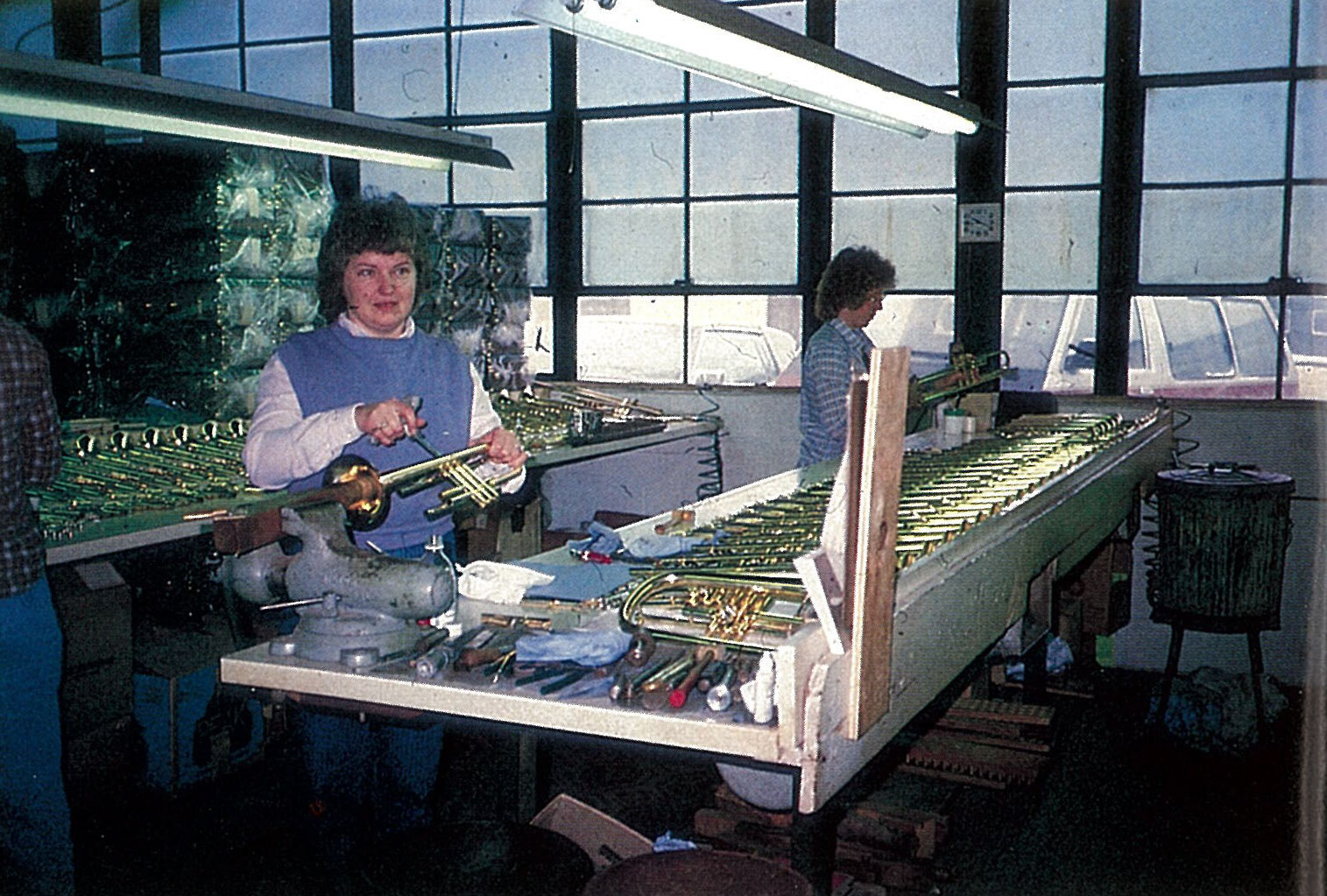
Assembling a trumpet
Assembling a trumpet

Mr. Merle Johnson
Mr. Merle Johnson

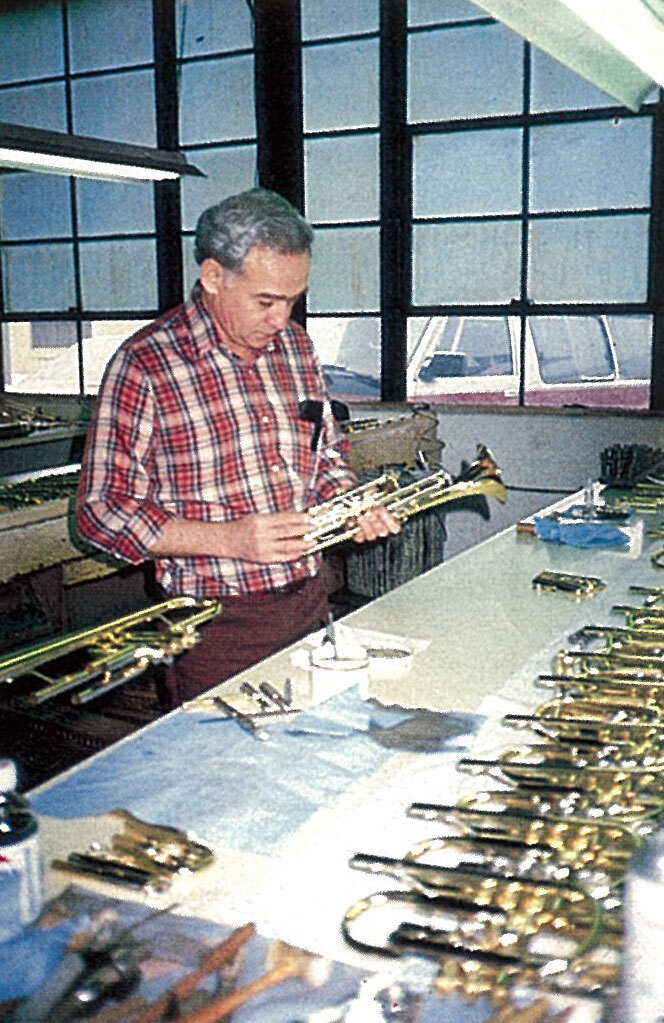
Final fitting of valves

Final fitting of valves

All sales are handled by dealers, with whom there is a constant exchange of information on the state of the market.

Mr. Johnson explained to me that the business was founded by Mr. Eno K. Blessing, who emigrated to the States from Germany in the thirties. He started building valves, for Conn among others. The first Vincent Bach instruments are also said to have come from his workshop. After Blessing’s death in 1953 his sons carried on the business, although having little success from their association with the Richards Music Co., an association abandoned a few years later. In 1964 the firm was taken over by Mr. Merle Johnson, who by that time had already been an employee of the company for ten years. He is responsible for its current success. 

If we’re still here, it’s thanks to the quality of our instruments,” he said and, thinking of the future, added, “Continue to improve our products as much as possible and give the dealers even more service — if that works, everything else will take care of itself!

E.K. Blessing Co. Inc.
1306 W. Beardsley
Elkhart, Indiana 46514, USA
Interview with Merle Johnson, owner
Employees: approximately 60
Sales: through dealers
Repairs: only own instruments.

Brass Bulletin 56, IV / 1986 pages 105–107

All content is protected by copyright © Brass Bulletin 1986–2026

Share this article

Facebook LinkedIn
Loading…

Questions & Answers

How the Digital Edition works

What does the Digital Edition include?

The Digital Edition brings together the articles already digitized as searchable online texts—not simply as scans or PDF files—along with their original illustrations, notes, authorship, issue information, and available translations. Related-article suggestions currently include only this digitized material.

Are the digital articles identical to the originals?

We preserve the original text, language, illustrations, captions, footnotes, and editorial context as faithfully as possible. The presentation is adapted for comfortable online reading, and obvious transcription or scanning errors may be corrected. The substance and character of the published article remain unchanged.

Which languages are available?

Brass Bulletin was published in English, French, and German throughout its history. Italian and Spanish translations were added from issue No. 60 onward.

On the Italian and Spanish sites, articles from issues 1–59 are therefore shown in English by default.

How often are new articles added?

New articles are added almost daily, with approximately one complete issue digitized each week. The pace may vary depending on the preparation, image work, and editorial checking required.

Why aren’t all articles available digitally?

The complete Brass Bulletin collection contains 1,246 articles published between 1971 and 2003. The full index is already available online, allowing readers to discover every article in the collection, including those whose complete text has not yet been digitized.

Digitization began in February 2026. Each article is carefully prepared for online reading, checked, and connected to its issue, authors, subjects, and illustrations. At the current pace of digitization, the complete collection is expected to be available online by February 2028.

Why do some references mention articles that are not available yet?

References in the original articles are preserved even when the material they point to has not yet been digitized. This keeps the historical and editorial record intact. As more issues are added to the Digital Edition, an increasing number of these references will lead to articles that can be read online.

Can I suggest an article or report a transcription error?

Yes. If there is an article you would particularly like to see digitized, or if you notice a possible transcription error or missing detail, please contact us. Reader feedback helps us improve the Digital Edition and prioritize useful connections within the archive.

How can I support Brass Bulletin?

Your support helps fund the preparation, verification, and online publication of the complete collection.

Subscribe to the Digital Edition

Prefer to support us without subscribing?

Make a donation

How is the digitization progressing?

We’re gradually making the Brass Bulletin available online, article by article. You can read newly digitized articles as soon as they’re ready, even before an entire issue is complete.

Visit our Digitization Roadmap to browse recent additions and see estimated availability for upcoming issues. These estimates follow our recent pace and may change.

Search Brass Bulletin.