Explore institutional access →

2 min. read

Georgiy Antonovich Orvid

Portrait of a distinguished Soviet trumpeter

Georgiy Antonovich Orvid

Georgiy Antonovich Orvid

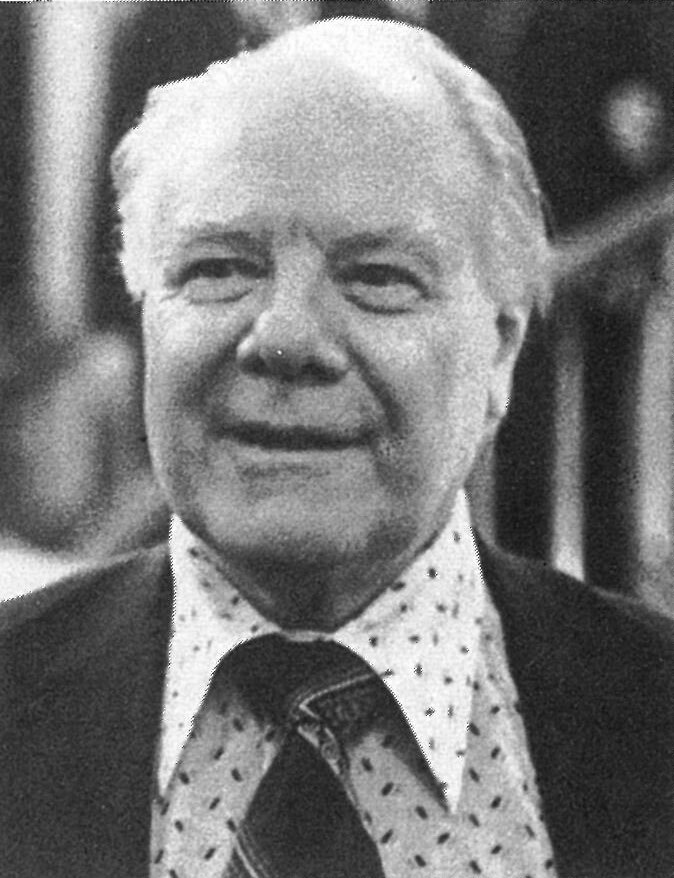
It is 82 years since the birth of Georgiy Antonovich Orvid (1904-1980) — the distinguished Soviet trumpeter, People’s artist of the Russian Federation and Professor at the Moscow State Conservatoire. A pupil of the outstanding Russian trumpeter M. I. Tabakov (1877-1956), Orvid became a renowned musician, teacher and public figure.

Orvid was born in the Ukraine, in the town of Voznesensk. His father was a bandmaster and it was he who aroused the boy’s interest in the trumpet and became his first teacher. From the first Orvid showed remarkable musical abilities and at the age of 13 he attracted the attention of many by his quick progress. During the Russian Civil War (1918-1926) Orvid was a bandsman in one of the regimental bands in the Red Army. After the war he became a student at the Kiev Conservatoire where along with mastering trumpet technique he studied military brass band instrumentation. He graduated in 1927 with a diploma in both subjects. The desire to perfect his playing technique led him to Moscow where he became a 3rd-year student at the Moscow State Conservatoire, studying with Tabakov. After he graduated in 1930 he was engaged in post-graduate studies for 2 years.

Orvid started teaching at the Moscow Conservatoire in the 1930s, later becoming Professor. At the same time he played in the Bolshoi Theatre Orchestra, Radio Symphony Orchestra, USSR State Symphony and Moscow Philharmonic. From 1939 to 1946 Orvid was engaged in training bandmasters for the Soviet Army. He spared no efforts to improve the performance of military bands. At the end of the 1940s and in the 1950s Orvid held important administrative posts: Pro-rector of the Moscow Conservatoire, director of the Bolshoi Theatre, USSR Deputy Minister of Culture. For a long time he held the chair of wind and percussion instruments at the Moscow Conservatoire.

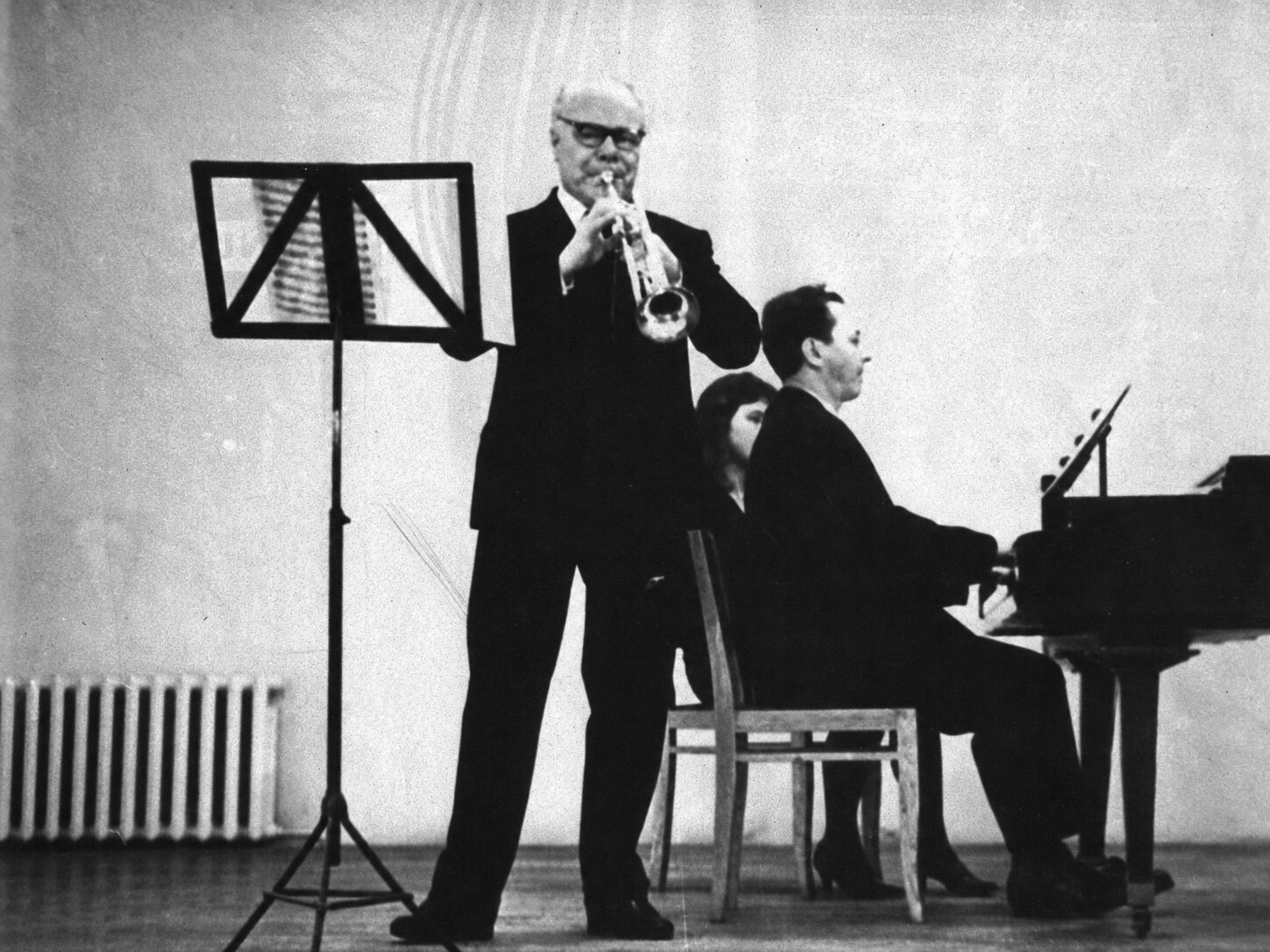
Despite his versatile public activity Orvid never gave up the trumpet. A biography of his creative years falls into 2 periods — the 1930s and the 1960-1970s. Already in the 1930s his numerous concert performances revealed his bright and original creative personality. In 1941 Orvid won the All-Union Wind-Players’ Competition in Moscow. In the 1960s, after a break of almost 20 years, Orvid appeared on the concert platform again. His playing style was distinguished by fluent mastery of both the technical and the expressive resources of the trumpet, a wide compass with pure and steady sounds and evenness of timbre in every register. He had an excellent memory and played all the compositions by heart. He always played some new composition for the trumpet, which is why his every performance excited great interest among musicians and music lovers. In 1967 on the stage of the Little Hall of the Moscow Conservatoire he played 5 big sonatas for trumpet and piano by Soviet composers B. Asaf’ev, E. Golubyov, M. Mil’man, N. Platonov and Y. Aleksandrov. Orvid was often the first to play musical pieces hitherto unknown to Soviet trumpeters: “Legend” by Enescu, “Fairy-tales” by Absil, “Triptych” by Tomasi, “Intrada” by Honegger, “Triptych” by Desenclos etc. His performances stimulated musicians to bring new compositions into the repertoire.

Brass Bulletin image

Orvid’s brilliant performances in the Great Hall of Moscow Conservatoire were always a great success. There he played the Concerto for trumpet and orchestra by Haydn and the Symphony-concerto for trumpet and orchestra by a contemporary French composer, A. Barraud, conducted by Jean-Claude Casadesus. Orvid has made many recordings: the Sonata for two trumpets, string orchestra and organ by Vivaldi (with Orvid’s pupil V. Yudin), the Sonatina by Martinu, sonatas by Hindemith, Mil’man, Aleksandrov, the Concertino by Banshikov and the Andante and Scherzo by J. Barat are the most and remarkable of them. Orvid is the author of the first Soviet trumpet tutor, first published in 1933, republished in 1936 and 1940. Along with scales, exercises and studies the tutor contains diverse musico-artistic material with piano accompaniment. Orvid edited Arban’s trumpet and cornet tutor, revised and with exercises and studies by Maire, published in the USSR in 1964. The tutor familiarized Soviet trumpeters with the contemporary principles of trumpet teaching in France. Proceeding from his playing and teaching experience Orvid wrote some theoretical works on the trumpet. His scientific-methodical investigation “Some objective principles of sound production and the ‘art of trumpet playing’”, published in 1976, was written on the basis of tests conducted in the acoustic laboratory and of X-ray examinations of the player. Orvid analyses inner physiological processes and gives a lot of useful advice. He also wrote several articles dedicated to famous Soviet wind players.
Georgiy Antonovich Orvid

Georgiy Antonovich Orvid

For nearly 50 years Orvid was a teacher at the Moscow State Conservatoire. His pupils include many winners at international and All-Union musical competitions, soloists in major symphony and opera orchestras and famous teachers: V. Yudin, S. Gevorkyan, L. Golovin, V. Traibman, O. Usach, L. Chumov, E. Fomin, M. Usach, N. Chobanu and others.

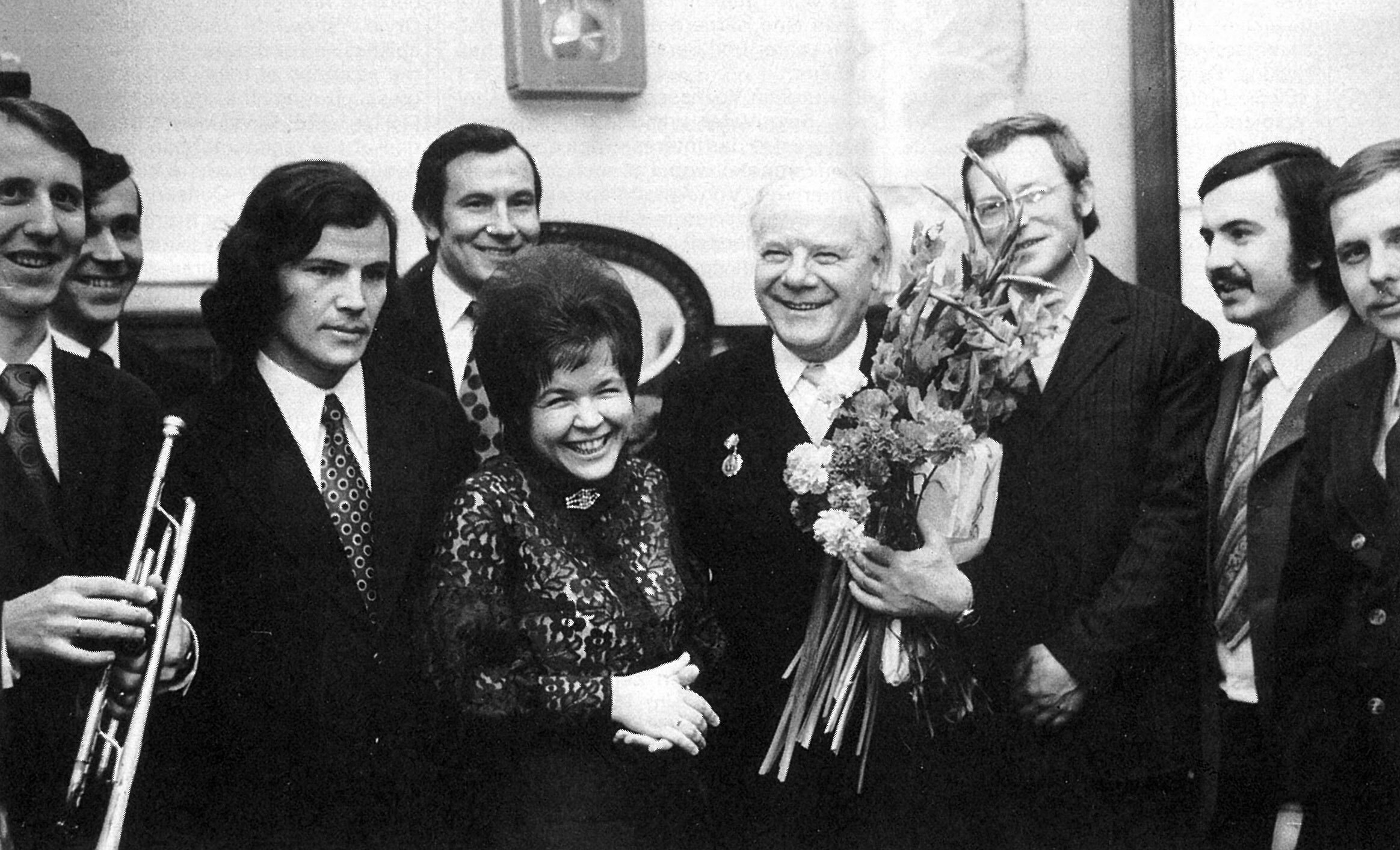
In december 1984 there was a memorial reception in the Little Hall of the Moscow Conservatoire, dedicated to Orvid on the occasion of his 80th birthday. The Moscow musical public, the best Soviet trumpet soloists, the Moscow trumpet quartet, the student brass quintett of the Moscow Conservatoire, the trumpet ensemble of the stage wind band of the Bolshoi Theatre have been playing.

(Translated from Russian by Jelena Kuznetsova.)

Brass Bulletin 55, III / 1986 pages 75–79

All content is protected by copyright © Brass Bulletin 1986–2026

Share this article

Facebook LinkedIn
Loading…

Questions & Answers

How the Digital Edition works

What does the Digital Edition include?

The Digital Edition brings together the articles already digitized as searchable online texts—not simply as scans or PDF files—along with their original illustrations, notes, authorship, issue information, and available translations. Related-article suggestions currently include only this digitized material.

Are the digital articles identical to the originals?

We preserve the original text, language, illustrations, captions, footnotes, and editorial context as faithfully as possible. The presentation is adapted for comfortable online reading, and obvious transcription or scanning errors may be corrected. The substance and character of the published article remain unchanged.

Which languages are available?

Brass Bulletin was published in English, French, and German throughout its history. Italian and Spanish translations were added from issue No. 60 onward.

On the Italian and Spanish sites, articles from issues 1–59 are therefore shown in English by default.

How often are new articles added?

New articles are added almost daily, with approximately one complete issue digitized each week. The pace may vary depending on the preparation, image work, and editorial checking required.

Why aren’t all articles available digitally?

The complete Brass Bulletin collection contains 1,246 articles published between 1971 and 2003. The full index is already available online, allowing readers to discover every article in the collection, including those whose complete text has not yet been digitized.

Digitization began in February 2026. Each article is carefully prepared for online reading, checked, and connected to its issue, authors, subjects, and illustrations. At the current pace of digitization, the complete collection is expected to be available online by February 2028.

Why do some references mention articles that are not available yet?

References in the original articles are preserved even when the material they point to has not yet been digitized. This keeps the historical and editorial record intact. As more issues are added to the Digital Edition, an increasing number of these references will lead to articles that can be read online.

Can I suggest an article or report a transcription error?

Yes. If there is an article you would particularly like to see digitized, or if you notice a possible transcription error or missing detail, please contact us. Reader feedback helps us improve the Digital Edition and prioritize useful connections within the archive.

How can I support Brass Bulletin?

Your support helps fund the preparation, verification, and online publication of the complete collection.

Subscribe to the Digital Edition

Prefer to support us without subscribing?

Make a donation

How is the digitization progressing?

We’re gradually making the Brass Bulletin available online, article by article. You can read newly digitized articles as soon as they’re ready, even before an entire issue is complete.

Visit our Digitization Roadmap to browse recent additions and see estimated availability for upcoming issues. These estimates follow our recent pace and may change.

Search Brass Bulletin.