Explore institutional access Explore institutional access

7 min. read

Five generations of mouthpiece specialists

From Höchstädt to Markneukirchen and beyond, five generations of Schmidts shaped brass mouthpiece design through craft, anatomy and evolving orchestral demands.
Five generations of mouthpiece specialists

Werner Christoph Schmidt was born in 1922, the fifth generation of the oldest mouthpiece manufacturing dynasty in the world still active, whose name is known even in the USA, not least because of the "Schmidt backbore" so much sought after by trumpet players. Schmidt learned the mouthpiece maker's trade from his father between 1936 and 1939 and passed his master craftsman's examination brilliantly in 1947. He obtained a second master's certificate in 1958 as an electro-plater since he himself supervised all the work processes, from preparing the casting to finishing the surface. From Markneukirchen, in the Vogtland, a traditional centre of German instrument making, he supplies his successful brass mouthpieces via the GDR foreign trade organisation all over the world.
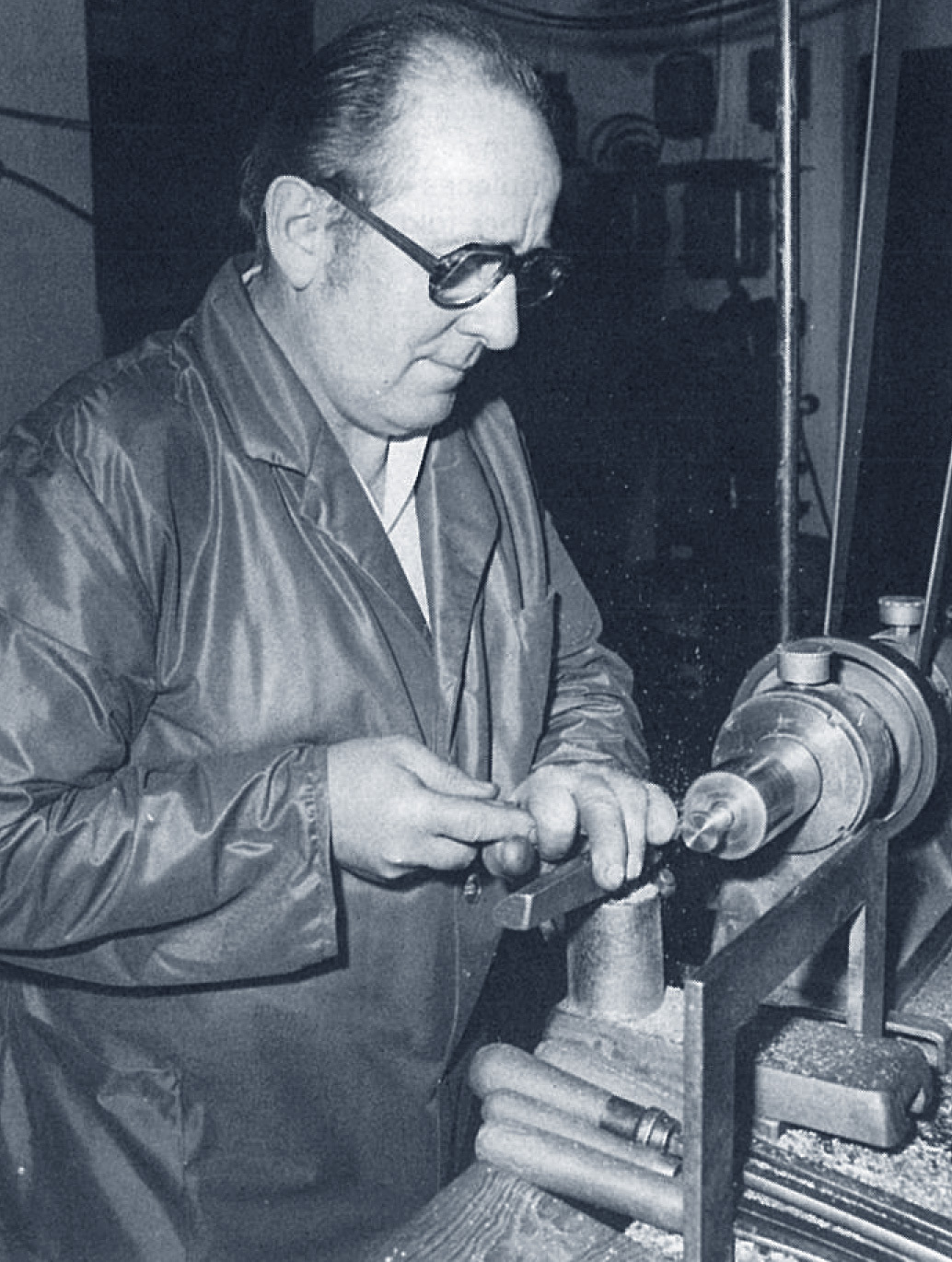
Werner Christoph Schmidt
Werner Christoph Schmidt

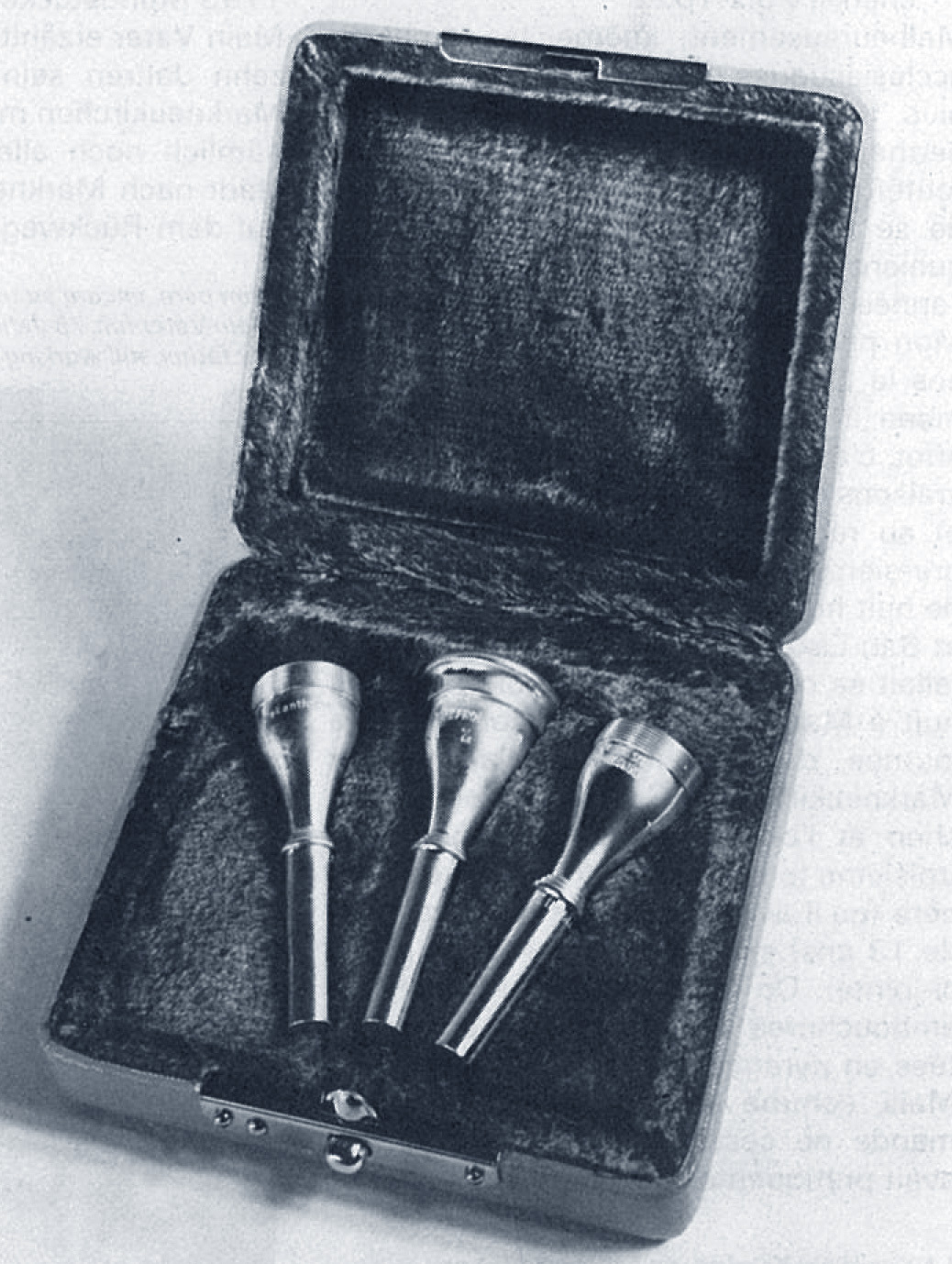
Three-part combination for horn including descant and Vienna cups.

Three-part combination for horn including descant and Vienna cups.

I am delighted to comply with Brass Bulletin's invitation to say something about the Schmidt family of mouthpiece makers and about my own work.

To begin with, our family tree, as far as it is known:

  1. Johann Schmidt. Trade — metal worker born 31st August 1793 in Höchstädt; died 4th March 1855 in Höchstädt
  2. Johann Schmidt. Trade — brazier born 23rd January 1819 in Höchstädt; died 7th November 1868 in Höchstädt
  3. Christoph Schmidt. Trade — brazier born 4th September 1845 in Höchstädt; died 3rd January 1912 in Markneukirchen
  4. Max Schmidt. Trade — master mouthpiece turner born 5th December 1880 in Höchstädt; died 21st March 1961 in Markneukirchen
  5. Werner Christoph Schmidt. Trade — mouthpiece specialist and master electro-plater born 25th February 1922 in Markneukirchen.

Germany's oldest church archive in Bamberg unfortunately does not go any further back but it can safely be assumed that my ancestors were making mouthpieces even before 1793.

Continue reading

Access the full Digital Edition.

Brass Bulletin 29, I / 1980 pages 27–34

All content is protected by copyright © Brass Bulletin 1980–2026

Share this article

Facebook LinkedIn
Loading…

Questions & Answers

How the Digital Edition works

What does the Digital Edition include?

The Digital Edition brings together the articles already digitized as searchable online texts—not simply as scans or PDF files—along with their original illustrations, notes, authorship, issue information, and available translations. Related-article suggestions currently include only this digitized material.

Are the digital articles identical to the originals?

We preserve the original text, language, illustrations, captions, footnotes, and editorial context as faithfully as possible. The presentation is adapted for comfortable online reading, and obvious transcription or scanning errors may be corrected. The substance and character of the published article remain unchanged.

Which languages are available?

Brass Bulletin was published in English, French, and German throughout its history. Italian and Spanish translations were added from issue No. 60 onward.

On the Italian and Spanish sites, articles from issues 1–59 are therefore shown in English by default.

How often are new articles added?

New articles are added almost daily, with approximately one complete issue digitized each week. The pace may vary depending on the preparation, image work, and editorial checking required.

Why aren’t all articles available digitally?

The complete Brass Bulletin collection contains 1,246 articles published between 1971 and 2003. The full index is already available online, allowing readers to discover every article in the collection, including those whose complete text has not yet been digitized.

Digitization began in February 2026. Each article is carefully prepared for online reading, checked, and connected to its issue, authors, subjects, and illustrations. At the current pace of digitization, the complete collection is expected to be available online by February 2028.

Why do some references mention articles that are not available yet?

References in the original articles are preserved even when the material they point to has not yet been digitized. This keeps the historical and editorial record intact. As more issues are added to the Digital Edition, an increasing number of these references will lead to articles that can be read online.

Can I suggest an article or report a transcription error?

Yes. If there is an article you would particularly like to see digitized, or if you notice a possible transcription error or missing detail, please contact us. Reader feedback helps us improve the Digital Edition and prioritize useful connections within the archive.

How can I support Brass Bulletin?

Your support helps fund the preparation, verification, and online publication of the complete collection.

Subscribe to the Digital Edition

Prefer to support us without subscribing?

Make a donation

Search Brass Bulletin.