Explore institutional access →

3 min. read

Part 8

Instrument Makers in USA

Getzen

Instrument Makers in USA

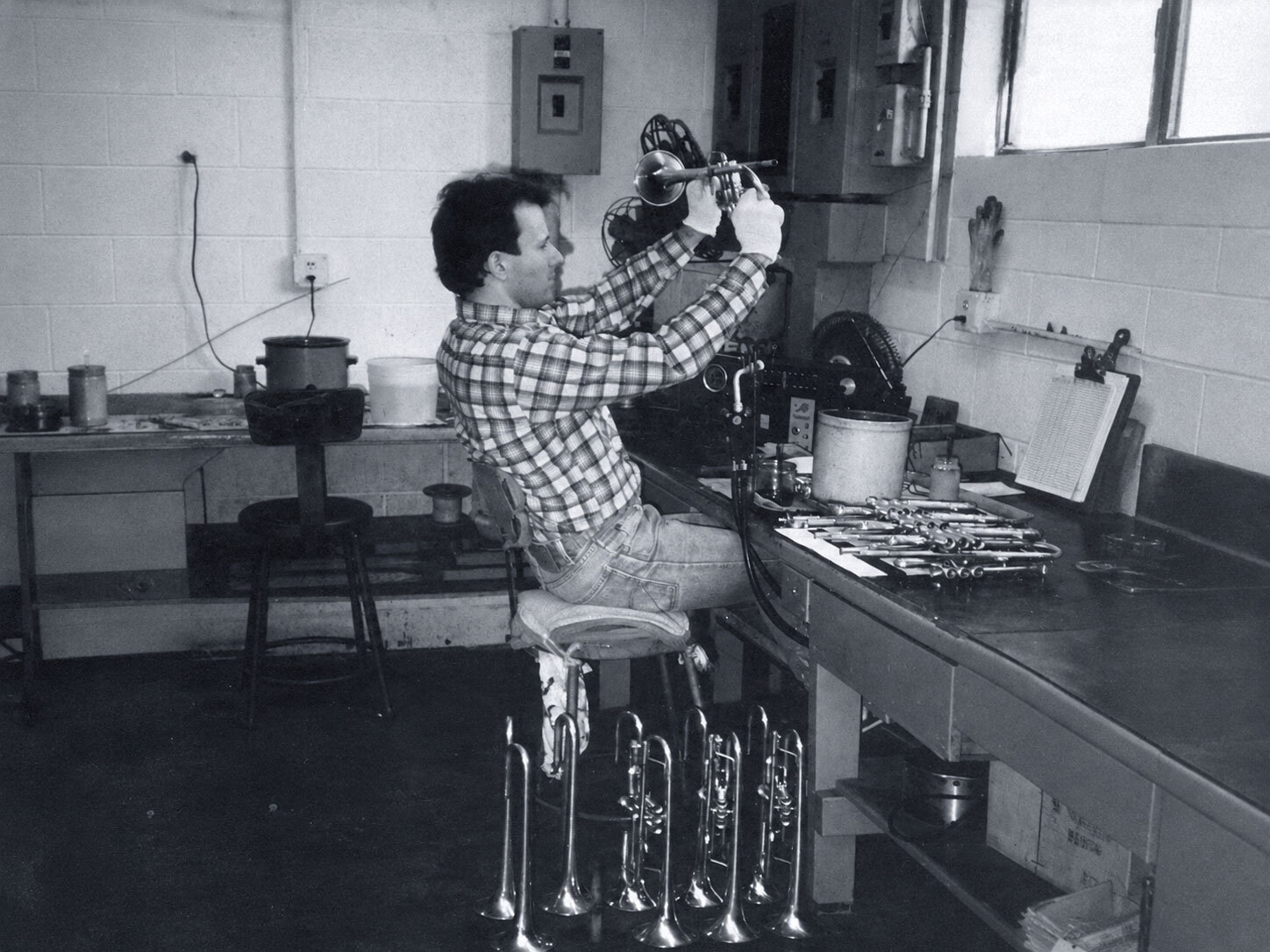
Aligning before assembly

It all started in an old three-storey building in Elkhorn, where the founder of the firm, T.J. Getzen, started repairing brass instruments in 1939. He had already had practical training at Holton, where he had finally been Plant Superintendant. After the war he started handling instruments of various origins and the workshop progressed from repair work to building its own student instruments. Trombones at first, then piston bugles too.

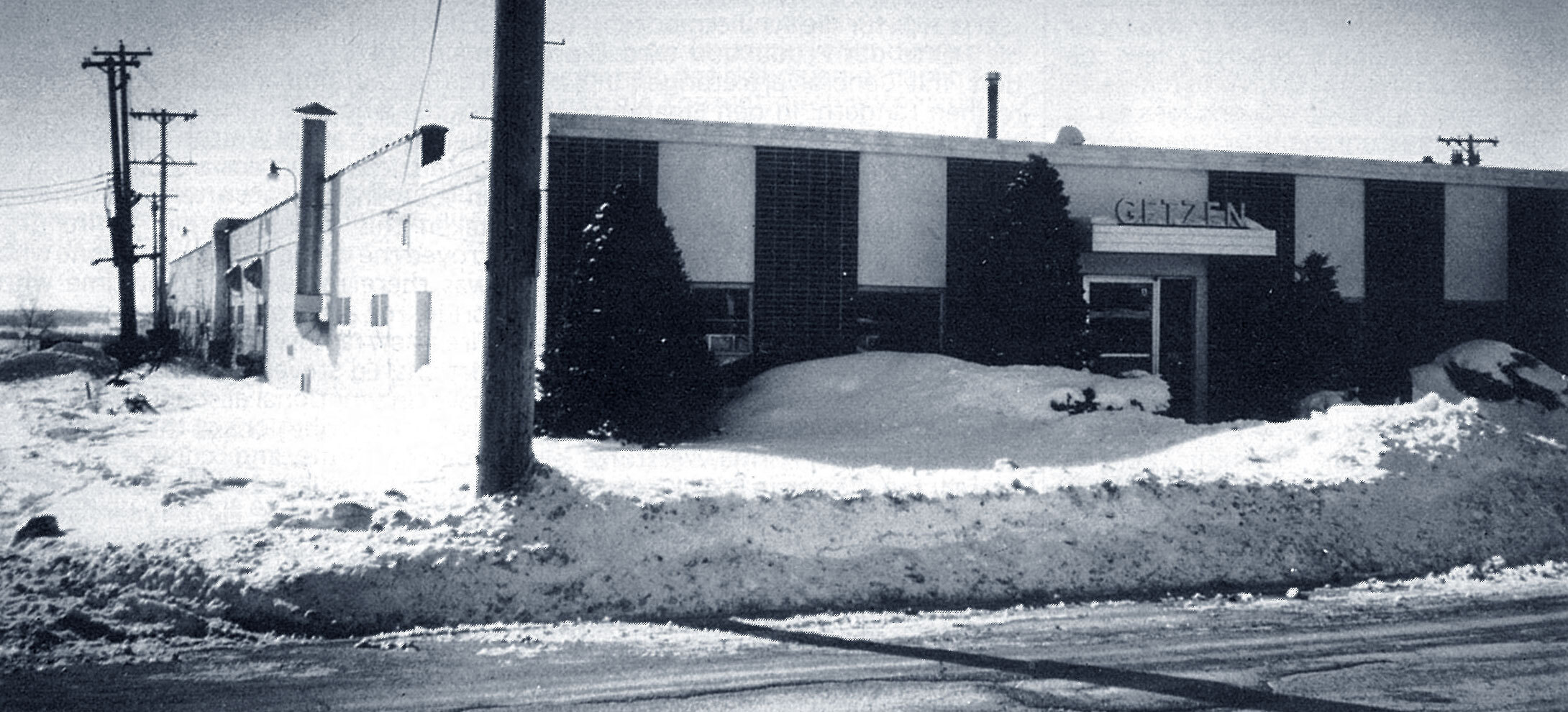
In 1960 the firm was taken over by Harold M. Knowlton, a prominent lawyer and businessman from Milwaukee. Under his leadership, and after moving to a modern factory building in Elkhorn’s industrial centre, the firm made a new start. Many of the previous models were replaced by better ones, production methods were overhauled and selling was reorganised. Today about eighty models are on offer, with the brand names Eterna for professional instruments, Capri for advanced students’ and Series 300 for school models. About half of all production is exported, with representatives in many countries. In the States seven representatives, working on commission, are on the road at all times so that, in addition to sales through dealers, contacts with schools and universities may be carefully maintained.

The Getzen Company also has the agency for the whole of North America for the well known Meinl-Weston tubas made in Geretsried (West Germany).

In 1963, three years after the firm had taken this new direction, a fire destroyed the whole factory. Everyone who was there remembers that time with pride, for a mere ninety days after the fire a new factory stood on the old foundations. Ed Stevens, the Sales Manager, gave an emotional account of the truly unique contributions of the employees, building firms and contractors who made it possible to rebuild in this incredibly short time. Eleven years later, in 1974, the factory had another fire, although this time it was put out sooner. The damage was still enormous since everything being worked on, as well as the finished instruments in the storeroom, fell victim to the heat. Once again in record time, this time in little more than a month, production was running again.

Getzen Company, Elkhorn Wisconsin

Getzen Company, Elkhorn Wisconsin

Inside the factory every department has its own room, which is certainly more pleasant for the employees than the usual large workshops. Although there is an effort to give full attention to the manufacture of every component, the valve block is the heart of the matter at Getzen. Slides and valves are lapped by hand. Bending is done only with a lead alloy which can be melted out at 95°C (203°F) i.e.: with boiling water. The plating department works with nickel, chrome and silver; the usual epoxy lacquer is used. Series are usually of fifty in production and of ten in assembly. Repair work is done only on Getzen instruments. Mouthpieces are obtained externally.

The firm pays particular attention to customer relations. The Getzen Gazette, whose 50’000 copies are distributed to students, teachers, conductors and dealers in the U.S. and abroad, appears three times a year. Many papers written by well known musicians and performers are available free of charge to those interested. These are mostly in the form of advice on handling instruments, breathing, transposition etc.

There is a kind of Brains’ Trust, led by Ed Stevens, to which numerous nationally and internationally known players, musicians and music teachers belong. From this group — and also, according to Ed Stevens, from customers and dealers — come many ideas and suggestions which lead to new developments in building the instruments. There is constant work on improvements. I was told that seven years of development had gone into the current Eterna model of the Getzen Professional trombone. Experience gained here will eventually rebound to the benefit of the student instruments. My visit coincided with the provisional conclusion of a very intensive phase of development for a whole group of instruments. I was told these included the trombone just mentioned, an Eterna C cornet, a marching mellophone, a marching baritone, a piccolo trumpet, a Capri flugelhorn and the new Eterna II professional B♭ trumpet.

The capacity of the factory has more than doubled since 1964. The present market share must be maintained at all costs, a goal which is accompanied by the motto which Harold M. Knowlton, retired President of Getzen, gave his fellow workers as a guideline: an understanding and appreciation of the performer’s requirements plus the desire and know-how to do something about them.

Getzen Company Inc.
211 W. Centralia
Elkhorn, Wisconsin 53121, USA
Phone (414) 723-4221
President: Charles E. Andrews
Vice President: David W. Ference
Interview with Ed Stevens,
Sales Manager
 

Employees: 60
Repairs: only own instruments.

Brass Bulletin 54, II / 1986 pages 75–78

All content is protected by copyright © Brass Bulletin 1986–2026

Share this article

Facebook LinkedIn
Loading…

Questions & Answers

How the Digital Edition works

What does the Digital Edition include?

The Digital Edition brings together the articles already digitized as searchable online texts—not simply as scans or PDF files—along with their original illustrations, notes, authorship, issue information, and available translations. Related-article suggestions currently include only this digitized material.

Are the digital articles identical to the originals?

We preserve the original text, language, illustrations, captions, footnotes, and editorial context as faithfully as possible. The presentation is adapted for comfortable online reading, and obvious transcription or scanning errors may be corrected. The substance and character of the published article remain unchanged.

Which languages are available?

Brass Bulletin was published in English, French, and German throughout its history. Italian and Spanish translations were added from issue No. 60 onward.

On the Italian and Spanish sites, articles from issues 1–59 are therefore shown in English by default.

How often are new articles added?

New articles are added almost daily, with approximately one complete issue digitized each week. The pace may vary depending on the preparation, image work, and editorial checking required.

Why aren’t all articles available digitally?

The complete Brass Bulletin collection contains 1,246 articles published between 1971 and 2003. The full index is already available online, allowing readers to discover every article in the collection, including those whose complete text has not yet been digitized.

Digitization began in February 2026. Each article is carefully prepared for online reading, checked, and connected to its issue, authors, subjects, and illustrations. At the current pace of digitization, the complete collection is expected to be available online by February 2028.

Why do some references mention articles that are not available yet?

References in the original articles are preserved even when the material they point to has not yet been digitized. This keeps the historical and editorial record intact. As more issues are added to the Digital Edition, an increasing number of these references will lead to articles that can be read online.

Can I suggest an article or report a transcription error?

Yes. If there is an article you would particularly like to see digitized, or if you notice a possible transcription error or missing detail, please contact us. Reader feedback helps us improve the Digital Edition and prioritize useful connections within the archive.

How can I support Brass Bulletin?

Your support helps fund the preparation, verification, and online publication of the complete collection.

Subscribe to the Digital Edition

Prefer to support us without subscribing?

Make a donation

How is the digitization progressing?

We’re gradually making the Brass Bulletin available online, article by article. You can read newly digitized articles as soon as they’re ready, even before an entire issue is complete.

Visit our Digitization Roadmap to browse recent additions and see estimated availability for upcoming issues. These estimates follow our recent pace and may change.

Search Brass Bulletin.