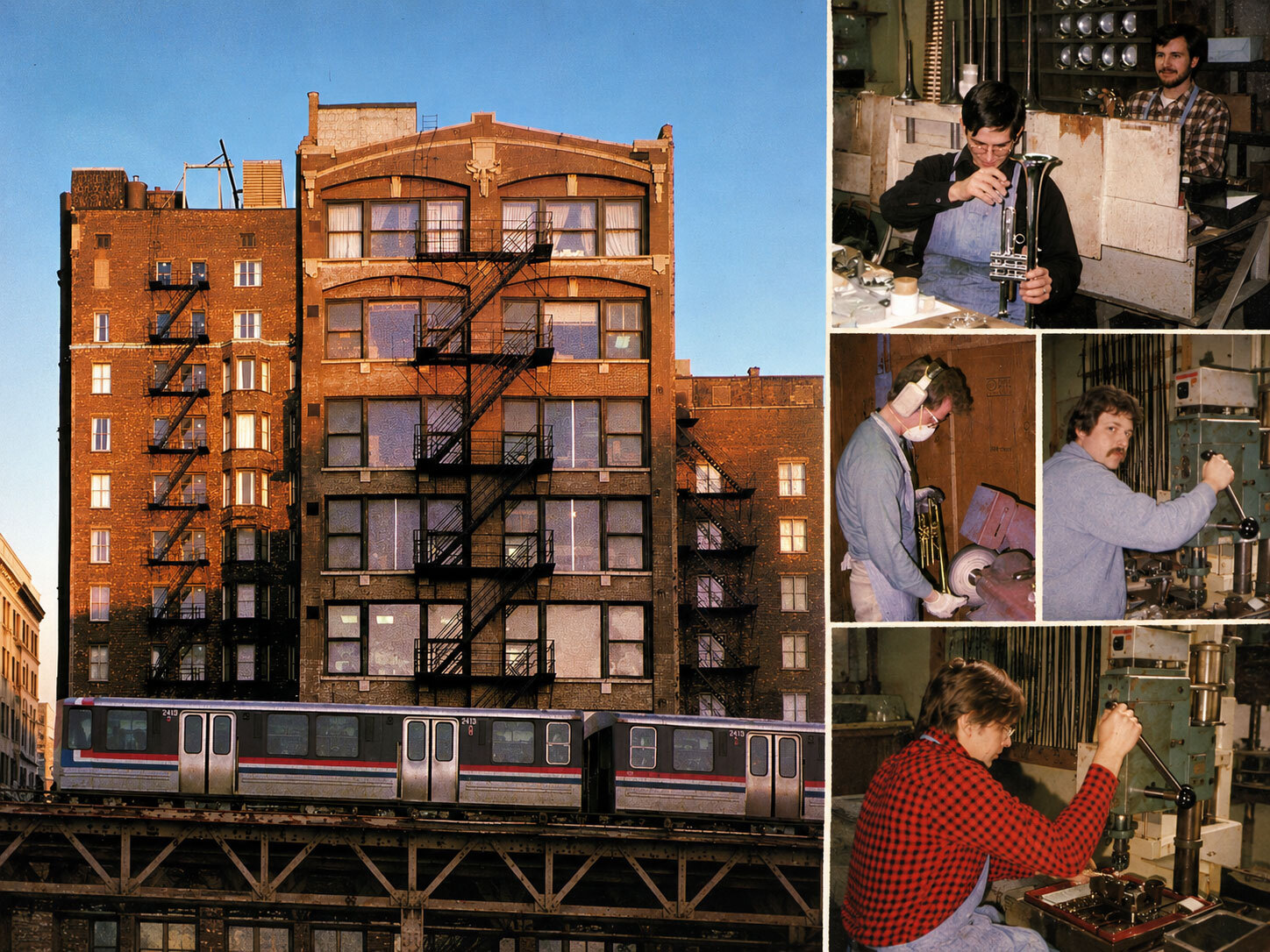
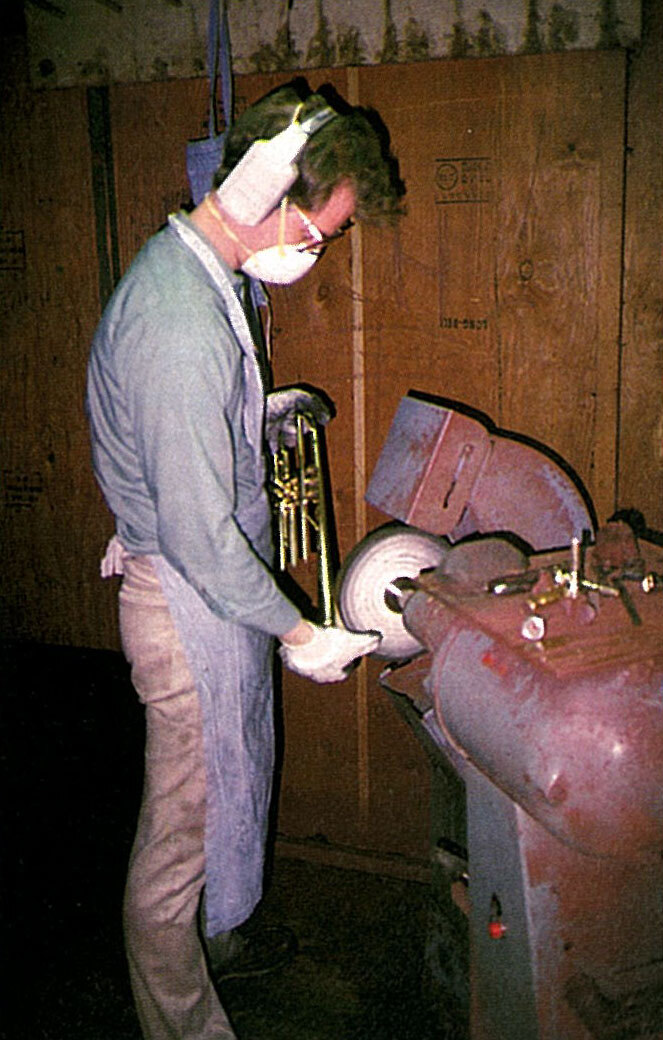
Polishing with music
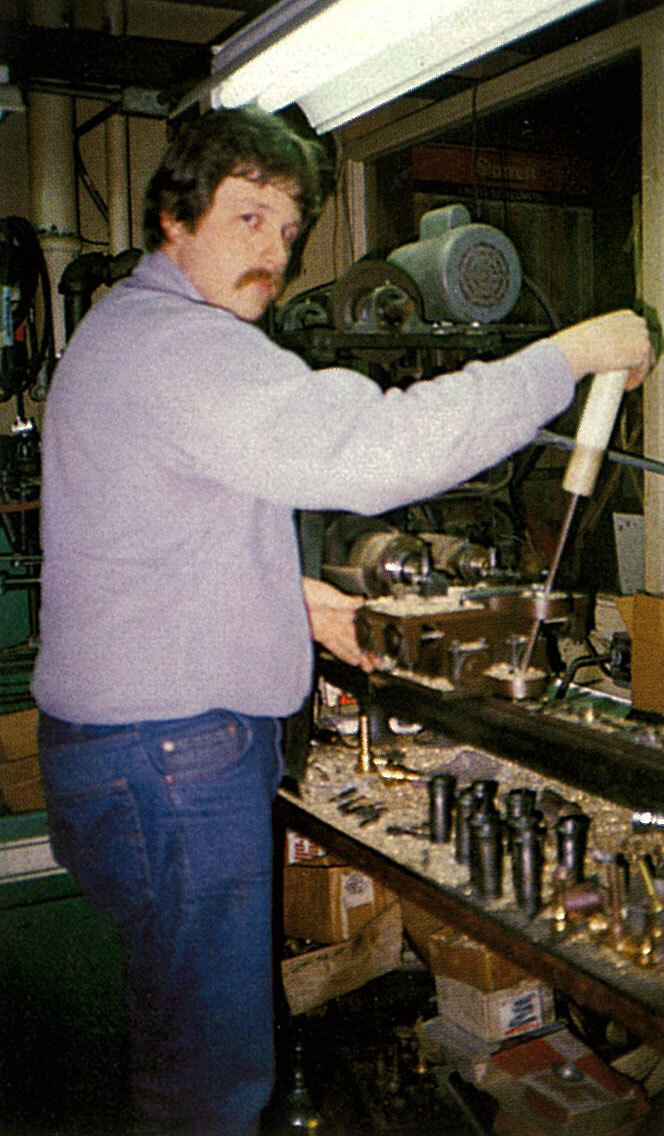
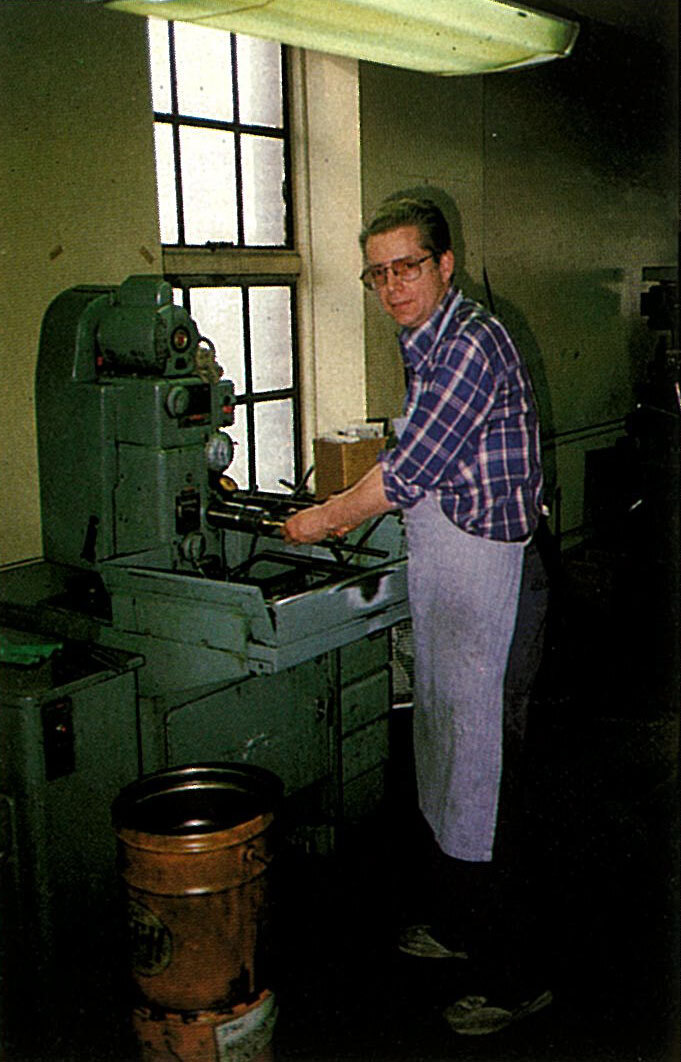
Scott Laskey and his mouthpiece-copying lathe
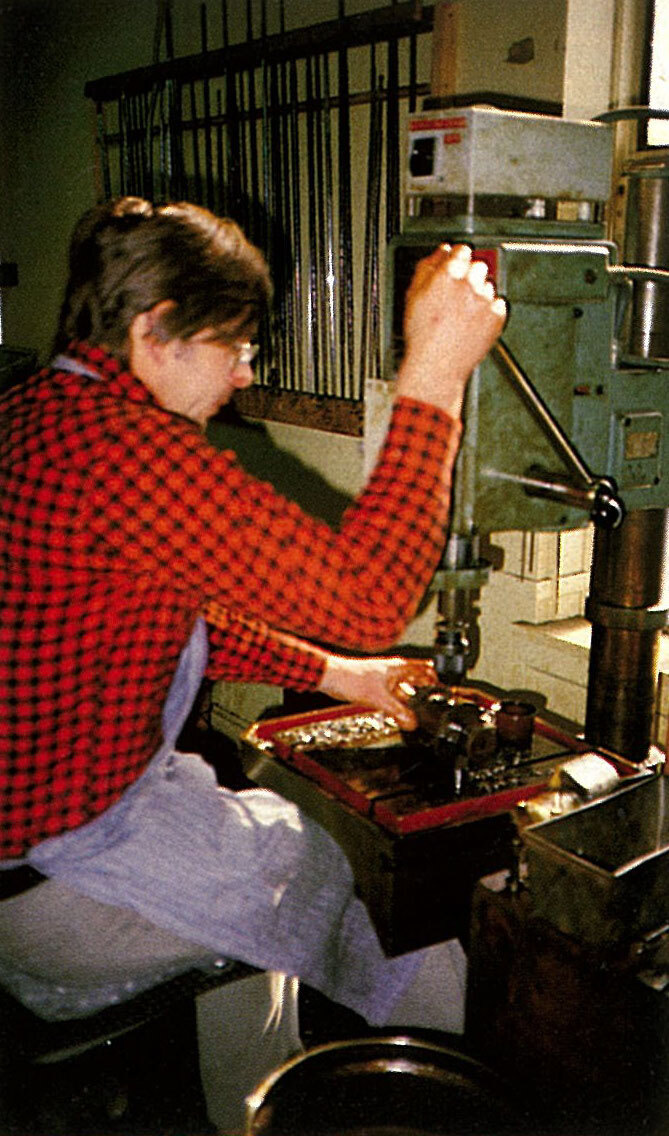
Drilling piston valves
The founder of the firm, Renold Schilke (1910-1982) started to play the cornet at the age of eight and later had very intensive brass training. From 1929 to 1961 he played in the Chicago Symphony Orchestra, as an extra, assistant 1st and 1st trumpet at various times. He got his first look at instrument making in 1921, at the age of eleven, when he joined Holton and worked there for two years. Later, from 1934 to 1952, he worked for Elden Benge and then opened his own workshop in 1956. From 1966 until his death he was also an advisor and designer for Yamaha, although retaining his independence. I had the honour of meeting him at the Frankfurt Music Fair shortly before his death. His daughter described him to me as follow:
He was a very strong, intense personality, a practical man above all else. When he could he supported people who put their back into something, even if they failed. He respected work well done. On the other hand he couldn’t understand people who were full of big ideas and plans.
His hats, which he liked, just as he liked stuffed toy animals, still hang in the office.
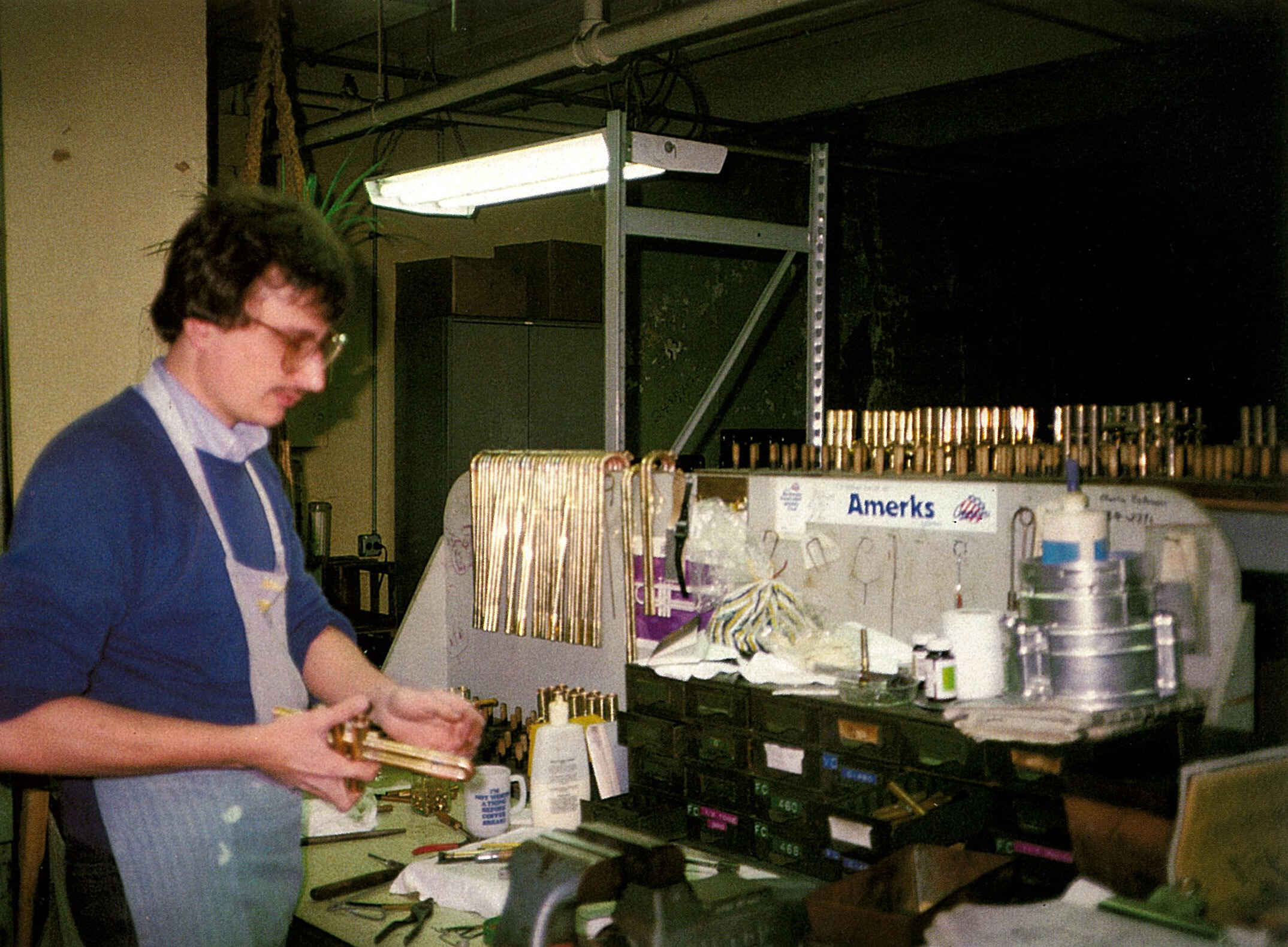
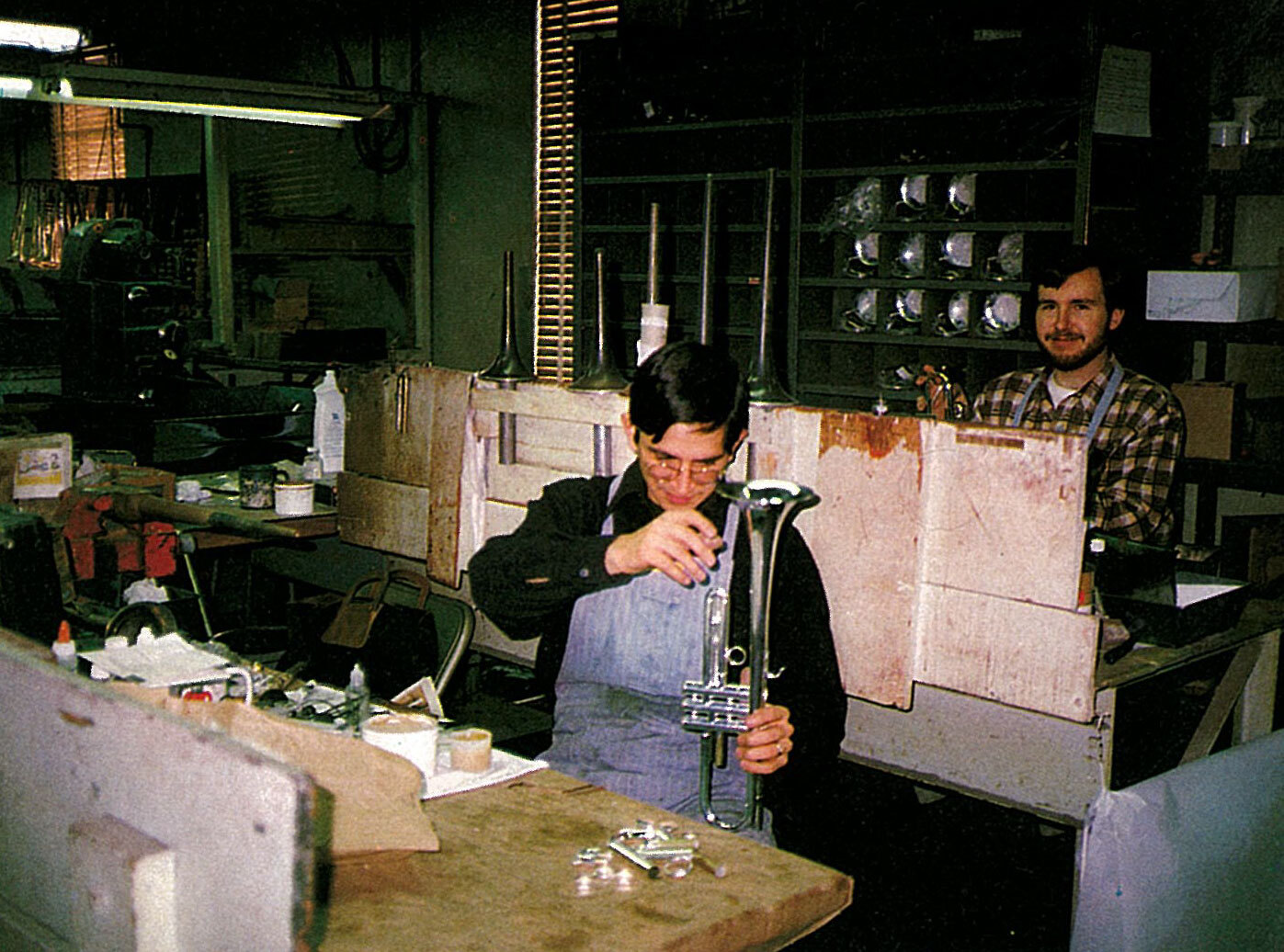
Assembly
Scott Laskey, who is now responsible for everything to do with custom mouthpieces, told me about the way — characteristic of Renold Schilke — he came to work for the firm.
In 1972, in the middle of my studies, I bought a trumpet, met the head of the firm and was lucky enough that he said he was willing to give me lessons — he was also an outstanding teacher. These could only be Saturday mornings between 5.30 and 6, before work, which was not so good for me as for my teacher. He took no money. Soon he was prophesying that I would give up my studies and work for him — which was not part of my plans at the time. Some time later, on a Saturday, I got a call summoning me to the office. To my surprise it wasn’t for a lesson, as I had expected; far from it — as I stepped out of the elevator, Mr. Schilke threw me his keys and said I was his new employee. I accepted and have not regretted it. Later I changed over to custom mouthpieces. Mr. Schilke let me work on my own and even put up with a few mistakes. As always, he was primarily interested in the result, not the method.
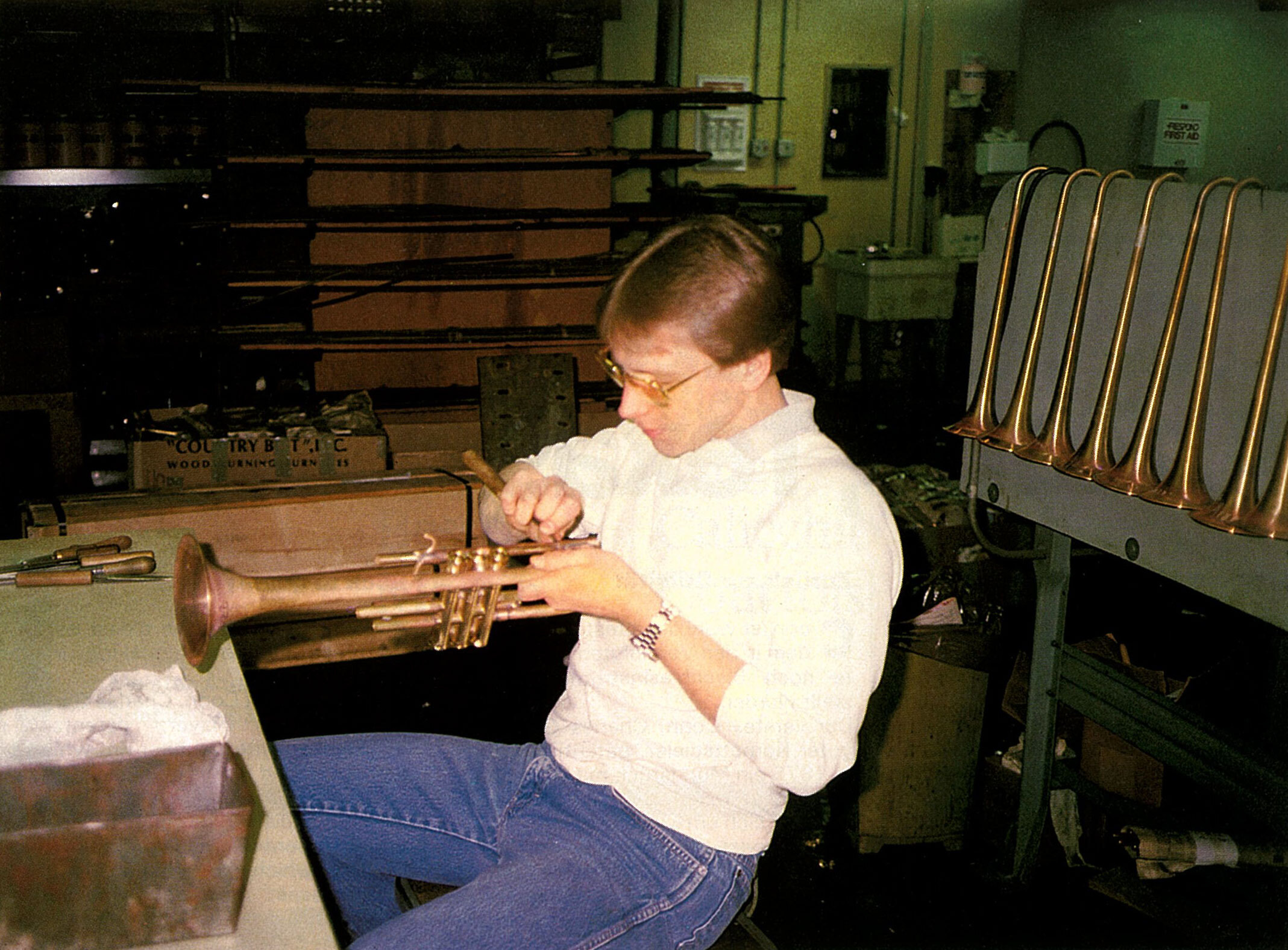
Removing solder
Kerry Griffith’s case also shows how a career can be made at Schilke. When there was an opening for a packer, he applied and got the job although it soon became clear that he was very clumsy with his hands. He could do little harm as a packer. But, as he was interested in everything, he was soon given more responsible work more suited to his abilities and today, seven years later, he is Scott Laskey’s successor as sales manager. These are exceptions, of course, and we should not forget that Kerry Griffith completed his studies as a trombonist.
Workers usually come to the firm with no previous training. They are put to work wherever a place is free and, if that is no good, attempts are made to find something more suitable. Once a job is found, it is rarely changed.
When the workers went home at five o’clock, many of them had instrument cases with them. The founder’s example of playing instruments as well as making them has remained alive!
Schilke Music Products Inc.
529 South Wabash Avenue, Chicago, Illinois 60605
Interviews with: Joan Schilke, Executive Vice President; Kerry Griffith, Sales Manager; Scott Laskey, Custom Mouthpieces.
Employees: 30
Annual production:
1200-1500 instruments
Repairs: All makes of trumpet