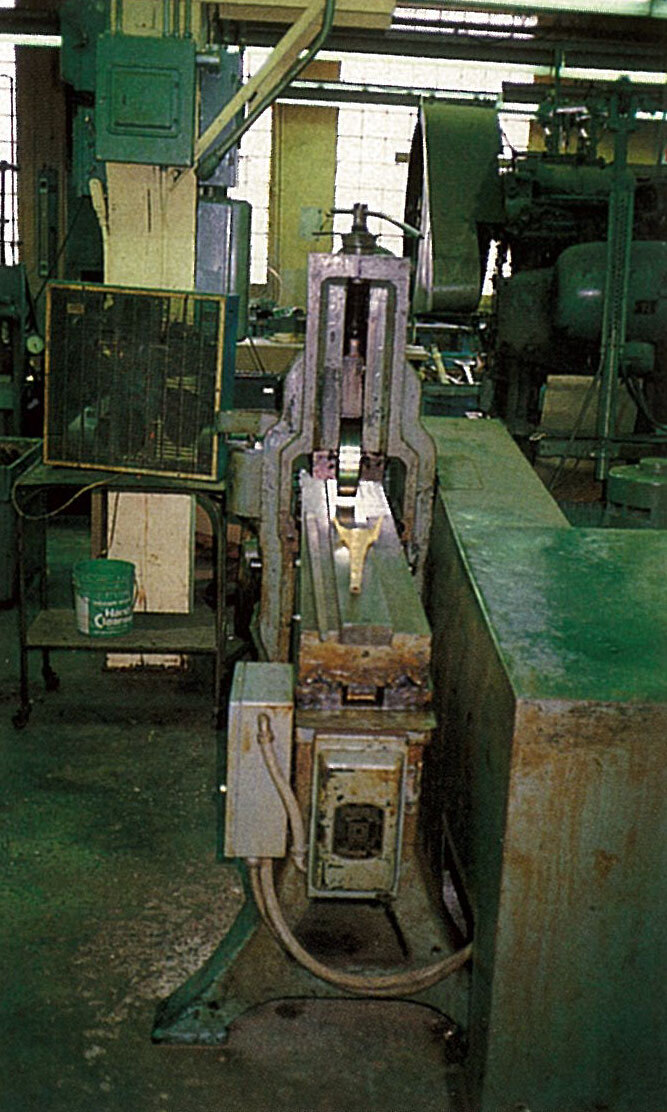
Solder-removing machine
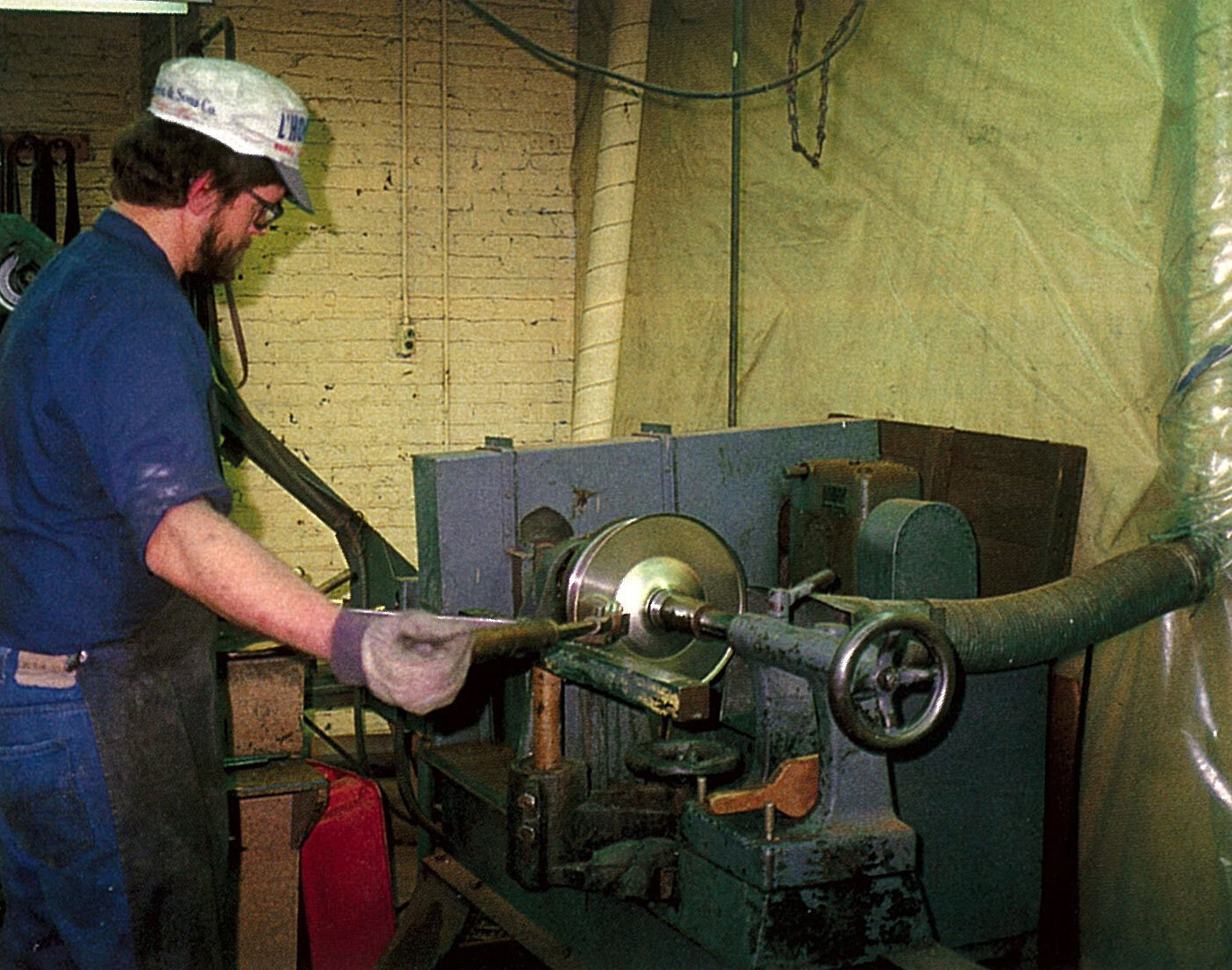
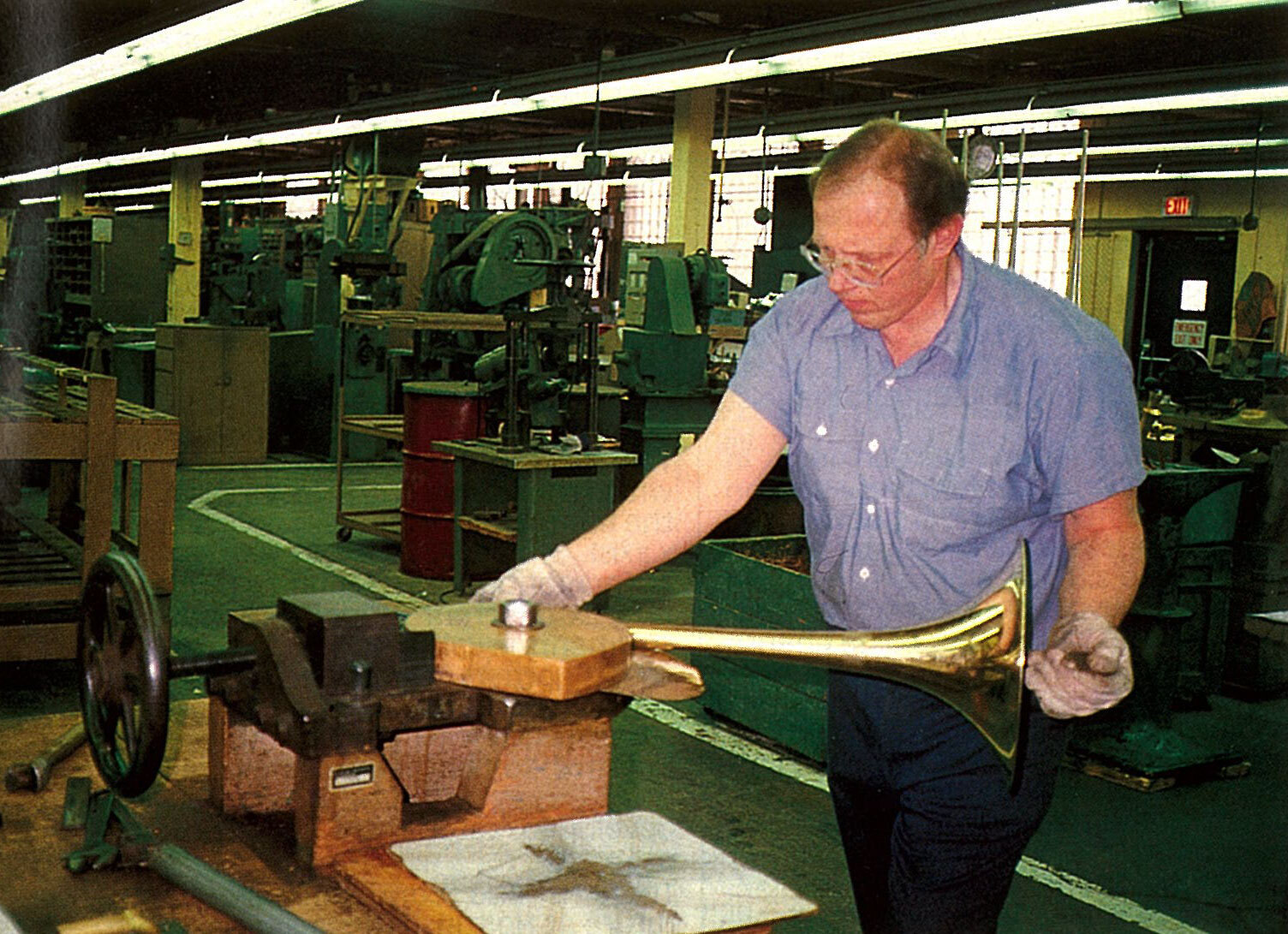
Pressing a horn bell
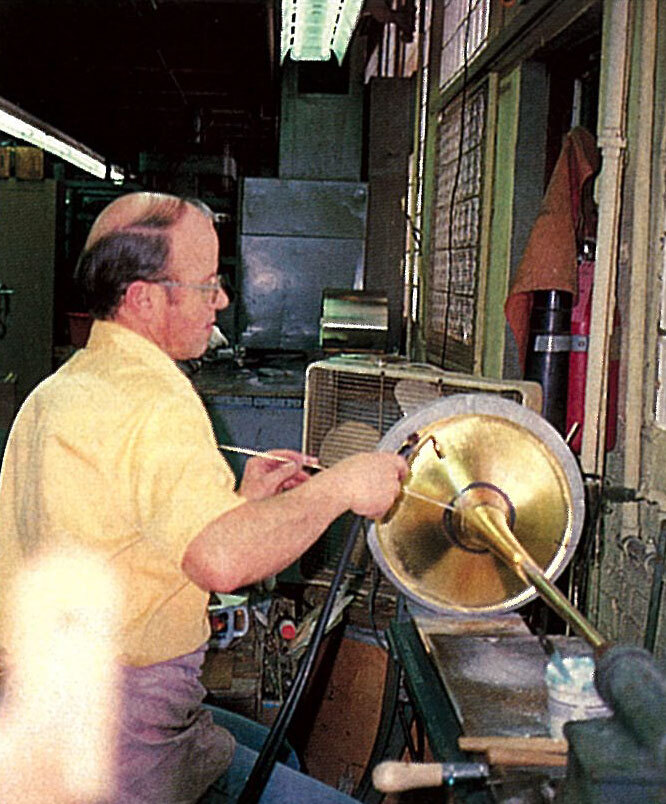
Cross-seam welding a horn bell
Individual employees are generally entrusted only with a small, easily learnable stage of production. The long-serving workforce is valued, however, and the firm was proud to introduce Mrs. Dorothy Rohda, a faithful employee of 57 years’ standing.
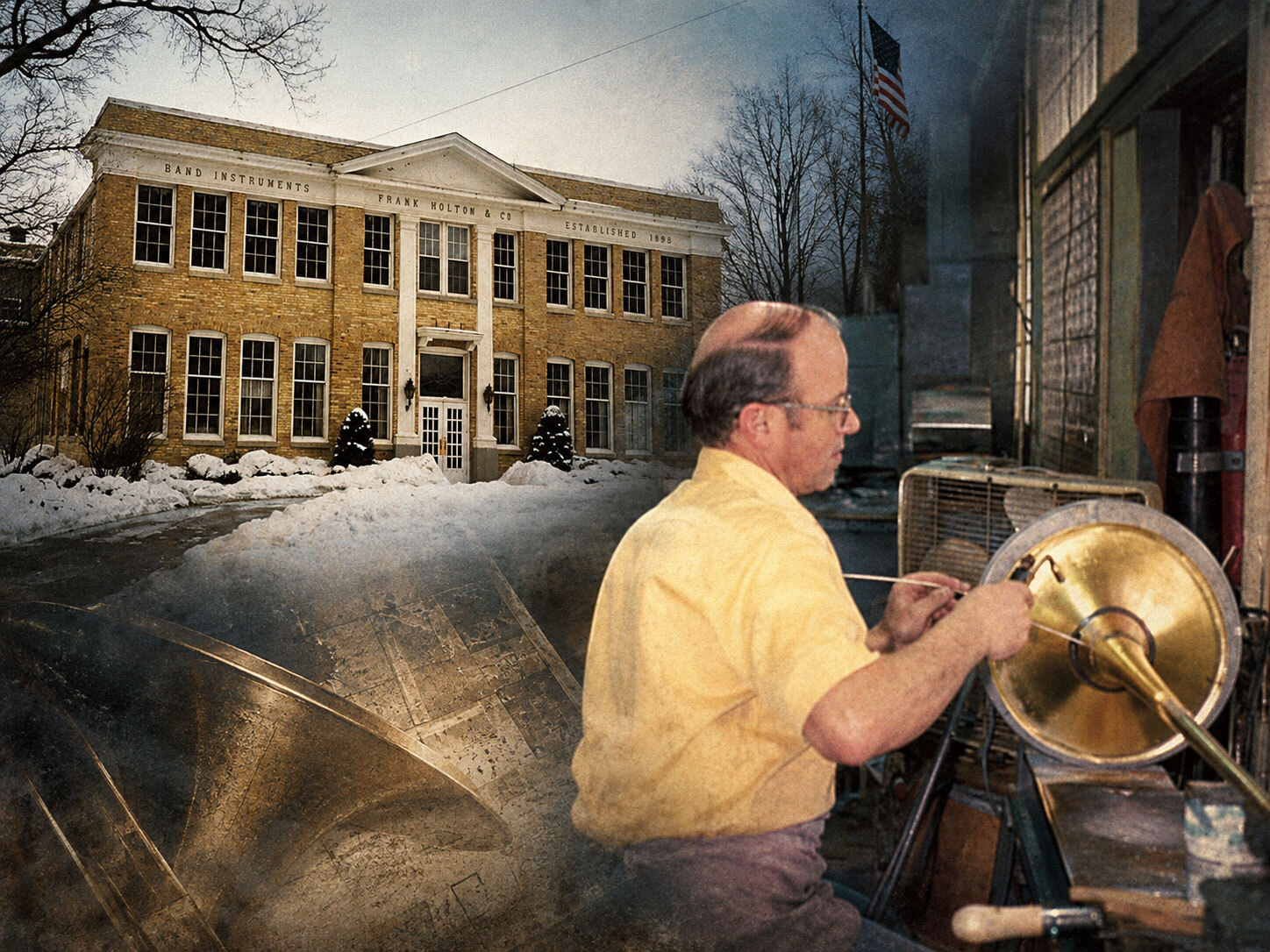
At Holton I saw no special production processes essentially different from those of other makers. Most bells are made in two parts; bending is done conventionally with pitch. I was particularly fascinated by the speed and dexterity with which the horn bells were bent and adjusted: the straight bell is fastened to a template disc and skilfully turned. The trombone slides are lapped by machine in groups of three. Burrs are removed from pressed parts in a vibration bath, as is normal. Holton’s plating department is very well developed, handling chrome, nickel, silver and gold plating. I was also interested to hear the views on surface finishes. My guide, Larry Ramirez, said
The tone quality is undoubtedly better if no finish is applied to the instrument. On the other hand then the metal is unprotected. Any plating affects the strenght of the material, however little, but not many people have a sharp enough ear to pick up the difference.
Bending the bell section of a horn
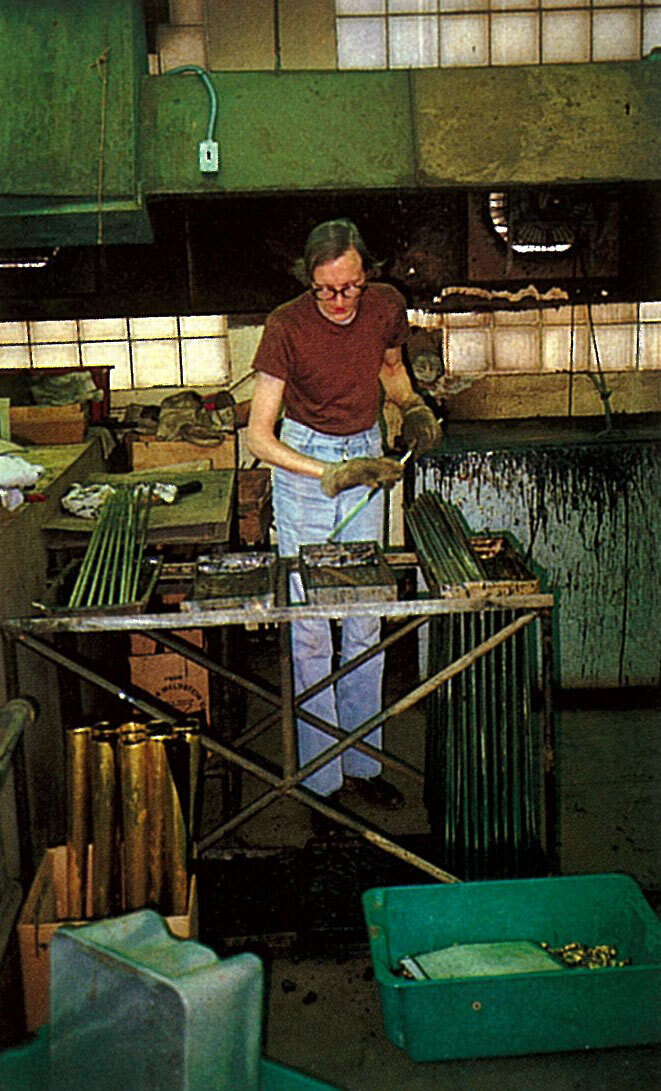
Cleaning tubing filled with pitch
At Holton great stress is laid on the degree of annealing.
It all depends on the tone colour you want; that determines how long and at what temperature a bell is annealed. A trumpet bell, which needs a brilliant sound, is obviously left hard; it’s quite different with a bass trombone, where your aim is to produce a soft, dark sound. But you mustn’t overstep the limit otherwise the material will lose all its carrying power and the note will just fall on the floor in front of you!
The student instruments are substantially simpler in design than the top-quality ones. In the trumpets, for example, the valves have only one guide, top and bottom valve caps are identical and there is no wire reinforcement in the bell rim. The shaping of the steel mandrels on which the tubing is drawn is also kept to the basic minimum (fewer points on the x axis).
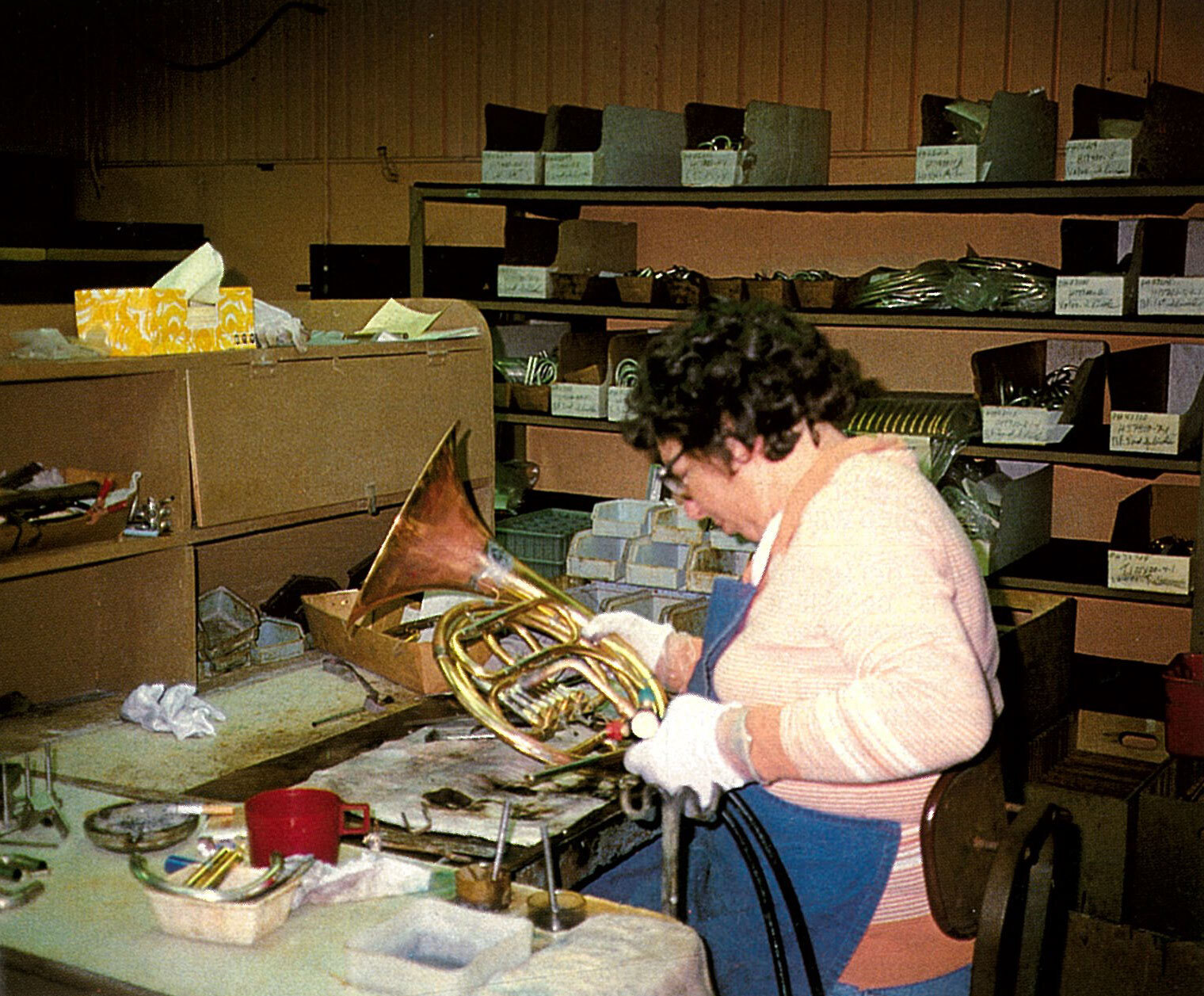
Assembling a horn
As for mouthpieces, for horns Holton offers six different models; for other instruments usually just one.
Special orders are only accepted in exceptional circumstances, in the case of an especially well known musician, for instance. Sometimes, as for example for Philip Farkas, an individual model will be developed. Later this may become the prototype for a whole series.
There is also confidence about the future at Holton. "Above all", says Larry Ramirez, "we want to experiment more with trombones. There’s plenty of room for improvement all round but we are always coming up against the fact that very many musicians — and brass players in particular — are extremely conservative! It’s hard to get new ideas across. But we will get them across!"
G. Leblanc Corporation
President: Vito Pascucci
Executive Vice President: Leon Pascucci
Vice President Marketing: Bill Price
Interviews with: Stan Surber, VP International Sales (Leblanc)
Larry Ramirez, Design Engineer (Holton)
Angelo Battelini, General Manager (Martin)
Employees, Holton, Martin and Vito Woodwind: 350
Repairs: only on own instruments
The G. Leblanc corporation distributes the following brands: Leblanc (Paris), Holton, Martin, Yanagisawa, Noblet/Normandy, Courtois, Vito, Vandoren, and woodwind brands.
Contact address (for Holton and Martin):
Stan Surber, VP International Sales, G. Leblanc Corporation, 7019 Thirtieth Avenue, Kenosha, Wisconsin 53141, USA.