Rendete Brass Bulletin disponibile nella vostra università, nel vostro conservatorio o nella vostra biblioteca Scoprite l’accesso istituzionale

3 min di lettura

Parte 8

Instrument Makers in USA

Getzen

Instrument Makers in USA

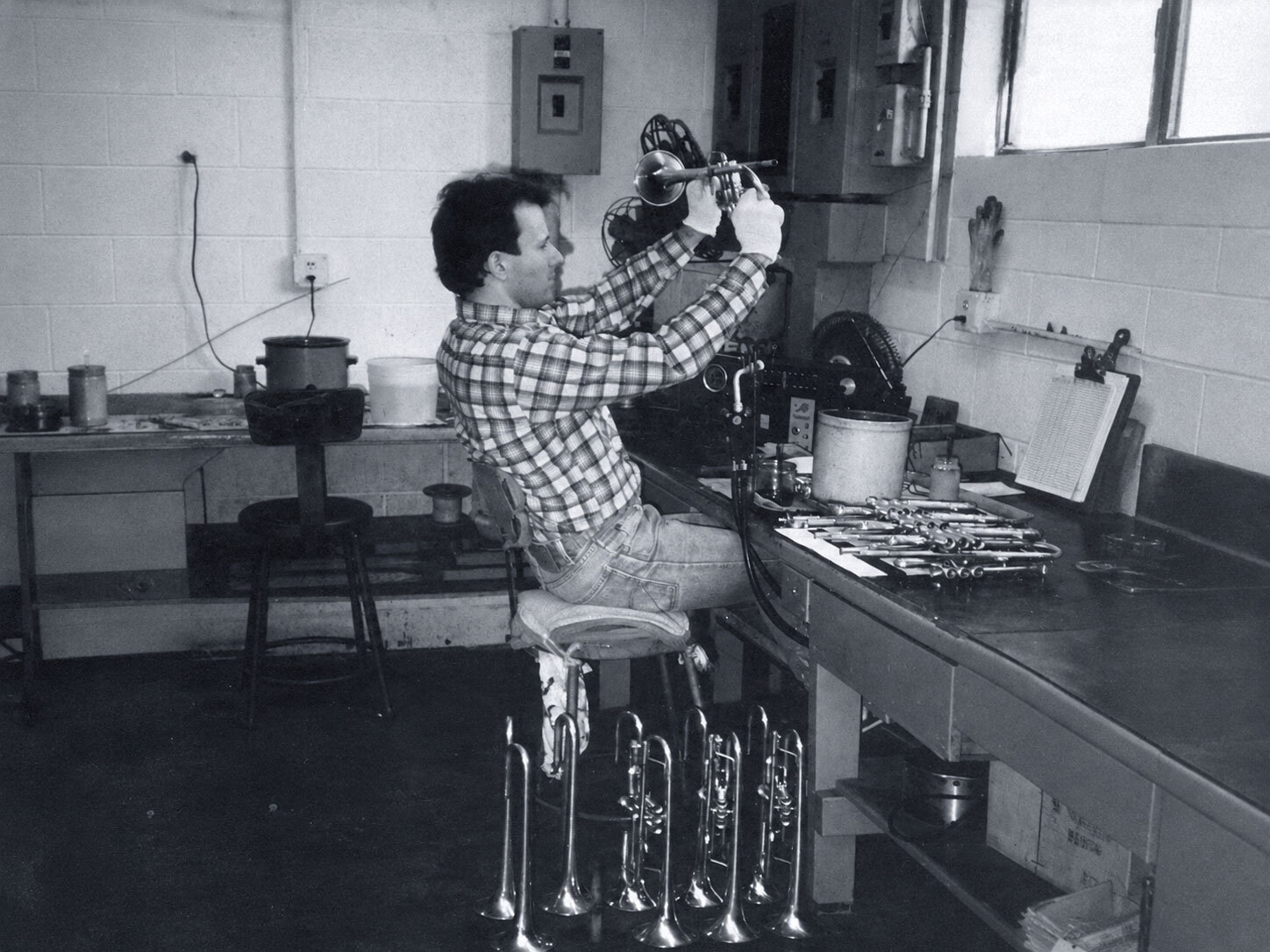
Aligning before assembly

It all started in an old three-storey building in Elkhorn, where the founder of the firm, T.J. Getzen, started repairing brass instruments in 1939. He had already had practical training at Holton, where he had finally been Plant Superintendant. After the war he started handling instruments of various origins and the workshop progressed from repair work to building its own student instruments. Trombones at first, then piston bugles too.

In 1960 the firm was taken over by Harold M. Knowlton, a prominent lawyer and businessman from Milwaukee. Under his leadership, and after moving to a modern factory building in Elkhorn’s industrial centre, the firm made a new start. Many of the previous models were replaced by better ones, production methods were overhauled and selling was reorganised. Today about eighty models are on offer, with the brand names Eterna for professional instruments, Capri for advanced students’ and Series 300 for school models. About half of all production is exported, with representatives in many countries. In the States seven representatives, working on commission, are on the road at all times so that, in addition to sales through dealers, contacts with schools and universities may be carefully maintained.

The Getzen Company also has the agency for the whole of North America for the well known Meinl-Weston tubas made in Geretsried (West Germany).

In 1963, three years after the firm had taken this new direction, a fire destroyed the whole factory. Everyone who was there remembers that time with pride, for a mere ninety days after the fire a new factory stood on the old foundations. Ed Stevens, the Sales Manager, gave an emotional account of the truly unique contributions of the employees, building firms and contractors who made it possible to rebuild in this incredibly short time. Eleven years later, in 1974, the factory had another fire, although this time it was put out sooner. The damage was still enormous since everything being worked on, as well as the finished instruments in the storeroom, fell victim to the heat. Once again in record time, this time in little more than a month, production was running again.

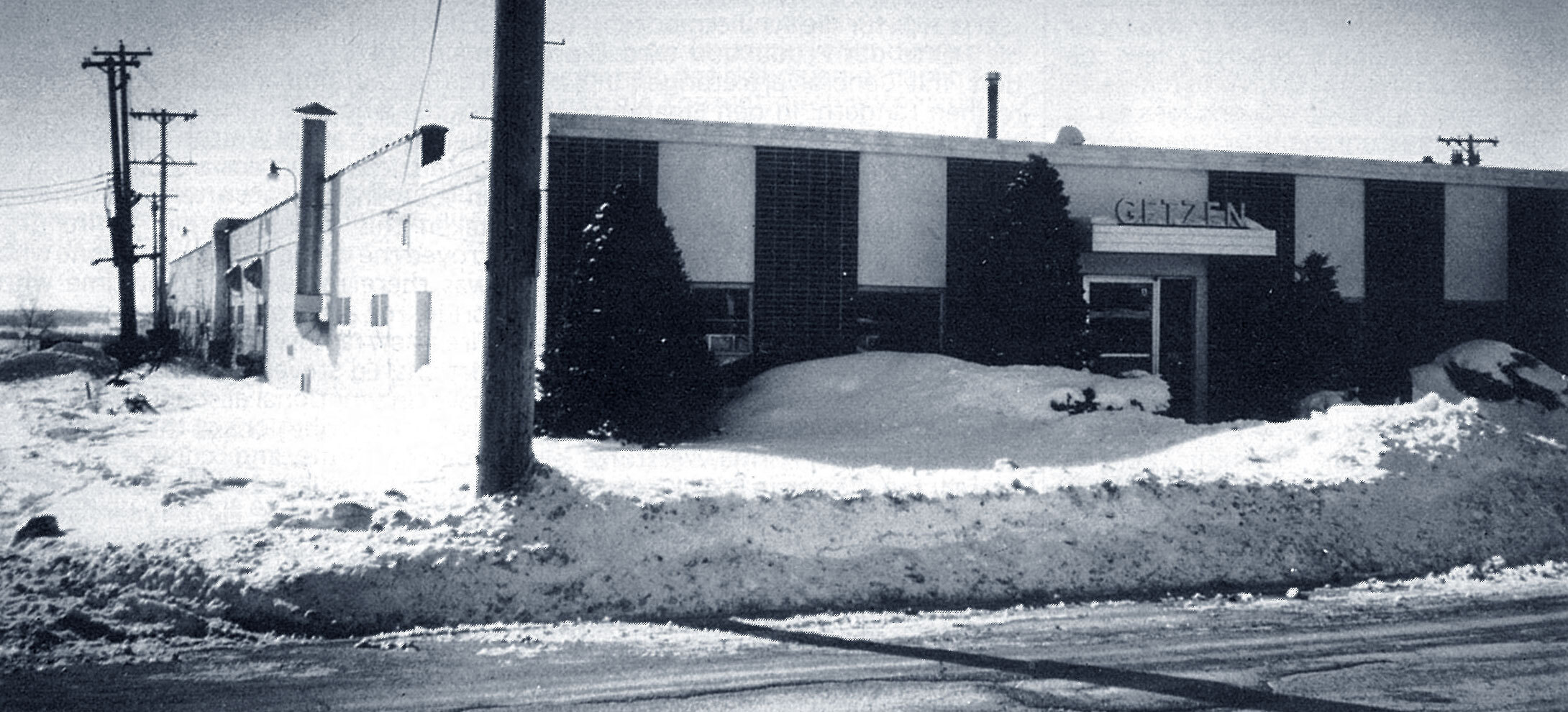
Getzen Company, Elkhorn Wisconsin

Getzen Company, Elkhorn Wisconsin

Inside the factory every department has its own room, which is certainly more pleasant for the employees than the usual large workshops. Although there is an effort to give full attention to the manufacture of every component, the valve block is the heart of the matter at Getzen. Slides and valves are lapped by hand. Bending is done only with a lead alloy which can be melted out at 95°C (203°F) i.e.: with boiling water. The plating department works with nickel, chrome and silver; the usual epoxy lacquer is used. Series are usually of fifty in production and of ten in assembly. Repair work is done only on Getzen instruments. Mouthpieces are obtained externally.

The firm pays particular attention to customer relations. The Getzen Gazette, whose 50’000 copies are distributed to students, teachers, conductors and dealers in the U.S. and abroad, appears three times a year. Many papers written by well known musicians and performers are available free of charge to those interested. These are mostly in the form of advice on handling instruments, breathing, transposition etc.

There is a kind of Brains’ Trust, led by Ed Stevens, to which numerous nationally and internationally known players, musicians and music teachers belong. From this group — and also, according to Ed Stevens, from customers and dealers — come many ideas and suggestions which lead to new developments in building the instruments. There is constant work on improvements. I was told that seven years of development had gone into the current Eterna model of the Getzen Professional trombone. Experience gained here will eventually rebound to the benefit of the student instruments. My visit coincided with the provisional conclusion of a very intensive phase of development for a whole group of instruments. I was told these included the trombone just mentioned, an Eterna C cornet, a marching mellophone, a marching baritone, a piccolo trumpet, a Capri flugelhorn and the new Eterna II professional B♭ trumpet.

The capacity of the factory has more than doubled since 1964. The present market share must be maintained at all costs, a goal which is accompanied by the motto which Harold M. Knowlton, retired President of Getzen, gave his fellow workers as a guideline: an understanding and appreciation of the performer’s requirements plus the desire and know-how to do something about them.

Getzen Company Inc.
211 W. Centralia
Elkhorn, Wisconsin 53121, USA
Phone (414) 723-4221
President: Charles E. Andrews
Vice President: David W. Ference
Interview with Ed Stevens,
Sales Manager
 

Employees: 60
Repairs: only own instruments.

Brass Bulletin 54, II / 1986 pagine 75–78

Tutti i contenuti sono protetti dal diritto d’autore © Brass Bulletin 1986–2026

Condividi questo articolo

Facebook LinkedIn
Loading…

Domande e risposte

Come funziona l’edizione digitale

Che cosa comprende l’edizione digitale?

L’edizione digitale riunisce gli articoli già digitalizzati sotto forma di testi leggibili e ricercabili online — non semplicemente come scansioni o file PDF — insieme alle illustrazioni originali, alle note, agli autori, alle informazioni sul numero della rivista e alle traduzioni disponibili. I suggerimenti di articoli correlati comprendono attualmente solo questo materiale digitalizzato.

Gli articoli digitali sono identici agli originali?

Conserviamo il più fedelmente possibile il testo originale, la lingua, le illustrazioni, le didascalie, le note e il contesto editoriale. La presentazione viene adattata per una lettura confortevole online e gli evidenti errori di trascrizione o scansione possono essere corretti. Il contenuto e il carattere dell’articolo pubblicato rimangono invariati.

Quali lingue sono disponibili?

Brass Bulletin è stato pubblicato in inglese, francese e tedesco nel corso di tutta la sua storia. Le traduzioni italiane e spagnole sono state aggiunte a partire dal numero 60. Sui siti italiano e spagnolo, gli articoli dei numeri da 1 a 59 vengono quindi mostrati in inglese per impostazione predefinita.

Con quale frequenza vengono aggiunti nuovi articoli?

Nuovi articoli vengono aggiunti quasi ogni giorno, con circa un numero completo digitalizzato ogni settimana. Il ritmo può variare in base al lavoro di preparazione, elaborazione delle immagini e verifica editoriale necessario.

Perché non tutti gli articoli sono disponibili in formato digitale?

La collezione completa di Brass Bulletin comprende 1.246 articoli pubblicati tra il 1971 e il 2003. L’indice completo è già disponibile online e consente di scoprire tutti gli articoli della collezione, compresi quelli il cui testo integrale non è ancora stato digitalizzato.

La digitalizzazione è iniziata nel febbraio 2026. Ogni articolo viene accuratamente preparato per la lettura online, verificato e collegato al relativo numero, agli autori, agli argomenti e alle illustrazioni. Al ritmo attuale di digitalizzazione, la collezione completa dovrebbe essere disponibile online entro febbraio 2028.

Perché alcuni riferimenti citano articoli che non sono ancora disponibili?

I riferimenti presenti negli articoli originali vengono conservati anche quando il materiale a cui rimandano non è ancora stato digitalizzato. In questo modo si preserva l’integrità storica ed editoriale della rivista. Man mano che nuovi numeri vengono aggiunti all’edizione digitale, un numero crescente di questi riferimenti condurrà ad articoli leggibili online.

Posso suggerire un articolo o segnalare un errore di trascrizione?

Sì. Se desiderate che un determinato articolo venga digitalizzato, oppure se notate un possibile errore di trascrizione o un’informazione mancante, contattateci. I riscontri dei lettori ci aiutano a migliorare l’edizione digitale e a stabilire priorità utili all’interno dell’archivio.

Come posso sostenere Brass Bulletin?

Il vostro sostegno contribuisce a finanziare la preparazione, la verifica e la pubblicazione online dell’intera collezione.

Abbonati all’Edizione digitale

Preferite sostenerci senza abbonarvi?

Fate una donazione

Come procede la digitalizzazione?

Stiamo rendendo Brass Bulletin disponibile online gradualmente, articolo per articolo. Potete leggere gli articoli appena digitalizzati non appena sono pronti, anche prima che un intero numero sia completato.

Consultate il nostro calendario di digitalizzazione per scoprire le ultime aggiunte e le date di disponibilità stimate dei prossimi numeri. Le stime si basano sul nostro ritmo recente e possono cambiare.

Cerca in Brass Bulletin.