Ofrezca Brass Bulletin en su universidad, conservatorio o biblioteca Descubra el acceso institucional

3 min de lectura

Parte 8

Instrument Makers in USA

Getzen

Instrument Makers in USA

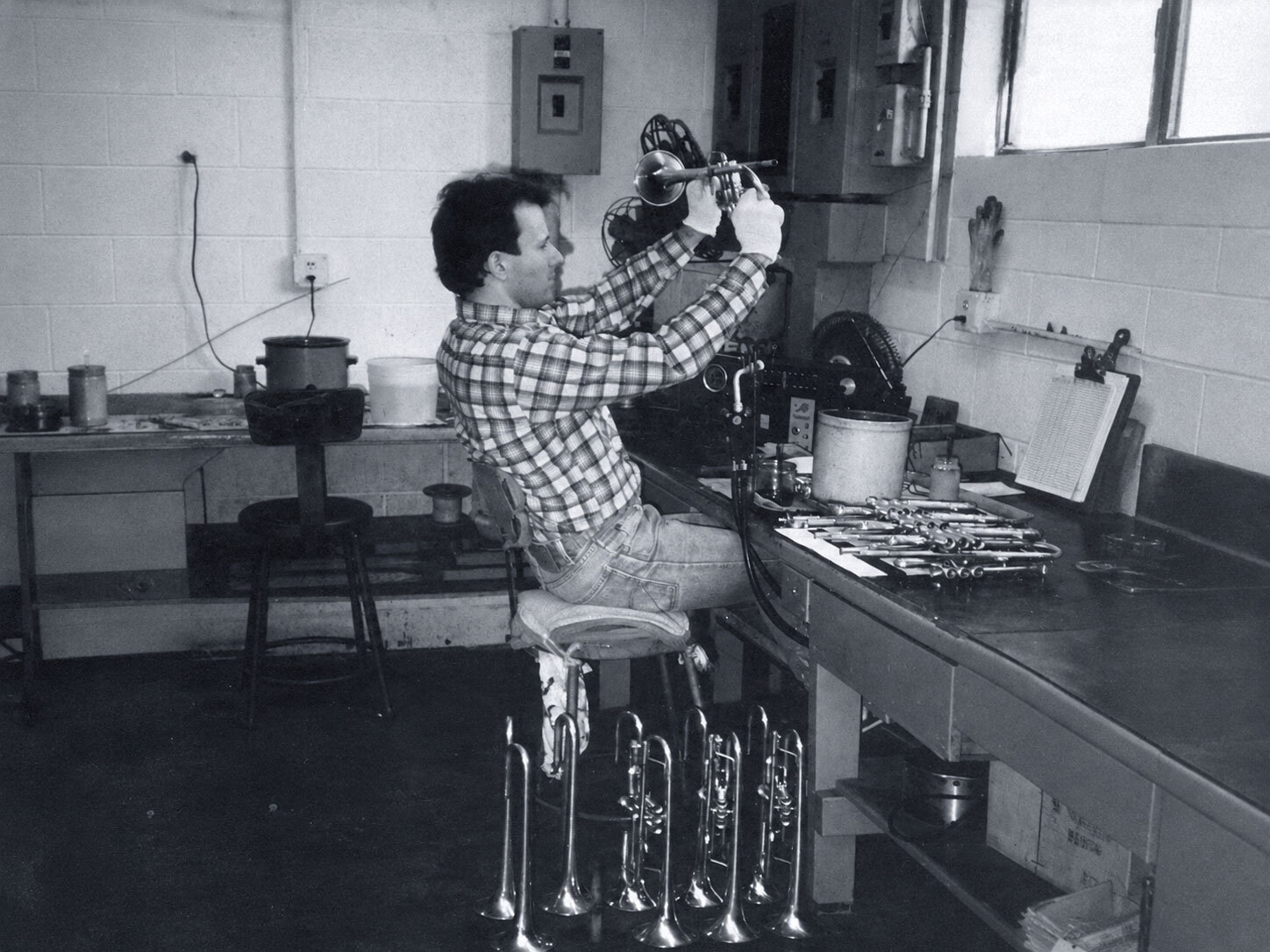
Aligning before assembly

It all started in an old three-storey building in Elkhorn, where the founder of the firm, T.J. Getzen, started repairing brass instruments in 1939. He had already had practical training at Holton, where he had finally been Plant Superintendant. After the war he started handling instruments of various origins and the workshop progressed from repair work to building its own student instruments. Trombones at first, then piston bugles too.

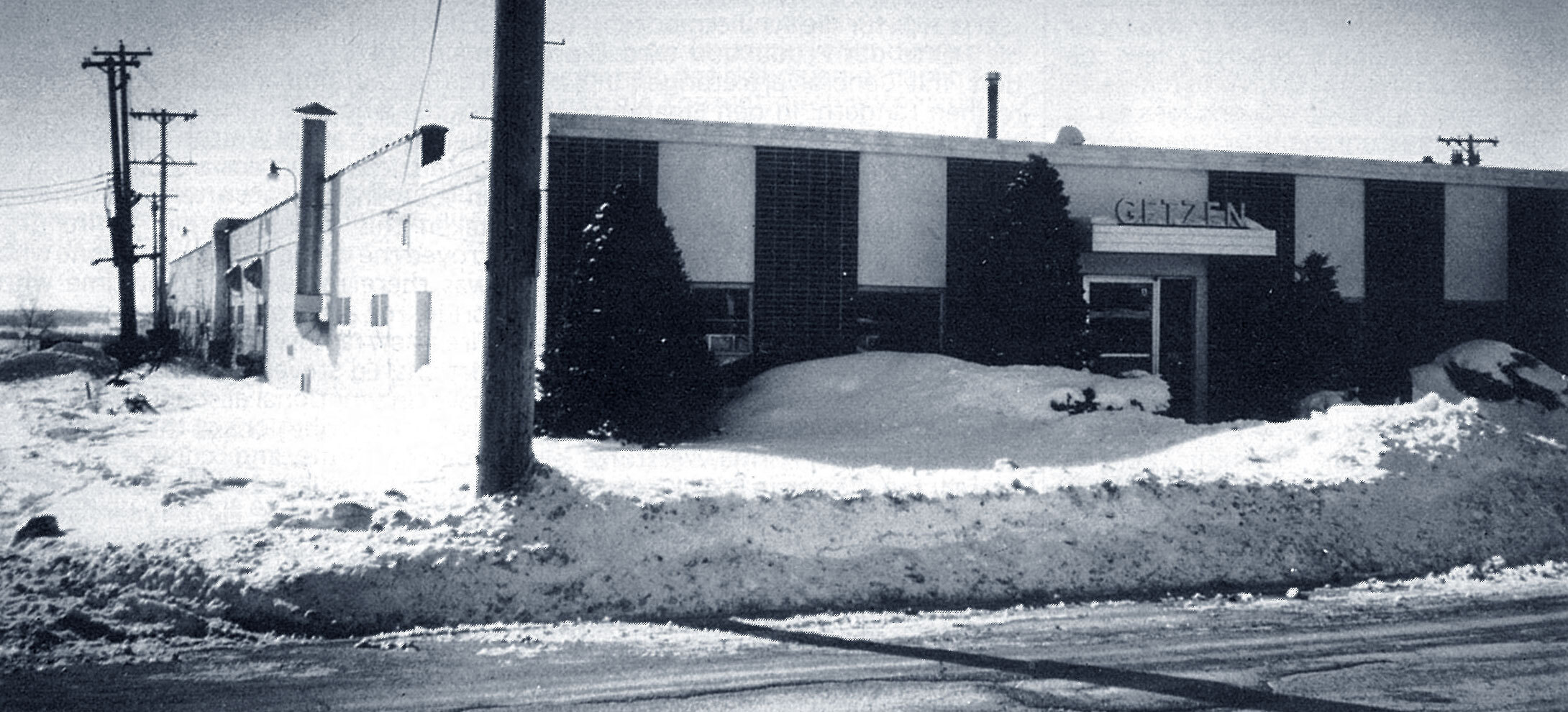
In 1960 the firm was taken over by Harold M. Knowlton, a prominent lawyer and businessman from Milwaukee. Under his leadership, and after moving to a modern factory building in Elkhorn’s industrial centre, the firm made a new start. Many of the previous models were replaced by better ones, production methods were overhauled and selling was reorganised. Today about eighty models are on offer, with the brand names Eterna for professional instruments, Capri for advanced students’ and Series 300 for school models. About half of all production is exported, with representatives in many countries. In the States seven representatives, working on commission, are on the road at all times so that, in addition to sales through dealers, contacts with schools and universities may be carefully maintained.

The Getzen Company also has the agency for the whole of North America for the well known Meinl-Weston tubas made in Geretsried (West Germany).

In 1963, three years after the firm had taken this new direction, a fire destroyed the whole factory. Everyone who was there remembers that time with pride, for a mere ninety days after the fire a new factory stood on the old foundations. Ed Stevens, the Sales Manager, gave an emotional account of the truly unique contributions of the employees, building firms and contractors who made it possible to rebuild in this incredibly short time. Eleven years later, in 1974, the factory had another fire, although this time it was put out sooner. The damage was still enormous since everything being worked on, as well as the finished instruments in the storeroom, fell victim to the heat. Once again in record time, this time in little more than a month, production was running again.

Getzen Company, Elkhorn Wisconsin

Getzen Company, Elkhorn Wisconsin

Inside the factory every department has its own room, which is certainly more pleasant for the employees than the usual large workshops. Although there is an effort to give full attention to the manufacture of every component, the valve block is the heart of the matter at Getzen. Slides and valves are lapped by hand. Bending is done only with a lead alloy which can be melted out at 95°C (203°F) i.e.: with boiling water. The plating department works with nickel, chrome and silver; the usual epoxy lacquer is used. Series are usually of fifty in production and of ten in assembly. Repair work is done only on Getzen instruments. Mouthpieces are obtained externally.

The firm pays particular attention to customer relations. The Getzen Gazette, whose 50’000 copies are distributed to students, teachers, conductors and dealers in the U.S. and abroad, appears three times a year. Many papers written by well known musicians and performers are available free of charge to those interested. These are mostly in the form of advice on handling instruments, breathing, transposition etc.

There is a kind of Brains’ Trust, led by Ed Stevens, to which numerous nationally and internationally known players, musicians and music teachers belong. From this group — and also, according to Ed Stevens, from customers and dealers — come many ideas and suggestions which lead to new developments in building the instruments. There is constant work on improvements. I was told that seven years of development had gone into the current Eterna model of the Getzen Professional trombone. Experience gained here will eventually rebound to the benefit of the student instruments. My visit coincided with the provisional conclusion of a very intensive phase of development for a whole group of instruments. I was told these included the trombone just mentioned, an Eterna C cornet, a marching mellophone, a marching baritone, a piccolo trumpet, a Capri flugelhorn and the new Eterna II professional B♭ trumpet.

The capacity of the factory has more than doubled since 1964. The present market share must be maintained at all costs, a goal which is accompanied by the motto which Harold M. Knowlton, retired President of Getzen, gave his fellow workers as a guideline: an understanding and appreciation of the performer’s requirements plus the desire and know-how to do something about them.

Getzen Company Inc.
211 W. Centralia
Elkhorn, Wisconsin 53121, USA
Phone (414) 723-4221
President: Charles E. Andrews
Vice President: David W. Ference
Interview with Ed Stevens,
Sales Manager
 

Employees: 60
Repairs: only own instruments.

Brass Bulletin 54, II / 1986 páginas 75–78

Todo el contenido está protegido por derechos de autor © Brass Bulletin 1986–2026

Compartir este artículo

Facebook LinkedIn
Cargando…

Preguntas y respuestas

Cómo funciona la edición digital

¿Qué incluye la edición digital?

La edición digital reúne los artículos ya digitalizados como textos legibles y consultables en línea —no simplemente como escaneos o archivos PDF— junto con sus ilustraciones originales, notas, autoría, información del número y traducciones disponibles. Las sugerencias de artículos relacionados incluyen actualmente solo este material digitalizado.

¿Los artículos digitales son idénticos a los originales?

Conservamos con la mayor fidelidad posible el texto original, el idioma, las ilustraciones, los pies de imagen, las notas y el contexto editorial. La presentación se adapta para facilitar la lectura en línea y pueden corregirse errores evidentes de transcripción o escaneado. El contenido y el carácter del artículo publicado permanecen inalterados.

¿Qué idiomas están disponibles?

Brass Bulletin se publicó en inglés, francés y alemán a lo largo de toda su historia. Las traducciones al italiano y al español se añadieron a partir del número 60. Por este motivo, en los sitios italiano y español los artículos de los números 1 a 59 se muestran en inglés de forma predeterminada.

¿Con qué frecuencia se añaden nuevos artículos?

Se añaden nuevos artículos casi a diario, con aproximadamente un número completo digitalizado cada semana. El ritmo puede variar según el trabajo de preparación, tratamiento de imágenes y revisión editorial necesario.

¿Por qué no están disponibles todos los artículos en formato digital?

La colección completa de Brass Bulletin contiene 1.246 artículos publicados entre 1971 y 2003. El índice completo ya está disponible en línea y permite descubrir todos los artículos de la colección, incluidos aquellos cuyo texto íntegro todavía no ha sido digitalizado.

La digitalización comenzó en febrero de 2026. Cada artículo se prepara cuidadosamente para la lectura en línea, se revisa y se vincula con su número, sus autores, sus temas y sus ilustraciones. Al ritmo actual de digitalización, se prevé que la colección completa esté disponible en línea en febrero de 2028.

¿Por qué algunas referencias mencionan artículos que todavía no están disponibles?

Las referencias de los artículos originales se conservan aunque el material al que remiten aún no haya sido digitalizado. De este modo se mantiene intacto el contexto histórico y editorial. A medida que se incorporen más números a la edición digital, un número creciente de estas referencias conducirá a artículos que podrán leerse en línea.

¿Puedo sugerir un artículo o informar de un error de transcripción?

Sí. Si hay algún artículo que le gustaría especialmente ver digitalizado, o si detecta un posible error de transcripción o algún dato que falta, póngase en contacto con nosotros. Los comentarios de los lectores nos ayudan a mejorar la edición digital y a establecer prioridades útiles dentro del archivo.

¿Cómo puedo apoyar a Brass Bulletin?

Su apoyo ayuda a financiar la preparación, verificación y publicación en línea de la colección completa.

Suscríbase a la Edición Digital

¿Prefiere apoyarnos sin suscribirse?

Haga una donación

¿Cómo avanza la digitalización?

Estamos poniendo Brass Bulletin a disposición de los lectores en línea, artículo por artículo. Pueden leer los artículos recién digitalizados en cuanto estén listos, incluso antes de que se complete un número entero.

Consulten nuestro calendario de digitalización para descubrir las últimas novedades y las fechas estimadas de disponibilidad de los próximos números. Estas estimaciones se basan en nuestro ritmo reciente y pueden cambiar.

Busca en Brass Bulletin.