Ofrezca Brass Bulletin en su universidad, conservatorio o biblioteca Descubra el acceso institucional

2 min de lectura

Parte 10 – Fin

Instrument makers in USA

E.K. Blessing Co. Inc

Instrument makers in USA

In the McDonald’s in Elkhart there are two large display cases of musical instruments and large photographs of instrument factories, Elkhart visiting cards, as it were. The concentration of many musical instrument makers there is still characteristic of the little town.

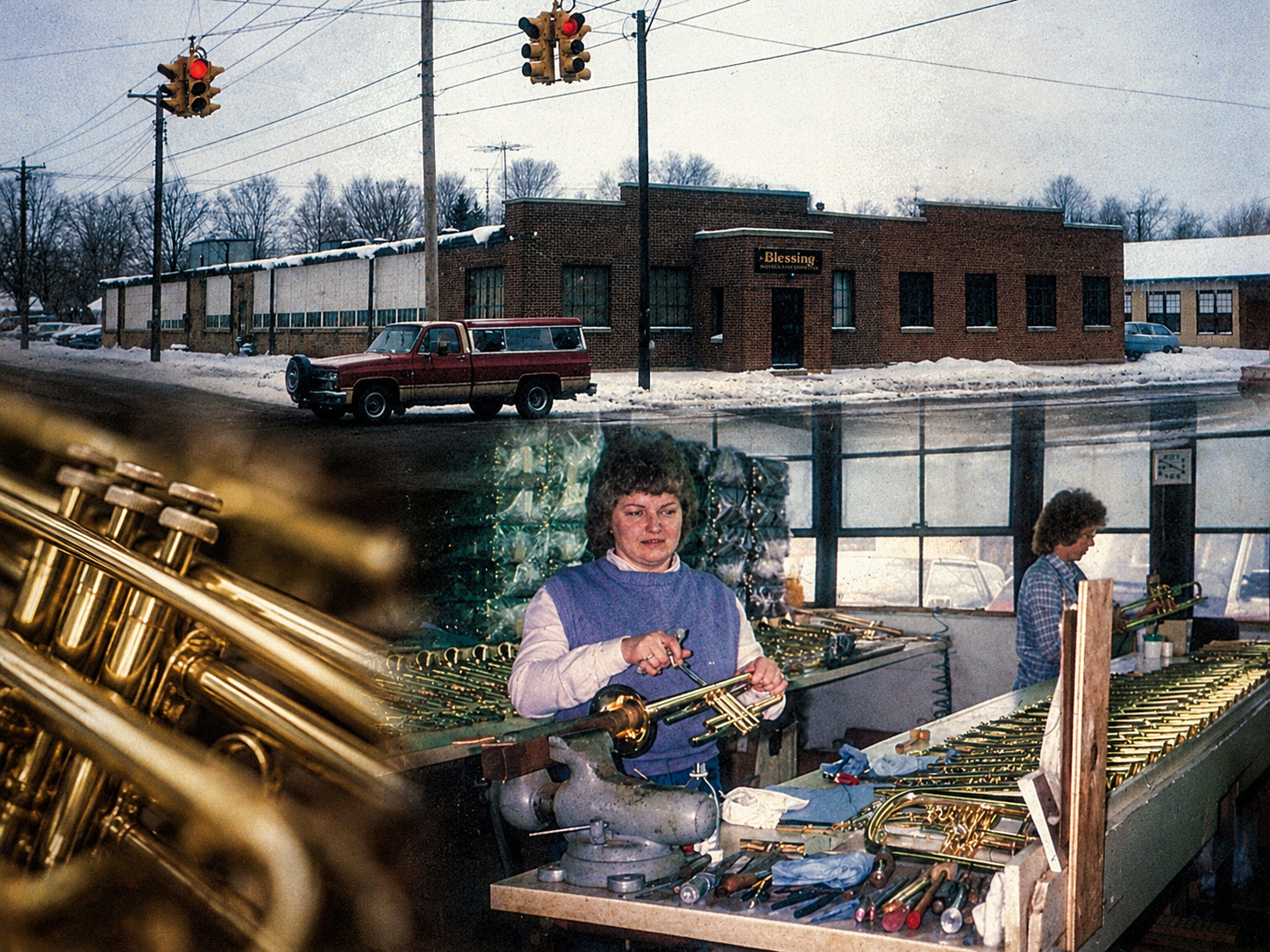
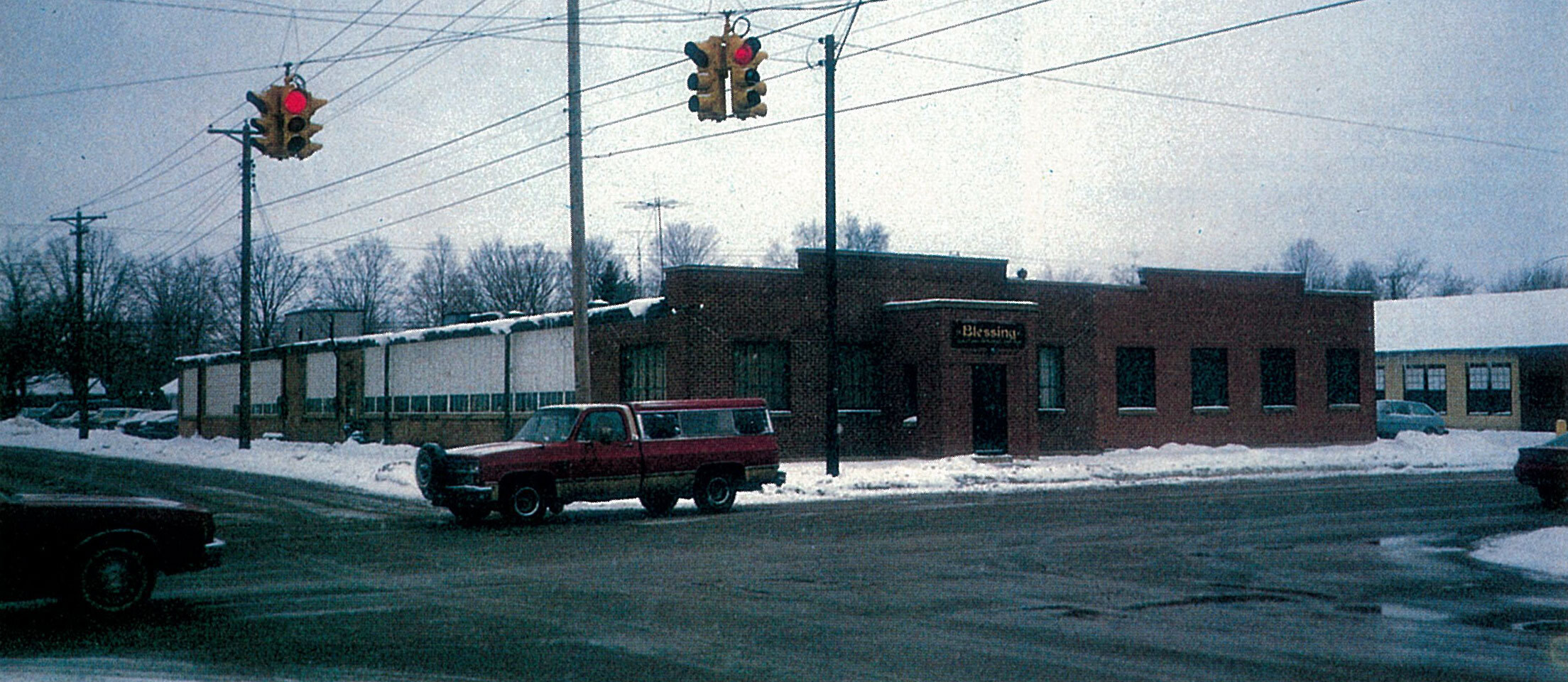
The firm of E.K. Blessing is one of the few of these to have remained in private hands. Brass and woodwind are produced: a wide range of cornets, flugelhorns, valve and slide trombones and tubas, as well as mouthpieces, in brass; mainly piccolos, flutes and clarinets in woodwind. Customers range from beginners to demanding professionals. Top-of-the-range trumpets, for example, are offered in no less than six versions — something to meet everyone’s wishes, in other words. “These instruments bear comparison with any on the market, even the best. Their musical qualities are outstanding,” Mr. Merle Johnson, the owner, explained to me as he gave me the opportunity to learn something about the well run business during my visit to the factory. He met my many questions with some reserve, saying, “Everybody in this sector manufactures basically in a very similar way; there are a few improvements here and there and everyone has his little secrets about that!”

Towards its customers, on the other hand, the firm is very open. “For any musician who plays one of our instruments and has a problem with it we will happily schedule a personal meeting any time. We repair our instruments, of course, if a mishap occurs.”

Almost all components are made in the company factory. An exception is silver plating, which goes to the specialised firm of Andersen’s, also operating in Elkhart.

E.K. Blessing Co. Inc.  Elkhart, Indiana

E.K. Blessing Co. Inc.  Elkhart, Indiana

Instruments in current production are tested by Mr. Johnson’s son, Randy; newly developed ones are further evaluated by professional musicians.

The sixty or so employees have almost all been trained within the firm itself.

We prefer people who know nothing about anything; that way we can get them used to our methods! We have very little turnover because of our good retirement scheme.
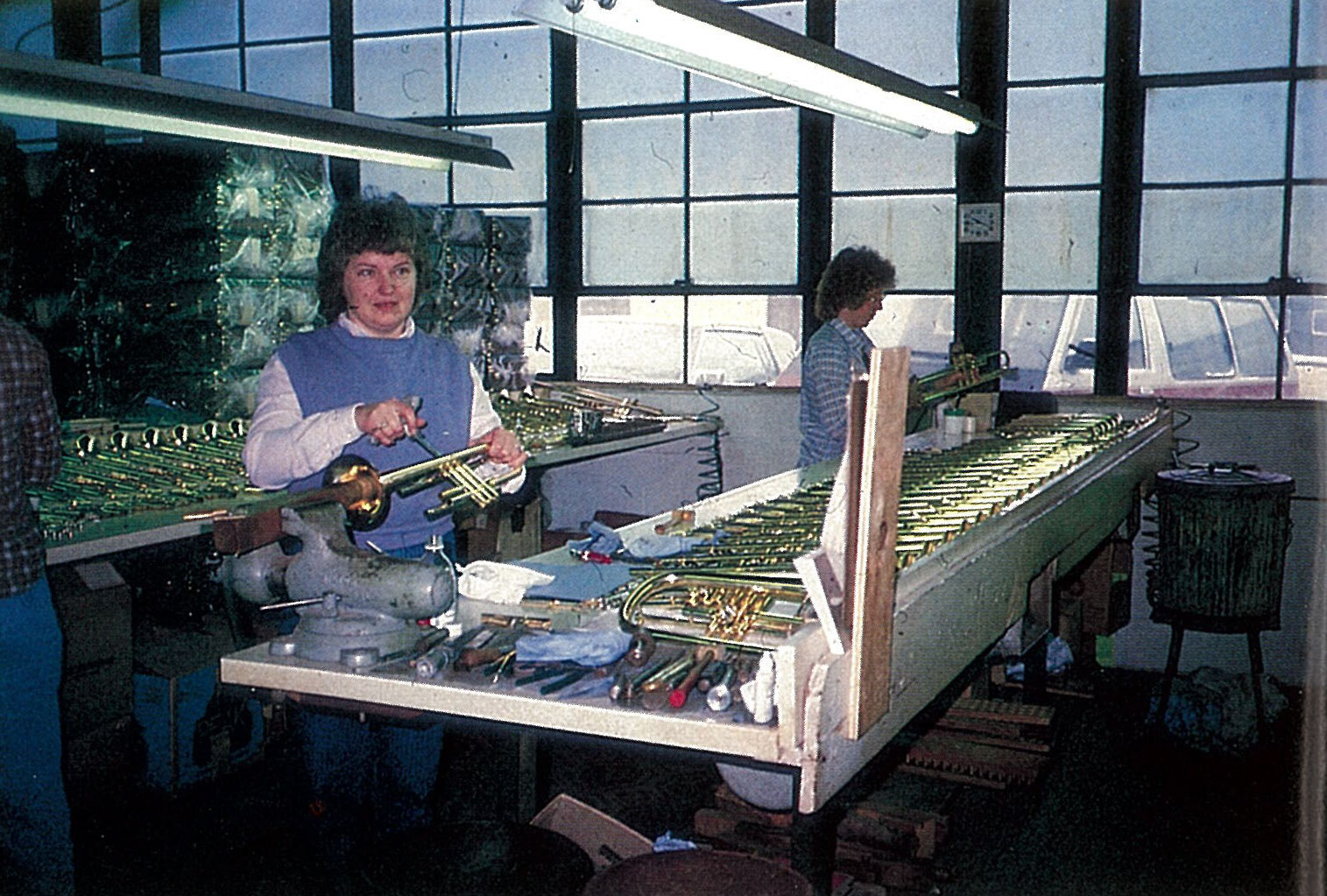
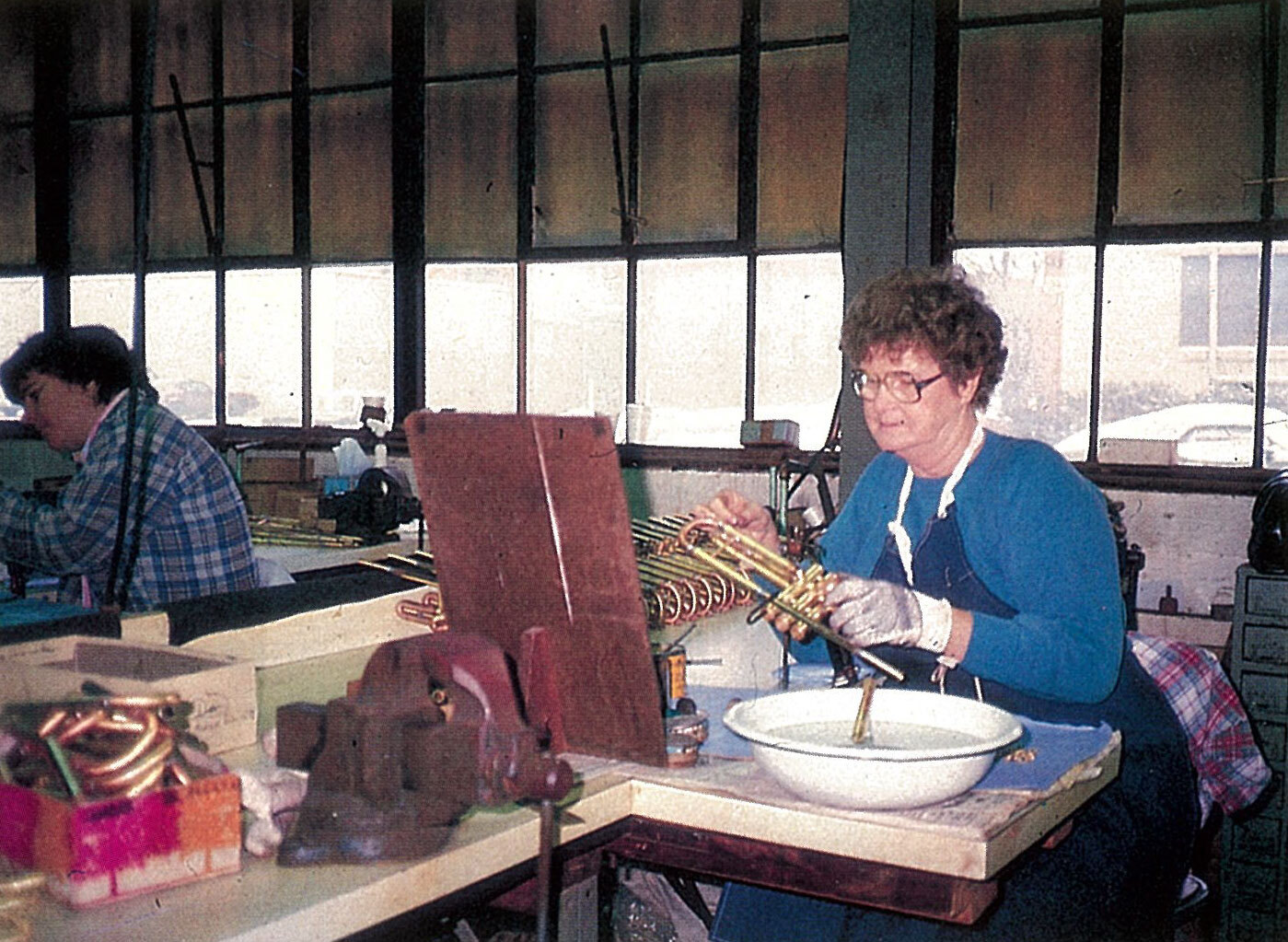
Assembling a trumpet
Assembling a trumpet

Mr. Merle Johnson
Mr. Merle Johnson

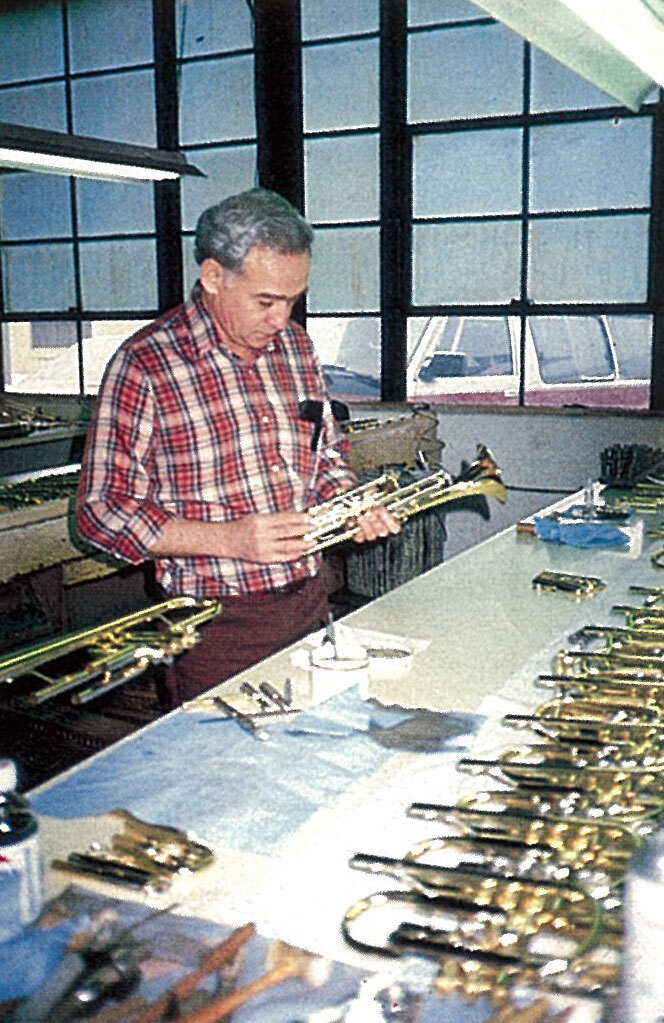
Final fitting of valves

Final fitting of valves

All sales are handled by dealers, with whom there is a constant exchange of information on the state of the market.

Mr. Johnson explained to me that the business was founded by Mr. Eno K. Blessing, who emigrated to the States from Germany in the thirties. He started building valves, for Conn among others. The first Vincent Bach instruments are also said to have come from his workshop. After Blessing’s death in 1953 his sons carried on the business, although having little success from their association with the Richards Music Co., an association abandoned a few years later. In 1964 the firm was taken over by Mr. Merle Johnson, who by that time had already been an employee of the company for ten years. He is responsible for its current success. 

If we’re still here, it’s thanks to the quality of our instruments,” he said and, thinking of the future, added, “Continue to improve our products as much as possible and give the dealers even more service — if that works, everything else will take care of itself!

E.K. Blessing Co. Inc.
1306 W. Beardsley
Elkhart, Indiana 46514, USA
Interview with Merle Johnson, owner
Employees: approximately 60
Sales: through dealers
Repairs: only own instruments.

Brass Bulletin 56, IV / 1986 páginas 105–107

Todo el contenido está protegido por derechos de autor © Brass Bulletin 1986–2026

Compartir este artículo

Facebook LinkedIn
Cargando…

Preguntas y respuestas

Cómo funciona la edición digital

¿Qué incluye la edición digital?

La edición digital reúne los artículos ya digitalizados como textos legibles y consultables en línea —no simplemente como escaneos o archivos PDF— junto con sus ilustraciones originales, notas, autoría, información del número y traducciones disponibles. Las sugerencias de artículos relacionados incluyen actualmente solo este material digitalizado.

¿Los artículos digitales son idénticos a los originales?

Conservamos con la mayor fidelidad posible el texto original, el idioma, las ilustraciones, los pies de imagen, las notas y el contexto editorial. La presentación se adapta para facilitar la lectura en línea y pueden corregirse errores evidentes de transcripción o escaneado. El contenido y el carácter del artículo publicado permanecen inalterados.

¿Qué idiomas están disponibles?

Brass Bulletin se publicó en inglés, francés y alemán a lo largo de toda su historia. Las traducciones al italiano y al español se añadieron a partir del número 60. Por este motivo, en los sitios italiano y español los artículos de los números 1 a 59 se muestran en inglés de forma predeterminada.

¿Con qué frecuencia se añaden nuevos artículos?

Se añaden nuevos artículos casi a diario, con aproximadamente un número completo digitalizado cada semana. El ritmo puede variar según el trabajo de preparación, tratamiento de imágenes y revisión editorial necesario.

¿Por qué no están disponibles todos los artículos en formato digital?

La colección completa de Brass Bulletin contiene 1.246 artículos publicados entre 1971 y 2003. El índice completo ya está disponible en línea y permite descubrir todos los artículos de la colección, incluidos aquellos cuyo texto íntegro todavía no ha sido digitalizado.

La digitalización comenzó en febrero de 2026. Cada artículo se prepara cuidadosamente para la lectura en línea, se revisa y se vincula con su número, sus autores, sus temas y sus ilustraciones. Al ritmo actual de digitalización, se prevé que la colección completa esté disponible en línea en febrero de 2028.

¿Por qué algunas referencias mencionan artículos que todavía no están disponibles?

Las referencias de los artículos originales se conservan aunque el material al que remiten aún no haya sido digitalizado. De este modo se mantiene intacto el contexto histórico y editorial. A medida que se incorporen más números a la edición digital, un número creciente de estas referencias conducirá a artículos que podrán leerse en línea.

¿Puedo sugerir un artículo o informar de un error de transcripción?

Sí. Si hay algún artículo que le gustaría especialmente ver digitalizado, o si detecta un posible error de transcripción o algún dato que falta, póngase en contacto con nosotros. Los comentarios de los lectores nos ayudan a mejorar la edición digital y a establecer prioridades útiles dentro del archivo.

¿Cómo puedo apoyar a Brass Bulletin?

Su apoyo ayuda a financiar la preparación, verificación y publicación en línea de la colección completa.

Suscríbase a la Edición Digital

¿Prefiere apoyarnos sin suscribirse?

Haga una donación

¿Cómo avanza la digitalización?

Estamos poniendo Brass Bulletin a disposición de los lectores en línea, artículo por artículo. Pueden leer los artículos recién digitalizados en cuanto estén listos, incluso antes de que se complete un número entero.

Consulten nuestro calendario de digitalización para descubrir las últimas novedades y las fechas estimadas de disponibilidad de los próximos números. Estas estimaciones se basan en nuestro ritmo reciente y pueden cambiar.

Busca en Brass Bulletin.