Rendete Brass Bulletin disponibile nella vostra università, nel vostro conservatorio o nella vostra biblioteca Scoprite l’accesso istituzionale

3 min di lettura

Parte 6

Instrument Makers in USA

Holton (G. Leblanc Corporation)

Instrument Makers in USA

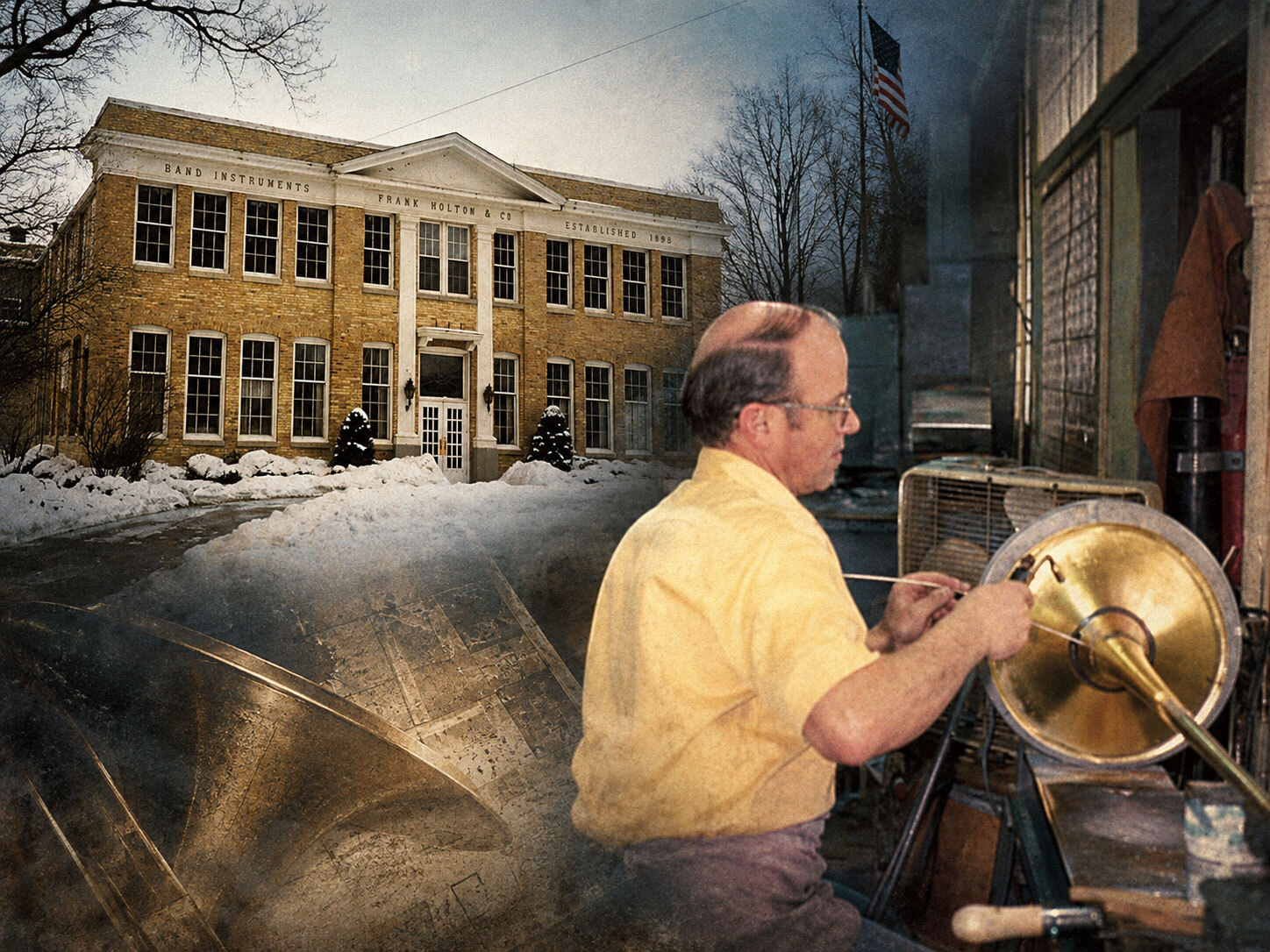
Holton, now part of the G. Leblanc Corporation, occupies a splendid old factory building in Elkhorn, Wisconsin. This picturesque area, seventy miles north of Chicago, is where the firm’s founder, Frank Holton, used to spend his holidays. It is now a good 65 years since he decided to move his factory and workforce here from Chicago.

When he started his business in 1898, Frank Holton was a very well known trombonist. First he turned to the production of accessories such as slide cream. In the course of time he incorporated an engineering workshop, at first for repair work. Then he took the all-important step into instrument making, starting with his own instrument, the trombone. Production was gradually extended.

Today the main emphasis is on horns. In addition high-quality trombones are still made, as well as E♭ horns, sousaphones and baritones. The specially developed and patented "Marching French Horn", which has piston valves and is held like a trumpet, is also made; this is an instrument that takes some time getting used to.

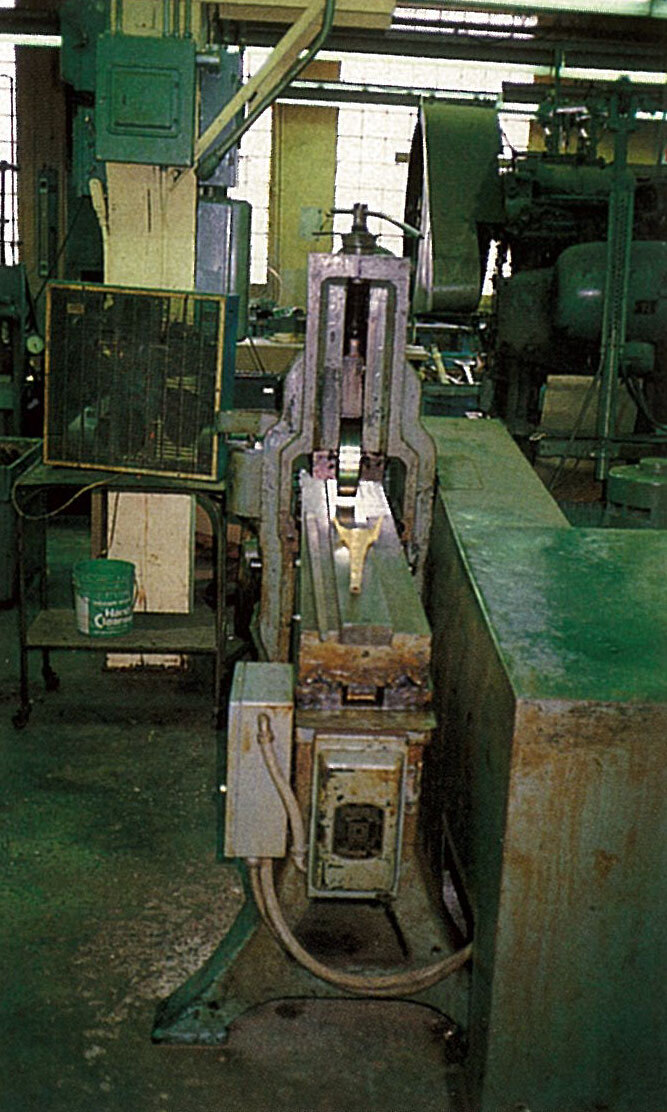
Solder-removing machine
Solder-removing machine

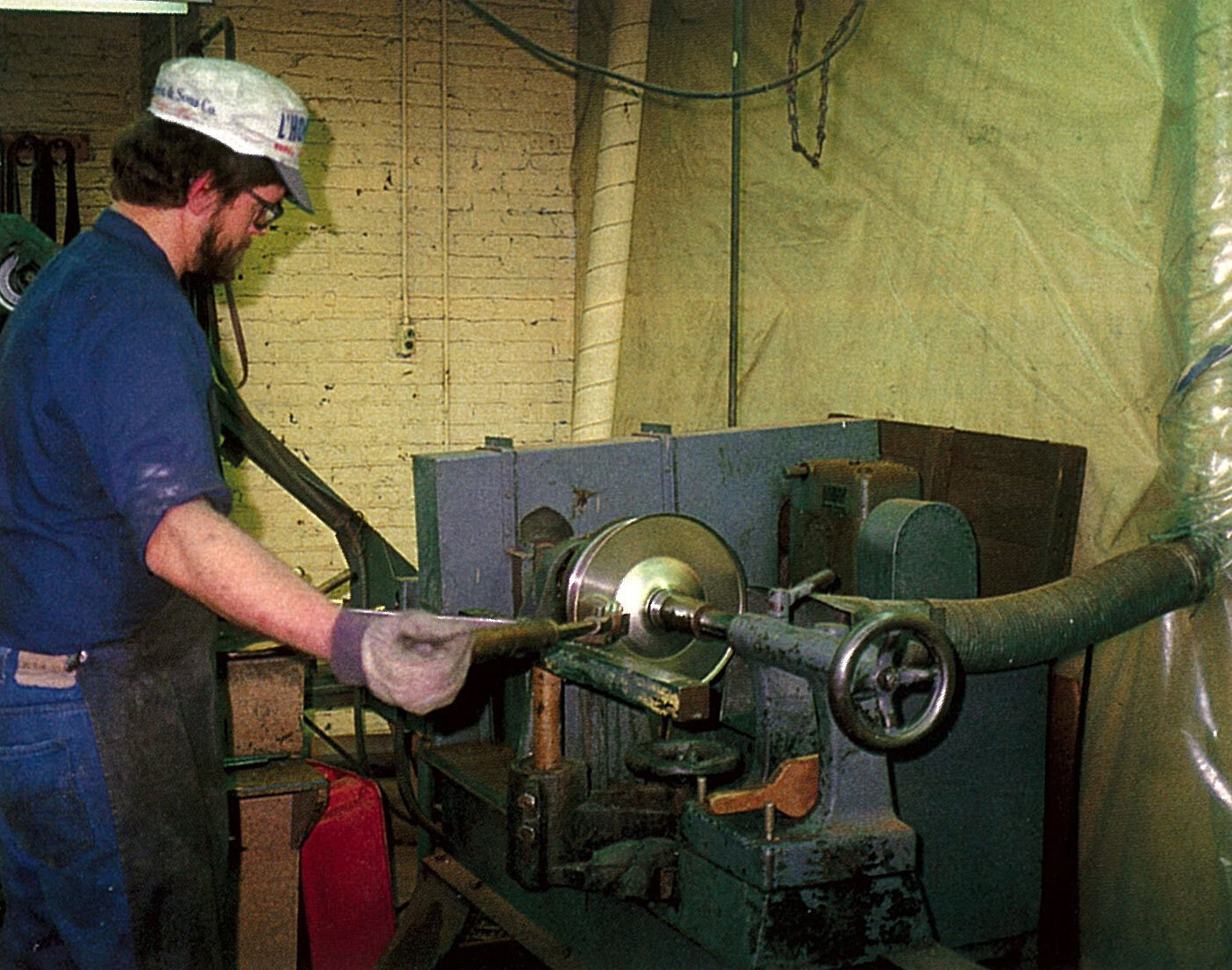
Pressing a horn bell
Pressing a horn bell

Cross-seam welding a horn bell

Cross-seam welding a horn bell

Individual employees are generally entrusted only with a small, easily learnable stage of production. The long-serving workforce is valued, however, and the firm was proud to introduce Mrs. Dorothy Rohda, a faithful employee of 57 years’ standing.

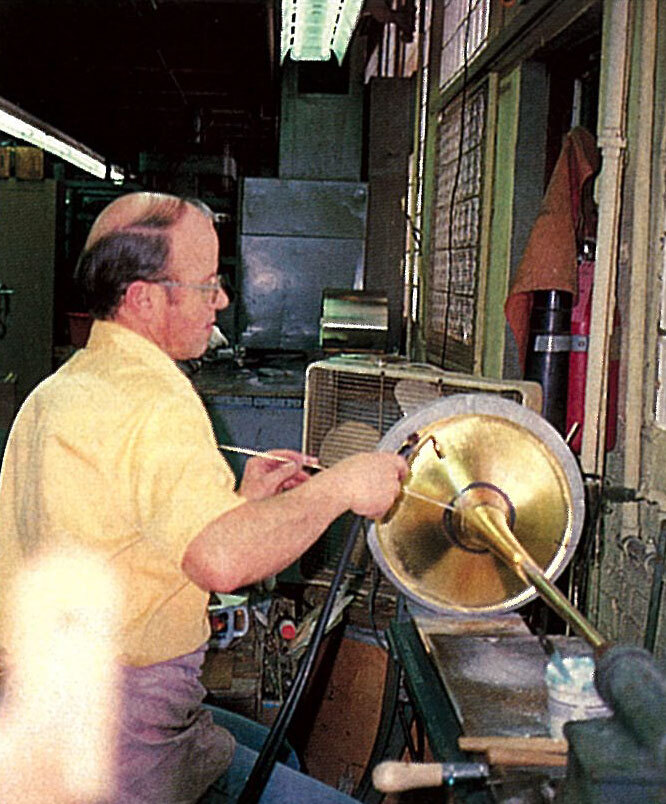
At Holton I saw no special production processes essentially different from those of other makers. Most bells are made in two parts; bending is done conventionally with pitch. I was particularly fascinated by the speed and dexterity with which the horn bells were bent and adjusted: the straight bell is fastened to a template disc and skilfully turned. The trombone slides are lapped by machine in groups of three. Burrs are removed from pressed parts in a vibration bath, as is normal. Holton’s plating department is very well developed, handling chrome, nickel, silver and gold plating. I was also interested to hear the views on surface finishes. My guide, Larry Ramirez, said

The tone quality is undoubtedly better if no finish is applied to the instrument. On the other hand then the metal is unprotected. Any plating affects the strenght of the material, however little, but not many people have a sharp enough ear to pick up the difference.
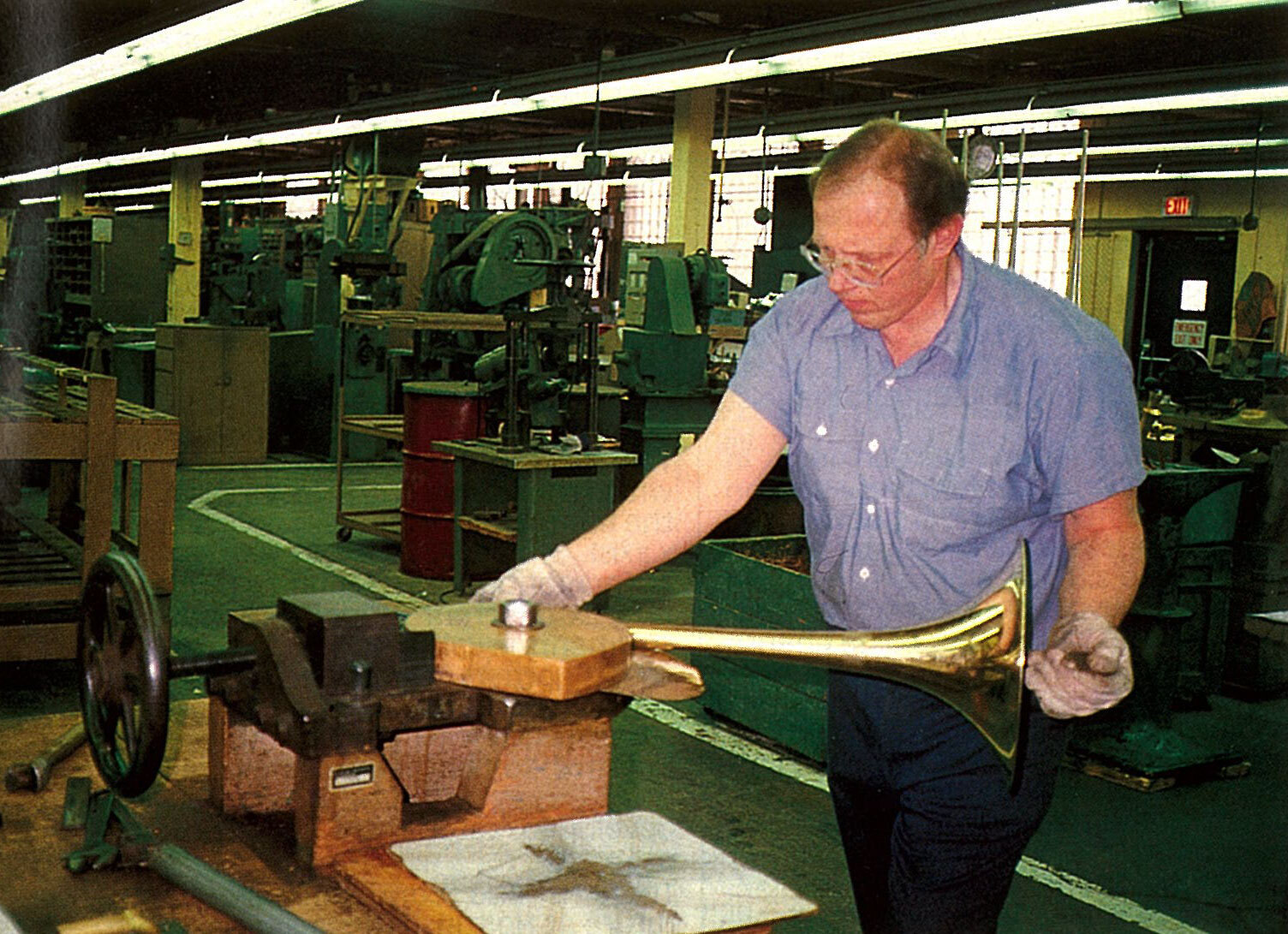
Bending the bell section of a horn
Bending the bell section of a horn

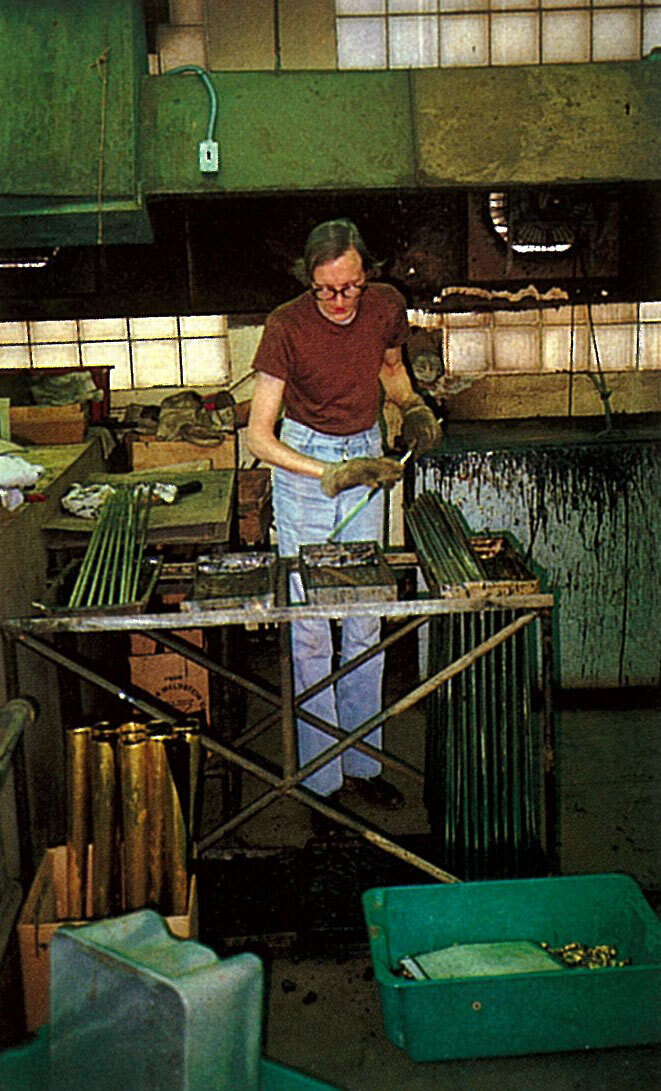
Cleaning tubing filled with pitch

Cleaning tubing filled with pitch

At Holton great stress is laid on the degree of annealing.

It all depends on the tone colour you want; that determines how long and at what temperature a bell is annealed. A trumpet bell, which needs a brilliant sound, is obviously left hard; it’s quite different with a bass trombone, where your aim is to produce a soft, dark sound. But you mustn’t overstep the limit otherwise the material will lose all its carrying power and the note will just fall on the floor in front of you!

The student instruments are substantially simpler in design than the top-quality ones. In the trumpets, for example, the valves have only one guide, top and bottom valve caps are identical and there is no wire reinforcement in the bell rim. The shaping of the steel mandrels on which the tubing is drawn is also kept to the basic minimum (fewer points on the x axis).
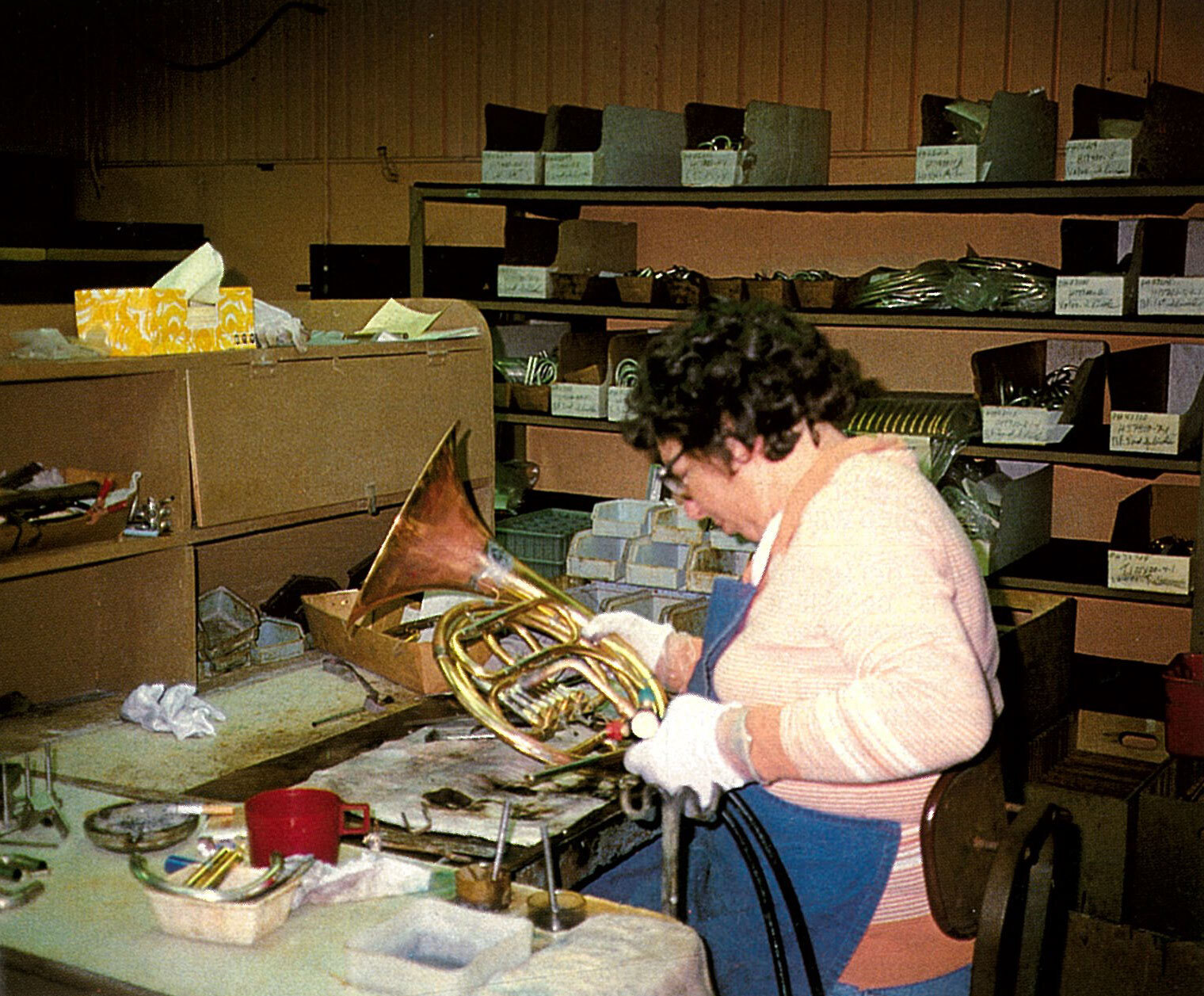
Assembling a horn

Assembling a horn

As for mouthpieces, for horns Holton offers six different models; for other instruments usually just one.

Special orders are only accepted in exceptional circumstances, in the case of an especially well known musician, for instance. Sometimes, as for example for Philip Farkas, an individual model will be developed. Later this may become the prototype for a whole series.

There is also confidence about the future at Holton. "Above all", says Larry Ramirez, "we want to experiment more with trombones. There’s plenty of room for improvement all round but we are always coming up against the fact that very many musicians — and brass players in particular — are extremely conservative! It’s hard to get new ideas across. But we will get them across!"

G. Leblanc Corporation

President: Vito Pascucci
Executive Vice President: Leon Pascucci
Vice President Marketing: Bill Price

Interviews with: Stan Surber, VP International Sales (Leblanc)
Larry Ramirez, Design Engineer (Holton)
Angelo Battelini, General Manager (Martin)

Employees, Holton, Martin and Vito Woodwind: 350

Repairs: only on own instruments

The G. Leblanc corporation distributes the following brands: Leblanc (Paris), Holton, Martin, Yanagisawa, Noblet/Normandy, Courtois, Vito, Vandoren, and woodwind brands.

Contact address (for Holton and Martin):
Stan Surber, VP International Sales, G. Leblanc Corporation, 7019 Thirtieth Avenue, Kenosha, Wisconsin 53141, USA.

Brass Bulletin 53, I / 1986 pagine 109–112

Tutti i contenuti sono protetti dal diritto d’autore © Brass Bulletin 1986–2026

Condividi questo articolo

Facebook LinkedIn
Loading…

Domande e risposte

Come funziona l’edizione digitale

Che cosa comprende l’edizione digitale?

L’edizione digitale riunisce gli articoli già digitalizzati sotto forma di testi leggibili e ricercabili online — non semplicemente come scansioni o file PDF — insieme alle illustrazioni originali, alle note, agli autori, alle informazioni sul numero della rivista e alle traduzioni disponibili. I suggerimenti di articoli correlati comprendono attualmente solo questo materiale digitalizzato.

Gli articoli digitali sono identici agli originali?

Conserviamo il più fedelmente possibile il testo originale, la lingua, le illustrazioni, le didascalie, le note e il contesto editoriale. La presentazione viene adattata per una lettura confortevole online e gli evidenti errori di trascrizione o scansione possono essere corretti. Il contenuto e il carattere dell’articolo pubblicato rimangono invariati.

Quali lingue sono disponibili?

Brass Bulletin è stato pubblicato in inglese, francese e tedesco nel corso di tutta la sua storia. Le traduzioni italiane e spagnole sono state aggiunte a partire dal numero 60. Sui siti italiano e spagnolo, gli articoli dei numeri da 1 a 59 vengono quindi mostrati in inglese per impostazione predefinita.

Con quale frequenza vengono aggiunti nuovi articoli?

Nuovi articoli vengono aggiunti quasi ogni giorno, con circa un numero completo digitalizzato ogni settimana. Il ritmo può variare in base al lavoro di preparazione, elaborazione delle immagini e verifica editoriale necessario.

Perché non tutti gli articoli sono disponibili in formato digitale?

La collezione completa di Brass Bulletin comprende 1.246 articoli pubblicati tra il 1971 e il 2003. L’indice completo è già disponibile online e consente di scoprire tutti gli articoli della collezione, compresi quelli il cui testo integrale non è ancora stato digitalizzato.

La digitalizzazione è iniziata nel febbraio 2026. Ogni articolo viene accuratamente preparato per la lettura online, verificato e collegato al relativo numero, agli autori, agli argomenti e alle illustrazioni. Al ritmo attuale di digitalizzazione, la collezione completa dovrebbe essere disponibile online entro febbraio 2028.

Perché alcuni riferimenti citano articoli che non sono ancora disponibili?

I riferimenti presenti negli articoli originali vengono conservati anche quando il materiale a cui rimandano non è ancora stato digitalizzato. In questo modo si preserva l’integrità storica ed editoriale della rivista. Man mano che nuovi numeri vengono aggiunti all’edizione digitale, un numero crescente di questi riferimenti condurrà ad articoli leggibili online.

Posso suggerire un articolo o segnalare un errore di trascrizione?

Sì. Se desiderate che un determinato articolo venga digitalizzato, oppure se notate un possibile errore di trascrizione o un’informazione mancante, contattateci. I riscontri dei lettori ci aiutano a migliorare l’edizione digitale e a stabilire priorità utili all’interno dell’archivio.

Come posso sostenere Brass Bulletin?

Il vostro sostegno contribuisce a finanziare la preparazione, la verifica e la pubblicazione online dell’intera collezione.

Abbonati all’Edizione digitale

Preferite sostenerci senza abbonarvi?

Fate una donazione

Come procede la digitalizzazione?

Stiamo rendendo Brass Bulletin disponibile online gradualmente, articolo per articolo. Potete leggere gli articoli appena digitalizzati non appena sono pronti, anche prima che un intero numero sia completato.

Consultate il nostro calendario di digitalizzazione per scoprire le ultime aggiunte e le date di disponibilità stimate dei prossimi numeri. Le stime si basano sul nostro ritmo recente e possono cambiare.

Cerca in Brass Bulletin.