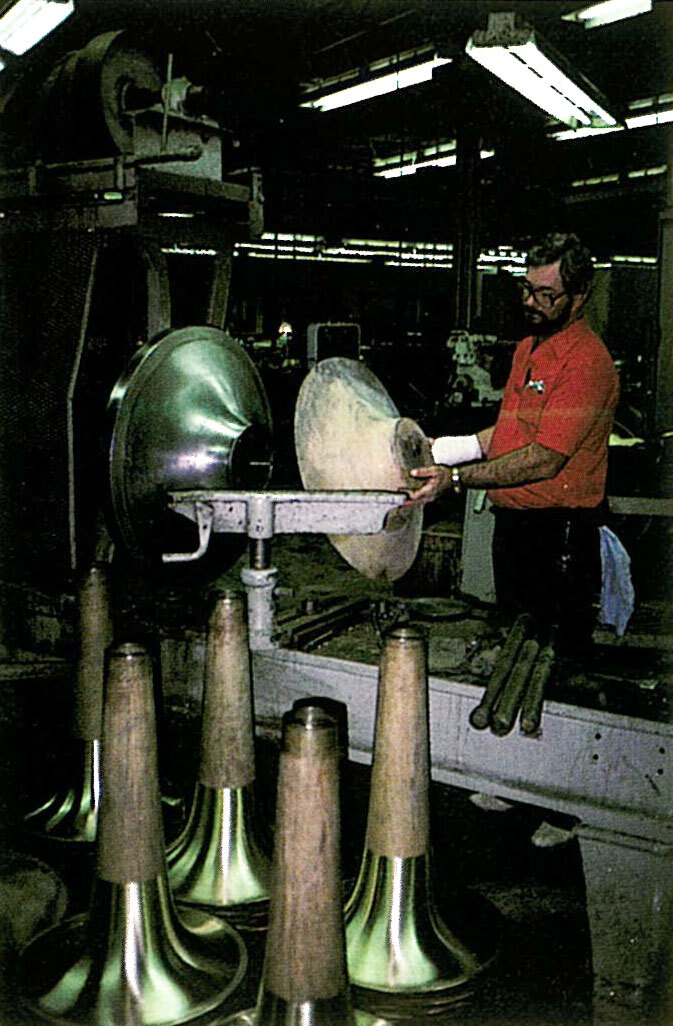
Foreman with a finished bell and the steel template
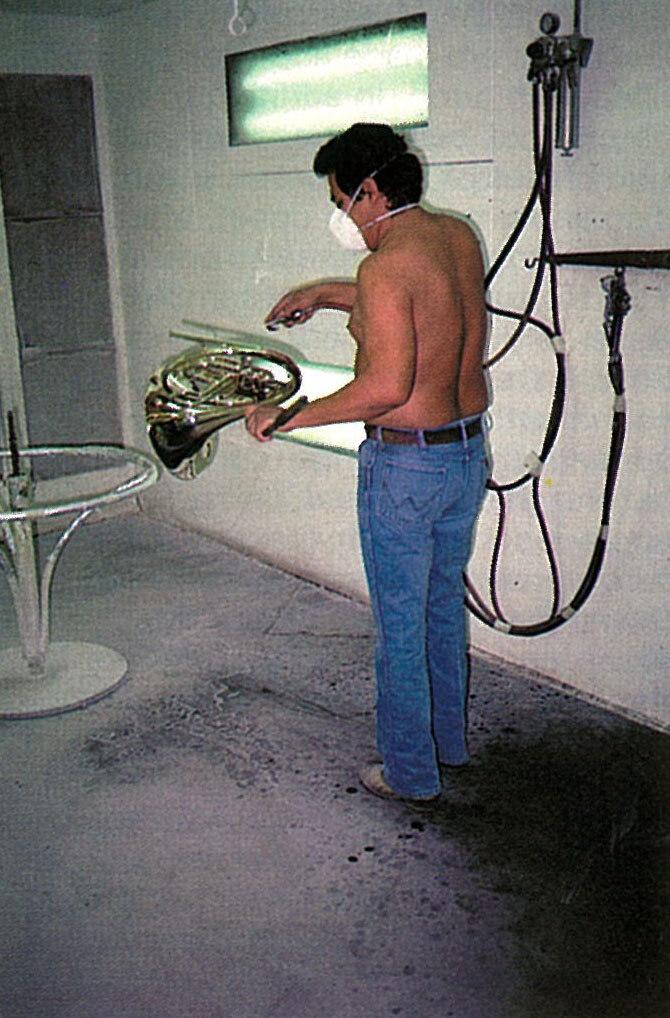
Lacquering a horn
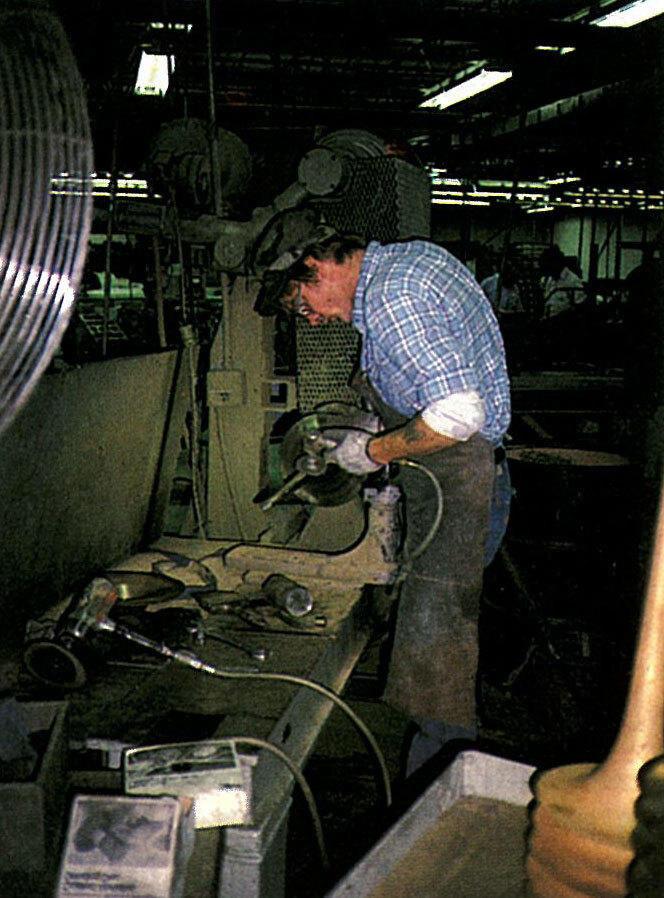
Polishing a bell
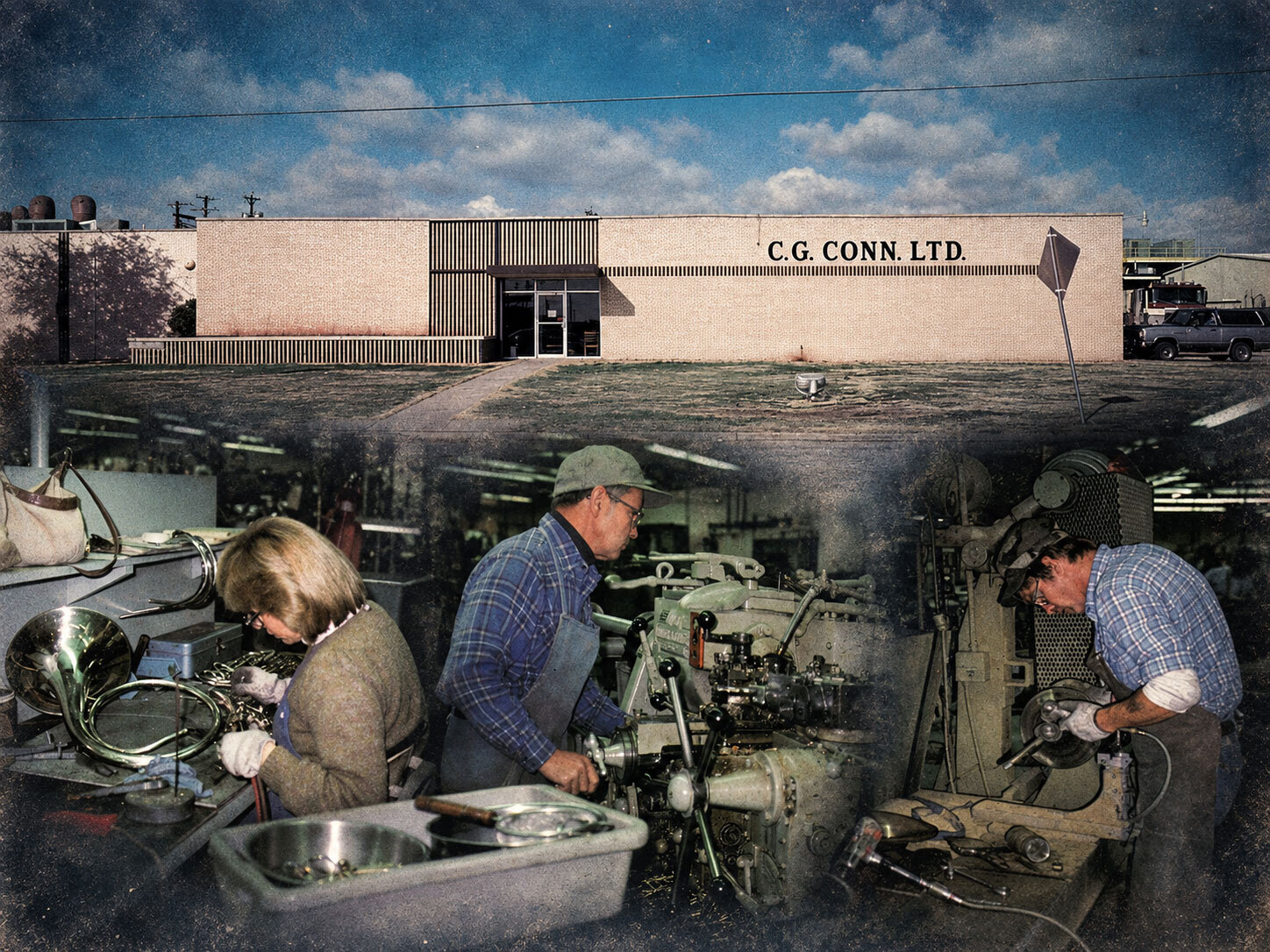
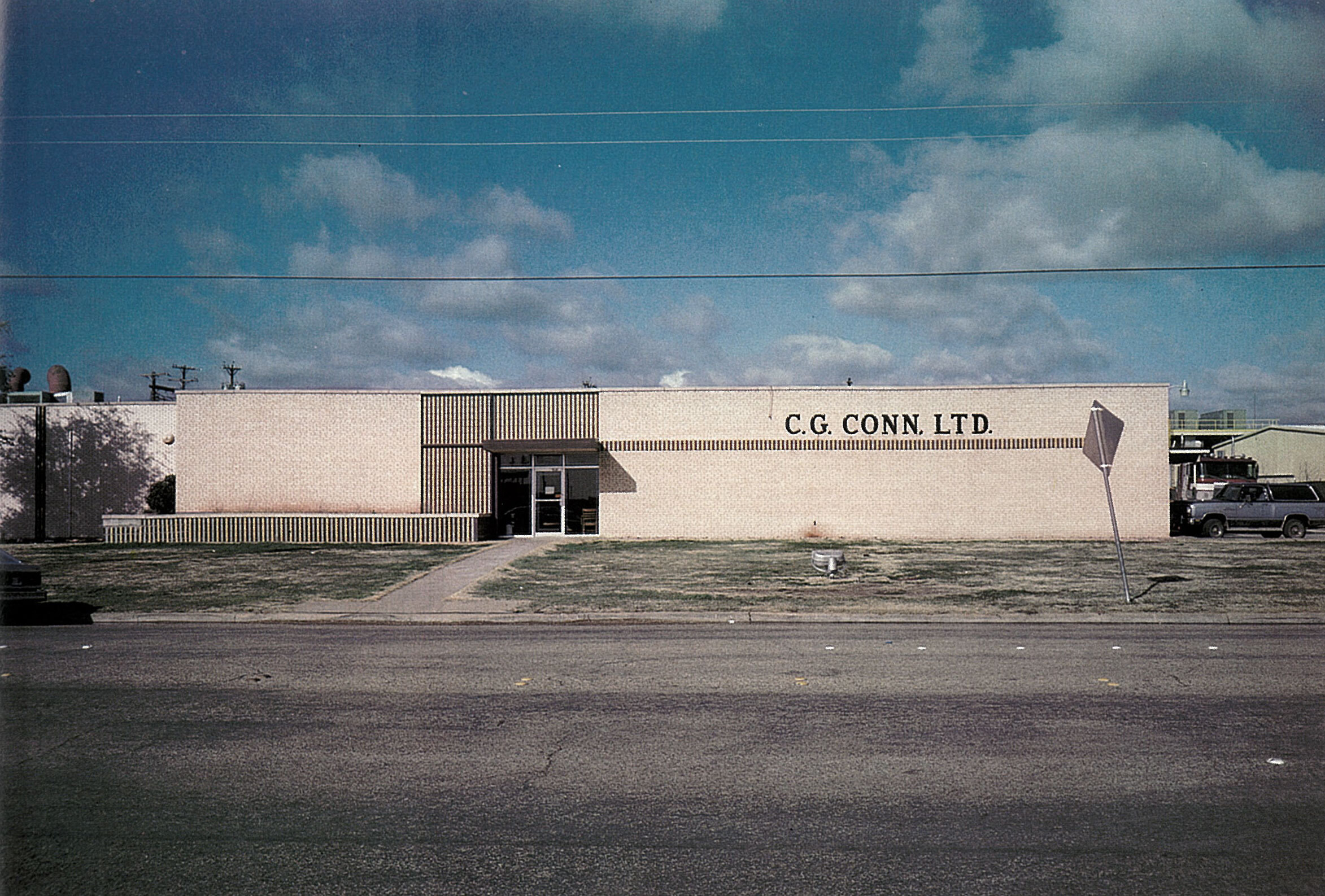
The Abilene factory is a long single-storey building. In the Machine Product Department small parts such as inner and outer slides, ferrules, braces etc. are made exclusively on fully automated lines in batches of more than 1500. With mouthpieces, for example, only the backbore remains to be cut. Next comes the Fabrication Department, where conical tubes are made and then bent while filled with pitch. In addition to this large batches of bell sections are produced; two pieces of sheet brass, cut to size (a disc and a truncated cone), are shaped, welded together, annealed and adjusted. The instruments are assembled in the Assembly Department, polished in the Buffing Department and cleaned in ultra-sound baths. They are then disassembled and the openings carefully sealed before the individual parts receive an epoxy lacquer finish. Next they are passed between infrared panels which bake the sprayed-on lacquer at a temperature of around 150°C (300°F). The Final Assembly Department re-assembles, adjusts and checks the finished instruments.
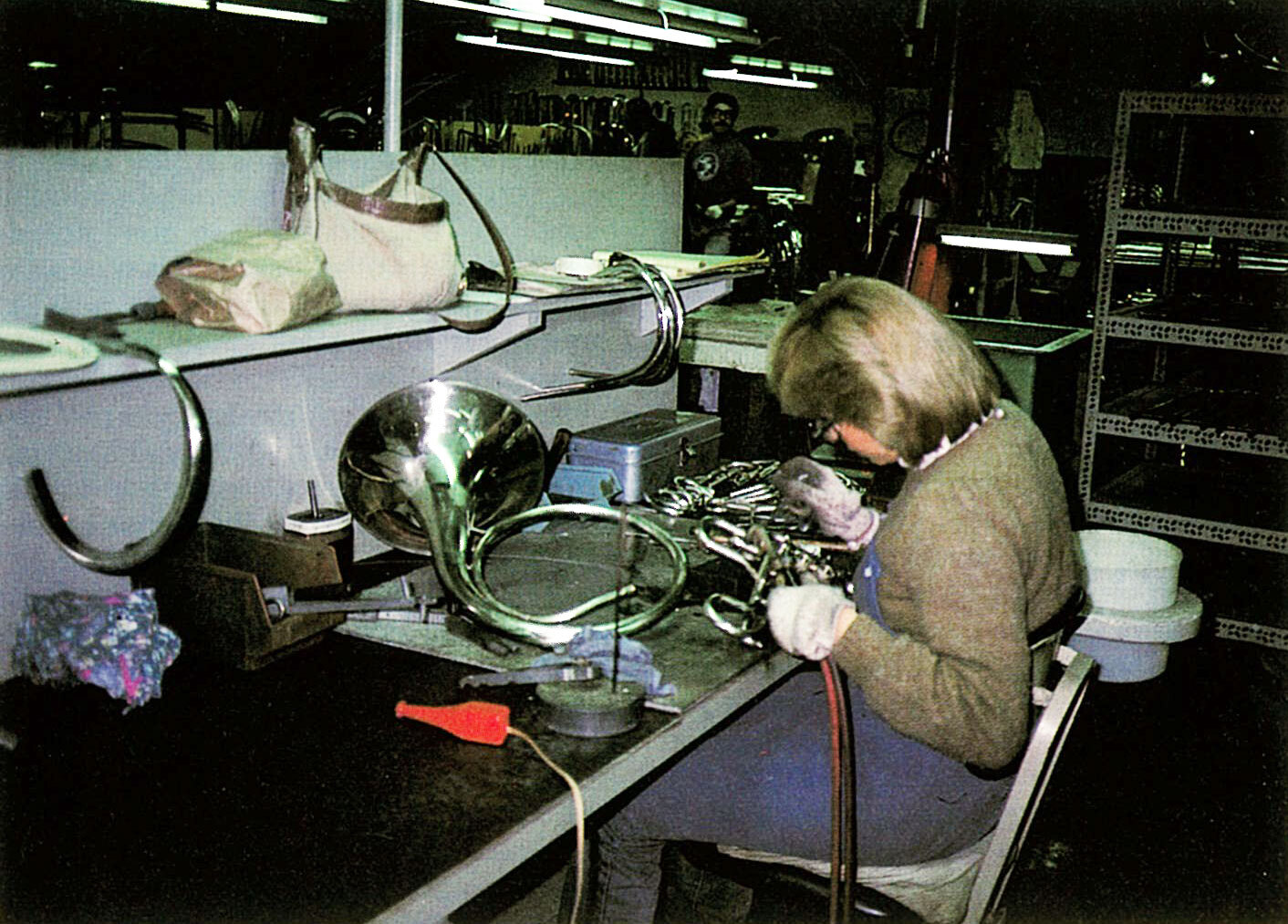
Soldering work on a horn
The employees are local. Moves from one department to another are rare, most employees staying where they were apprenticed on first joining the company. Officials were kind enough to show me a copy of the firm’s union agreement, which covers relationships between the firm and its employees in great detail. The agreement covers all those involved in production, from the caretaker to the specialists and supervisors, the individual points to be applied without discrimination in respect of sex, age, race, colour, creed, origin, physical and mental disability or union membership.
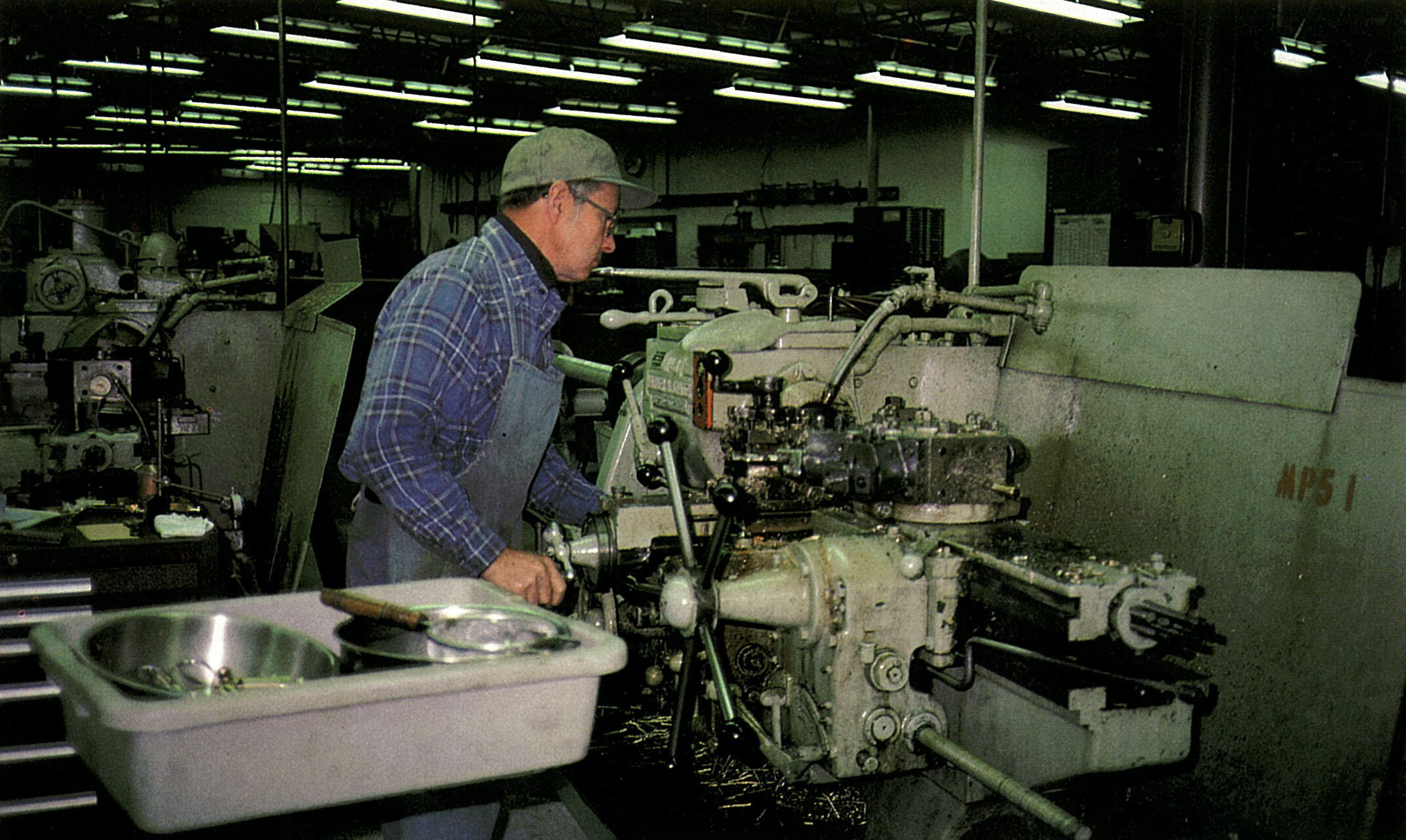
Small-scale series work on the lathe
A new employee is confirmed in his job after sixty days’ probation. The normal working week is forty hours, Monday to Friday. Hourly rates with premiums for shift work are agreed in advance for three-year periods for each individual work process and for the probationary period and for subsequent periods of employment of two or six months or more. The ratio between the pay-rates for the simplest and the most demanding jobs is approximately 1:2. The union renounces the use of strikes and the company renounces the use of lockouts. There is a precisely defined arbitration procedure for dismissals and disputes. The individual employee’s seniority within the firm is very important since, in the event of layoffs, the ‘‘last-in-first-out’’ rule applies. Annual leave is one to two weeks per year in the first two years, rising to three weeks in the ninth year, plus ten paid holidays a year, one of which is the employee’s own birthday. Conn and the union have equal control over the employees’ pension fund, which provides a modest pension in old age and in the event of invalidity.
These details are very brief, of course, but they do give some idea of the conditions of employment in a company of this kind in the southern U.S.
C.G. Conn Ltd.
5520 North First Street Abilene, Texas, 79603
Interview with: Lyndia Oman, General Manager
Employees: 125
Production: 12’000 - 15’000 instruments per year
The firm of C.G. Conn Ltd. belongs to the Mardan Corporation of Elkhart, Indiana, which also includes the following companies:
C.G. Conn Ltd., Abilene and Nogales
Artley Flutes, Nogales, Arizona
Goshen Case, Goshen, Indiana
Scherl + Roth, Cleveland, Ohio
Continental Music, Atlanta, Georgia, and Reno, Nevada
King Music Company, Cleveland, Ohio