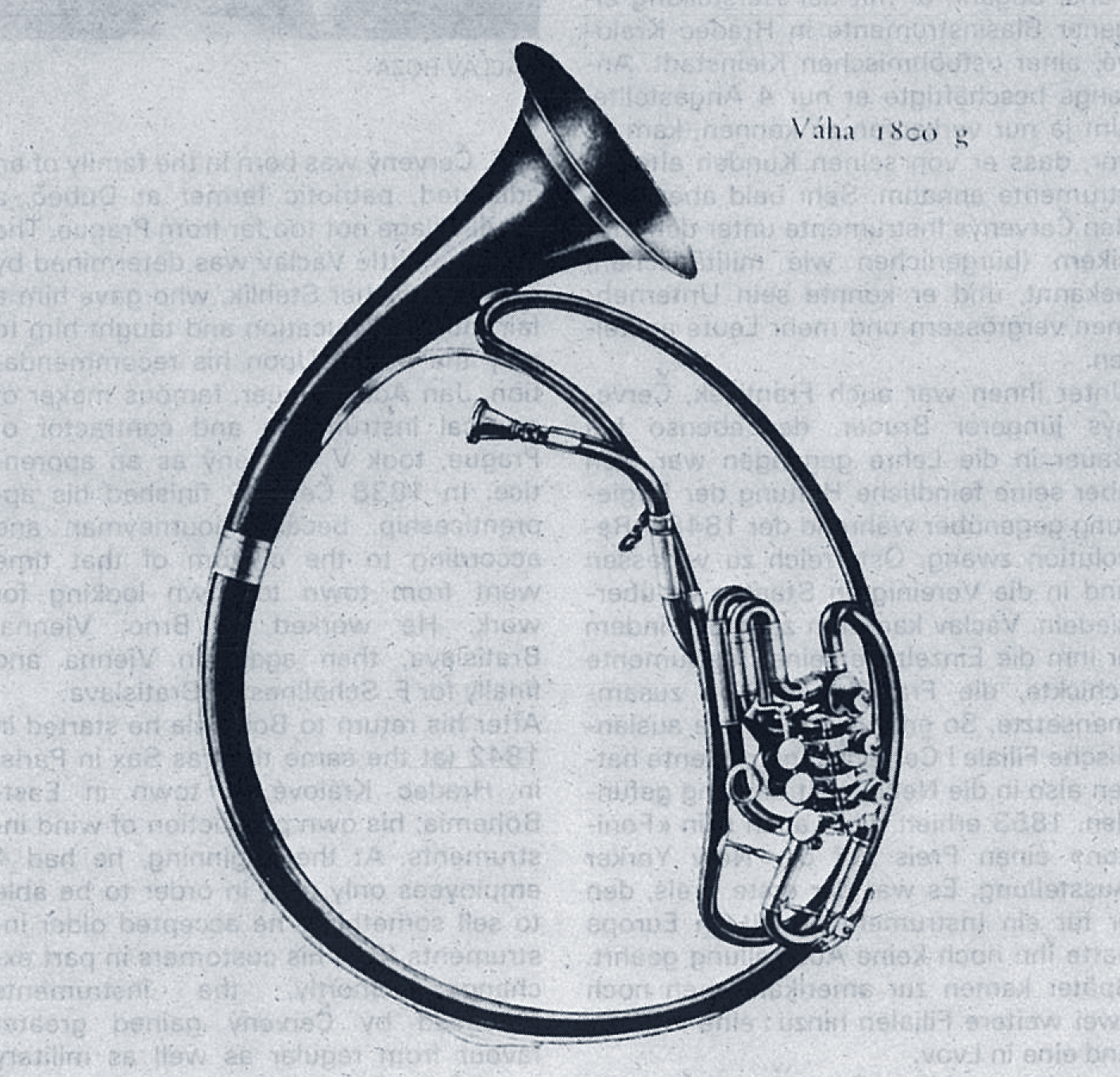
Althorn in Eb
After having created the necessary basis for his production, V. F. Cervený started his activity as inventor. He concentrated his efforts mostly on valve instruments of euphonium type developed in their construction from a bugle. Cervený for the first time defined characteristic features of instruments of the Austrian school. The French school was producing narrow-bore instruments based on the construction techniques of a cornet. The full and rich sound of the Austrian school was satisfying the Slavonic demands for a melodious sound and — as proved later on — even the demands of German romanticists (Wagner). The first act in this sphere was the adjustment of the horn for the use of equestrian bands, so called cornon. In 1844 it was produced either in F or E flat. The Wagner tuba constructed by German instrument makers was to a certain extent the continuation of the cornon.
One year later, Cervený presents another invention, the so-called contra bass. The construction of this instrument developed from the F tuba of Moritz, sounds, however, one quart (C¹) later or one fifth (B²) lower. The shape of the tube (main branch) of this instrument is consistently conical. The outstanding bass-players ordered the contra bass and praised the instrument as well as its inventor. Due to the simplified technology, Cervený gained a remarkable profit on this instrument: from 500% to 1000%. As a result of competitors activity, imitations of this instrument appeared on the market, for example the pelliton. A further invention from 1846 was the «Sound changing device» (in German: Tonwechselmaschine) which became the subject of a patent dispute between Cervený and the French instrument producer Gautrot. Cervený was very embittered by this case.
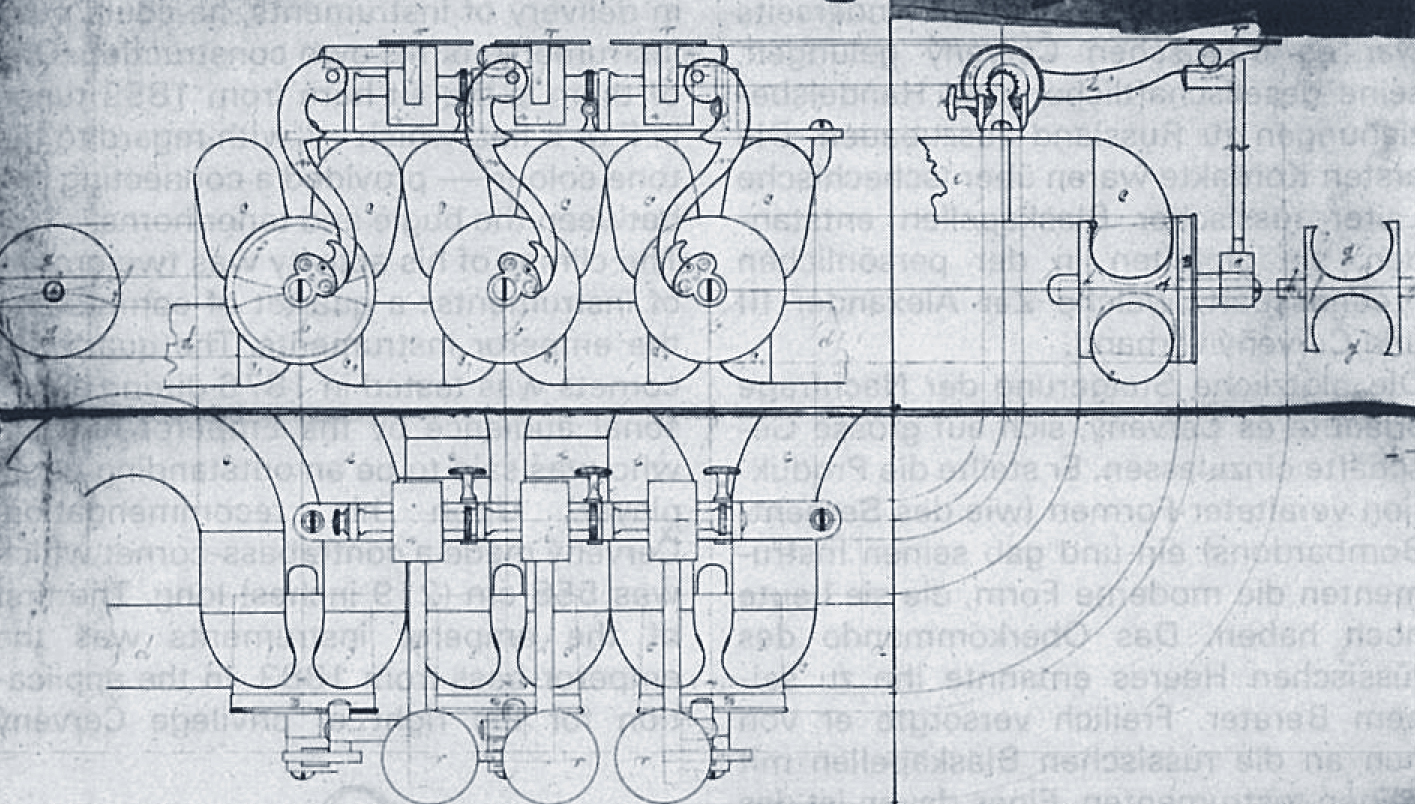
Documentation enclosed with the application for the privilege in manufacturing the rotary valve appliances.
The year 1851 was very happy for Cervený. The Austrian Emperor issued an order according to which the regiment bands had to be increased to 48 members. Besides that, Cervený entered into social and business relations with Russia. These contacts were negotiated with the help of Russian bandmasters of Czech origin and culminated in the personal friendship between Cervený and Russian Emperor Alexander III. A brisk demand enabled Cervený to start a large-scale production. He left the out-of-date forms of instruments (like serpent-bombardon) behind and gave his instruments the modern shape maintained up to this day. The Commander of the Russian Army appointed him expert adviser and, in delivery of instruments, he could push instruments of his own construction. One of them is the alt horn from 1859 tuned in F or E flat, which — with regard to the tone colour — provided a connecting link between the bugle and tenor horns.
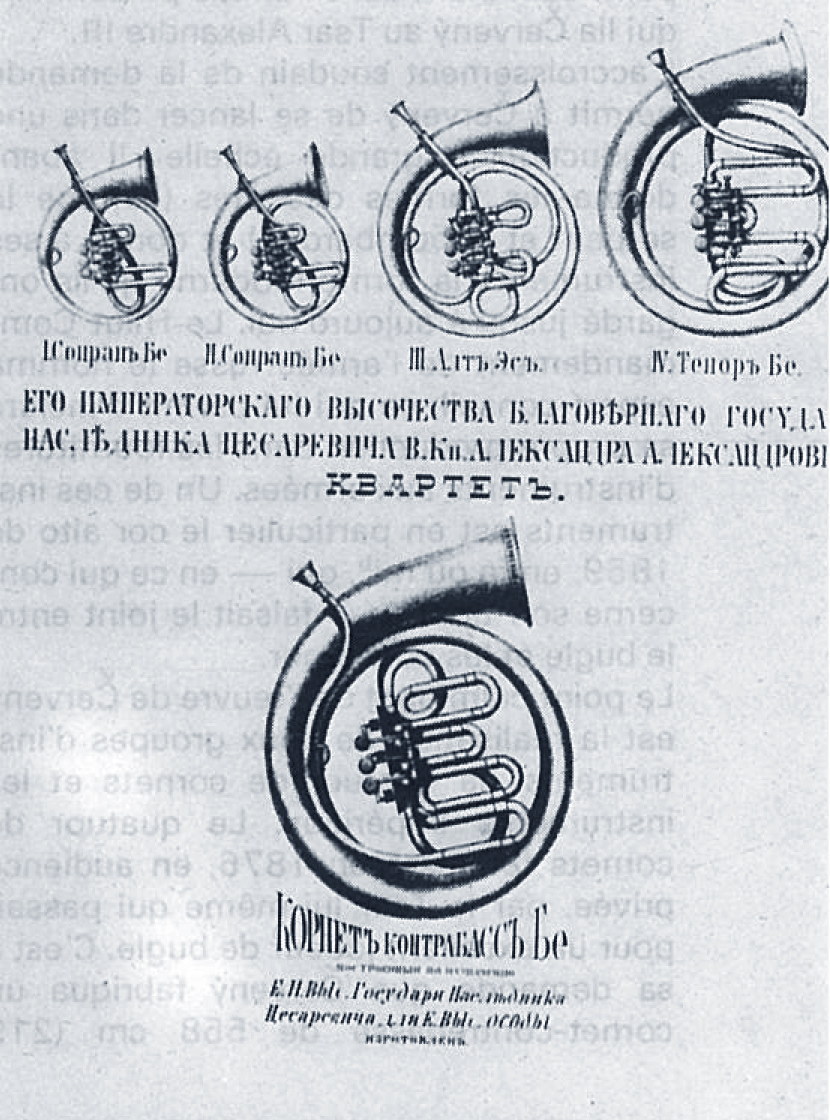
Prospectus of cornets quartet (1876)
The climax of his activity was two groups of instruments: a quartet of cornets and the emperor instruments. The quartet of cornets was tested in 1876 during a personal audience by the Emperor himself, who was said to be an outstanding bugle player. Upon his recommendation, Cervený made a contrabass-cornet which was 558 cm (219 inches) long. The first of the emperor instruments was the emperor-bass from 1883. In the application for the right of privilege Cervený states that the emperor-bass has 3–5 rotary or piston valves, is 5300 mm (208 inches) long, the diameter of the slides is 15 mm. The instrument can be delivered in the form of tuba or bombardon. One year later Cervený developed a wide-bore emperor tenor horn and wide-bore bugle. Later on, these instruments were made under the name "Triumph".
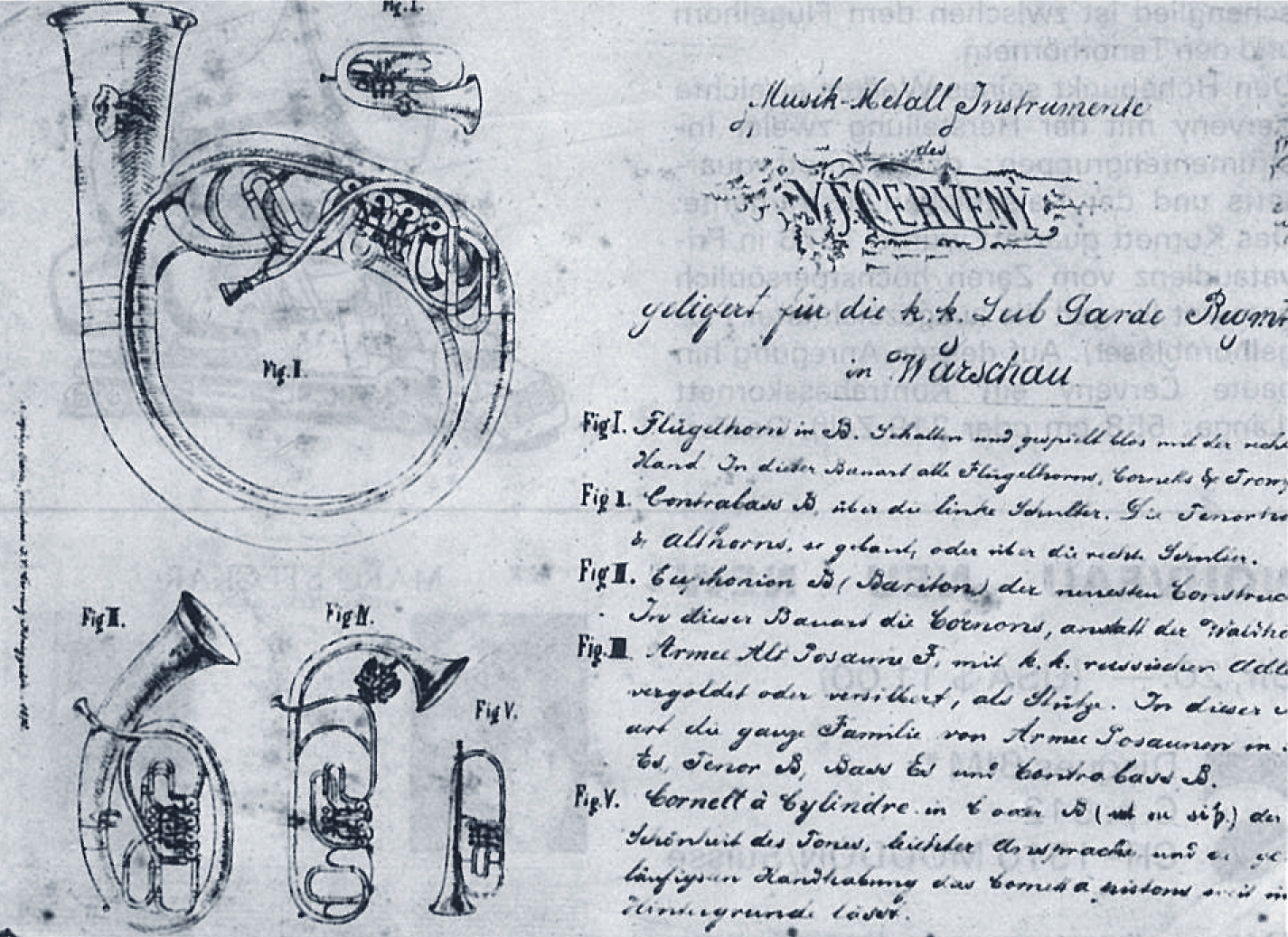
Catalogue from 1872
Cervený displayed his further inventions at plenty of industrial exhibitions and gained medals and high decorations from the leaders of many countries. His serious competitor on the world forum was Adolph Sax, producer of musical instruments in Paris. Both instrument makers had many common features, yet in some way differed. Whilst Sax developed whole series of new instruments in a carefree manner, Cervený, probably thanks to his peasant origin, carefully planned and verified each new feature. Cervený respected Sax indeed and condemned all intrigues plotted by his colleagues in Paris against Sax.
Even before the death of V. F. Cervený, his sons took over the management of affairs. After the year 1945 the factory became state property. The production of Cervený's instruments is maintained in Hradec Králové up to this day under the new name "Amati".
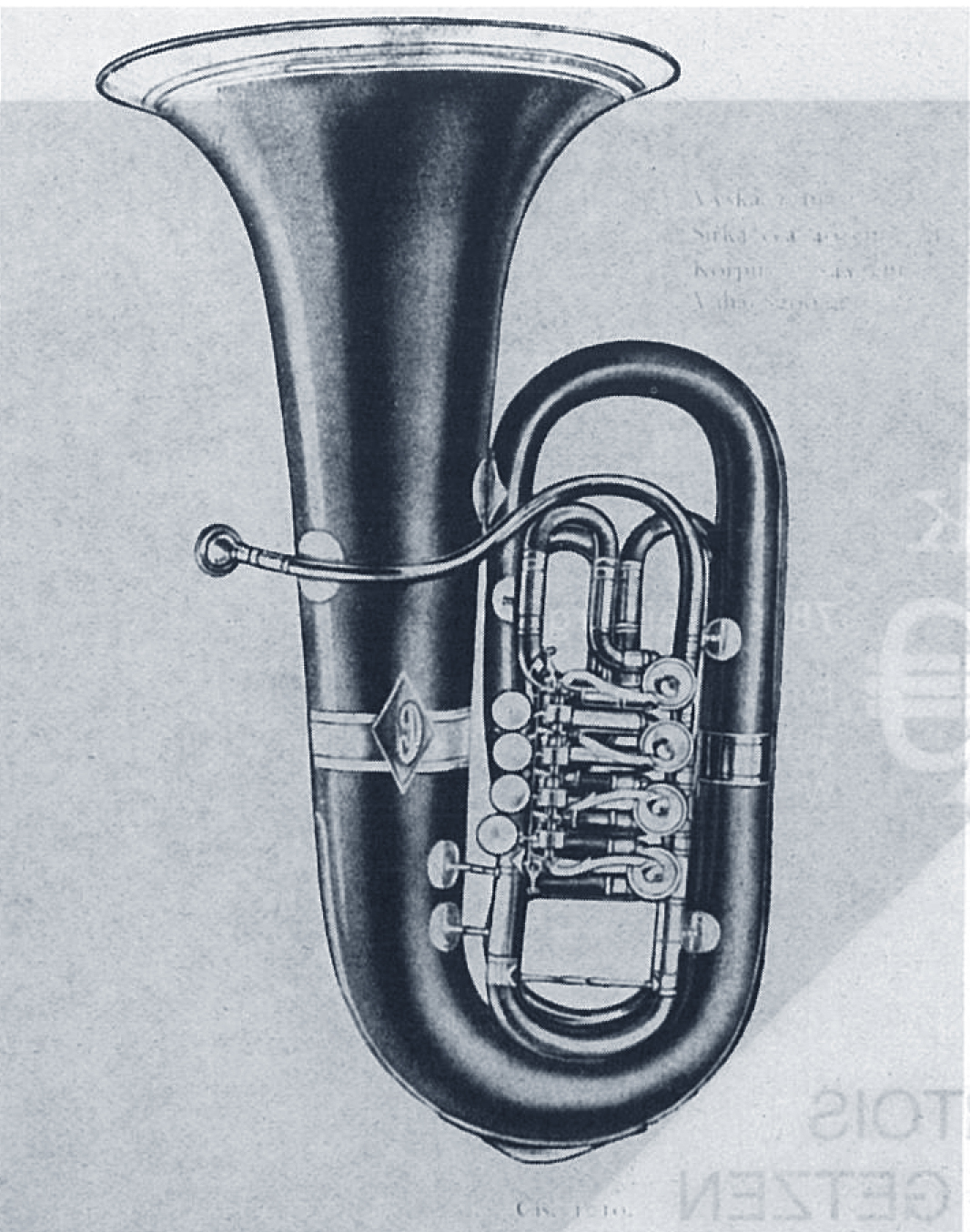
Triumph tuba in F
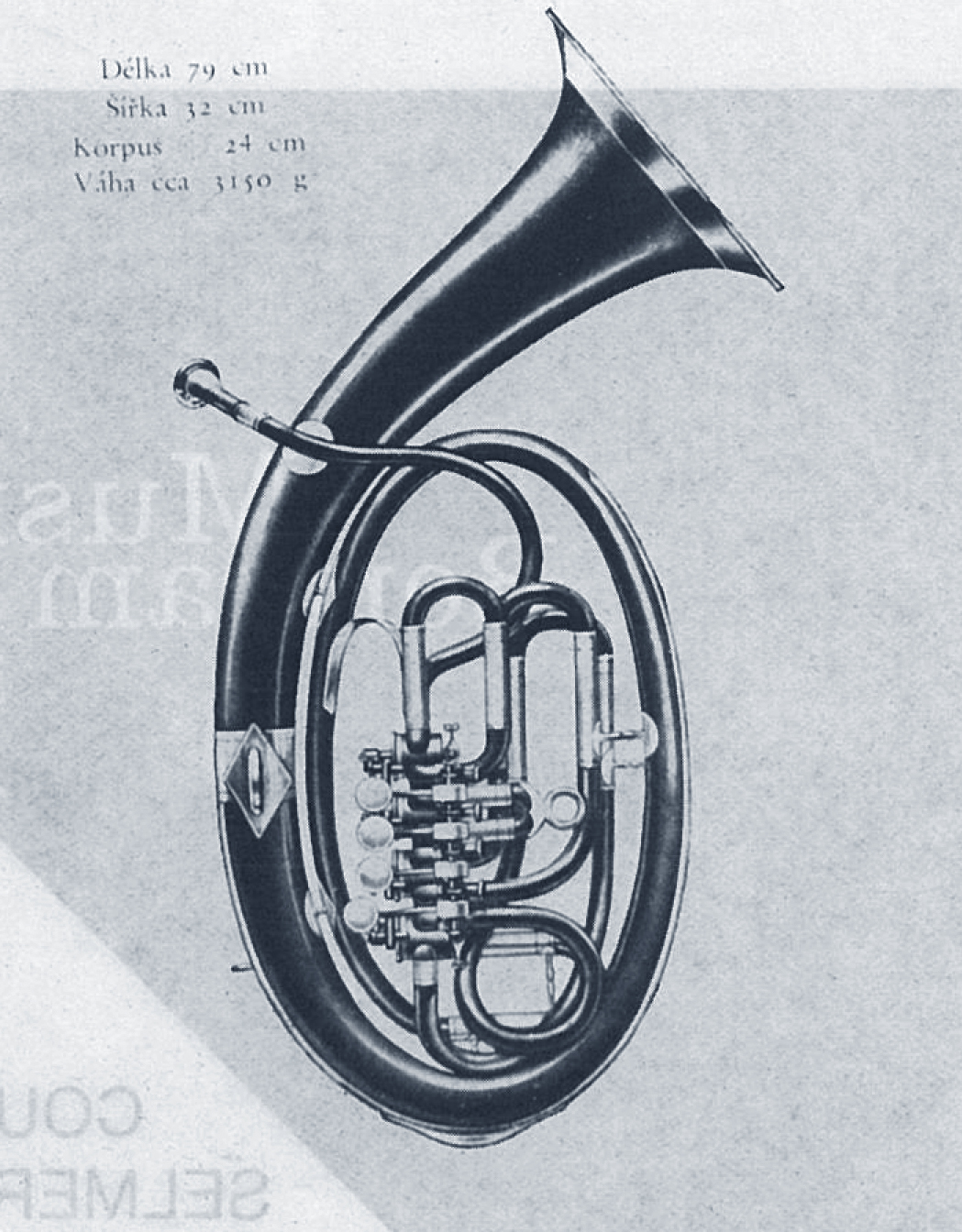
Triumph tenor in Bb