Ofrezca Brass Bulletin en su universidad, conservatorio o biblioteca Descubra el acceso institucional

4 min de lectura

Parte 2

Instrument Makers in USA

Schilke Music Products, Inc. Chicago

Instrument Makers in USA

Schilke Music Products, Inc. Chicago

American careers

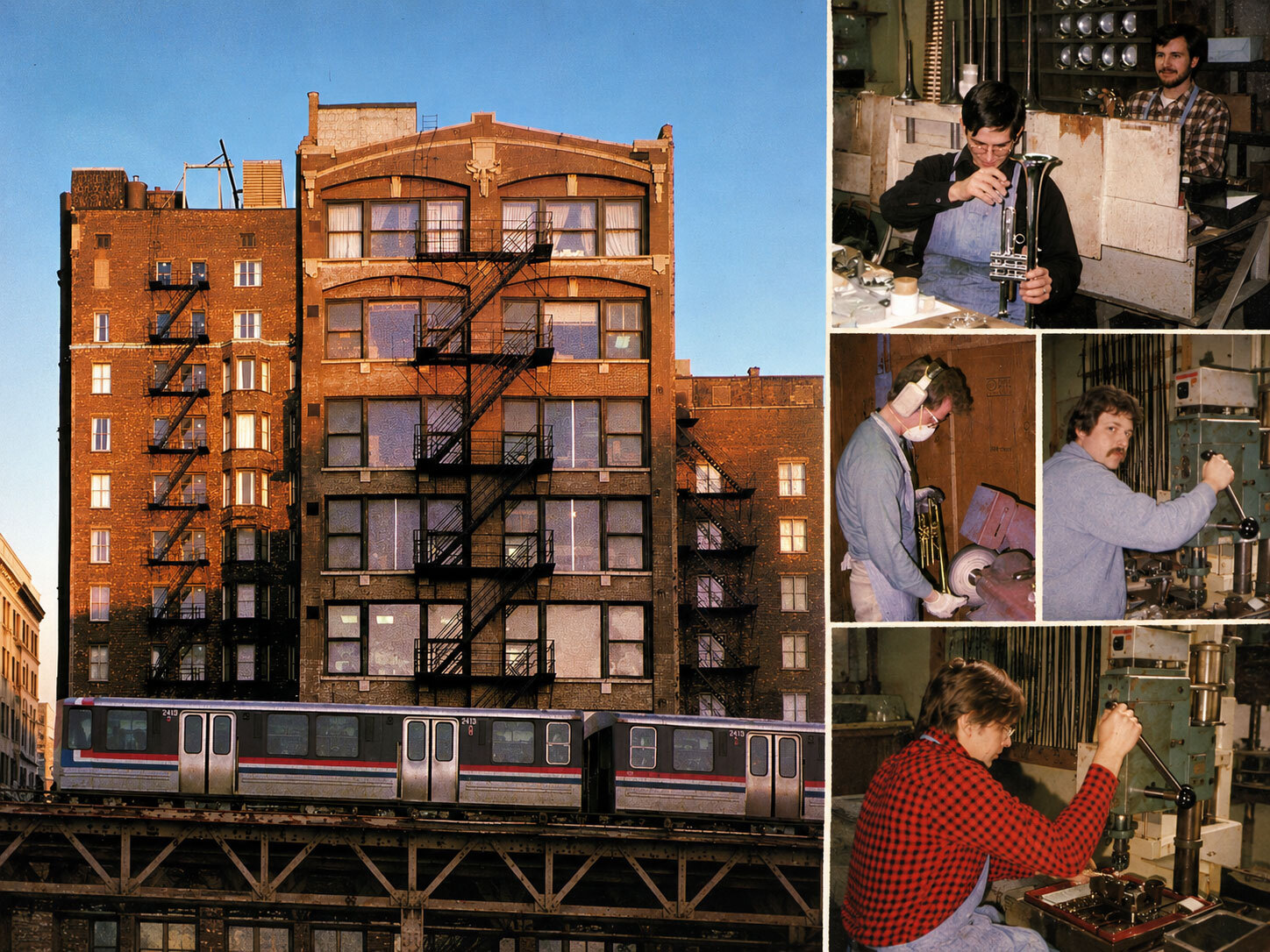
Schilke is situated in the heart of Chicago, 500 yards from the shores of Lake Michigan. Production and administration occupy the seventh and eighth floors at 529 South Wabash Avenue. Most sales are to professionals. Trumpets, piccolo trumpets and cornets are made, also mouthpieces, both standard and custom-made. During my visit the prototype of a newly developed flugelhorn, shortly to go into production, was being discussed. About 45 trusted dealers in America and twenty more abroad sell the products.

The workshop is set up in a traditional way. Instruments are normally produced in batches of 25, with about fifty man-hours going into each instrument. Formerly, when Schilke still produced horns, trombones and tubas, the tubes were made from soldered sheet metal; today the conical tube sections are made from seamless cylindrical tubing. Pitch is used for bending. Great importance is attached to the method of removing solder. The instruments are not placed in the usual chemical solder-removing bath after assembly; instead the solder is painstakingly removed by hand with a scraper. The valves are made of monel. Schilke uses an interesting procedure for seamless bells. Previously the so-called beryllium-bronze bell was used to good effect; a template produced in the workshop was delivered to a specialist firm where it was immersed in an electrolytic bath until the metal deposit reached the desired thickness, when the raw bell could be removed from the template. Today many instruments, including the S series, have a newly developed bell, seamless and specially produced from a single piece of brass. Renold Schilke, son of the founder and now president, follows production and finishing of this model personally. He is an all-rounder in both office and workshop. When I arrived, he was working on leadpipes for piccolo trumpets and later I saw him lapping valves after two workers had called in sick.

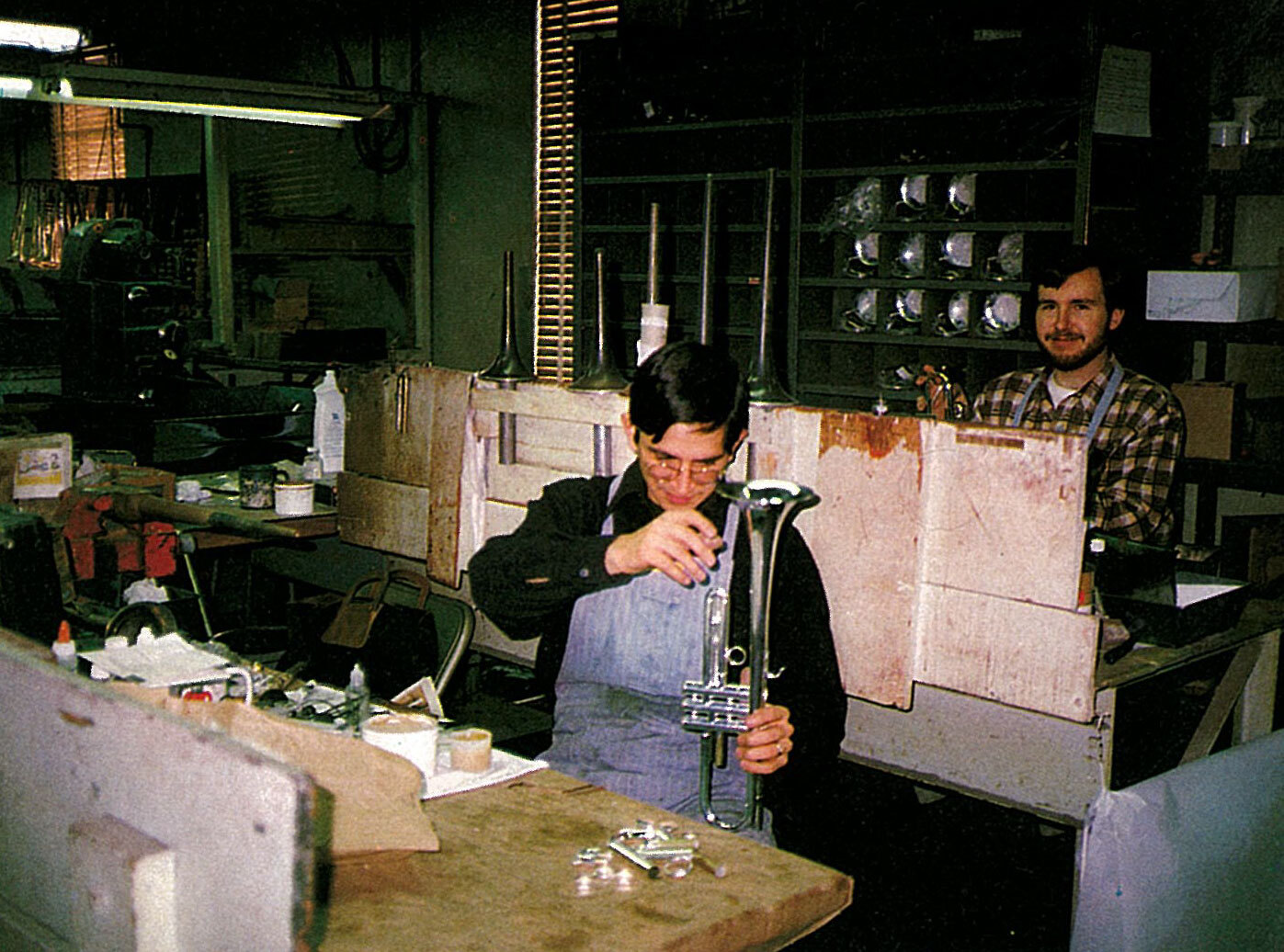
Final assembly of the silver-plated instruments

Final assembly of the silver-plated instruments

Renold Schilke, jr.

Renold Schilke, jr.

The composition of the metal used is no secret: “The material is relatively unimportant; it’s what you do with it that makes the difference!” When I asked why their instruments were so prized, Mrs. Schilke answered,

"We try to combine good design with flawless craftsmanship and attention to detail. One without the other is no good. We have many processes which couldn’t be considered in a large factory on cost grounds. That’s why we stay at our present size.” And the finish: “My father wouldn’t allow an instrument to be lacquered. He hated lacquer and said it killed an instrument.”

This still applies at Schilke; most completed instruments are sent to Anderson in Elkhart, Indiana, to be silver-plated unless gold-plating has been ordered.

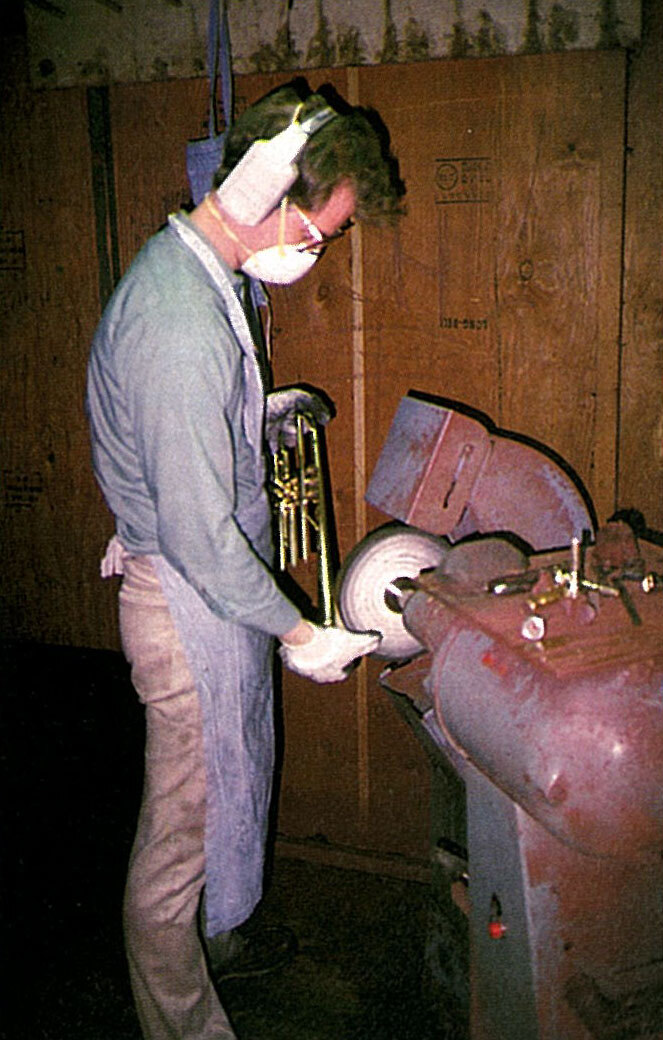
Polishing with music
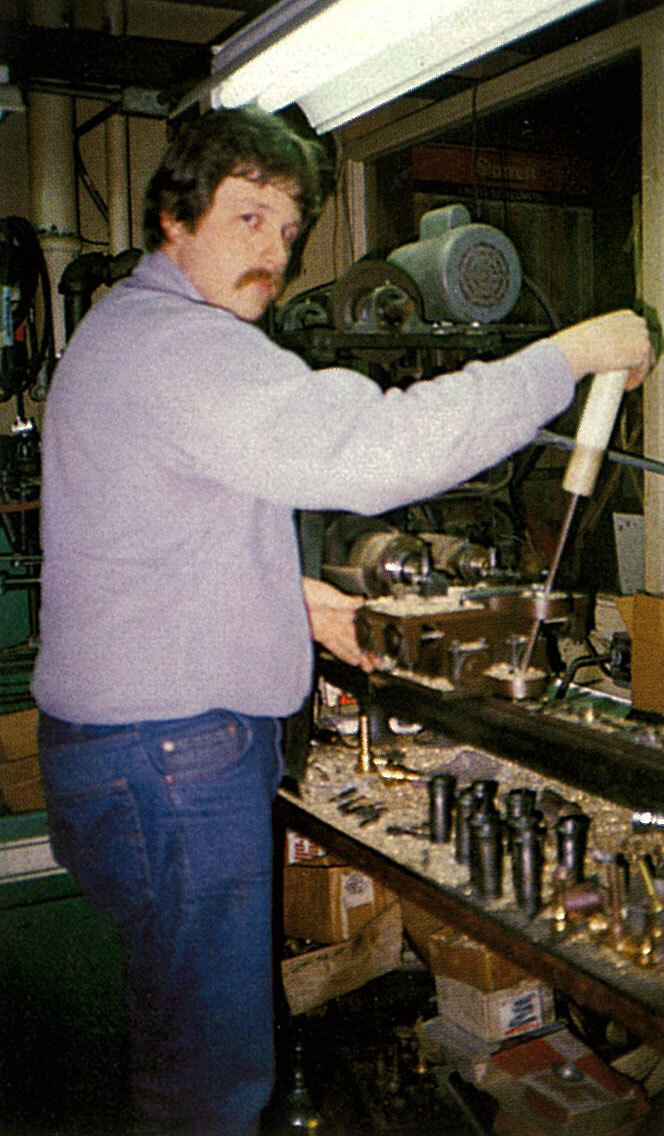
Polishing with music

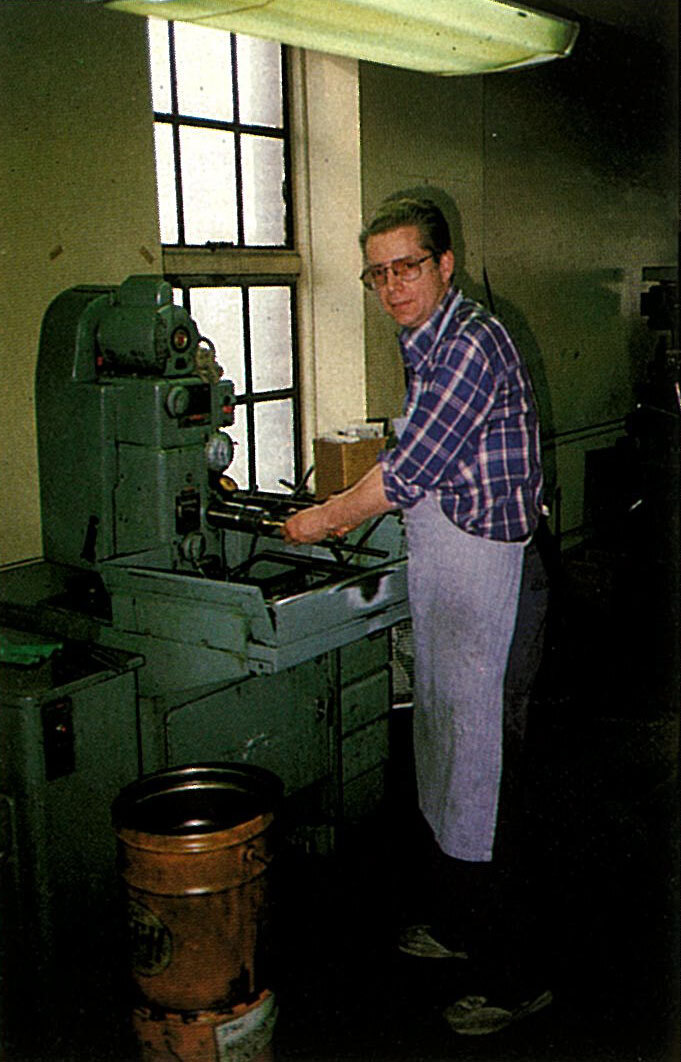
Scott Laskey and his mouthpiece-copying lathe
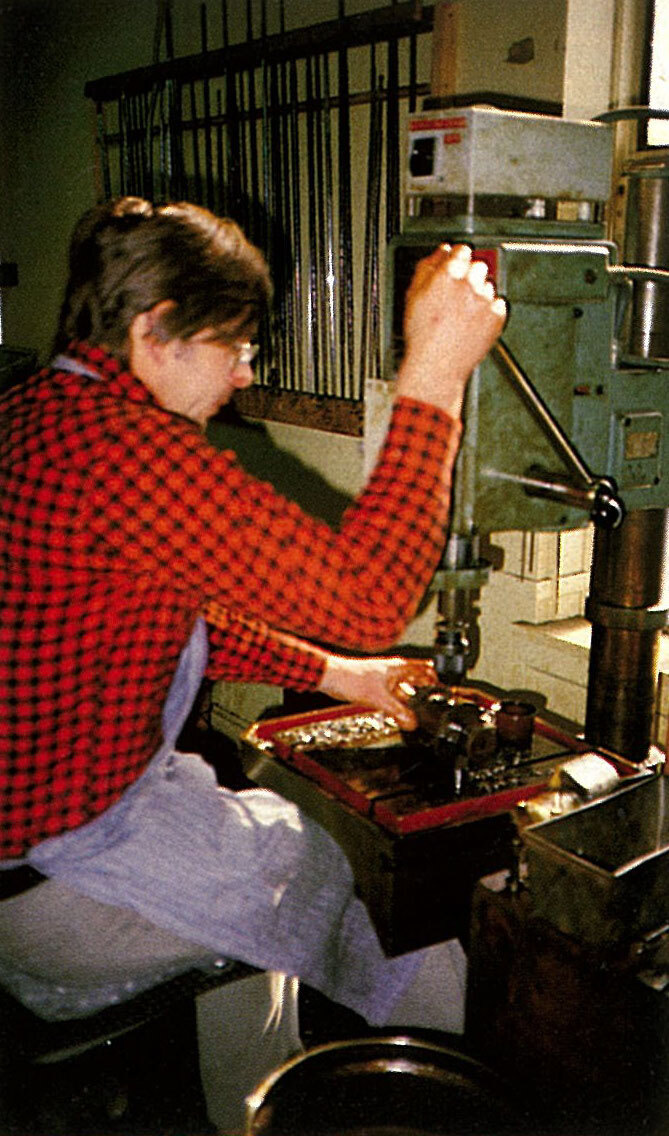
Scott Laskey and his mouthpiece-copying lathe

Drilling piston valves

Drilling piston valves

The founder of the firm, Renold Schilke (1910-1982) started to play the cornet at the age of eight and later had very intensive brass training. From 1929 to 1961 he played in the Chicago Symphony Orchestra, as an extra, assistant 1st and 1st trumpet at various times. He got his first look at instrument making in 1921, at the age of eleven, when he joined Holton and worked there for two years. Later, from 1934 to 1952, he worked for Elden Benge and then opened his own workshop in 1956. From 1966 until his death he was also an advisor and designer for Yamaha, although retaining his independence. I had the honour of meeting him at the Frankfurt Music Fair shortly before his death. His daughter described him to me as follow:

He was a very strong, intense personality, a practical man above all else. When he could he supported people who put their back into something, even if they failed. He respected work well done. On the other hand he couldn’t understand people who were full of big ideas and plans.

His hats, which he liked, just as he liked stuffed toy animals, still hang in the office.
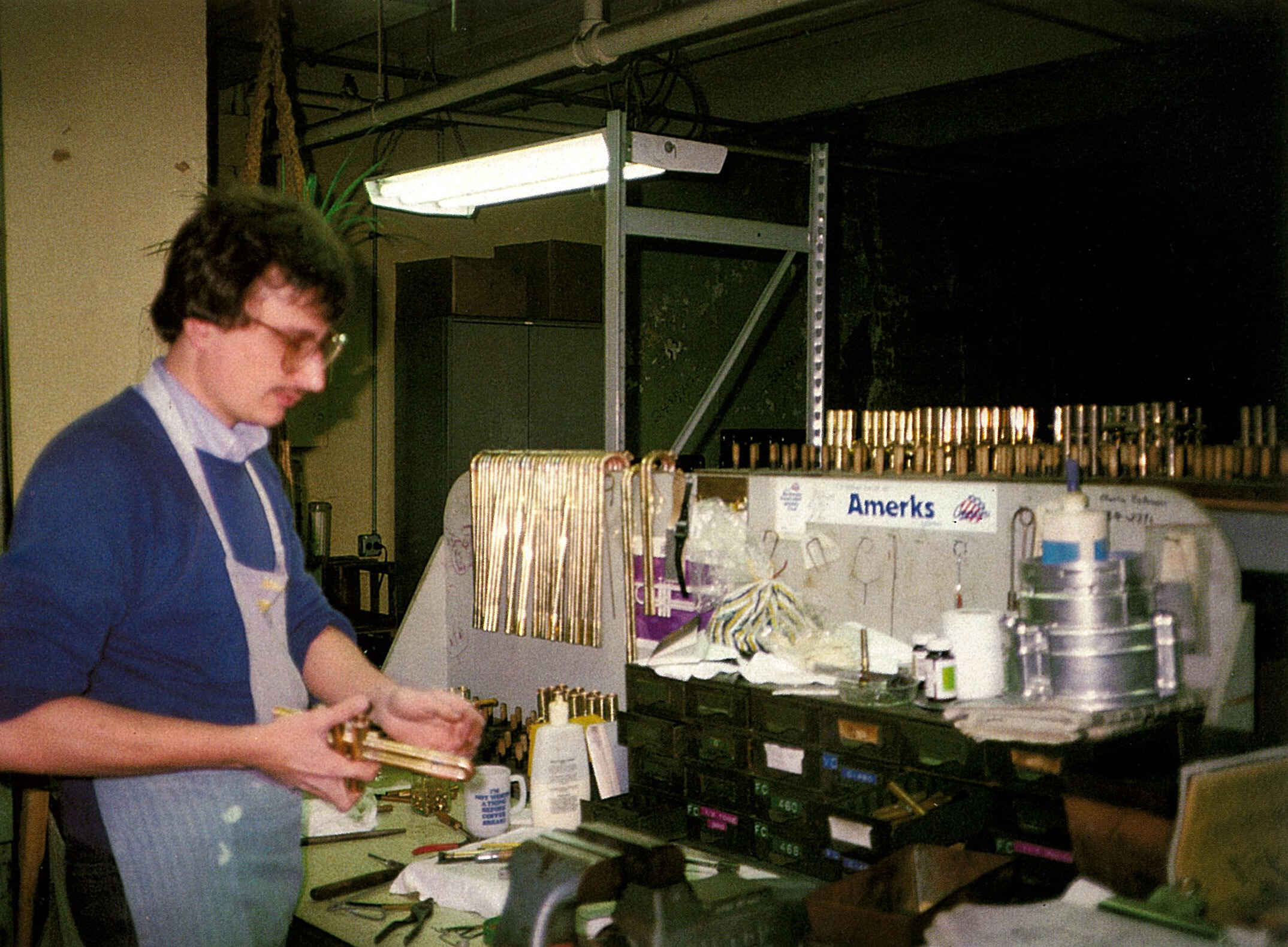
Assembly

Assembly

Scott Laskey, who is now responsible for everything to do with custom mouthpieces, told me about the way — characteristic of Renold Schilke — he came to work for the firm. 

In 1972, in the middle of my studies, I bought a trumpet, met the head of the firm and was lucky enough that he said he was willing to give me lessons — he was also an outstanding teacher. These could only be Saturday mornings between 5.30 and 6, before work, which was not so good for me as for my teacher. He took no money. Soon he was prophesying that I would give up my studies and work for him — which was not part of my plans at the time. Some time later, on a Saturday, I got a call summoning me to the office. To my surprise it wasn’t for a lesson, as I had expected; far from it — as I stepped out of the elevator, Mr. Schilke threw me his keys and said I was his new employee. I accepted and have not regretted it. Later I changed over to custom mouthpieces. Mr. Schilke let me work on my own and even put up with a few mistakes. As always, he was primarily interested in the result, not the method.
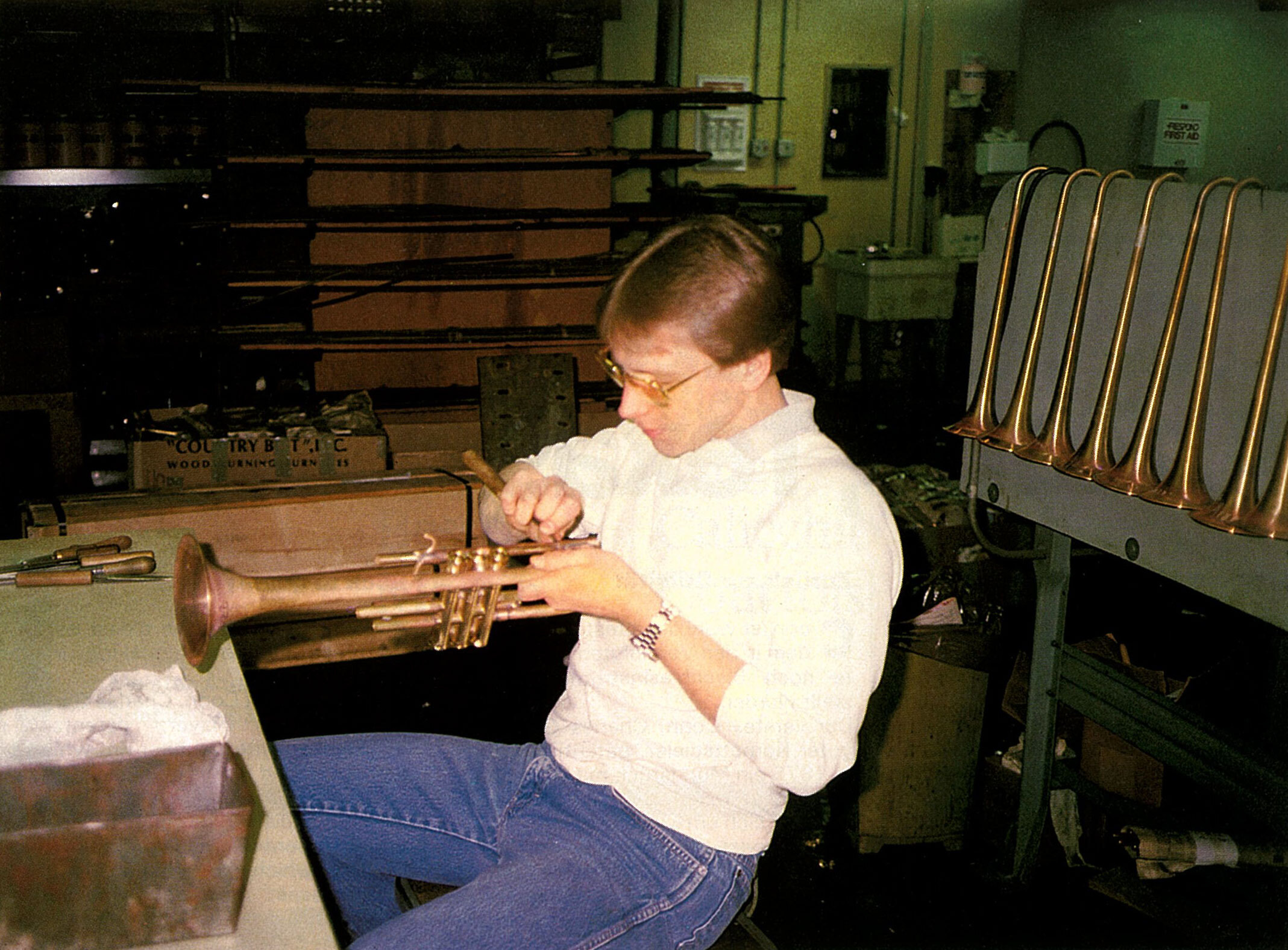
Removing solder

Removing solder

Kerry Griffith’s case also shows how a career can be made at Schilke. When there was an opening for a packer, he applied and got the job although it soon became clear that he was very clumsy with his hands. He could do little harm as a packer. But, as he was interested in everything, he was soon given more responsible work more suited to his abilities and today, seven years later, he is Scott Laskey’s successor as sales manager. These are exceptions, of course, and we should not forget that Kerry Griffith completed his studies as a trombonist.

Workers usually come to the firm with no previous training. They are put to work wherever a place is free and, if that is no good, attempts are made to find something more suitable. Once a job is found, it is rarely changed.

When the workers went home at five o’clock, many of them had instrument cases with them. The founder’s example of playing instruments as well as making them has remained alive!

Schilke Music Products Inc.
529 South Wabash Avenue, Chicago, Illinois 60605
 

Interviews with: Joan Schilke, Executive Vice President; Kerry Griffith, Sales Manager; Scott Laskey, Custom Mouthpieces.
 

Employees: 30
Annual production:
1200-1500 instruments
Repairs: All makes of trumpet

Brass Bulletin 51, III / 1985 páginas 48–58

Todo el contenido está protegido por derechos de autor © Brass Bulletin 1985–2026

Compartir este artículo

Facebook LinkedIn
Cargando…

Preguntas y respuestas

Cómo funciona la edición digital

¿Qué incluye la edición digital?

La edición digital reúne los artículos ya digitalizados como textos legibles y consultables en línea —no simplemente como escaneos o archivos PDF— junto con sus ilustraciones originales, notas, autoría, información del número y traducciones disponibles. Las sugerencias de artículos relacionados incluyen actualmente solo este material digitalizado.

¿Los artículos digitales son idénticos a los originales?

Conservamos con la mayor fidelidad posible el texto original, el idioma, las ilustraciones, los pies de imagen, las notas y el contexto editorial. La presentación se adapta para facilitar la lectura en línea y pueden corregirse errores evidentes de transcripción o escaneado. El contenido y el carácter del artículo publicado permanecen inalterados.

¿Qué idiomas están disponibles?

Brass Bulletin se publicó en inglés, francés y alemán a lo largo de toda su historia. Las traducciones al italiano y al español se añadieron a partir del número 60. Por este motivo, en los sitios italiano y español los artículos de los números 1 a 59 se muestran en inglés de forma predeterminada.

¿Con qué frecuencia se añaden nuevos artículos?

Se añaden nuevos artículos casi a diario, con aproximadamente un número completo digitalizado cada semana. El ritmo puede variar según el trabajo de preparación, tratamiento de imágenes y revisión editorial necesario.

¿Por qué no están disponibles todos los artículos en formato digital?

La colección completa de Brass Bulletin contiene 1.246 artículos publicados entre 1971 y 2003. El índice completo ya está disponible en línea y permite descubrir todos los artículos de la colección, incluidos aquellos cuyo texto íntegro todavía no ha sido digitalizado.

La digitalización comenzó en febrero de 2026. Cada artículo se prepara cuidadosamente para la lectura en línea, se revisa y se vincula con su número, sus autores, sus temas y sus ilustraciones. Al ritmo actual de digitalización, se prevé que la colección completa esté disponible en línea en febrero de 2028.

¿Por qué algunas referencias mencionan artículos que todavía no están disponibles?

Las referencias de los artículos originales se conservan aunque el material al que remiten aún no haya sido digitalizado. De este modo se mantiene intacto el contexto histórico y editorial. A medida que se incorporen más números a la edición digital, un número creciente de estas referencias conducirá a artículos que podrán leerse en línea.

¿Puedo sugerir un artículo o informar de un error de transcripción?

Sí. Si hay algún artículo que le gustaría especialmente ver digitalizado, o si detecta un posible error de transcripción o algún dato que falta, póngase en contacto con nosotros. Los comentarios de los lectores nos ayudan a mejorar la edición digital y a establecer prioridades útiles dentro del archivo.

¿Cómo puedo apoyar a Brass Bulletin?

Su apoyo ayuda a financiar la preparación, verificación y publicación en línea de la colección completa.

Suscríbase a la Edición Digital

¿Prefiere apoyarnos sin suscribirse?

Haga una donación

¿Cómo avanza la digitalización?

Estamos poniendo Brass Bulletin a disposición de los lectores en línea, artículo por artículo. Pueden leer los artículos recién digitalizados en cuanto estén listos, incluso antes de que se complete un número entero.

Consulten nuestro calendario de digitalización para descubrir las últimas novedades y las fechas estimadas de disponibilidad de los próximos números. Estas estimaciones se basan en nuestro ritmo reciente y pueden cambiar.

Busca en Brass Bulletin.