Rendete Brass Bulletin disponibile nella vostra università, nel vostro conservatorio o nella vostra biblioteca Scoprite l’accesso istituzionale

4 min di lettura

Parte 2

Instrument Makers in USA

Schilke Music Products, Inc. Chicago

Instrument Makers in USA

Schilke Music Products, Inc. Chicago

American careers

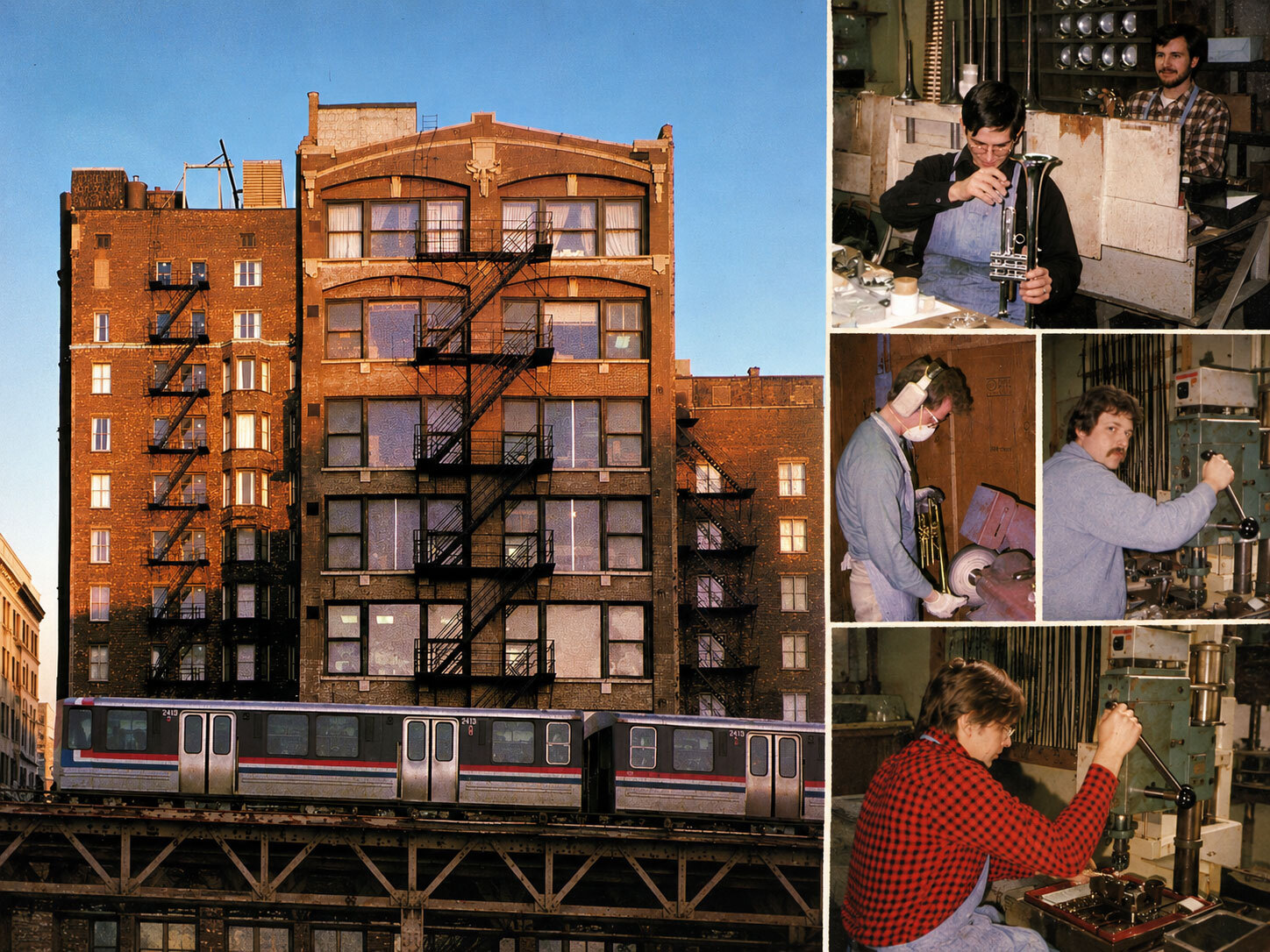
Schilke is situated in the heart of Chicago, 500 yards from the shores of Lake Michigan. Production and administration occupy the seventh and eighth floors at 529 South Wabash Avenue. Most sales are to professionals. Trumpets, piccolo trumpets and cornets are made, also mouthpieces, both standard and custom-made. During my visit the prototype of a newly developed flugelhorn, shortly to go into production, was being discussed. About 45 trusted dealers in America and twenty more abroad sell the products.

The workshop is set up in a traditional way. Instruments are normally produced in batches of 25, with about fifty man-hours going into each instrument. Formerly, when Schilke still produced horns, trombones and tubas, the tubes were made from soldered sheet metal; today the conical tube sections are made from seamless cylindrical tubing. Pitch is used for bending. Great importance is attached to the method of removing solder. The instruments are not placed in the usual chemical solder-removing bath after assembly; instead the solder is painstakingly removed by hand with a scraper. The valves are made of monel. Schilke uses an interesting procedure for seamless bells. Previously the so-called beryllium-bronze bell was used to good effect; a template produced in the workshop was delivered to a specialist firm where it was immersed in an electrolytic bath until the metal deposit reached the desired thickness, when the raw bell could be removed from the template. Today many instruments, including the S series, have a newly developed bell, seamless and specially produced from a single piece of brass. Renold Schilke, son of the founder and now president, follows production and finishing of this model personally. He is an all-rounder in both office and workshop. When I arrived, he was working on leadpipes for piccolo trumpets and later I saw him lapping valves after two workers had called in sick.

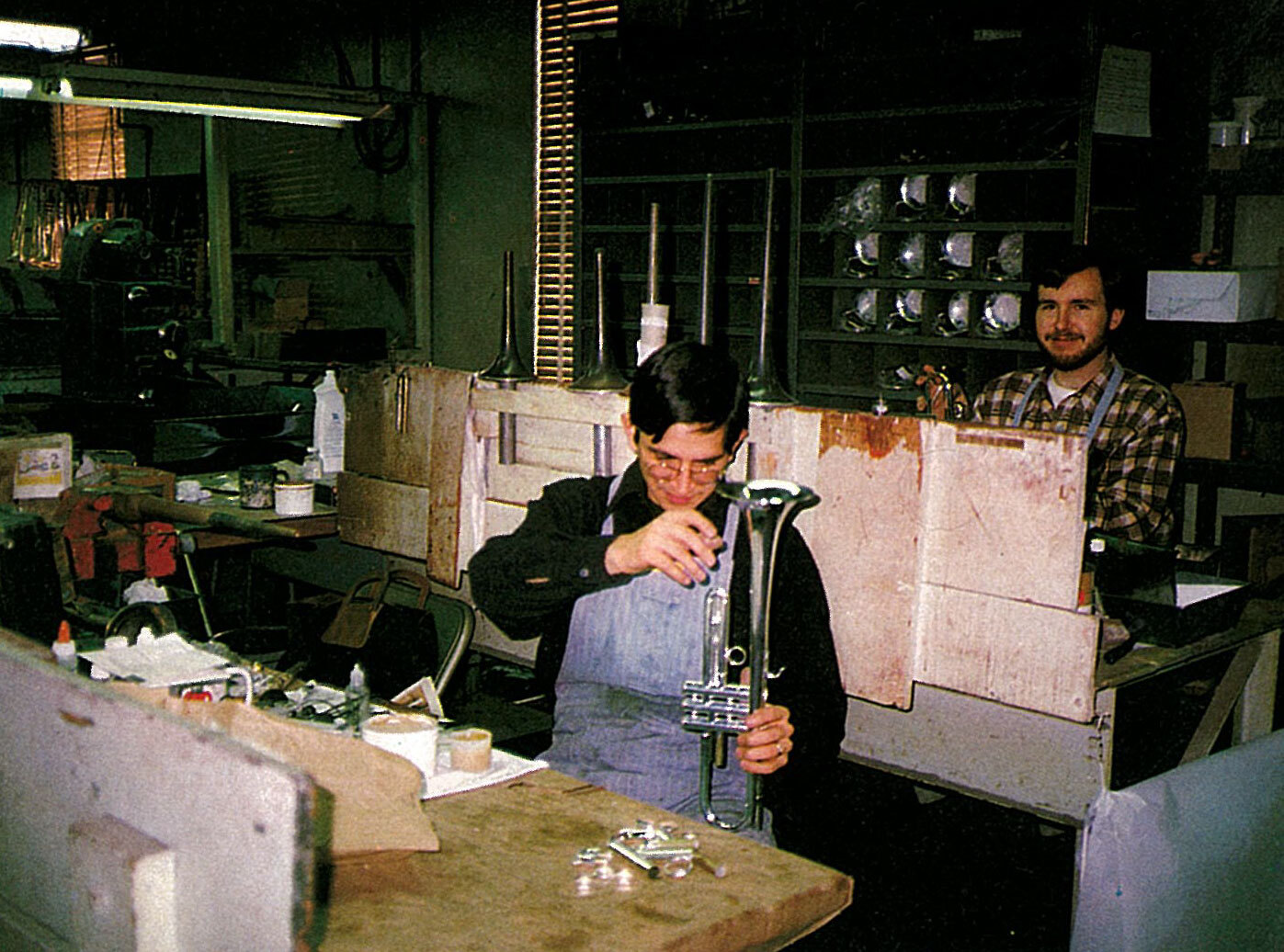
Final assembly of the silver-plated instruments

Final assembly of the silver-plated instruments

Renold Schilke, jr.

Renold Schilke, jr.

The composition of the metal used is no secret: “The material is relatively unimportant; it’s what you do with it that makes the difference!” When I asked why their instruments were so prized, Mrs. Schilke answered,

"We try to combine good design with flawless craftsmanship and attention to detail. One without the other is no good. We have many processes which couldn’t be considered in a large factory on cost grounds. That’s why we stay at our present size.” And the finish: “My father wouldn’t allow an instrument to be lacquered. He hated lacquer and said it killed an instrument.”

This still applies at Schilke; most completed instruments are sent to Anderson in Elkhart, Indiana, to be silver-plated unless gold-plating has been ordered.

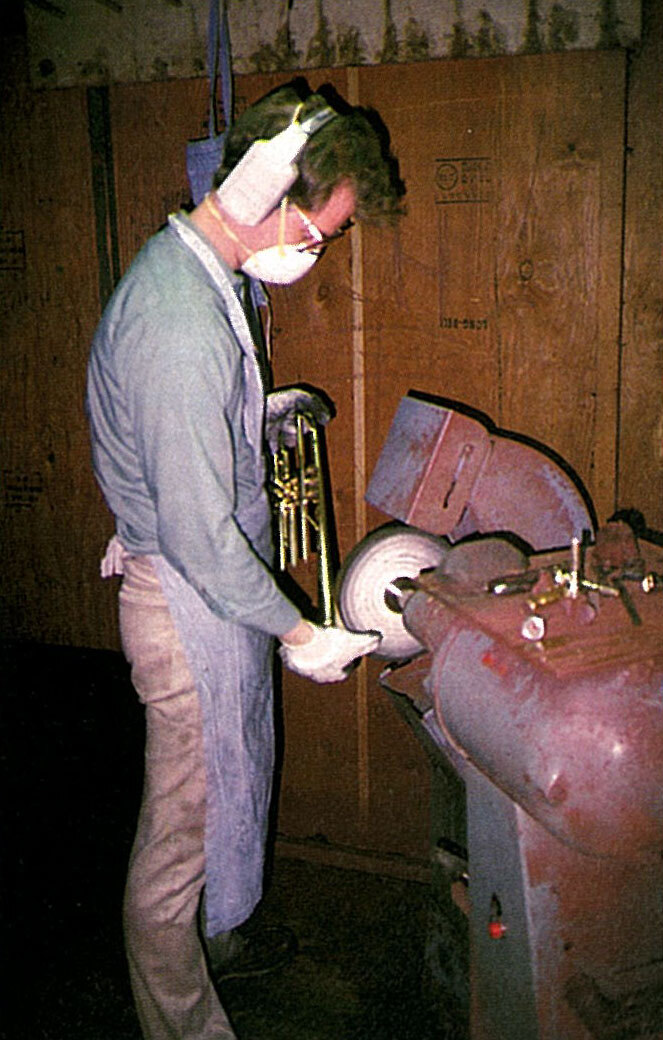
Polishing with music
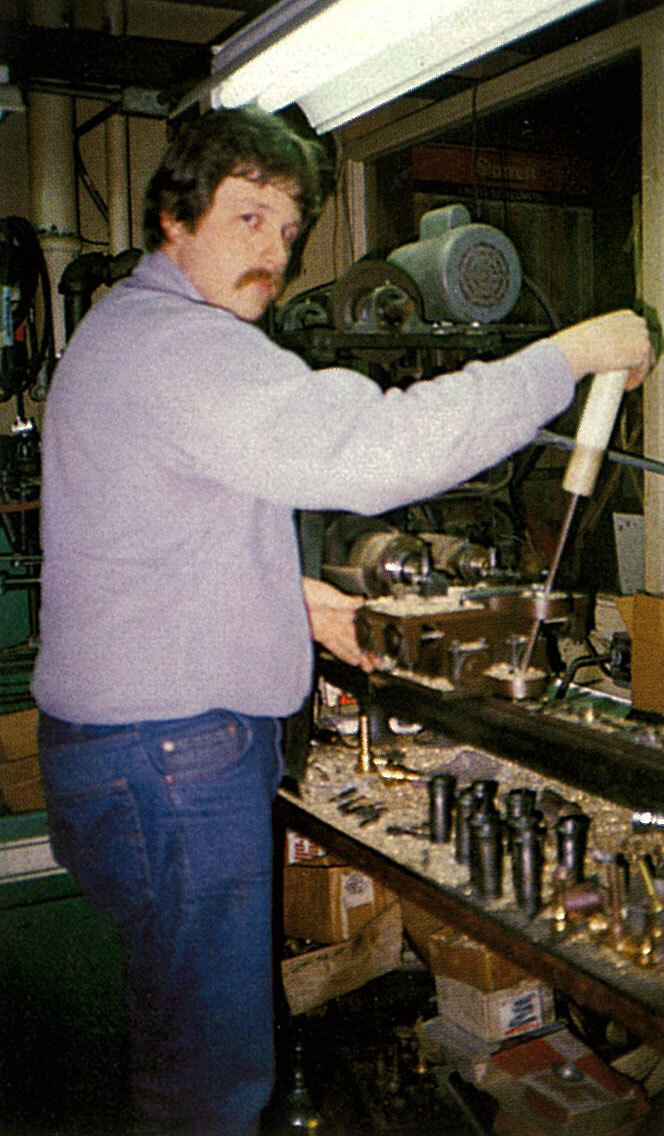
Polishing with music

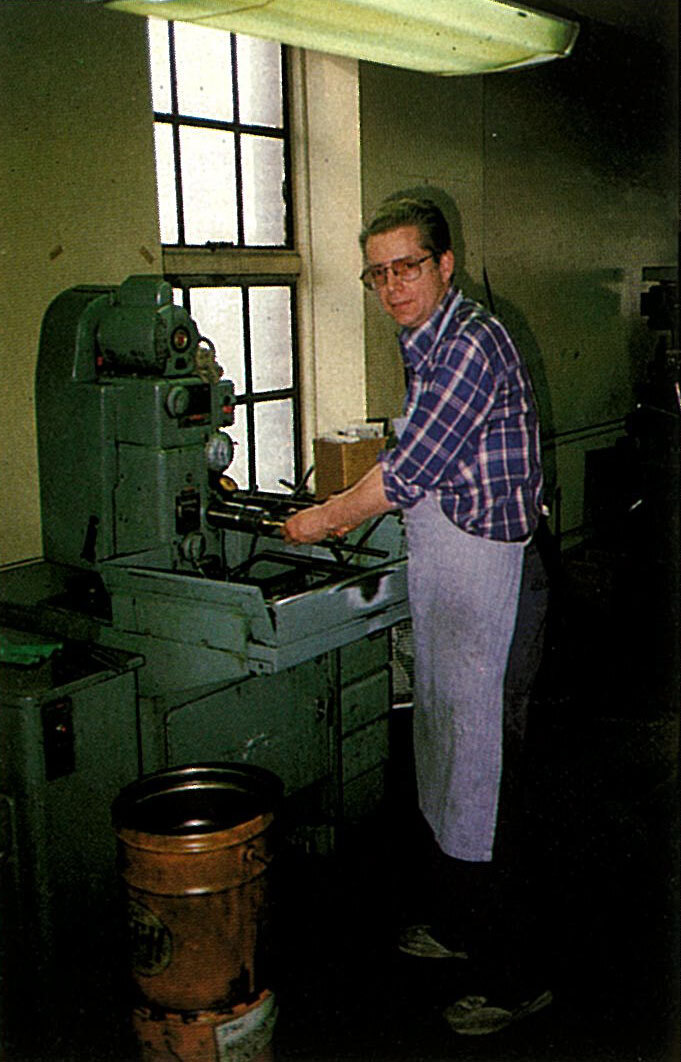
Scott Laskey and his mouthpiece-copying lathe
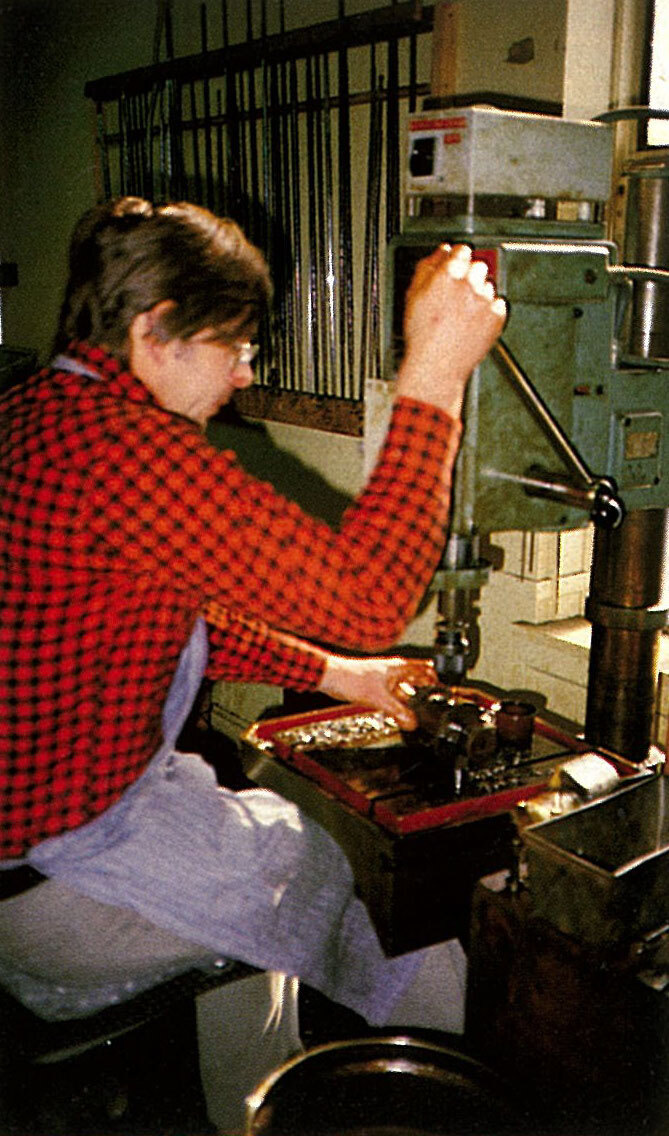
Scott Laskey and his mouthpiece-copying lathe

Drilling piston valves

Drilling piston valves

The founder of the firm, Renold Schilke (1910-1982) started to play the cornet at the age of eight and later had very intensive brass training. From 1929 to 1961 he played in the Chicago Symphony Orchestra, as an extra, assistant 1st and 1st trumpet at various times. He got his first look at instrument making in 1921, at the age of eleven, when he joined Holton and worked there for two years. Later, from 1934 to 1952, he worked for Elden Benge and then opened his own workshop in 1956. From 1966 until his death he was also an advisor and designer for Yamaha, although retaining his independence. I had the honour of meeting him at the Frankfurt Music Fair shortly before his death. His daughter described him to me as follow:

He was a very strong, intense personality, a practical man above all else. When he could he supported people who put their back into something, even if they failed. He respected work well done. On the other hand he couldn’t understand people who were full of big ideas and plans.

His hats, which he liked, just as he liked stuffed toy animals, still hang in the office.
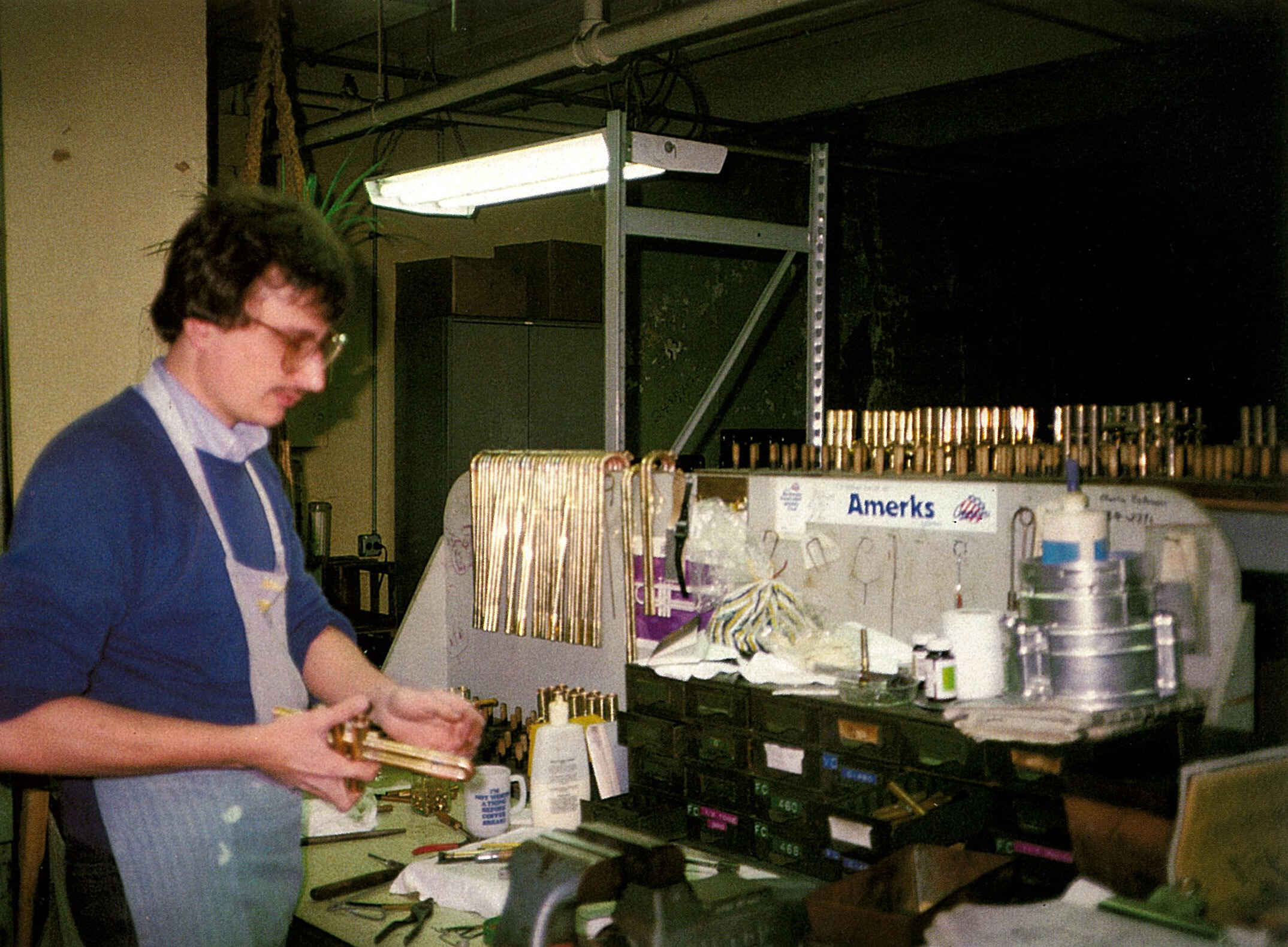
Assembly

Assembly

Scott Laskey, who is now responsible for everything to do with custom mouthpieces, told me about the way — characteristic of Renold Schilke — he came to work for the firm. 

In 1972, in the middle of my studies, I bought a trumpet, met the head of the firm and was lucky enough that he said he was willing to give me lessons — he was also an outstanding teacher. These could only be Saturday mornings between 5.30 and 6, before work, which was not so good for me as for my teacher. He took no money. Soon he was prophesying that I would give up my studies and work for him — which was not part of my plans at the time. Some time later, on a Saturday, I got a call summoning me to the office. To my surprise it wasn’t for a lesson, as I had expected; far from it — as I stepped out of the elevator, Mr. Schilke threw me his keys and said I was his new employee. I accepted and have not regretted it. Later I changed over to custom mouthpieces. Mr. Schilke let me work on my own and even put up with a few mistakes. As always, he was primarily interested in the result, not the method.
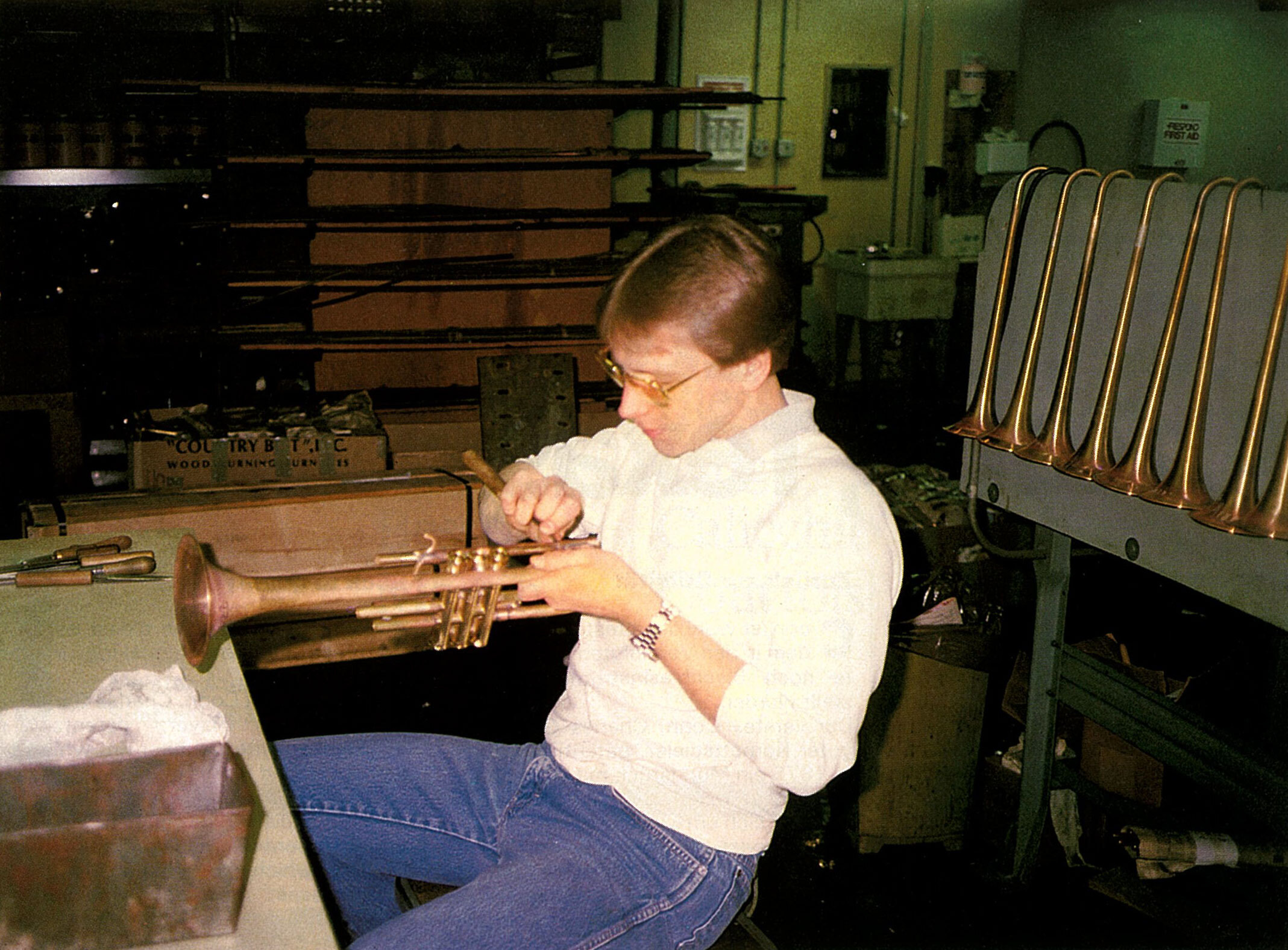
Removing solder

Removing solder

Kerry Griffith’s case also shows how a career can be made at Schilke. When there was an opening for a packer, he applied and got the job although it soon became clear that he was very clumsy with his hands. He could do little harm as a packer. But, as he was interested in everything, he was soon given more responsible work more suited to his abilities and today, seven years later, he is Scott Laskey’s successor as sales manager. These are exceptions, of course, and we should not forget that Kerry Griffith completed his studies as a trombonist.

Workers usually come to the firm with no previous training. They are put to work wherever a place is free and, if that is no good, attempts are made to find something more suitable. Once a job is found, it is rarely changed.

When the workers went home at five o’clock, many of them had instrument cases with them. The founder’s example of playing instruments as well as making them has remained alive!

Schilke Music Products Inc.
529 South Wabash Avenue, Chicago, Illinois 60605
 

Interviews with: Joan Schilke, Executive Vice President; Kerry Griffith, Sales Manager; Scott Laskey, Custom Mouthpieces.
 

Employees: 30
Annual production:
1200-1500 instruments
Repairs: All makes of trumpet

Brass Bulletin 51, III / 1985 pagine 48–58

Tutti i contenuti sono protetti dal diritto d’autore © Brass Bulletin 1985–2026

Condividi questo articolo

Facebook LinkedIn
Loading…

Domande e risposte

Come funziona l’edizione digitale

Che cosa comprende l’edizione digitale?

L’edizione digitale riunisce gli articoli già digitalizzati sotto forma di testi leggibili e ricercabili online — non semplicemente come scansioni o file PDF — insieme alle illustrazioni originali, alle note, agli autori, alle informazioni sul numero della rivista e alle traduzioni disponibili. I suggerimenti di articoli correlati comprendono attualmente solo questo materiale digitalizzato.

Gli articoli digitali sono identici agli originali?

Conserviamo il più fedelmente possibile il testo originale, la lingua, le illustrazioni, le didascalie, le note e il contesto editoriale. La presentazione viene adattata per una lettura confortevole online e gli evidenti errori di trascrizione o scansione possono essere corretti. Il contenuto e il carattere dell’articolo pubblicato rimangono invariati.

Quali lingue sono disponibili?

Brass Bulletin è stato pubblicato in inglese, francese e tedesco nel corso di tutta la sua storia. Le traduzioni italiane e spagnole sono state aggiunte a partire dal numero 60. Sui siti italiano e spagnolo, gli articoli dei numeri da 1 a 59 vengono quindi mostrati in inglese per impostazione predefinita.

Con quale frequenza vengono aggiunti nuovi articoli?

Nuovi articoli vengono aggiunti quasi ogni giorno, con circa un numero completo digitalizzato ogni settimana. Il ritmo può variare in base al lavoro di preparazione, elaborazione delle immagini e verifica editoriale necessario.

Perché non tutti gli articoli sono disponibili in formato digitale?

La collezione completa di Brass Bulletin comprende 1.246 articoli pubblicati tra il 1971 e il 2003. L’indice completo è già disponibile online e consente di scoprire tutti gli articoli della collezione, compresi quelli il cui testo integrale non è ancora stato digitalizzato.

La digitalizzazione è iniziata nel febbraio 2026. Ogni articolo viene accuratamente preparato per la lettura online, verificato e collegato al relativo numero, agli autori, agli argomenti e alle illustrazioni. Al ritmo attuale di digitalizzazione, la collezione completa dovrebbe essere disponibile online entro febbraio 2028.

Perché alcuni riferimenti citano articoli che non sono ancora disponibili?

I riferimenti presenti negli articoli originali vengono conservati anche quando il materiale a cui rimandano non è ancora stato digitalizzato. In questo modo si preserva l’integrità storica ed editoriale della rivista. Man mano che nuovi numeri vengono aggiunti all’edizione digitale, un numero crescente di questi riferimenti condurrà ad articoli leggibili online.

Posso suggerire un articolo o segnalare un errore di trascrizione?

Sì. Se desiderate che un determinato articolo venga digitalizzato, oppure se notate un possibile errore di trascrizione o un’informazione mancante, contattateci. I riscontri dei lettori ci aiutano a migliorare l’edizione digitale e a stabilire priorità utili all’interno dell’archivio.

Come posso sostenere Brass Bulletin?

Il vostro sostegno contribuisce a finanziare la preparazione, la verifica e la pubblicazione online dell’intera collezione.

Abbonati all’Edizione digitale

Preferite sostenerci senza abbonarvi?

Fate una donazione

Come procede la digitalizzazione?

Stiamo rendendo Brass Bulletin disponibile online gradualmente, articolo per articolo. Potete leggere gli articoli appena digitalizzati non appena sono pronti, anche prima che un intero numero sia completato.

Consultate il nostro calendario di digitalizzazione per scoprire le ultime aggiunte e le date di disponibilità stimate dei prossimi numeri. Le stime si basano sul nostro ritmo recente e possono cambiare.

Cerca in Brass Bulletin.