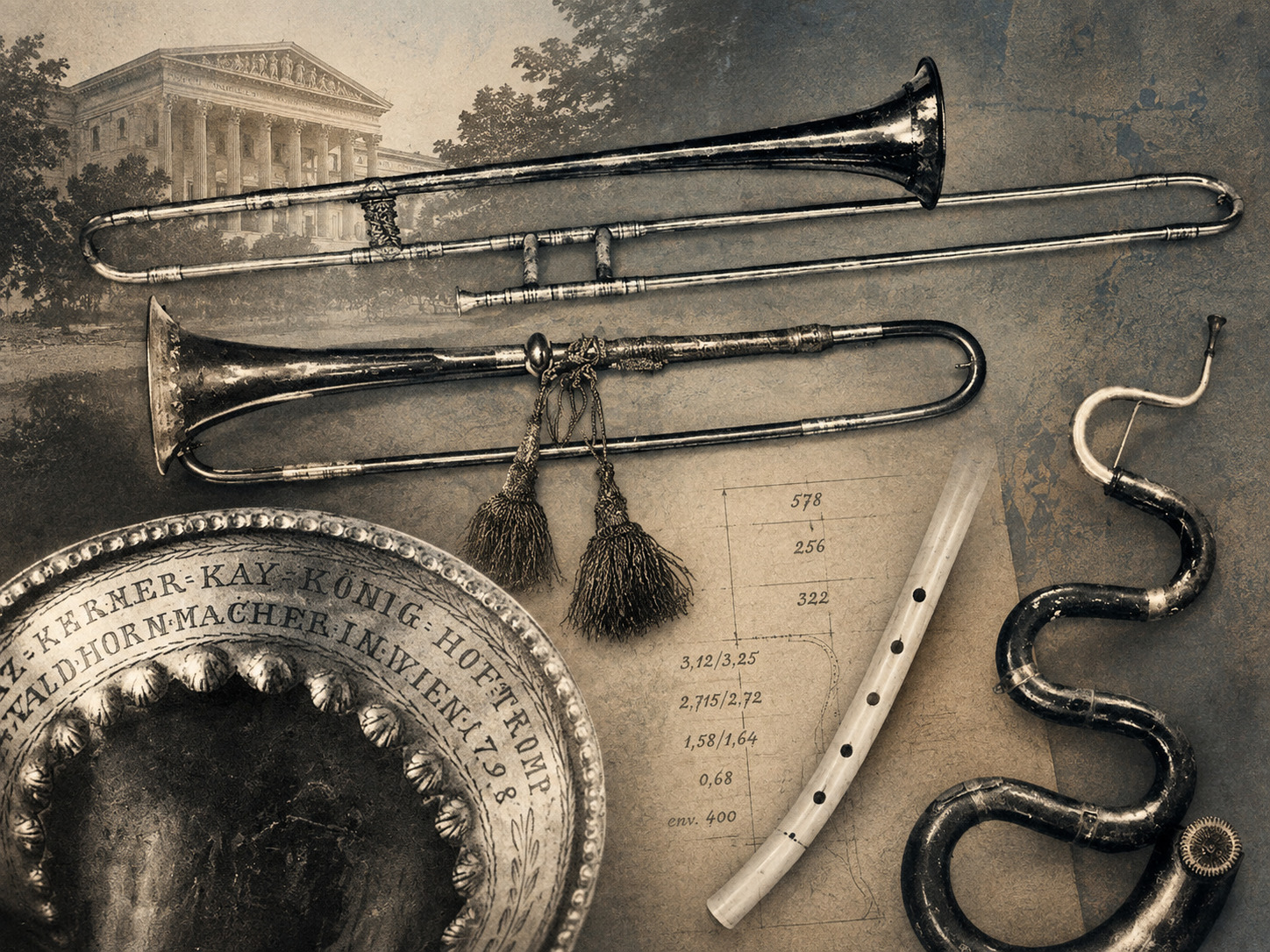
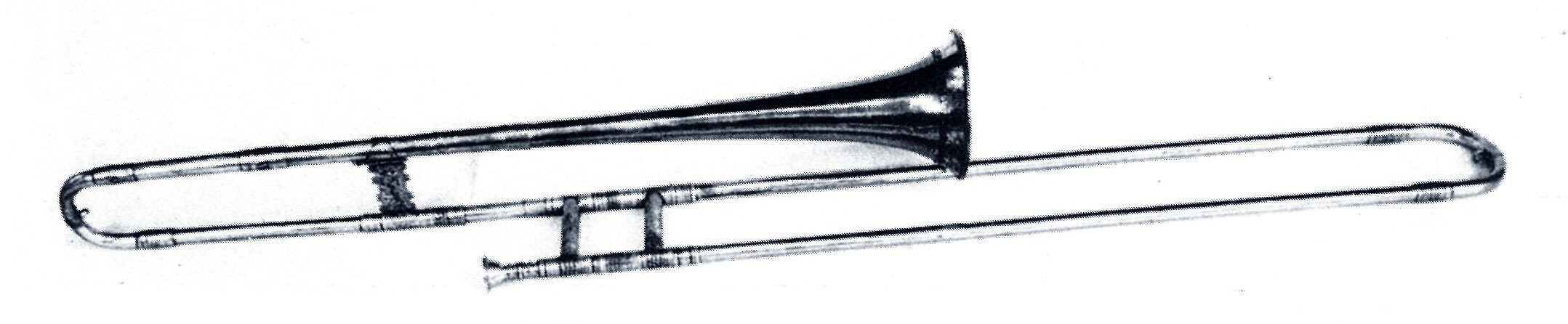
Tenor trombone, Geyer, Vienna, 1702 (Cat. no. H 1951.9)
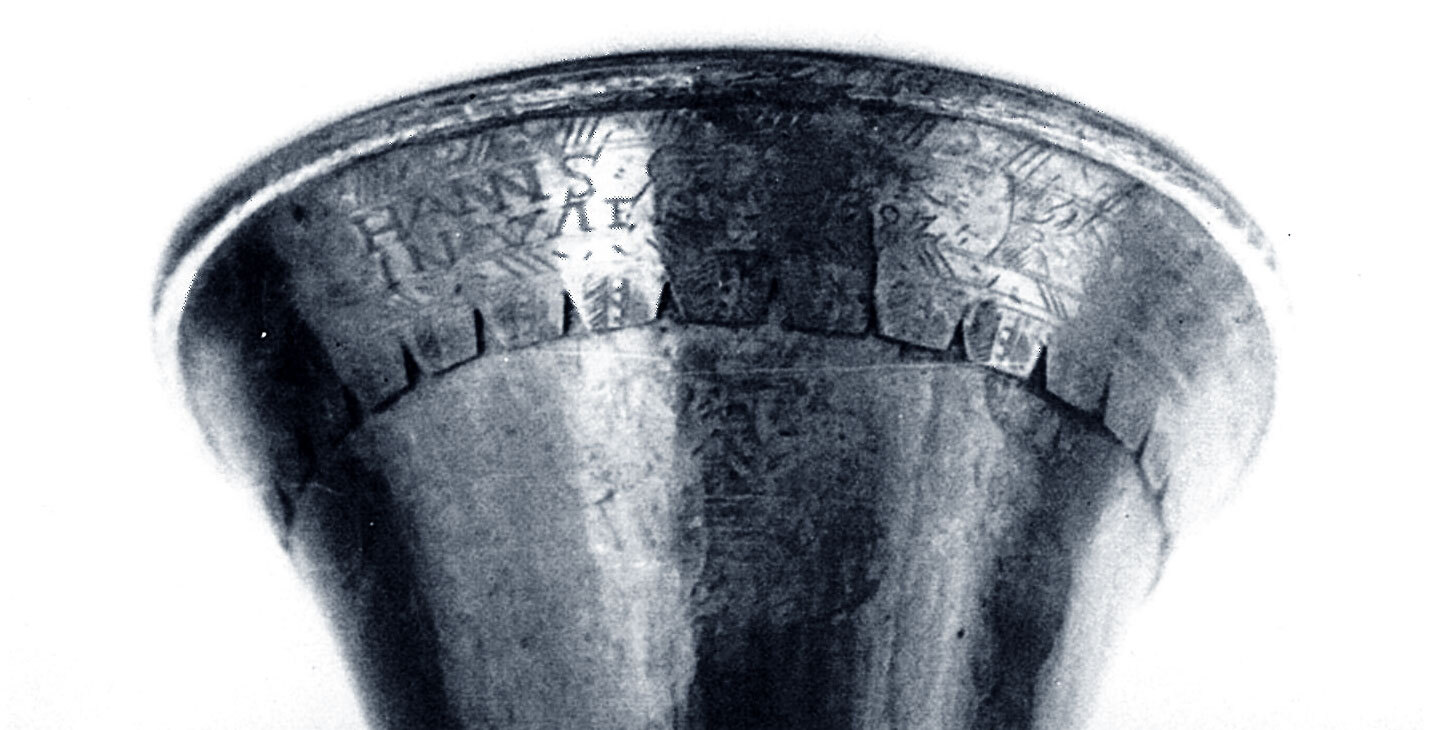
Bell of the Geyer trombone (Cat. no. H 1951.9)
Table 1: Trumpets of the Hungarian National Museum in Budapest
| No. | Instrument |
|---|---|
| 1 | Natural trumpet in F, Kerner, Vienna, 1798, silver (black) and gold |
| 2 | Natural trumpet in D, Kerner, Vienna, 1800, with mouthpiece |
| 3 | Natural trumpet in D, anonymous (Hungary, 19th century?), with mouthpiece |
| 4 | Natural trumpet in E♭, Huschauer, Vienna, 1804 |
| 5 | 2 natural trumpets, anonymous 19th century, one with mouthpiece |
| 6 | Short natural trumpet in D♭, Lausmann, Pressburg (now Bratislava), 1823, with mouthpiece |
| 7 | Short natural trumpet, anonymous, unplayable (severely damaged) |
| 8 | Keyed trumpet in D♭, Hoyer, 5 keys, with mouthpiece |
| 9 | Fanfare trumpet in low D, W.J. Schunda, Pest, second half of the 19th century (lenght: 107 cm; bell diameter: 13.4/13.6 cm) |
| 10 | Alto trombone, Geyer, Vienna, 1702 |
| 11 | Tenor trombone, Geyer, Vienna, 1702, with mouthpiece |
Many instruments were destroyed in a fire during World War II; there remain bell fragments from some, for example: Ch. Scheily in Pest”, “Thomas Zilka in Brünn”, and “D. Meink KK a p Instr Fabrick in Wien”.
Descriptions:
(ratings are on a scale 1-5):
1) Natural trumpet in F (Cat. no. 67.8520), weapons collection. Inscription: IGNAZ KERNER KAY KÖNIG HOFTROMP UND WALDHORNMACHER IN WIEN 1798 (“Ignaz Kerner, Imperial-Royal Court trumpet and horn maker, Vienna 1798”; see. Ill. 4). Bows, tubes and bell section are oxydised black (originally silver, as can be seen beneath the movable pommel). Ferrules, pommel and garland (with shell decoration) are gold. The instrument has two original gold tassels. Some buckling in the bell. Condition: 3-4; musical quality: 1-2; workmanship: 1-2. A fine instrument with a fine sound.
2) Natural trumpet in D with mouthpiece (Cat. no. 67.8558) Inscription: ANTON UND IGNAZ KERNER KK PRIVIL HOF UND KAMMER WALDHORN UND TRP MACHER IN WIEN 1800 (“Anton and Ignaz Kerner, by Imperial-Royal privilege, Court and Chamber horn and trumpet makers in Vienna, 1800”). Pommel not movable, garland with shell decoration. Presumably the model for instrument 1916.34.8.6 (q.v.), also acquired from the church. No wooden block, but instead three metal braces, clearly of more recent date, connecting mouthpipe and bell (hole in the bell). Condition: 2; musical quality: 2; workmanship: 2.
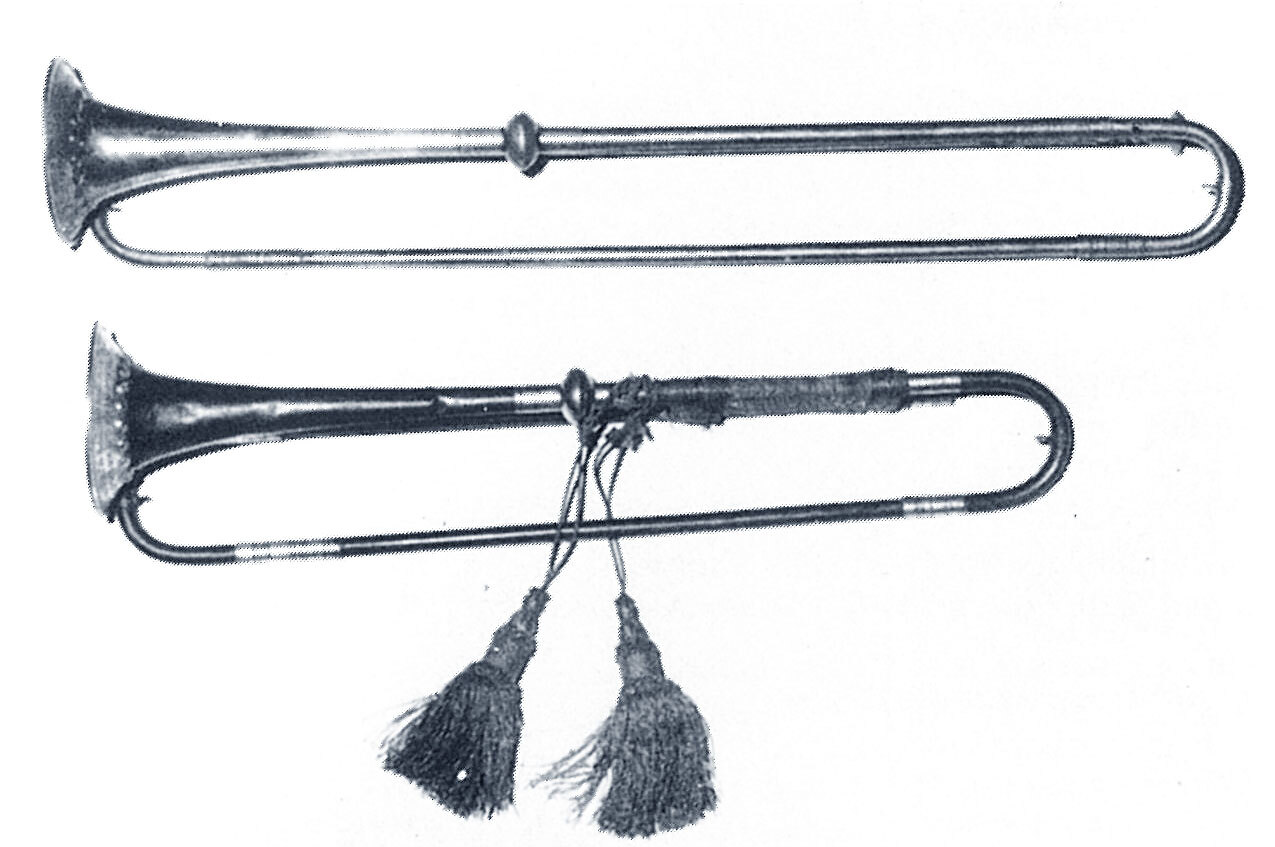
Natural trumpets in D and F, both by Kerner, Vienna (Cat. nos. 67.8558 and 67.8520)
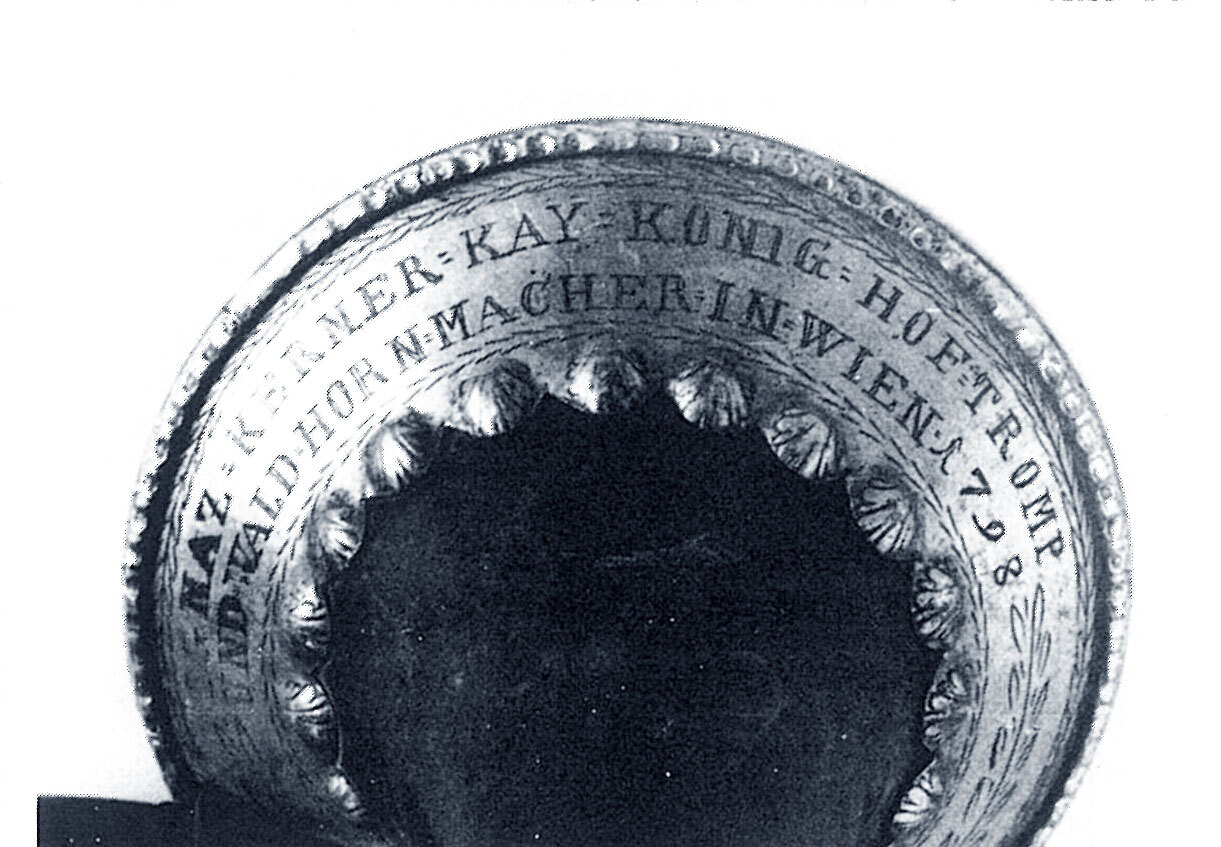
Bell of the F trumpet (Cat. no. 67.8520)
Table 2: Measurements for the trumpets described
| Instrument | 67.8520 | 67.8558 | 1916/34/8/6 | 1951.5 |
|---|---|---|---|---|
| Pitch | F | D | D | E♭ |
| A | 450 Hz | 438 (422) Hz | 438 Hz¹ | 435 Hz |
| Mouthpiece | Tilz Sp. 2 | original (Tilz Sp. 2) | original | Tilz Sp. 2 |
| Length | 58.5 cm | 72.5 cm | 72.5 cm¹ | 69.0 cm |
| Bore at mouthp. | 11.55 mm | 11.7/11.85 mm | 11.7 mm | 11.8 mm |
| External diameter of tube | 12.0 mm | 12.1-12.4 mm | 12.1-13.0 mm | 11.9-12.0 mm |
| Bell diameter | 11.57/11.63 mm | 11.57/11.70 cm | 11.31/11.42 cm (not completely circular) | 11.98/12.06 cm |
| Bell seams | not visible |  | not visible | not visible |
¹ without bit
Table 3: Original mouthpieces (in mm)
| Instrument | 67.8558 | 1916.34.8.6 |
|---|---|---|
| Overall length | 74.5 | 66.5 |
| Cup: | ||
| Length | 20.2 | 22.1 |
| Internal/external diameter | 17.3/27.9 | 18.9/28.5 |
| Depth | 12.2 | 10.- (not precisely measurable) |
| Bore | 4.15 | 4.3 |
| Rim | flat | flat |
| Description | sharp edge | between cup and funnel shape |
| Shank: | ||
| Cylindrical/conical | both | conical |
| Length | 53.6 | 36.8 |
| Diameter at cup | 10.9 | 12.7 |
| Diameter at end | 10.2 | 10.4-10.6 (slightly deformed) |
| Bore: | ||
| cylindrical/conical | both | conical |
| Internal diameter at end | 8.2/10.2 | 8.8/9.1 |
| Description | full sound, sits well |
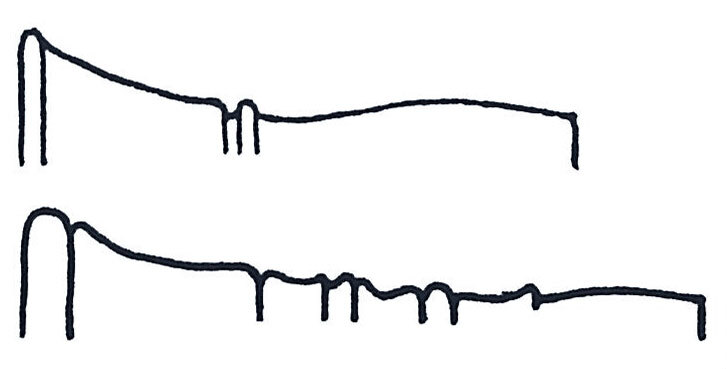
Diagramm
inside: conical / cylindrical
3) Natural trumpet in D with mouthpiece (Cat. no. 1916.34.8.6) This instrument was acquired from the church together with the previous one. Provenance uncertain (Hungary, 19th century?), no inscription, no mark. This trumpet has a bit (not original; length: 10.29 cm). It is probably a copy of instrument 67.8558. The grounds for this conclusion are:
a) same pitch (without the bit)
b) an exactly similar pommel
c) the three metal braces, which are in the same position
d) the (unnecessary) final ferrule, which is in the same position. (The second bow runs beyond the final ferrule in one piece so that the bell section does not begin until 62.4 cm after the ferrule.)
4) Natural trumpet in E♭ (Cat. no. 1951.5) Provenance: Vienna, 1804. Inscription: Joseph Huschauer, 18 in Wienn 04 Garland decorated with [ornament] and shell motif. All catalogue numbers beginning with 1951 are for instruments all of whose documentation was lost during the upheavals of the war. Condition: 3; musical quality: 2 (sounds very bright); workmanship: 2.
Instruments of secondary interest
Along with the serpent (Cat. no. H 1951.27; no mouthpiece inscription: GEBR. ALEXANDER MAINZ; see Ill. 5) the ivory cornetto is the most significant.
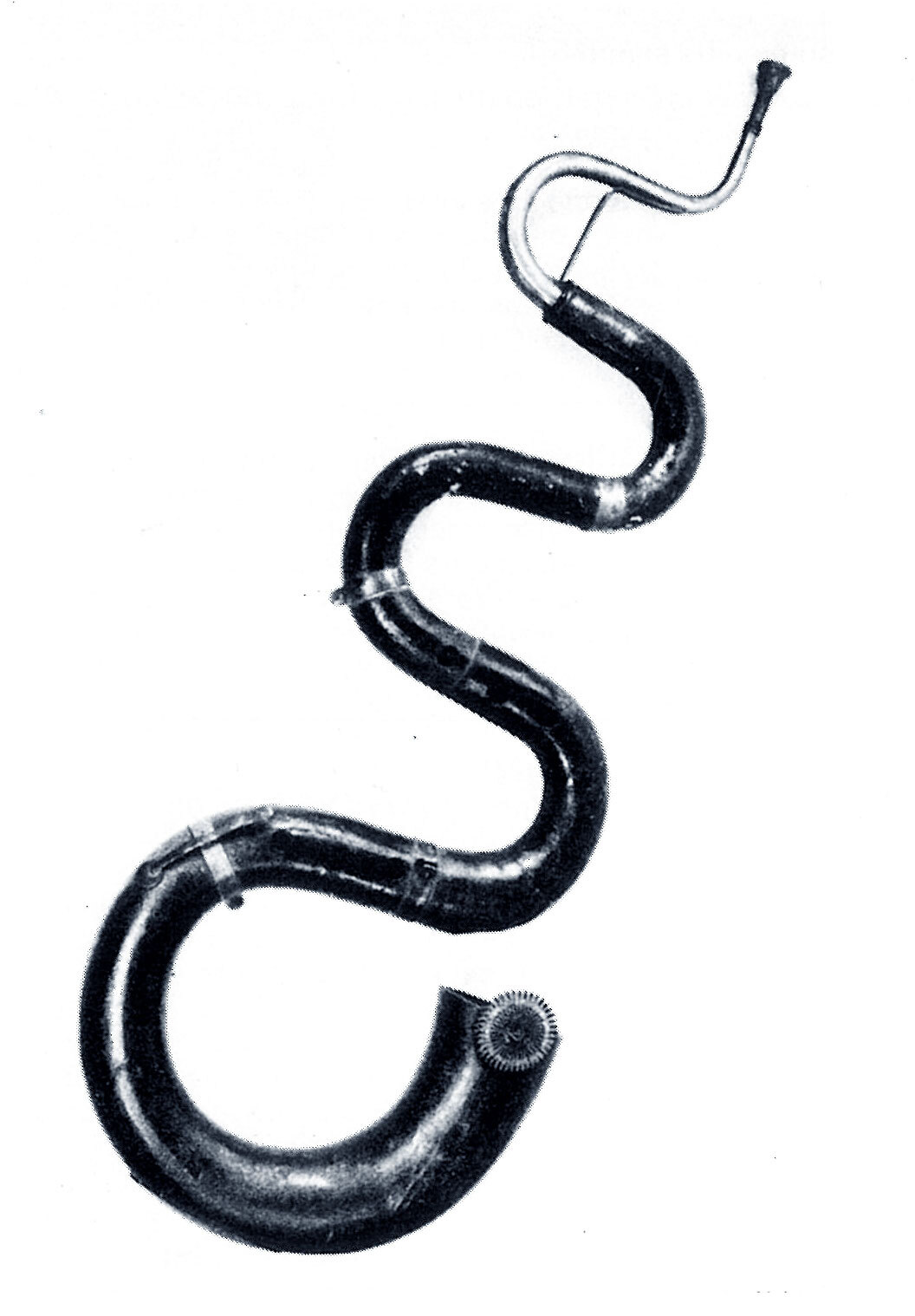
The serpent from the collection (Cat. no. H 1951-27)
This cornetto is in B♭ (A = 445 Hz, as measured using a reconstruction of the mouthpiece 1879.55 in the Historisches Museum in Basle, Switzerland) and is right-handed. One x-ray and two endoscopy pictures of it can be found in the “Galpin Society Journal” XXXVI (Eszter Fontana: “The manufacture of ivory cornetti”). It carries no inscription or marks.
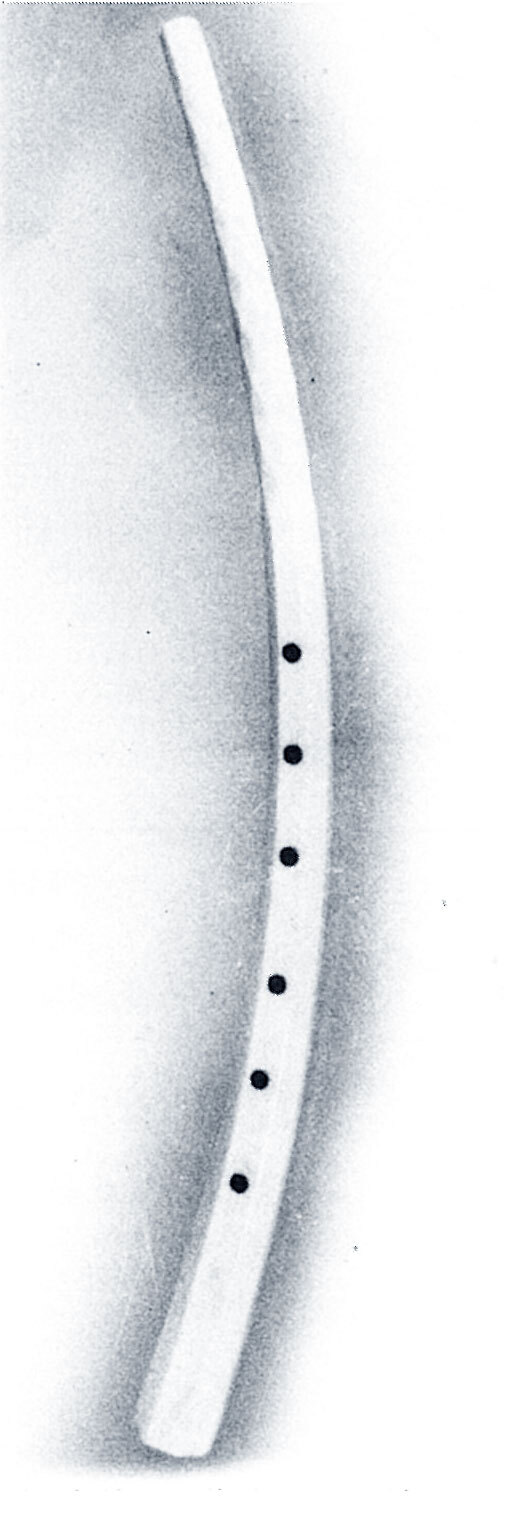
The ivory cornetto from the collection (Cat. no. H 1876.147.10)
This sketch corresponds to the report which Edward H. Tarr made of his measurements when describing these instruments for the catalogue section of the “cornetto book” (the Basler Jahrbuch für historische Musikpraxis V, 1981).
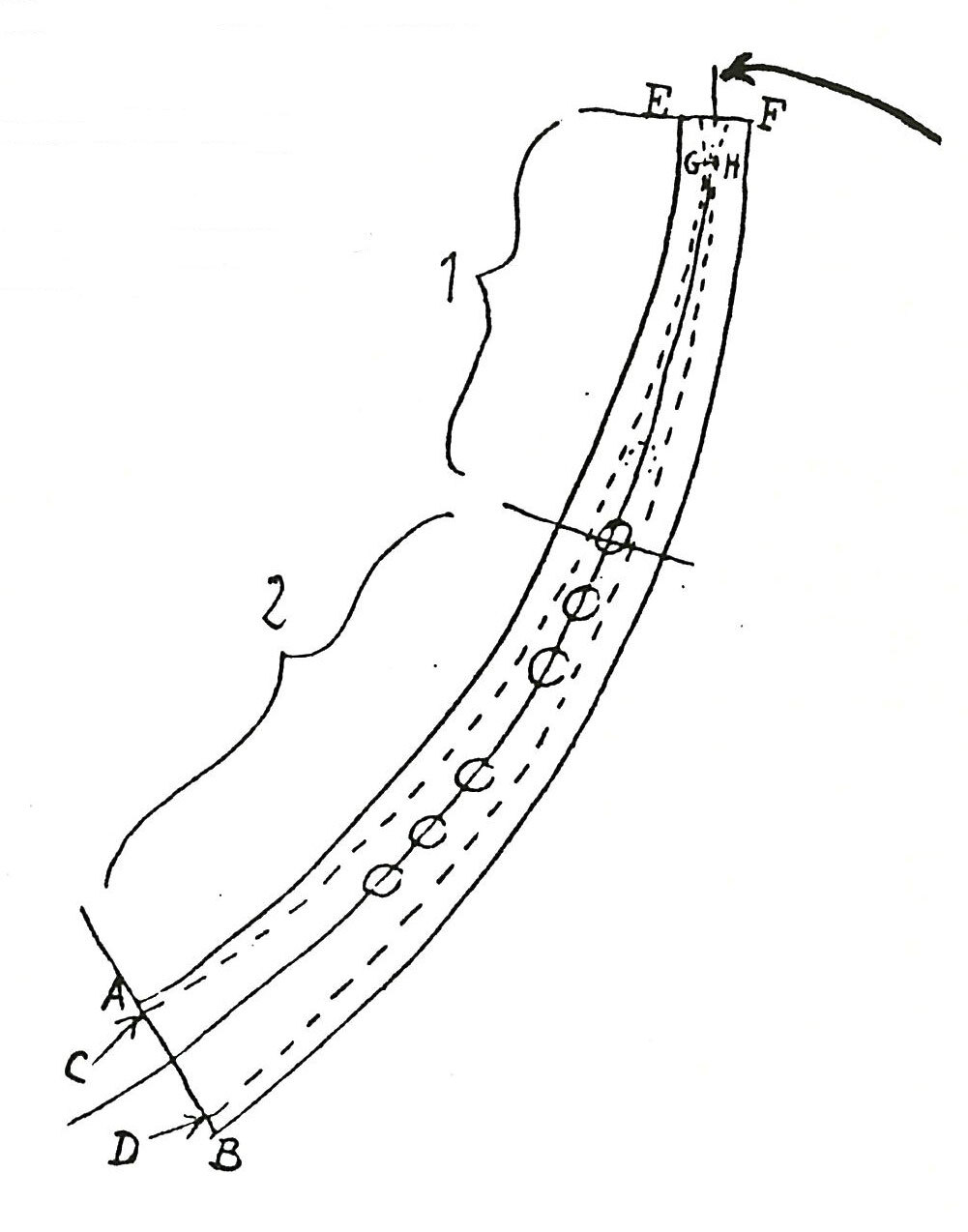
Table 4: Measurements of the ivory cornetto
Table 4: Measurements of the ivory cornetto
| Measurement (mm) | Description |
|---|---|
| 578 | Overall length along this centre line |
| 256 | Lenght 1 |
| 322 | Lenght 2 |
| 3.12/3.25 | Outside measurement, lower end, AB |
| 2.715/1.72 | Inside measurement, lower opening, CD |
| 1.58/1.64 | Outside measurement, upper end, EF |
| 0.68 | Inside measurement, narrowest point, GH |
| approx. 400 | Distance GH-EF |