Explore institutional access →

Approach

91 articles available online

Editorial Free
No. 29 • 1980 Digitized

Editorial

At the dawn of the 1980s, Brass Bulletin challenges institutional habits, avant-garde rigidity and brass pedagies through a direct appeal to younger musicians.

By Jean-Pierre Mathez
Society Teaching Sociology Ideas
The development of the amateur wind-band repertoire in Central Europe since 1950 Member
No. 49 • 1985 Digitized

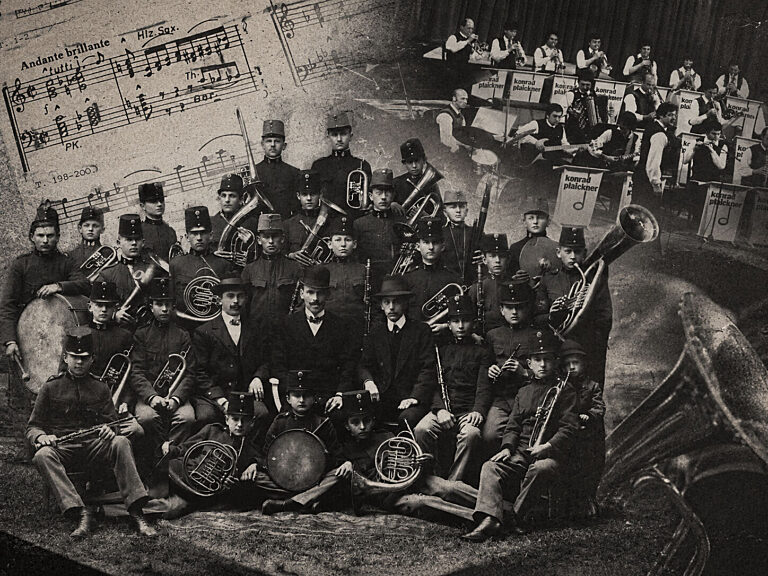
The development of the amateur wind-band repertoire in Central Europe since 1950

After 1950, Central Europe’s amateur wind bands became a testing ground where inherited traditions, modern composition, popular music and education collided.

By Wolfgang Suppan

Repertoire Society Sociology Contemporary Music
Member
No. 32 • 1980 Digitized

Brass studies in Australia

As international performers, seminars and teachers reached Australia in the late 1970s, a geographically isolated brass scene began finding its own direction.

By David O'Meara

Report Teaching Sociology Orchestral playing Contemporary Music
No. 72 • 1990 Awaiting digitization

The Minute counter!

By Thomas Stevens

Society Ideas
Editorial Free
No. 19 • 1977 Digitized

Editorial

Is sound something you control—or something you become? Jean-Pierre Mathez challenges technique, fashion, and pedagogy: sonority is a lifelong conquest of freedom.

By Jean-Pierre Mathez

Society Acoustics Sound Sociology Ideas
Listening Member
No. 38 • 1982 Digitized

Listening

Musical listening begins where judgment ends, as Jeffrey Agrell questions habits of criticism, recordings and expectation that shape every performance.

By Jeffrey Agrell

Society Sociology Mental approach Ideas
No. 97 • 1997 Awaiting digitization

The Art of the Third Horn Player

The unsung hero

By Kerry Turner

Repertoire Ideas
Gabinetto Armonico by Filippo Bonanni, Rome 1723 Free
No. 8 • 1974 Digitized

Gabinetto Armonico by Filippo Bonanni, Rome 1723

22 Illustrations

Selection of illustrations and excerpts from Gabinetto Armonico (1723), offering a visual insight into early instruments and musical practice.

By Filippo Bonanni

History Illustrations
Dynamics in the 80's Member
No. 29 • 1980 Digitized

Dynamics in the 80's

From Reykjavik to the Hollywood Bowl, rising concert hall scale and amplified culture reshape orchestral sound, leaving acoustic limits exposed.

By Roger Bobo
Acoustics Society Sound Interpretation Sociology
Being a woman brass player... So what? Free
No. 26 • 1979 Digitized

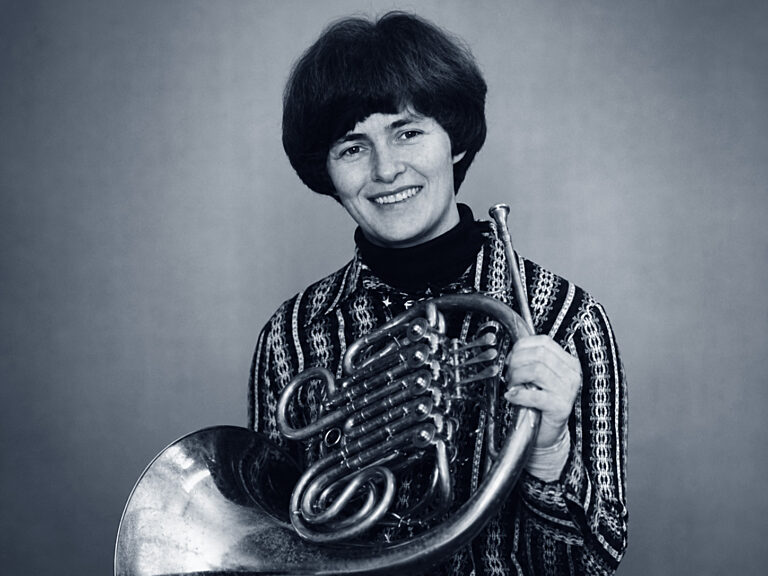
Being a woman brass player... So what?

Frøydis Ree Wekre reflects on women in brass playing, examining physical assumptions, psychological factors, and practical realities across performance and professional life.

By Frøydis Ree Wekre

Society Health Sociology Mental approach Endurance
Member
No. 17 • 1977 Digitized

Ornamentation of baroque music for brass

Baroque ornamentation forgotten? Without it, performances become dull and repetitive. This article argues for a return to style, freedom, and creative interpretation.

By Marc Meissner

Repertoire Ornaments Interpretation Ideas
The Audition System Free
No. 35 • 1981 Digitized

The Audition System

Why American Musicians Emigrate?

Behind orchestral vacancies in North America, travel costs, subjective selection and hidden hiring practices help explain a growing flow of musicians abroad.

By David P. Searfoss
Professional life Society Auditions Orchestral playing Sociology
Women and Brass Free
No. 28 • 1979 Digitized

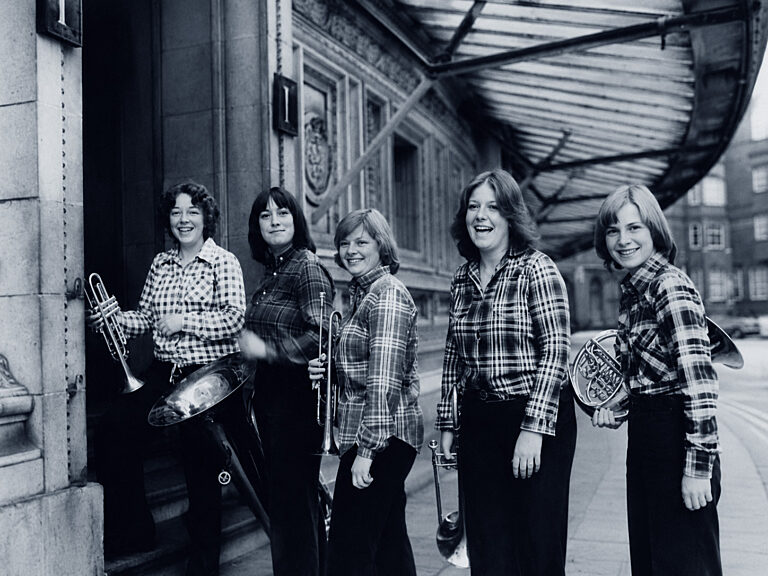
Women and Brass

Statements

Female brass players in British orchestras describe auditions, section dynamics and the pressure of proving themselves beyond musical ability.

By Jean-Pierre Mathez

Society Professional life Sociology Orchestral playing
From the pen of Roger Bobo Free
No. 19 • 1977 Digitized

From the pen of Roger Bobo

A bold statement from Roger Bobo: limiting yourself to your instrument’s repertoire is musical imprisonment — true musicianship begins beyond boundaries.

By Roger Bobo

Repertoire Ideas
The subconscious, a useful friend Member
No. 33 • 1981 Digitized

The subconscious, a useful friend

From yogic practices to auto-hypnosis, mental conditioning and visualisation are linked to performance, self-control, and the body's hidden responses.

By Michel Ricquier

Health Teaching Mental approach Nerves Interpretation Ideas
Editorial Free
No. 27 • 1979 Digitized

Editorial

Virtuosity is framed less as method than perception, opposing formula-driven teaching and pointing to attentive listening as the ground for technical clarity and artistic control

By Jean-Pierre Mathez
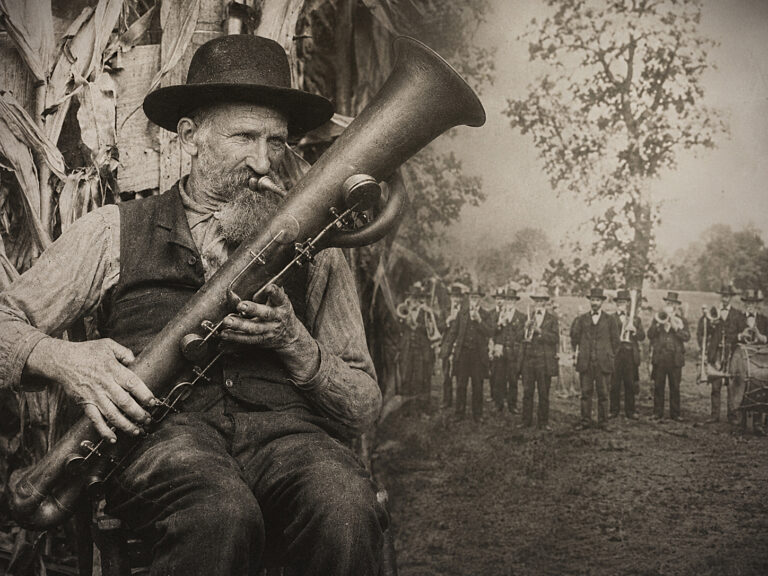
Teaching Society Sociology Ideas
Music in an American Frontier Communal Society Member
No. 34 • 1981 Digitized

Part 1

Music in an American Frontier Communal Society

Aurora Colony

In a German communal settlement on the Oregon frontier, bands, choirs and original compositions shaped daily life as strongly as faith, work and education.

By Deborah M. Olsen

History Society Sociology Brass Ensemble Historical instruments
Editorial Free
No. 36 • 1981 Digitized

Editorial

International Competitions - Time, a perishable commodity...

From competition juries to the accelerating pace of modern life, Jean-Pierre Mathez questions the judgments and pressures shaping musicians and their careers

By Jean-Pierre Mathez
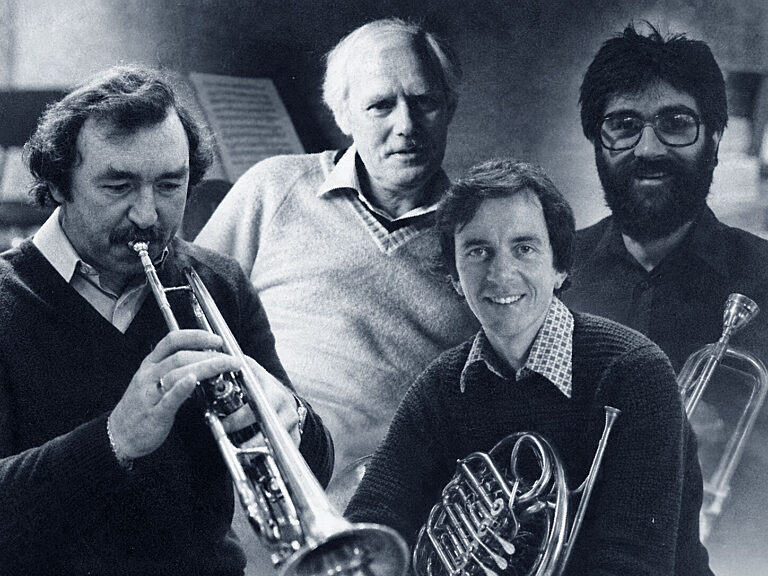
Competition Society Ideas Sociology
What's your proper job? Member
No. 51 • 1985 Digitized

What's your proper job?

A social portrait of the British brass player

Four British brass players confront a profession transformed by orchestras, freelance work, social prejudice and the shrinking certainties of musical life.

By Thomas Aitken

Society Professional life Sociology Freelance Orchestral playing
The use of the mind in instrumental performance Member
No. 30 • 1980 Digitized

The use of the mind in instrumental performance

Relaxation, concentration and mental imagery reshape technical practice, linking self-confidence and instrumental control beyond physical training alone.

By Michel Ricquier

Health Teaching Nerves Interpretation Ideas
No. 121 • 2003 Awaiting digitization

Part 1

Classical music: Why bother?

By Joshua Fineberg

Society Ideas Sociology
The Trumpet in the USA Free
No. 27 • 1979 Digitized

Part 1

The Trumpet in the USA

Across competitions, teaching and equipment in the U.S., trumpet practice exposes clashing ideas of musicality, raising the question of shared standards beyond national styles

By Thomas Stevens

Society American school Interpretation Ideas
Zen and the Art of Horn playing Member
No. 23 • 1978 Digitized

Part 2

Zen and the Art of Horn playing

Beyond technique: Jeffrey Agrell explores the clash between intellect and intuition—arguing that true musical expression begins where analysis ends.

By Jeffrey Agrell

Health Society Mental approach Sociology Ideas
No. 104 • 1998 Awaiting digitization

Thoughts on Competitions in Music

By Frøydis Ree Wekre

Society Competition Ideas
Loading…

Questions & Answers

How the Digital Edition works

What does the Digital Edition include?

The Digital Edition brings together the articles already digitized as searchable online texts—not simply as scans or PDF files—along with their original illustrations, notes, authorship, issue information, and available translations. Related-article suggestions currently include only this digitized material.

Are the digital articles identical to the originals?

We preserve the original text, language, illustrations, captions, footnotes, and editorial context as faithfully as possible. The presentation is adapted for comfortable online reading, and obvious transcription or scanning errors may be corrected. The substance and character of the published article remain unchanged.

Which languages are available?

Brass Bulletin was published in English, French, and German throughout its history. Italian and Spanish translations were added from issue No. 60 onward.

On the Italian and Spanish sites, articles from issues 1–59 are therefore shown in English by default.

How often are new articles added?

New articles are added almost daily, with approximately one complete issue digitized each week. The pace may vary depending on the preparation, image work, and editorial checking required.

Why aren’t all articles available digitally?

The complete Brass Bulletin collection contains 1,246 articles published between 1971 and 2003. The full index is already available online, allowing readers to discover every article in the collection, including those whose complete text has not yet been digitized.

Digitization began in February 2026. Each article is carefully prepared for online reading, checked, and connected to its issue, authors, subjects, and illustrations. At the current pace of digitization, the complete collection is expected to be available online by February 2028.

Why do some references mention articles that are not available yet?

References in the original articles are preserved even when the material they point to has not yet been digitized. This keeps the historical and editorial record intact. As more issues are added to the Digital Edition, an increasing number of these references will lead to articles that can be read online.

Can I suggest an article or report a transcription error?

Yes. If there is an article you would particularly like to see digitized, or if you notice a possible transcription error or missing detail, please contact us. Reader feedback helps us improve the Digital Edition and prioritize useful connections within the archive.

How can I support Brass Bulletin?

Your support helps fund the preparation, verification, and online publication of the complete collection.

Subscribe to the Digital Edition

Prefer to support us without subscribing?

Make a donation

How is the digitization progressing?

We’re gradually making the Brass Bulletin available online, article by article. You can read newly digitized articles as soon as they’re ready, even before an entire issue is complete.

Visit our Digitization Roadmap to browse recent additions and see estimated availability for upcoming issues. These estimates follow our recent pace and may change.

Search Brass Bulletin.