16 min. read
The development of the amateur wind-band repertoire in Central Europe since 1950
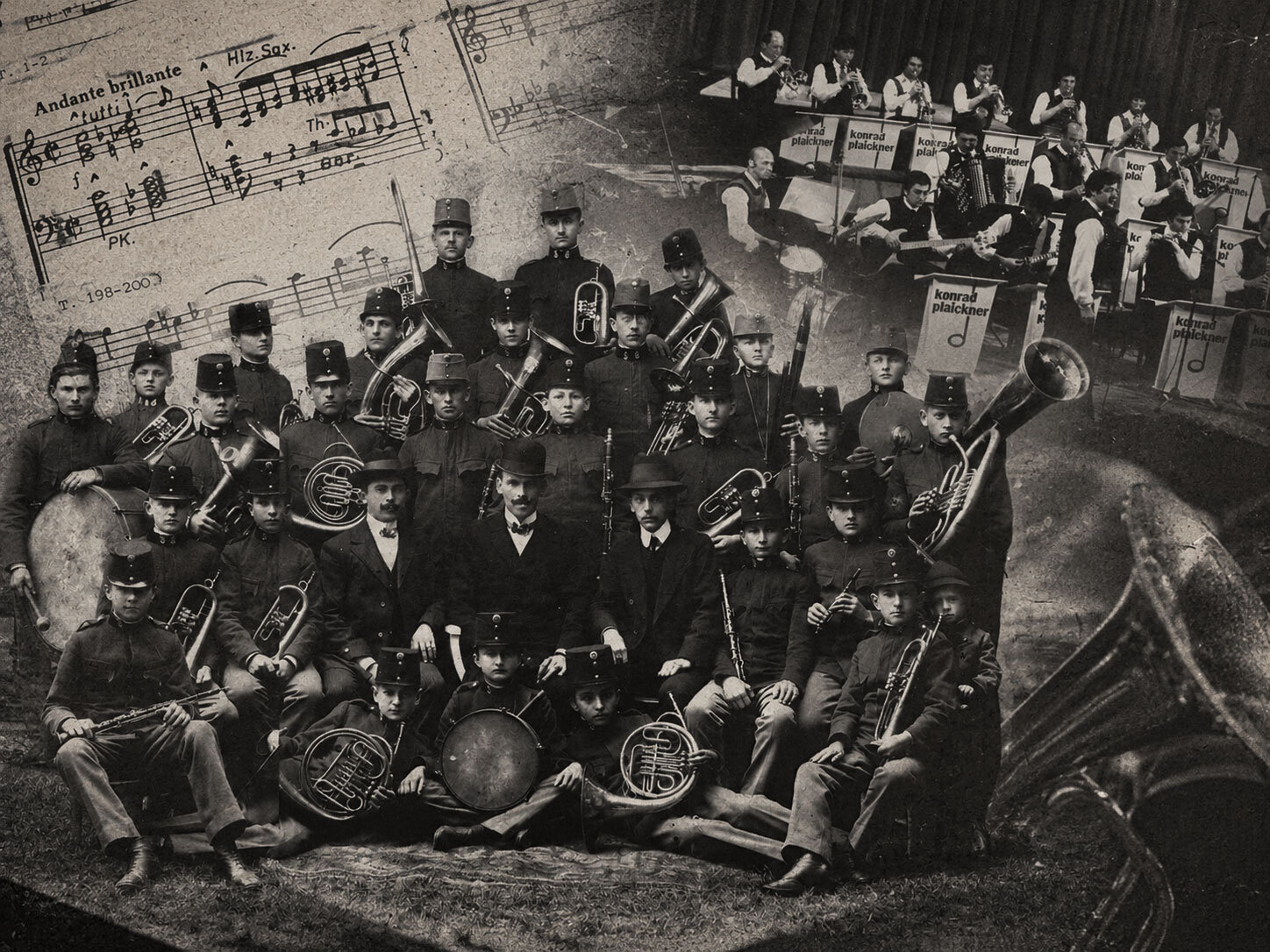
Around 10’000 wind bands with a total membership of around half a million active musicians form the basis of musical life in the villages and small towns of South Germany, Austria, Switzerland and the South Tirol. Statistics from the German Music Council prove it: in this region no other public musical institution is currently bringing more young people into music-making. And yet this broad base of the musical cultural pyramid is widely regarded as suspect. Histories of music do not mention it and dictionaries and encyclopedias contain scarcely a line on the musical development, on the socio-political and educational effectiveness and on the composers and performers in this genre. More — allegedly — means worse. Representatives of the art-for-art’s-sake school may lack sympathy for the amateur wind-music movement but music teachers and those who run the education system must be aware that wind-band members are exposed to an educational process which is significant for the whole of musical culture. The questions are thus of general interest: How do the assimilation of young people into wind bands and their socialisation by wind bands take place?² What kind of music is presented to them there? In what social environment do training and appearances/concerts take place? In this short paper I would like to go some way towards answering the second of these questions.
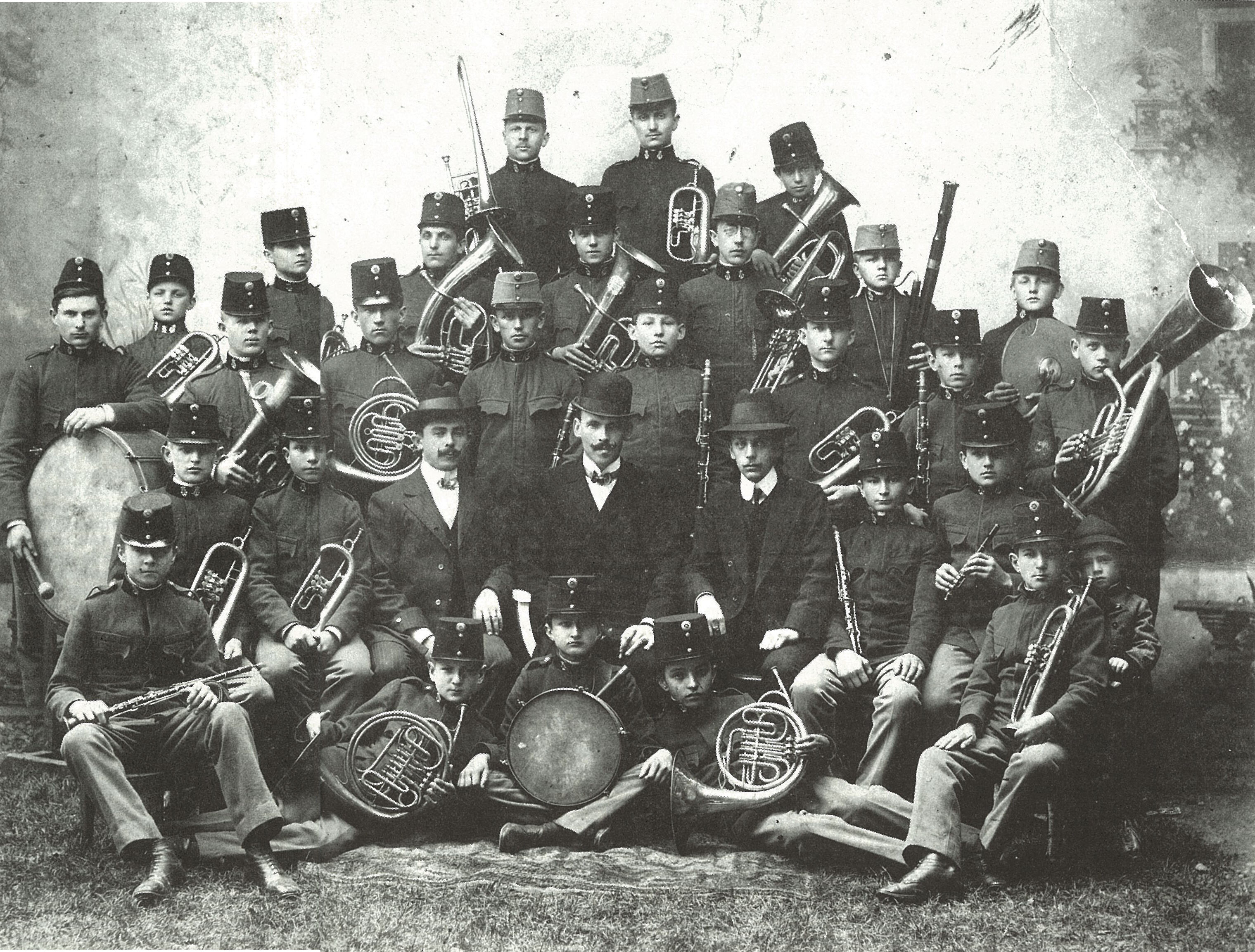
The Bohemian lands were once known as the “conservatoire of Europe”. Pupils were trained there for military bands throughout the German-speaking area. This picture shows the band of J. Volesensky’s boarding school in Neu-Byzoo, later Königgrätz, now Hradec Králové in Czechoslovakia. The monthly fees here were very high at 58 crowns. The players with light-coloured caps have already been selected for certain military bands and are leaving the school. 1910.
Ever since Paul Hindemith, in the young-movement enthusiasm of the twenties, recognised that this great potential in amateur musicians must not be left untapped by responsible, thinking teachers and composers; ever since Hindemith himself, as well as Ernst Krenek, Ernst Pepping and Ernst Toch wrote appropriate works for the Donaueschingen Music Festival of 1926³; ever since then there has been a clear trend towards original music for amateur wind bands, away from the previously predominant marches and open-air music on the one hand and arrangements of classical and Romantic masterpieces on the other.⁴ (The Donaueschingen movement was ushered in by Hermann Grabner with his Perkeo Suite (1923, printed 1925; in the style of a classical wind-ensemble piece), continued with his Castle Music, Firleflei Variations (1937) and Concerto Grosso (1940) and involved the participation of Boris Blacher, Paul Höffer and Hans Felix Husadel.)
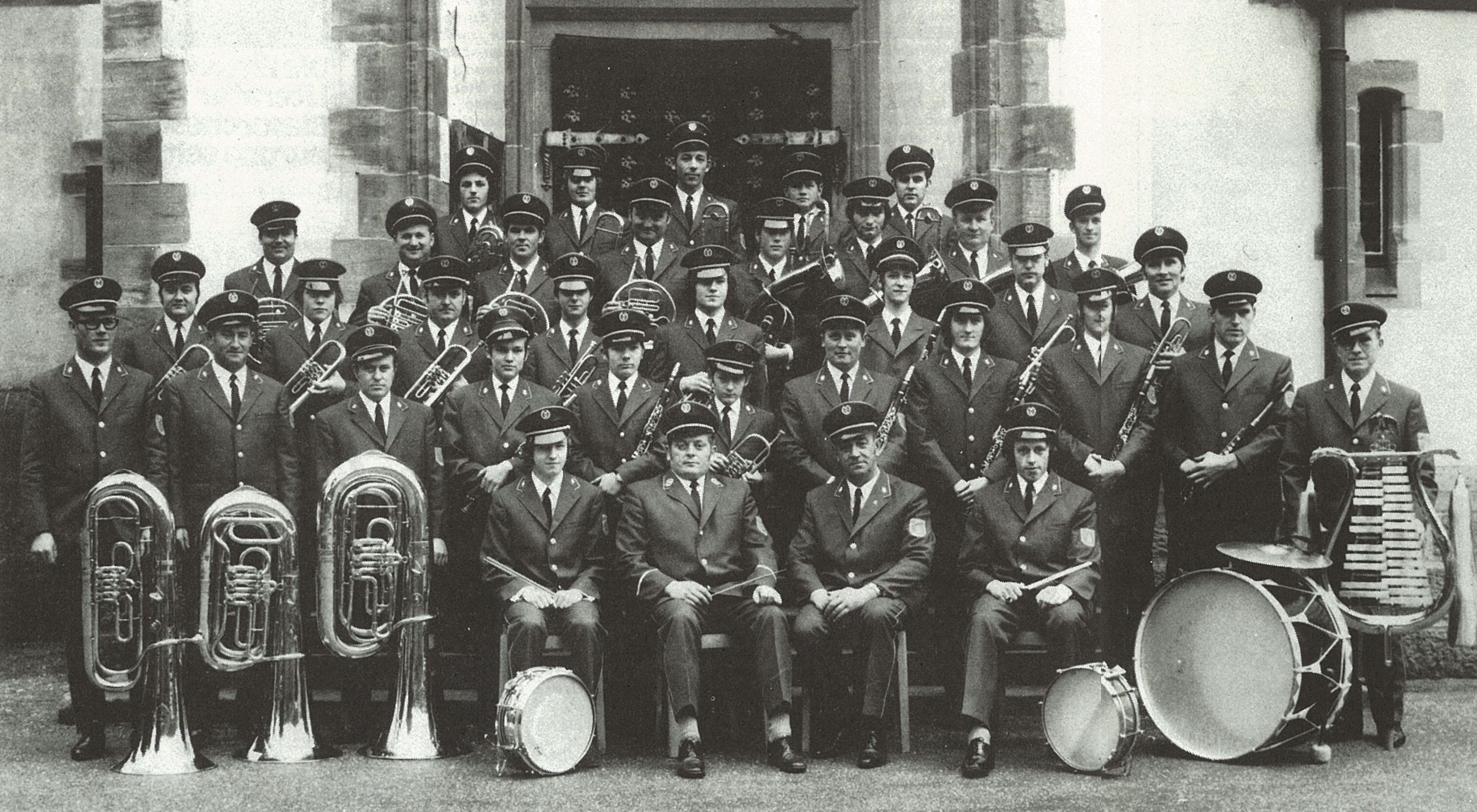
In the 19th century ex-servicemen accounted for the bulk of the civilian bandsmen in towns and in the country. So the amateur bands began to dress in fancy uniforms. This picture shows the band in Nordrach/Kinzigtal (FRG) in 1963.
The Second World War transferred this development to the United States, where good high-school and university wind bands were also looking for new material written specifically for winds; for them Paul Hindemith wrote his Symphony in B♭, Arnold Schönberg his Theme and Variations, op. 43A⁵ and Krzysztof Penderecki his Pittsburgh Overture. As early as the fifties, however, a group centred around Guido Waldmann at the College Institute of Music in Trossingen, in the centre of the South German wind-music activity, was seeking to take up Hindemith and Grabner’s ideas and adapt them to the new social forms. The great influx of young people into wind playing not only strengthened individual bands; it also created the possibility that, with some help from the repertoire, wind playing might acquire some contemporary features. The problem lay in striking a balance between the development of the musical avant-garde and the capabilities of amateurs, in creating a “New Simplicity” (specific to level and situation) which would not be suspected to triviality.
Brass Bulletin 49, I / 1985 pages 13–30
All content is protected by copyright © Brass Bulletin 1985–2026