Explore institutional access Explore institutional access

6 min. read

Listening
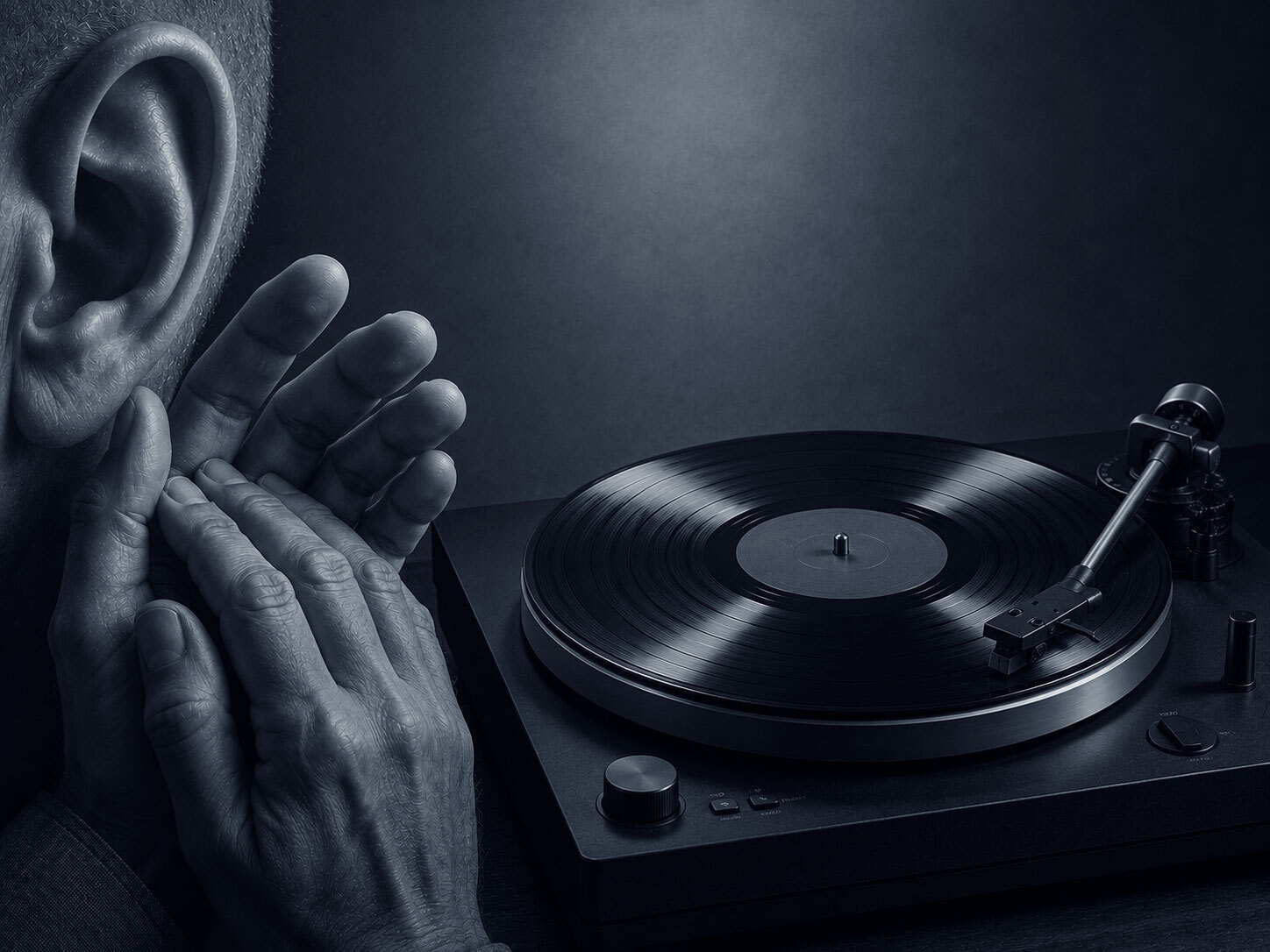
Musical listening begins where judgment ends, as Jeffrey Agrell questions habits of criticism, recordings and expectation that shape every performance.
Listening

“No one can have an idea once he really starts listening.”

— John Cage

When one attends a concert, it is most annoying and distracting to be seated next to someone engaged in conversation while the music is going on, even if the conversation is about the music. Unfortunately, all too often this is precisely the case, except that the distracting voice is inside our own heads.

The little voice of the language-using part of our minds has a vast repertoire of topics and techniques to keep chattering. They range from the mundane (let's see, how can I get both the car fixed and do the laundry tomorrow...) to the irrelevant observation (these chairs are uncomfortable..., why don't the musicians smile more?) to all kinds of judgements and comparisons about the music (Chicago played it better last year..., it's not as good as my recording at home..., the conductor has obviously no understanding of the composer's intentions in the development...).

All three, especially the first two, are due to the natural tendency of the mind to ramble on whenever possible, regardless of whether it serves any purpose to do so. This tendency is exacerbated by manifold aspects of Western culture. We are deluged with words, words, words, from an uncountable number of sources — TV, radio, newspapers, magazines, advertisements, school, work, and so on, all competing for our attention (and usually our money). This competition promotes the ever-increasing use in the media of flashy technique over substance: everything is fast fast fast, newer and more super and more scandalous than ever before. The tempo of everyday life has likewise accelerated: fast cars, fast food, pressure to achieve and produce, pressure to consume and spend.

The mind is more than happy to think or worry about any of this just as long as it can keep going. There is precious little chance for a little silence or solitude; in fact, many of us have become stress junkies — we become uncomfortable being quiet or alone without the constant little jolts of adrenalin from the many distractive intrusions of "modern living". A concert hall situation may minimize the external distractions, but it is still difficult to shut off the internal noise after so much practice in keeping it going.

“When we are proud, that pride keeps us from observing very clearly.”

— John Cage

Continue reading

Access the full Digital Edition.

Brass Bulletin 38, II / 1982 pages 9–14

All content is protected by copyright © Brass Bulletin 1982–2026

Share this article

Facebook LinkedIn
Loading…

Questions & Answers

How the Digital Edition works

What does the Digital Edition include?

The Digital Edition brings together the articles already digitized as searchable online texts—not simply as scans or PDF files—along with their original illustrations, notes, authorship, issue information, and available translations. Related-article suggestions currently include only this digitized material.

Are the digital articles identical to the originals?

We preserve the original text, language, illustrations, captions, footnotes, and editorial context as faithfully as possible. The presentation is adapted for comfortable online reading, and obvious transcription or scanning errors may be corrected. The substance and character of the published article remain unchanged.

Which languages are available?

Brass Bulletin was published in English, French, and German throughout its history. Italian and Spanish translations were added from issue No. 60 onward.

On the Italian and Spanish sites, articles from issues 1–59 are therefore shown in English by default.

How often are new articles added?

New articles are added almost daily, with approximately one complete issue digitized each week. The pace may vary depending on the preparation, image work, and editorial checking required.

Why aren’t all articles available digitally?

The complete Brass Bulletin collection contains 1,246 articles published between 1971 and 2003. The full index is already available online, allowing readers to discover every article in the collection, including those whose complete text has not yet been digitized.

Digitization began in February 2026. Each article is carefully prepared for online reading, checked, and connected to its issue, authors, subjects, and illustrations. At the current pace of digitization, the complete collection is expected to be available online by February 2028.

Why do some references mention articles that are not available yet?

References in the original articles are preserved even when the material they point to has not yet been digitized. This keeps the historical and editorial record intact. As more issues are added to the Digital Edition, an increasing number of these references will lead to articles that can be read online.

Can I suggest an article or report a transcription error?

Yes. If there is an article you would particularly like to see digitized, or if you notice a possible transcription error or missing detail, please contact us. Reader feedback helps us improve the Digital Edition and prioritize useful connections within the archive.

How can I support Brass Bulletin?

Your support helps fund the preparation, verification, and online publication of the complete collection.

Subscribe to the Digital Edition

Prefer to support us without subscribing?

Make a donation

Search Brass Bulletin.