Explore institutional access Explore institutional access

5 min. read

Zen and the Art of Horn playing
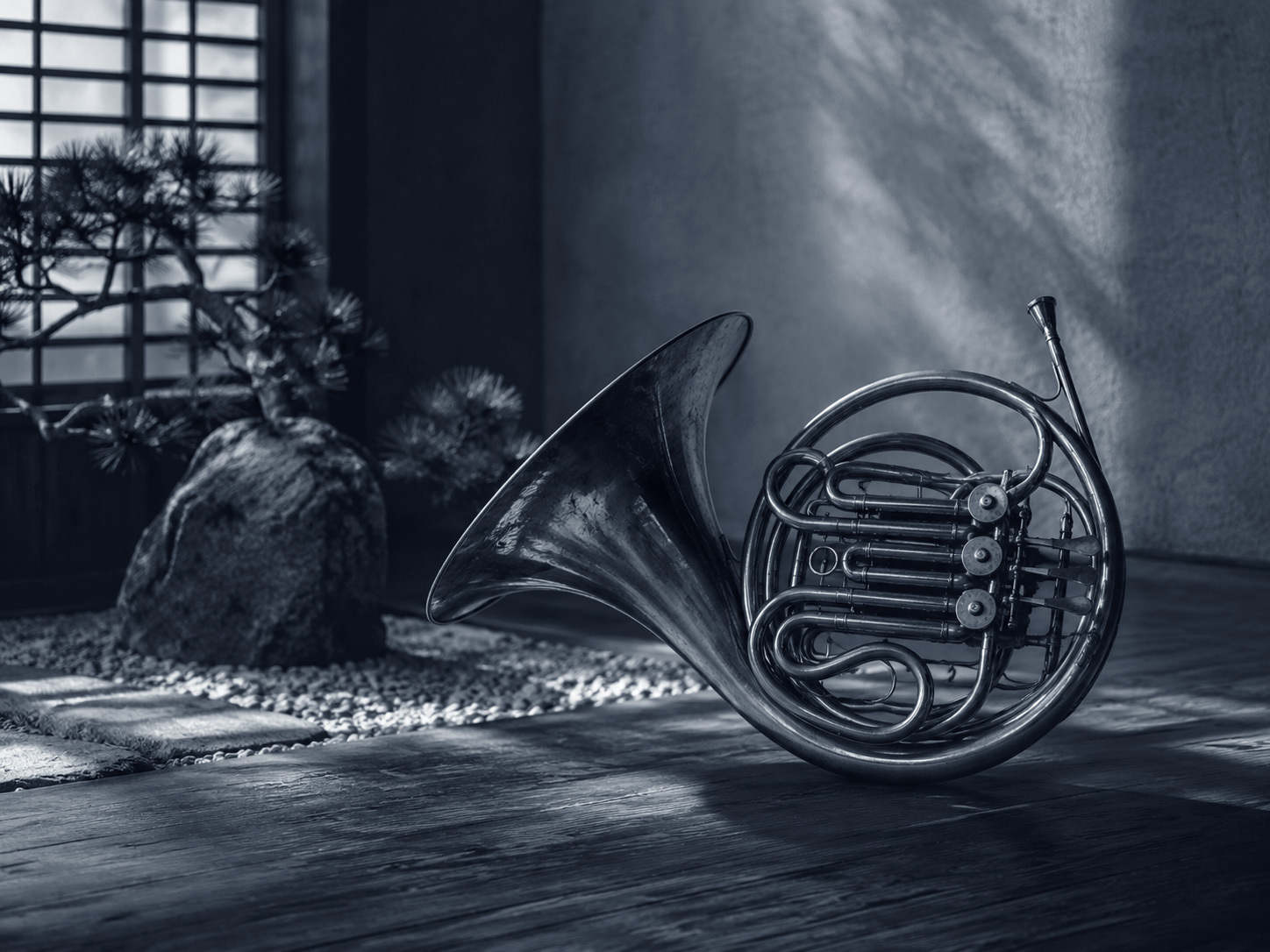
Beyond technique: Jeffrey Agrell explores the clash between intellect and intuition—arguing that true musical expression begins where analysis ends.
Zen and the Art of Horn playing

Professor Herrigel studied with his archery Master for six years. It took him a year just to learn to draw the bow correctly; three more years to learn to release the shot; and finally at the last he learned to aim at the target. At one point the Master tried to learn a little Western philosophy to help him from a side he already knew. But he soon gave up, saying that now he could "understand that a person who interested himself in such things would find the art of archery uncommonly difficult to learn".

Science has recently begun to make investigations into the nature of the mind. They have found that the left hemisphere of the brain is the site of the rational functions: the left side can use language, do mathematics, and think about the past and future. The right hemisphere cannot use language or numbers, but has to do with the wordless feelings of the body, the experiencing of the here-and-now. Left side: reason; right side: feelings and intuition. It seems that we all have the entire East-West Weltanschauung dichotomy in our heads. Studies show that the two sides operate independently of one another. In one experiment, the subject was a person who, for medical reasons, had had the connection between the two brains severed. He was blindfolded and when a comb was placed in his left hand, he could not say the name of what he was holding (the hemispheres link up with the opposite sides of the body, i. e. left hand — right brain). The right brain has no words for its feelings, so though he knew exactly what he held in the left hand, he could not say the name associated with the feel of this object until the right hand had touched it as well. Studies also show that the operation of one side interferes with the operation of the other, but we will take that up later.

Continue reading

Access the full Digital Edition.

Brass Bulletin 23, III / 1978 pages 69–72

All content is protected by copyright © Brass Bulletin 1978–2026

Share this article

Facebook LinkedIn
Loading…

Questions & Answers

How the Digital Edition works

What does the Digital Edition include?

The Digital Edition brings together the articles already digitized as searchable online texts—not simply as scans or PDF files—along with their original illustrations, notes, authorship, issue information, and available translations. Related-article suggestions currently include only this digitized material.

Are the digital articles identical to the originals?

We preserve the original text, language, illustrations, captions, footnotes, and editorial context as faithfully as possible. The presentation is adapted for comfortable online reading, and obvious transcription or scanning errors may be corrected. The substance and character of the published article remain unchanged.

Which languages are available?

Brass Bulletin was published in English, French, and German throughout its history. Italian and Spanish translations were added from issue No. 60 onward.

On the Italian and Spanish sites, articles from issues 1–59 are therefore shown in English by default.

How often are new articles added?

New articles are added almost daily, with approximately one complete issue digitized each week. The pace may vary depending on the preparation, image work, and editorial checking required.

Why aren’t all articles available digitally?

The complete Brass Bulletin collection contains 1,246 articles published between 1971 and 2003. The full index is already available online, allowing readers to discover every article in the collection, including those whose complete text has not yet been digitized.

Digitization began in February 2026. Each article is carefully prepared for online reading, checked, and connected to its issue, authors, subjects, and illustrations. At the current pace of digitization, the complete collection is expected to be available online by February 2028.

Why do some references mention articles that are not available yet?

References in the original articles are preserved even when the material they point to has not yet been digitized. This keeps the historical and editorial record intact. As more issues are added to the Digital Edition, an increasing number of these references will lead to articles that can be read online.

Can I suggest an article or report a transcription error?

Yes. If there is an article you would particularly like to see digitized, or if you notice a possible transcription error or missing detail, please contact us. Reader feedback helps us improve the Digital Edition and prioritize useful connections within the archive.

How can I support Brass Bulletin?

Your support helps fund the preparation, verification, and online publication of the complete collection.

Subscribe to the Digital Edition

Prefer to support us without subscribing?

Make a donation

Search Brass Bulletin.