The acoustics of the places of performance also play their role. It is perhaps the most aleatoric factor with which the musician is faced (the factor therefore which demands the greatest faculty for spontaneous adjustment). All the concert halls and places in the open air are different. (Our architects have lost the knowledge of applied acoustics which their Greek ancestors had.) Certain musicians identify the nature of the places very quickly and come to "intimate" terms with them. It is amazing that this factor is completely left out of instrumental instruction.
The academic influence of the aesthetics of a particular sound is most profound. But who in fact is in a position to determine the quality of a sound? The "ideal" sound (is this merely utopian?) could be the one which is emitted with the least effort (free), the best balance (centred) of a note played by the best musician on the best instrument. But it isn’t as simple as that. There are also the older ideals of sound, those in fashion in 1895, 1920 and 1950, which leave their mark. It is interesting to point out that the kind of sound extolled today in the academies is "big", powerful, flexible in all registers of the compass, and in all gradations of dynamic range. This sonority is a direct inheritance of the romantic era with its grandiose symphonic orchestra (which is still so popular nowadays).
This joint conception of the ideal sound, passed on by word of mouth down through the generations, is pretty strange in itself, and one would be justified in putting a number of questions on this subject, e.g. is it right to play the music before the romantic era (renaissance, baroque, classical) or chamber and brass ensemble music with this "symphonic" sound? In jazz the sound is influenced by the style and certain band leaders but as a general rule (with the exception of the demands made by the big bands), the individual freedom is greater. In fact, the estimation of this or that type of sound remains purely subjective in itself, whence perhaps the difficulty of defining it arises, other than simply saying it is "good" or "bad"...
Indeed it is an aspect of instrumental understanding which is most neglected and which should be studied much more seriously. In spite of everything I think that the exterior factors which form the sonority of an artist remain those which are the easiest to grasp, fashion and master. It is also these exterior factors which most of our instrumental methods are based on and which the composers refer to.
As to the personal elements which make up a type of sound, perception, aural sensitivity, feeling, etc., they are infinitely variable and elusive in their complex and intimate ins and outs. The very delicate sphere is touched on here, which is commonly called the talent, gift and facility of a musician. These "natural" factors generally determine the spontaneous hierarchical formation of the society of artists, but today a tendency is becoming more and more apparent, which the governments uphold, to classify these musicians by diplomas and key posts which falsifies the whole evolution of music (for instance cut off more and more from popular festivals).
We are perhaps entering the reign of the certificated... (are the artists, for a long time only marginally tolerated by the masses, to become the subjects of too much revolutionizing?).
The sol-fa of our learned musical culture tries hard to develop hearing, singing, etc., but by sticking exclusively to a general plan of initiation, to a musical cultural system, rather than to a real development of individual sensitivity, it is this which would most frequently entail a rough awakening for the individual faced with his existence and his social milieu.
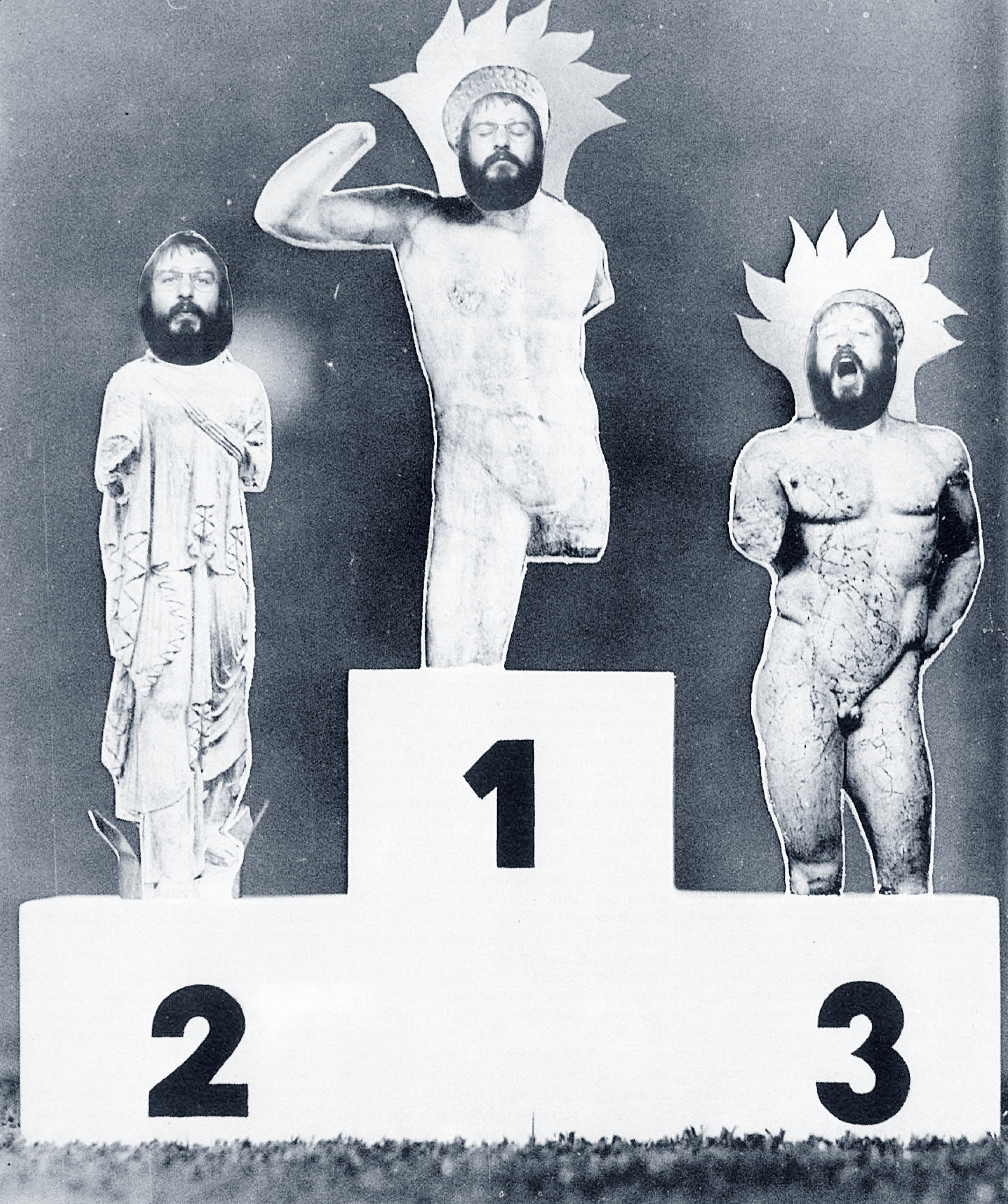
Musical instruction does not take this task on. Its field of activity remains superficial and limits itself to making one acquainted with a certain musical tradition. Essentially, this musical instruction is only destined to produce a top elite of exemplary artists (as in sport: our civilisation is more intent on creating a few big champions — by using all the means available! — than maintaining the physical health of the nation as a whole).
From this point of view, logic is upheld: one works basically on instrumental technique, where no fundamental questions are asked at all and where the illusion of progress is all but perfect (the true mirage...).
It is essential that we as instrumental musicians get organised and consider deeply the fundamental questions which are raised by the culture, civilisation and society of today, rather than to discuss ad nauseam technical or historical problems which only keep us subjected to the brutal and uncontrolled evolution of a civilisation which relegates art (and the individual) to the rank of a commercial commodity. This statement is a direct invitation to diverse brass associations which do lots of things (competitions, etc.) but don't seem to want to instigate the basic discussion which our generation should nevertheless be opening if we still want one "to come after".
It seems to me that sonority is a perpetual conquest of freedom (and not an acquired technique).
At the end of each sound there is a being who lives and should be able to find oneself. Let’s do something for his sake!
Jean-Pierre Mathez