16 min. read
What's your proper job?
A social portrait of the British brass player
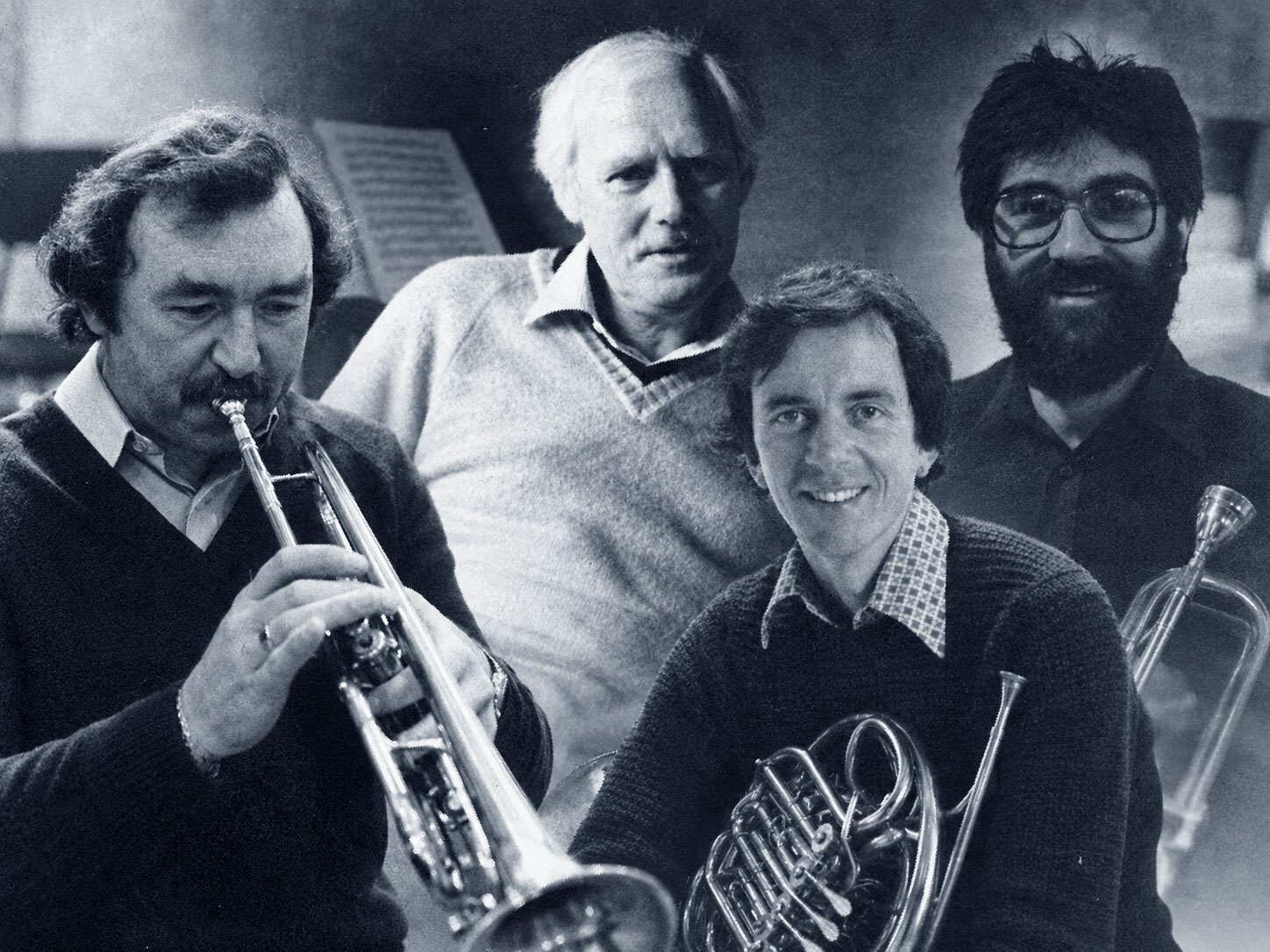
Maurice Murphy (trumpet), Bill Geldard (trombone), John Pignequy (horn), James Gourlay (tuba)
How do British brass players live? Are they prosperous? Are they happy? What do people think of them?
Asked to write this article, I interviewed (separately) four players of varying ages whose careers have followed very different patterns. Between them they cover many, perhaps most, of the multitudinous facets of professional brass playing in Britain today, as well as exemplifying the changes which have occurred in the scene in the last forty years.
Trumpeter Maurice Murphy was principal cornet with the Black Dyke Mills Band before turning professional, since when he has spent 15 years with the BBC Northern Symphony Orchestra (now the BBC Philharmonic) and 7 with the London Symphony Orchestra, of which he is Principal Trumpet. He has worked in addition with the London Sinfonietta, the Nash Ensemble and the Fires of London, and appears with the Locke Brass Consort as well as doing a great deal of session work recording music for films, TV, commercials and so on.
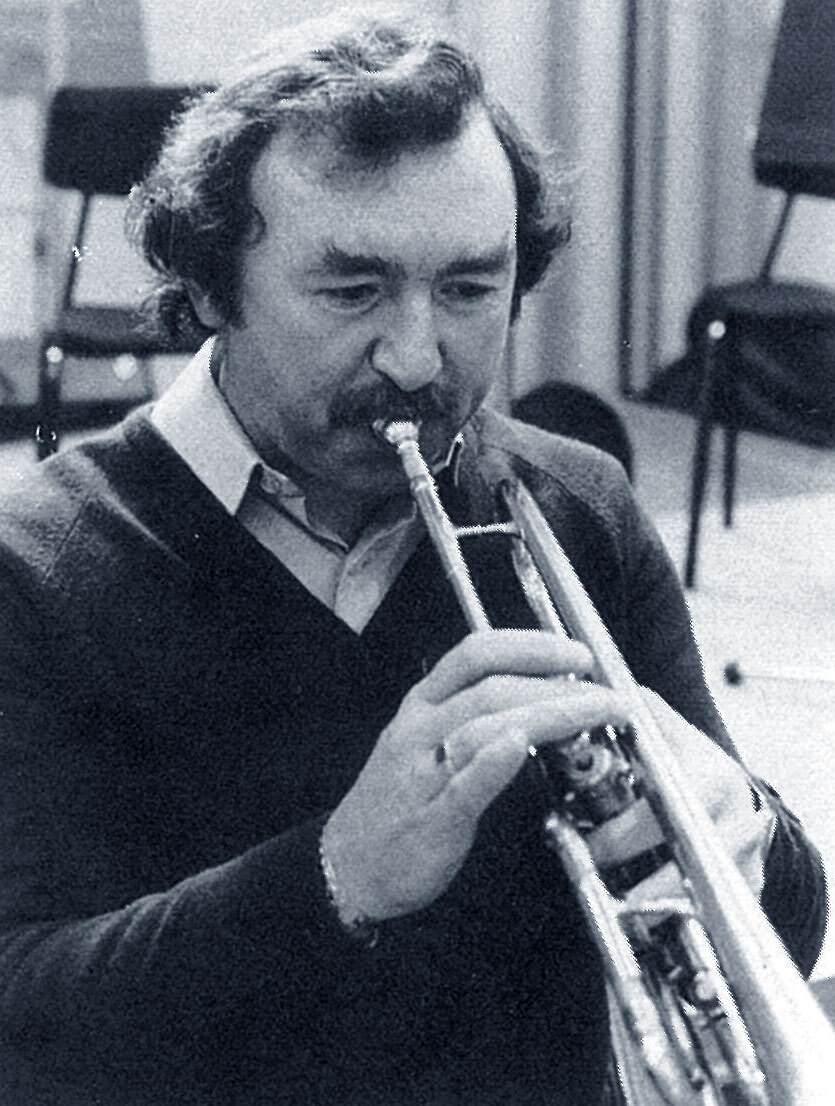
Maurice Murphy
John Pignequy (horn) left the Royal Academy of Music in 1966 and, apart from a two-year stint at the Royal Opera House, Covent Garden, has been a free-lance player ever since, with such groups as the Nash Ensemble, the Philip Jones Brass Ensemble, the London Mozart Players, the Locke Brass Consort, and as a session player. He recently left the PJBE to concentrate on the Nash Ensemble, freelance work in London and two small light music groups of his own.
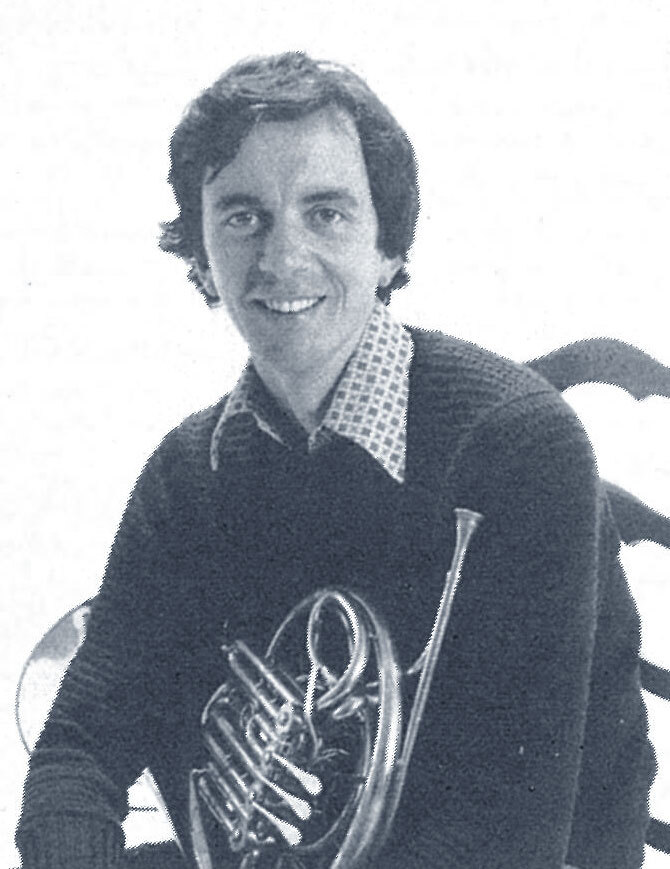
John Pignequy
Trombonist Bill Geldard got his first professional job in a theatre pit orchestra in 1945, when he was fifteen. After a period in big bands at Butlin’s Holiday Camps and service in the Central Band of the Royal Air Force, he played during the forties and fifties in such big bands as the Squadronaires, Ted Heath’s, John Dankworth’s, Jack Parnell’s and Oscar Rabin’s. Since then he has worked freelance as player, conductor, composer and arranger.
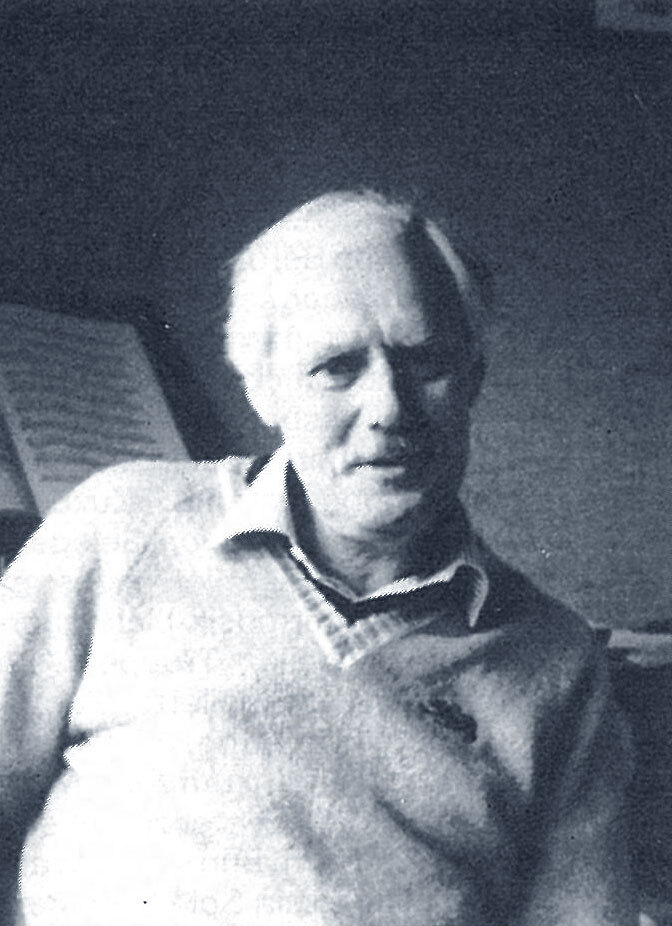
Bill Geldard
James Gourlay (tuba) left the Royal College of Music in 1975 after only one year to join the City of Birmingham Symphony Orchestra. Four years later he moved to the BBCSO. He does ‘the usual round of free-lance dates in London,’ and plays with the Albany Brass Ensemble, which takes up an increasing amount of his time.
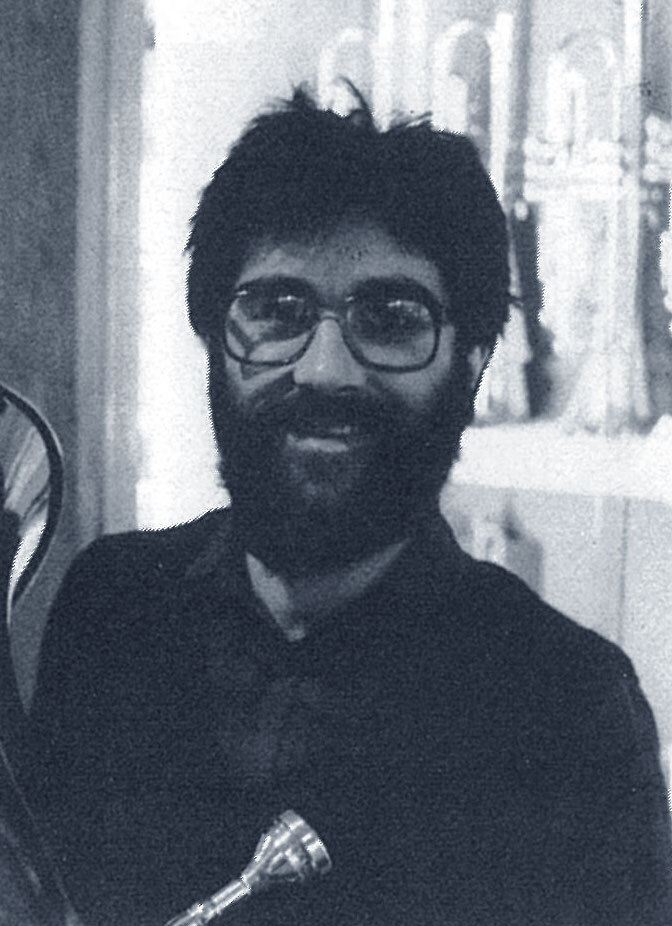
James Gourlay
Of the four, then, only John Pignequy has had a complete, orthodox musical education. James Gourlay, having left college early, has ‘no bits of paper hanging on the wall.’ Bill Geldard spent a great deal of his childhood listening to string quartets played by his father and friends, and was well taught at school (violin and viola but not, to his regret, the piano, which would have helped with his arranging) and in a brass band (trombone and harmony) but, since the age of fifteen, has learnt essentially by doing.
Maurice Murphy didn’t study music as a child.
I was just brought up in brass bands. Theoretically I know very little. But I’ve been playing since I was 6. You pick up quite a lot on the way. My parents bought me a theory book once. I just couldn’t get into it at all.
Maurice’s actual entry into the profession might seem unorthodox now, but at the time he was following almost exactly in the footsteps of Willie Lang, who still plays alongside him in the LSO. While playing in brass bands, Maurice did ‘‘quite a bit of semi-professional and professional work. Extra trumpet with the Liverpool Philharmonic. Odd gigs with the Hallé. A lot of theatre work — amateur dramatic societies, professional outfits that used to play the Leeds Grand: Polish Ballet, pantomime. All good experience.’’
After all that it was natural enough to move into the BBC Northern Orchestra in Manchester.
Bill Geldard’s professional beginnings were more abrupt. He played a solo in a brass band concert and ‘‘a chap came up to me and said ‘Can you read bass clef?’ I told him yes and he said ‘Would you like a job?’ I said ‘I’ll have to ask my mum!’’ (His father was still away on war service.) ‘‘I think the money was £ 5 a week, which felt like a fortune. That was me in.’’
Brass Bulletin 51, III / 1985 pages 14–24
All content is protected by copyright © Brass Bulletin 1985–2026