All content is protected by copyright © Brass Bulletin 1974–2026

Gabinetto Armonico by Filippo Bonanni, Rome 1723

22 Illustrations

Search in this article

Reprint with an introduction and captions by Frank Li. Harrison and Joan Rimmer: The Showcase of Musical Instruments, Dover Publications Inc., New York, 1964. (Summary, with kind permission of the publishers, by E. Mende.)

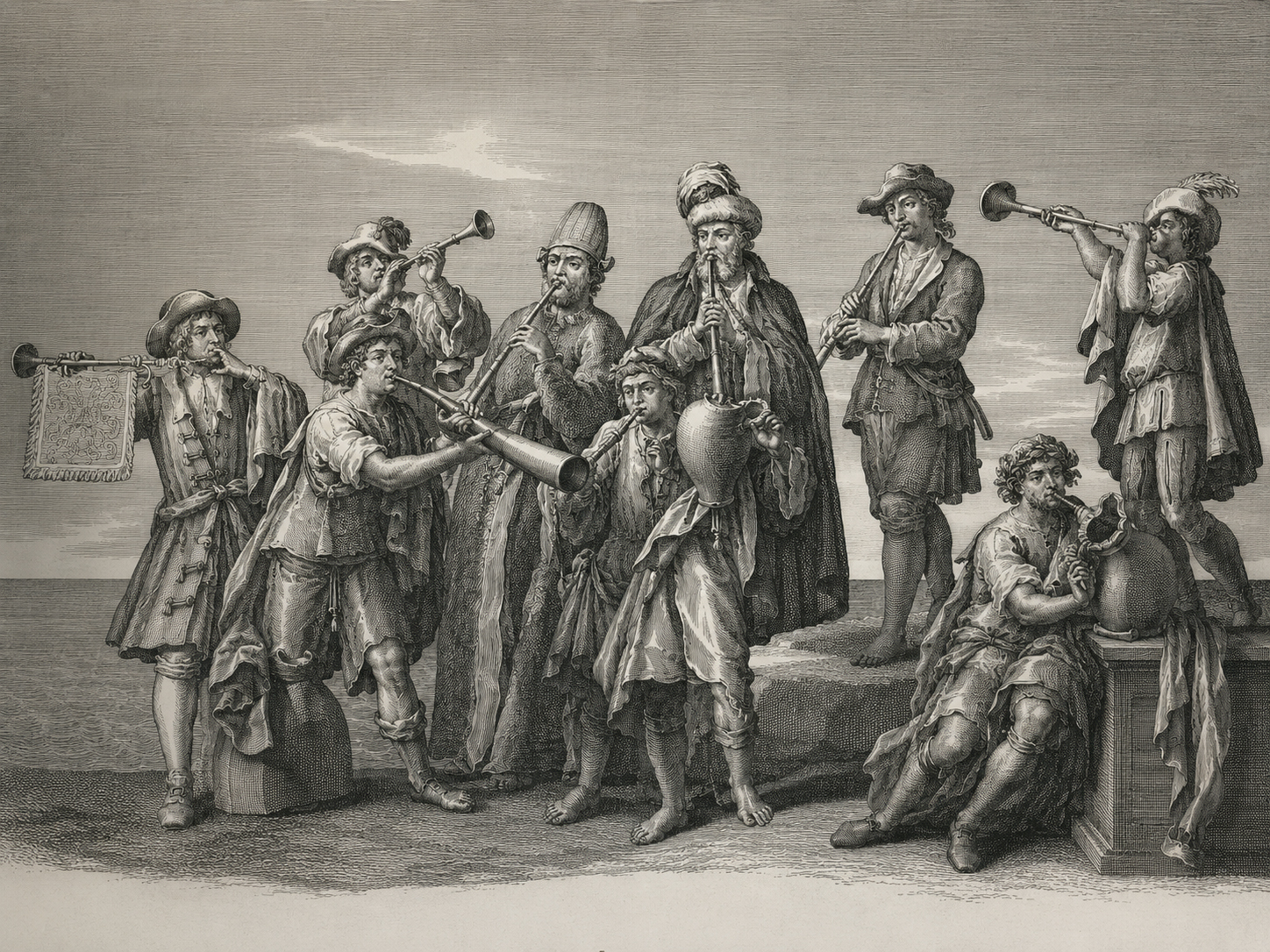
Filippo Bonanni was born in Rome in 1658, became a Jesuit, and in 1698 was appointed curator of the collection of antiquities formed by the celebrated Athanasius Kircher and preserved in the Jesuit College. The Gabinetto Armonico, first printed in 1716, was revised and expanded in 1723 (all pictures are from this reprint) and even though it may be inexact in detail at times, it is more truly comprehensive than any book on musical instruments until the work of Curt Sachs in 1913 (Dover Publ. 1964). It is entirely non-professional in its approach, neither didactic, nor scientific in the seventeenth-century sense and has a humanistic attitude and sociological awareness that reminds us of our books of to-day.

Bonanni gives art and folk instruments of Europe, many little-known instruments used in the Eastern Christian churches and a remarkably wide coverage of extra-European material. His sources are varied of course, including scholarly works and travel accounts, but his most important source is Marin Mersenne, the French philosopher and mathematician whose «Harmonie Universelle» of 1636-1667 has a detailed section on instruments.

For this reprint of the plates from the Gabinetto Armonico the authors have made no attempt to translate the rather heavy original commentary, but have tried to accompany the splendid engravings of Arnold van Westerhout with brief but informative captions.

The Hebrew trumpet, like the Egyptian trumpet of which some examples and many pictures survive, was a conical tube of me...
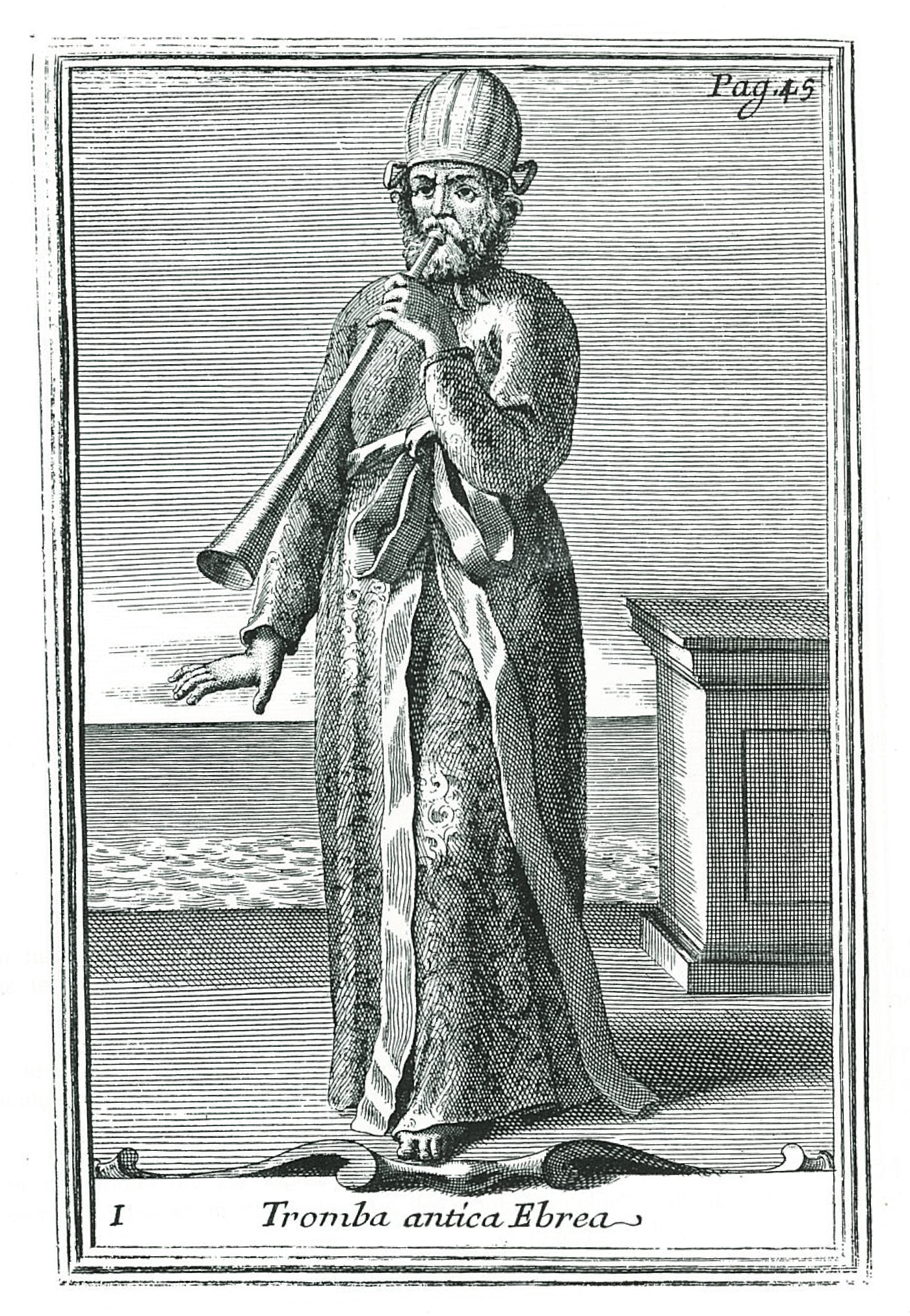
The Hebrew trumpet, like the Egyptian trumpet of which some examples and many pictures survive, was a conical tube of metal, bell-ended and, according to Flavius Josephus (1st cent.) «a little less than a cubit long». Trumpets were used in the elaborate musical ritual of the Temple, but their function was to produce a loud and brilliant blare rather than a controlled musical sound in the modern sense.
The Roman trumpet, made of bronze, was longer than the Hebrew trumpet but not essentially different. Its use seems to ha...
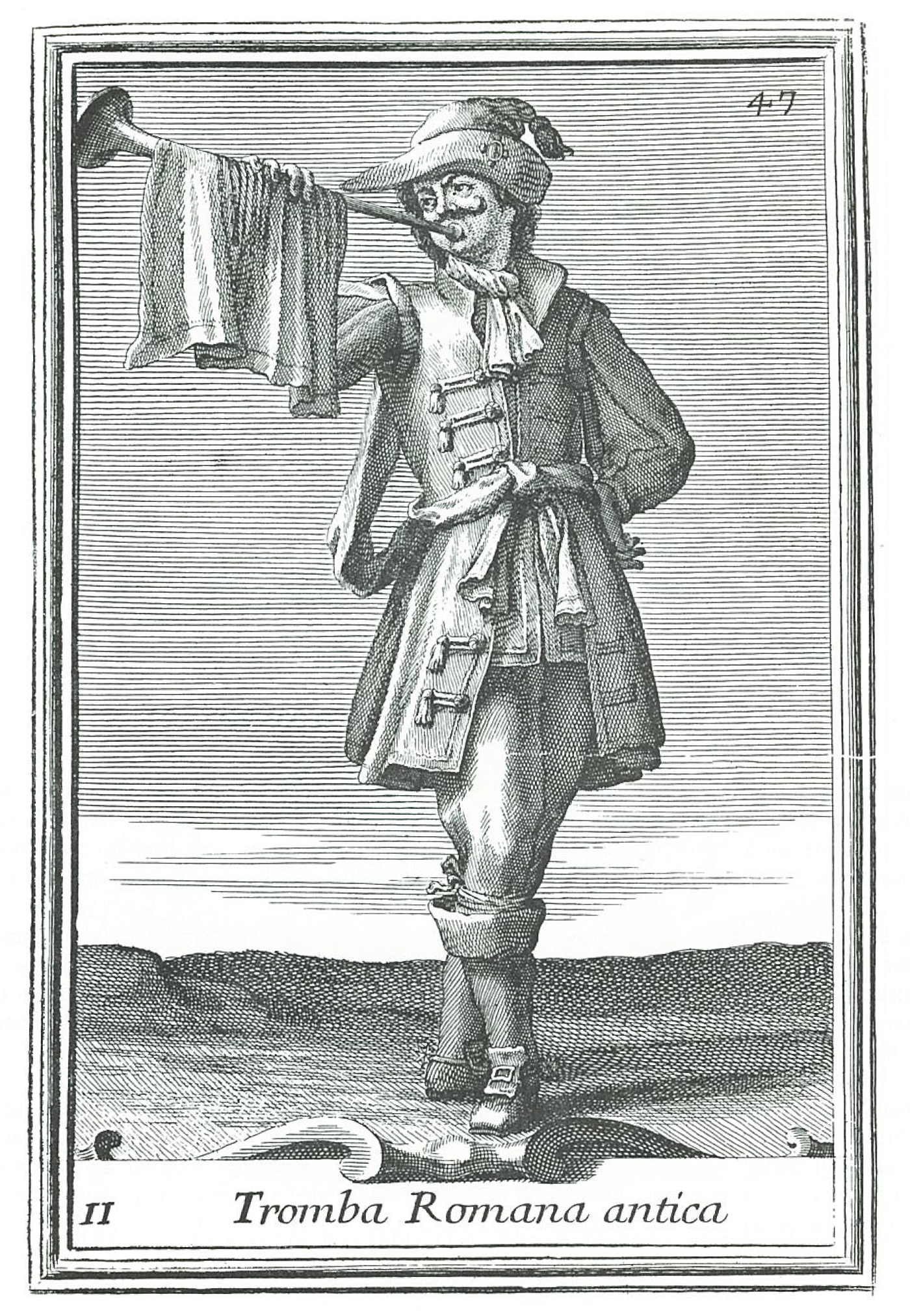
The Roman trumpet, made of bronze, was longer than the Hebrew trumpet but not essentially different. Its use seems to have been entirely military and gladiatorial and its sound raucous.
This plate shows incorrectly the double aulos and not a trumpet. Its pipes were cylindrical in bore and were sounded by...
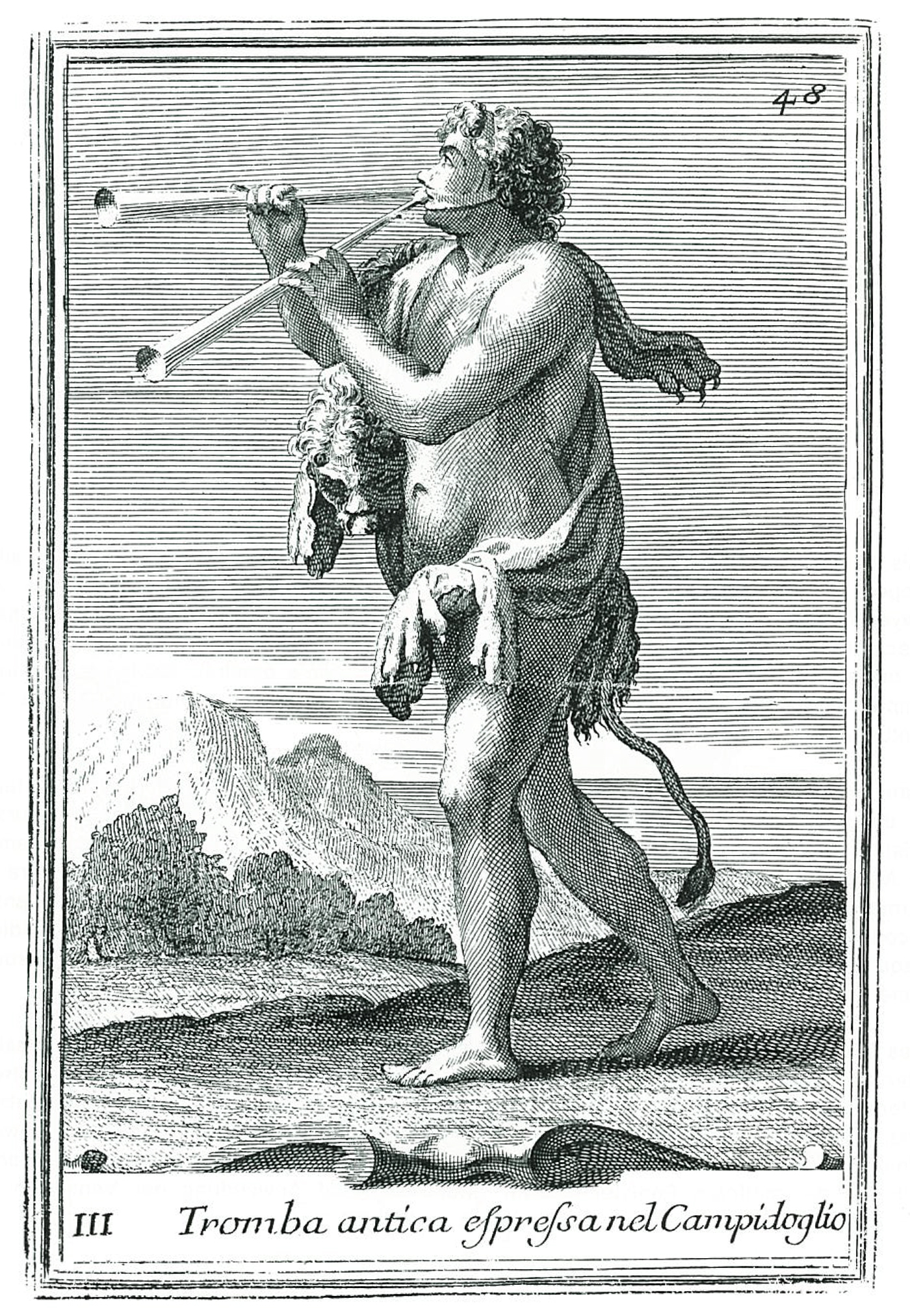
This plate shows incorrectly the double aulos and not a trumpet. Its pipes were cylindrical in bore and were sounded by very large double reeds. Pipes of this type were the high art wind instruments of the Sumerian, Egyptian, Greek and Roman civilisations. It was then gradually replaced by the conical reed pipe, the predecessor of the oboe.
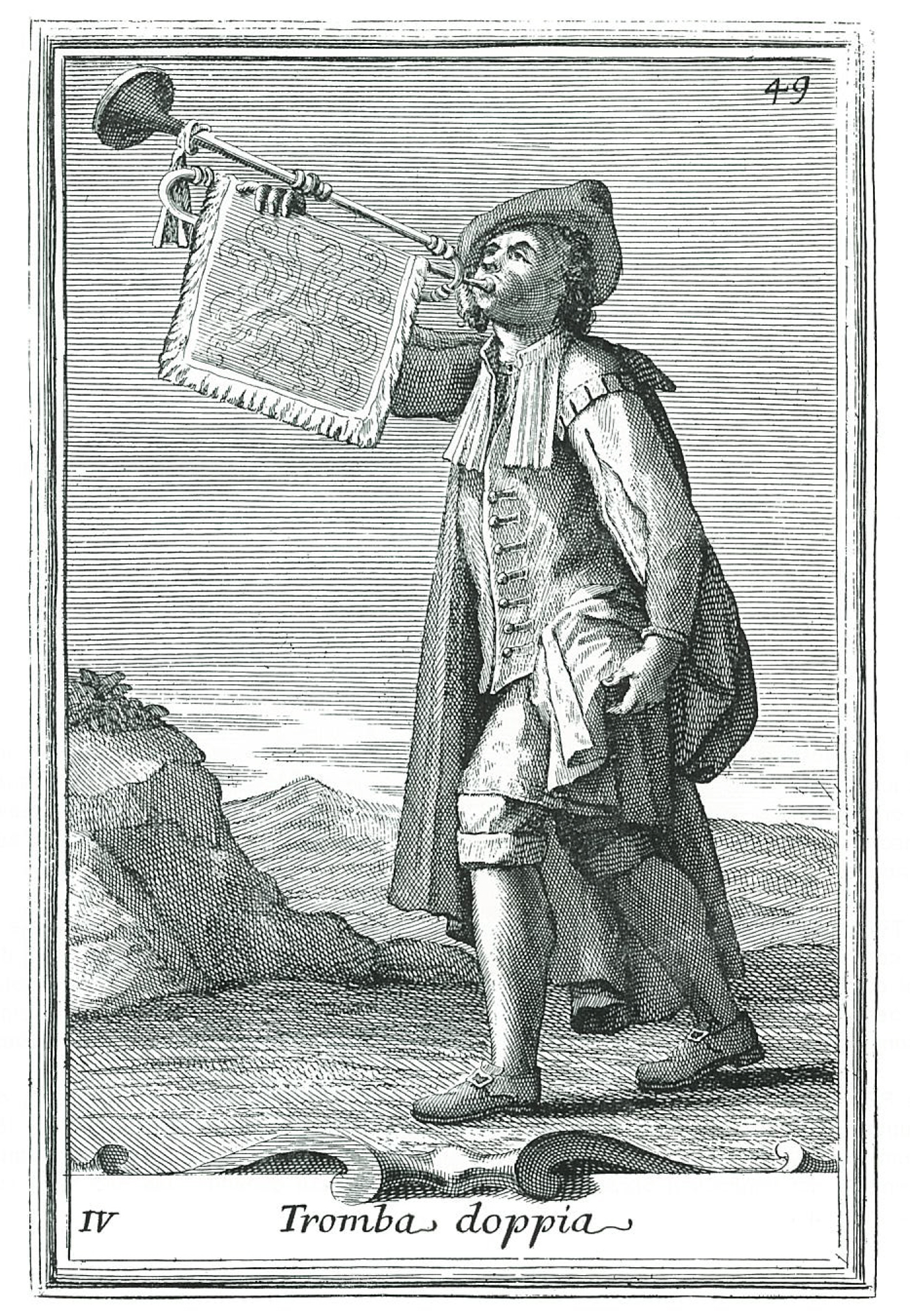
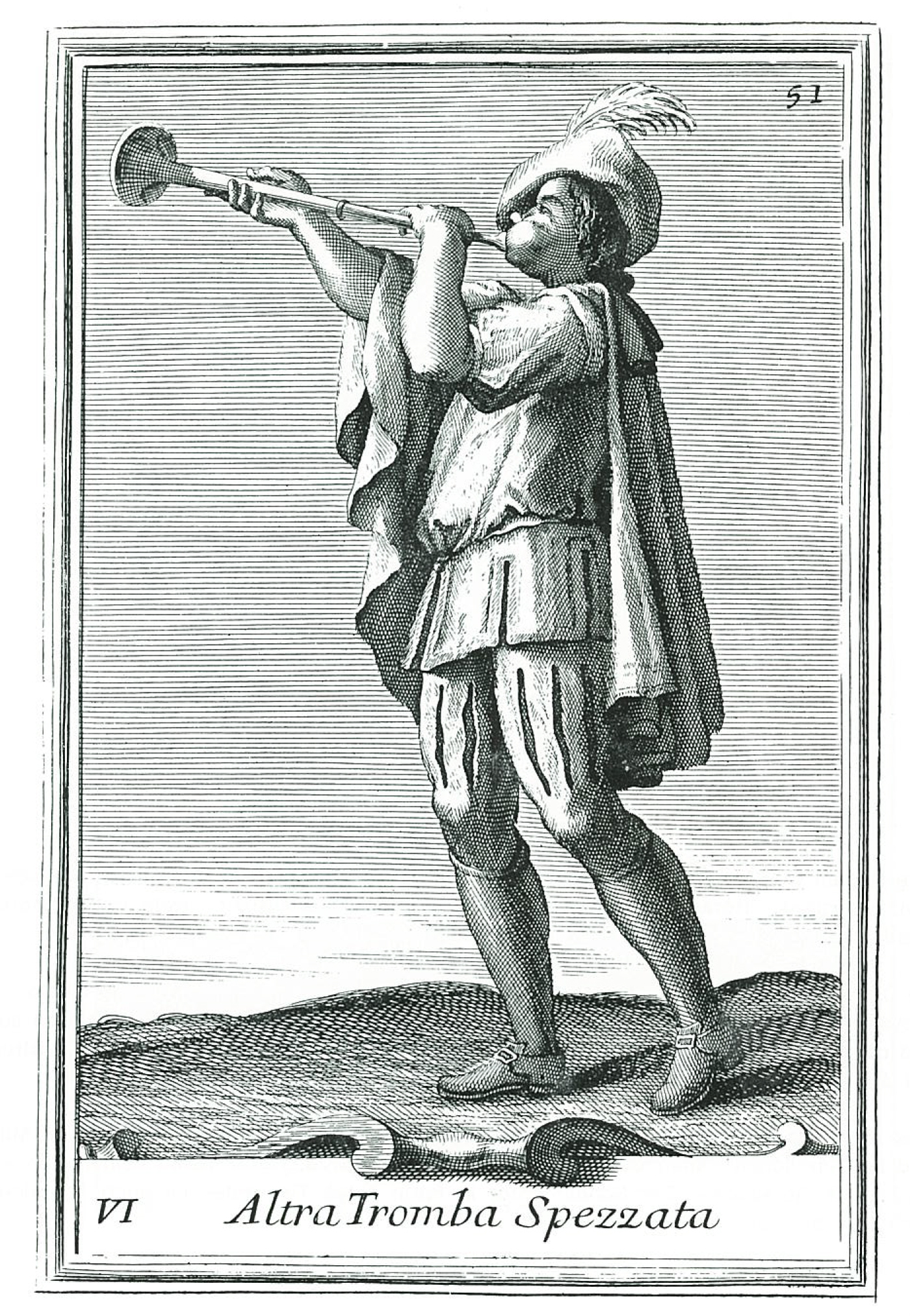
This is the trumpet of the early 18th century, a seven-foot length of brass or silver looped into a convenient shape. In...
This is the trumpet of the early 18th century, a seven-foot length of brass or silver looped into a convenient shape. In Bonanni's time, besides military trumpeters who played fanfares and flourishes of a fairly simple nature, there were, especially in Germany, specialist players of the instrument's highest, or clarino register. This style disappeared in the second half of the eighteenth century (after Bach's death!), leaving a period of simple middle register trumpet playing until the invention of valves (first half of the 19th century).
The trombone, in principle a trumpet with a movable U-shaped tube which fits into the main body of the instrument, was e...
The trombone, in principle a trumpet with a movable U-shaped tube which fits into the main body of the instrument, was established in almost its present form by 1500. Under its original name sackbut, it played the bass or tenor part in the 16th century shawm consorts. It was made in several sizes for German wind bands. The plate shows a bass trombone.
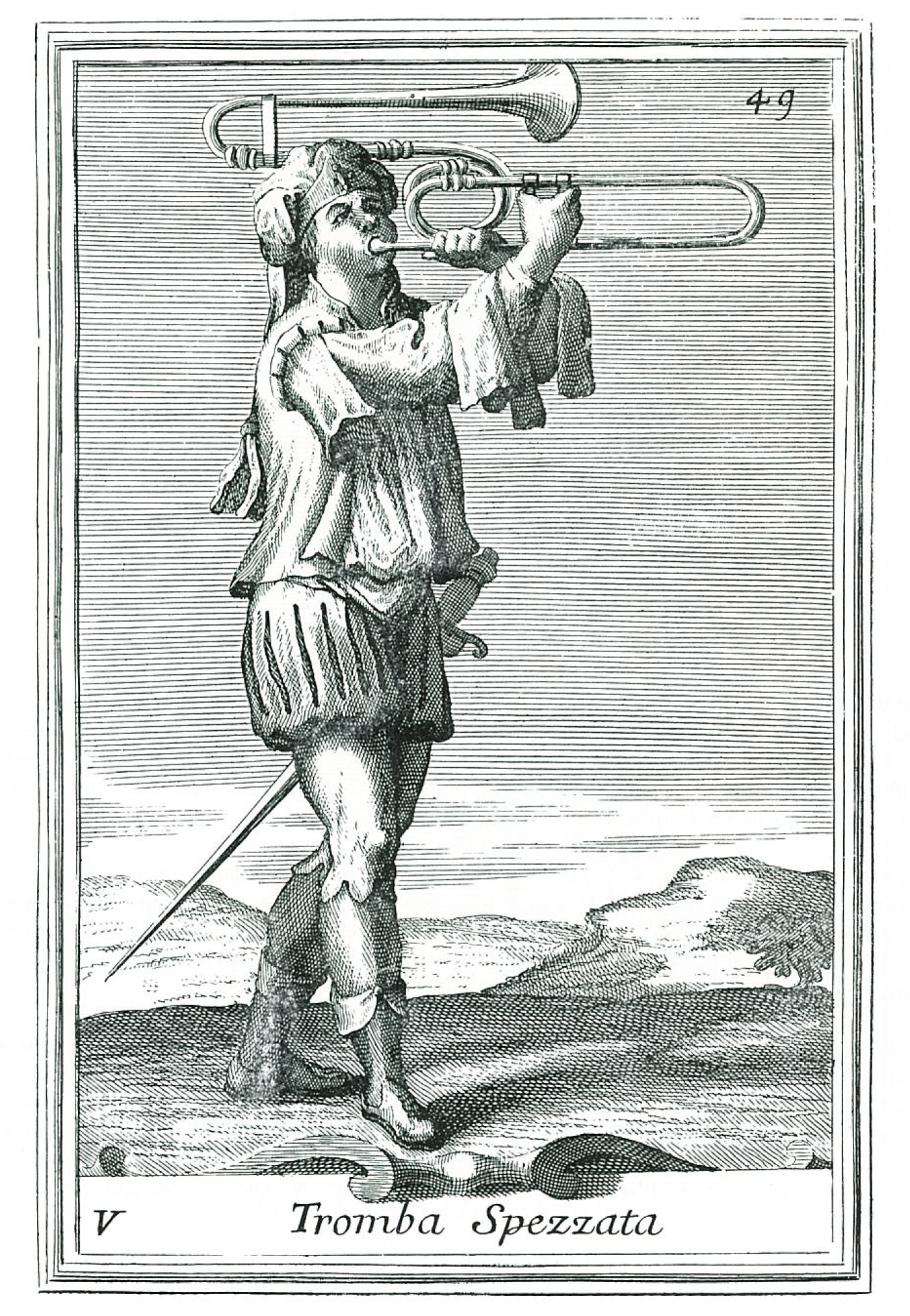
By the 15th cent. a slide trumpet was in use, with a long tube at the mouthpiece end which fitted telescopically into th...
By the 15th cent. a slide trumpet was in use, with a long tube at the mouthpiece end which fitted telescopically into the body of the instrument. By moving the instrument in and out the player could obtain a larger range of contiguous notes than was possible on the ordinary trumpet. It survived in Germany up to Bonanni's time and was used by Bach, under the name tromba da tirarsi, in several cantatas.
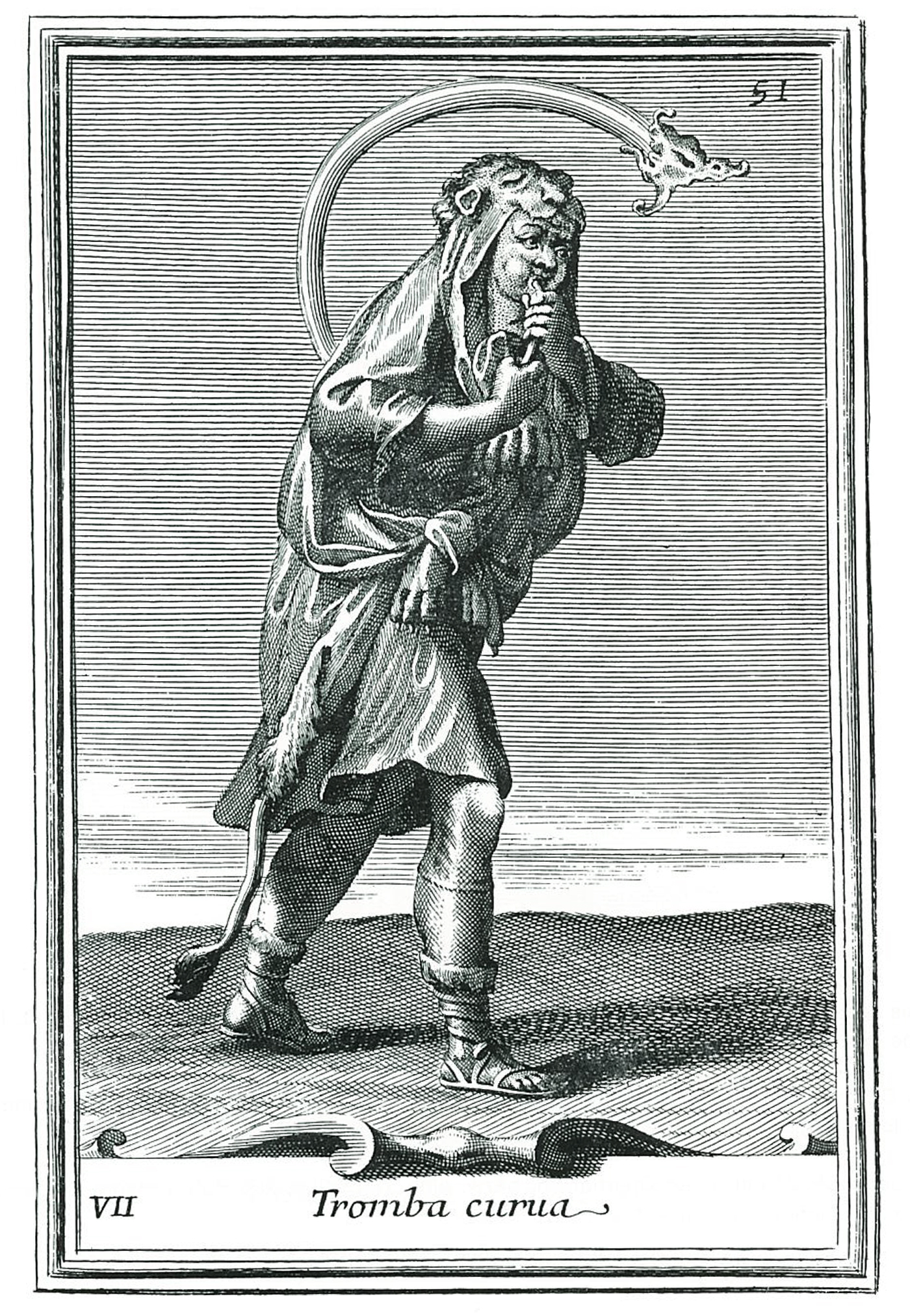
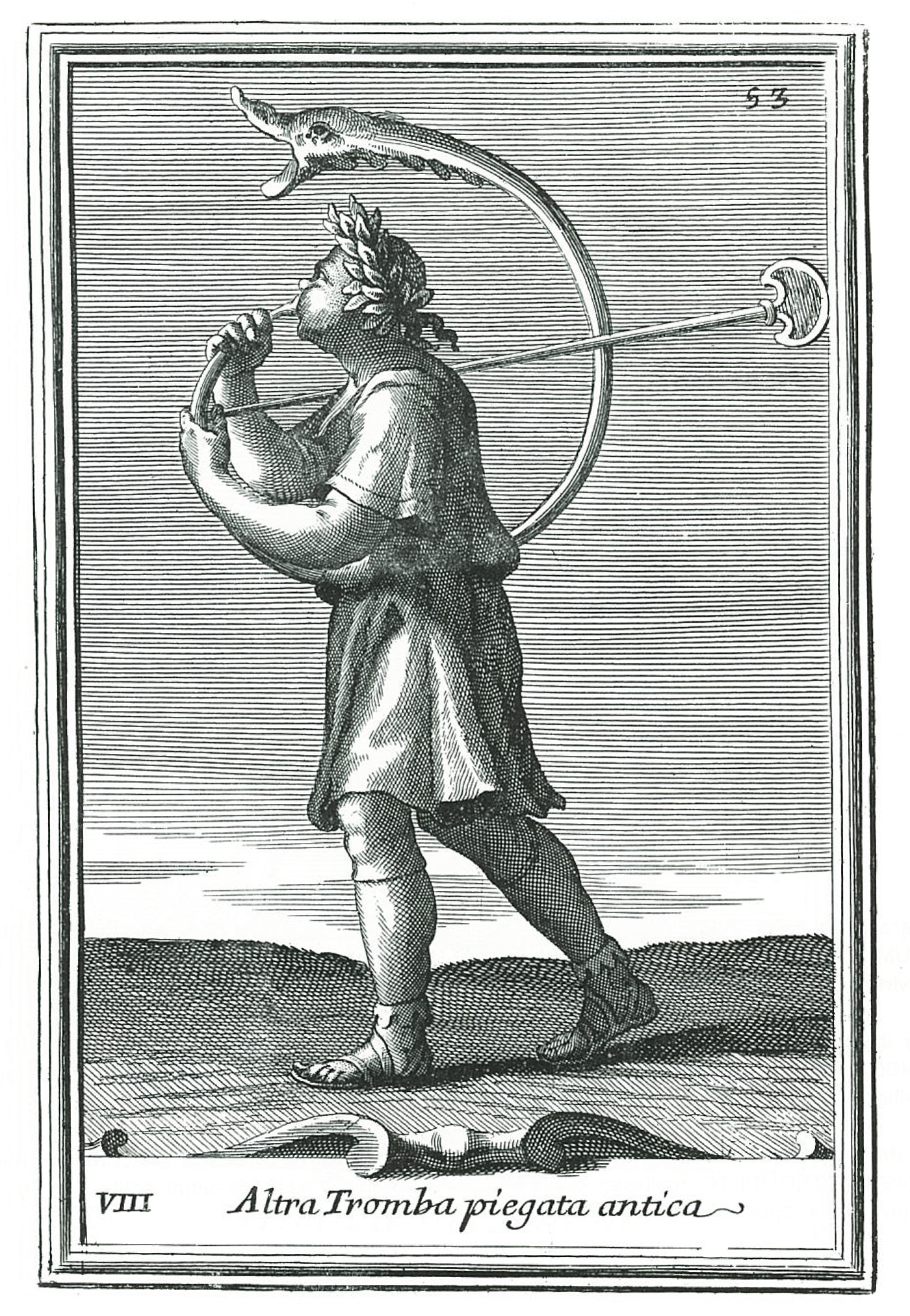
The Roman cornu was a G-shaped conical tube of bronze, used on military and solemn civil occasions. Horace described its...
The Roman cornu was a G-shaped conical tube of bronze, used on military and solemn civil occasions. Horace described its sound as menacing murmur. Note the zoomorphic head which is also characteristic of the Celtic carnyx.
This cornu has the wooden crossbar, or carrying crutch, which supported the 11 ft. long tube on the player's shoulder.
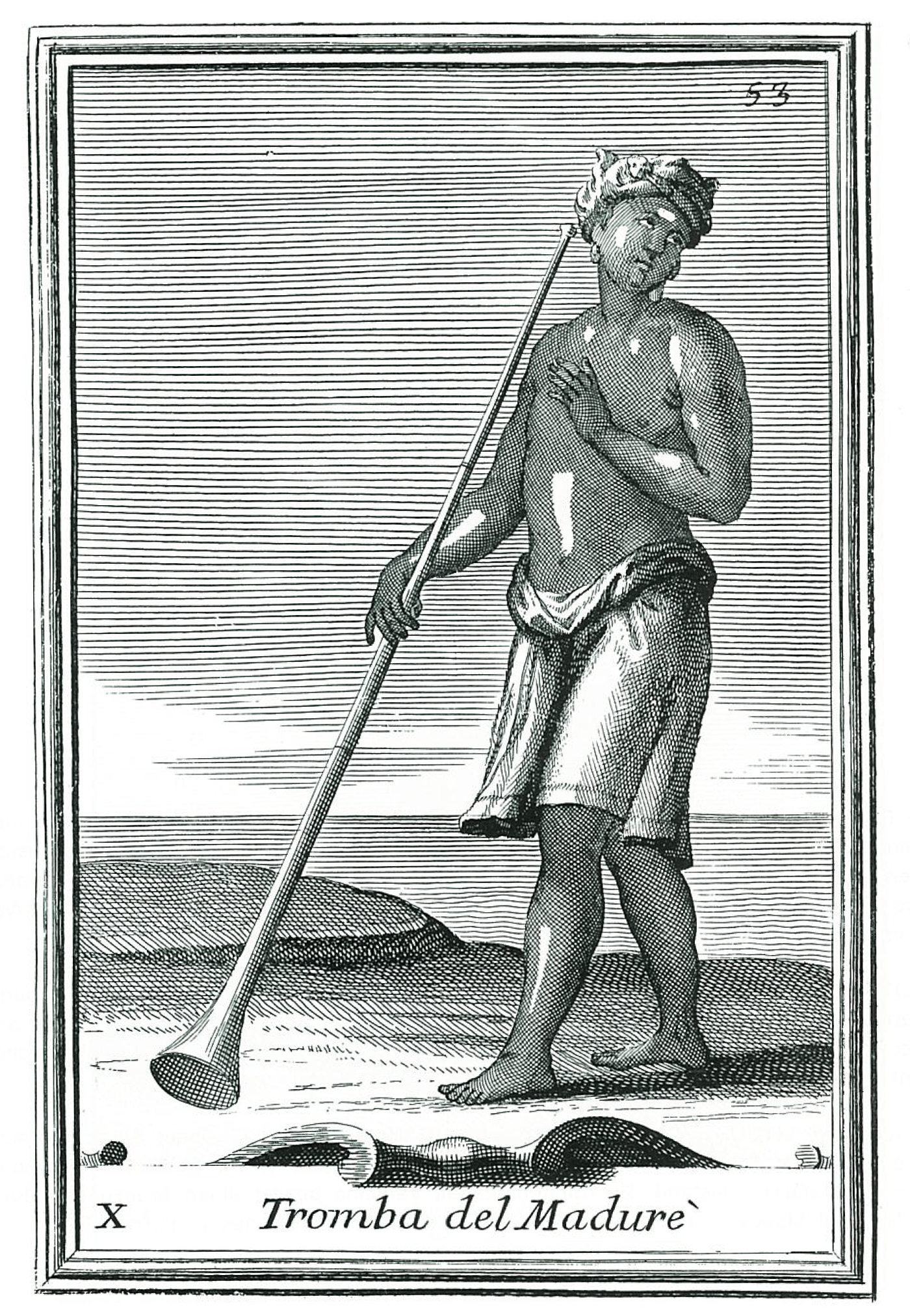
There have been many outside influences on the instruments of India, and this Indian trumpet is little different from ce...
There have been many outside influences on the instruments of India, and this Indian trumpet is little different from certain Chinese trumpets. Bonanni points out that the playing position is incorrectly shown — the instrument should be pointing upwards.
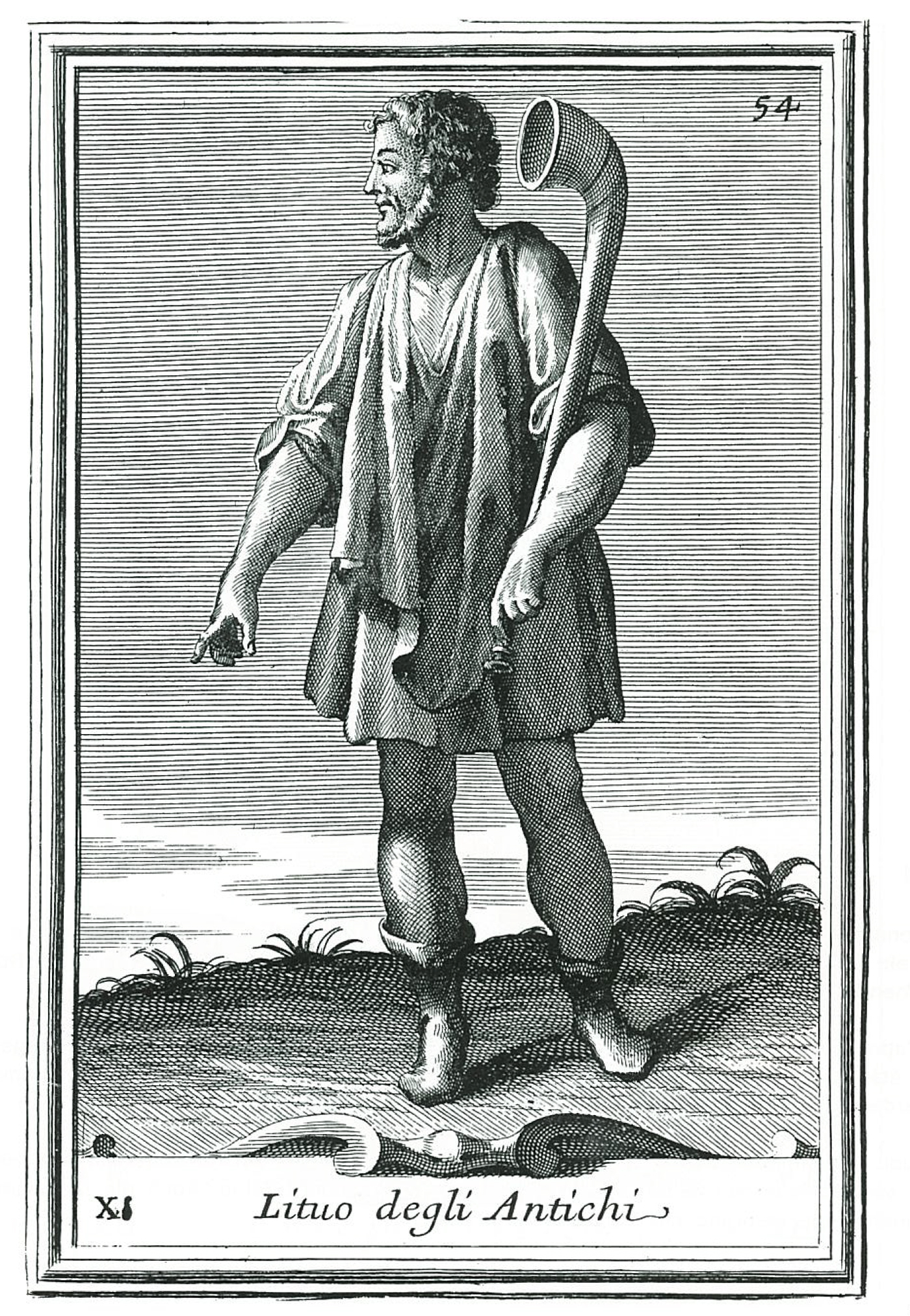
The Roman lituus is thought to be of Etruscan origin. Although made of one tube expanding to form an upturned flare at t...
The Roman lituus is thought to be of Etruscan origin. Although made of one tube expanding to form an upturned flare at the end, it retained the shape of its predecessor, a cane tube whose sound was amplified by the addition of an animal horn. A bronze lituus is preserved in the Vatican Library and hooked bronze instruments of similar type are in the National Museum of Ireland.
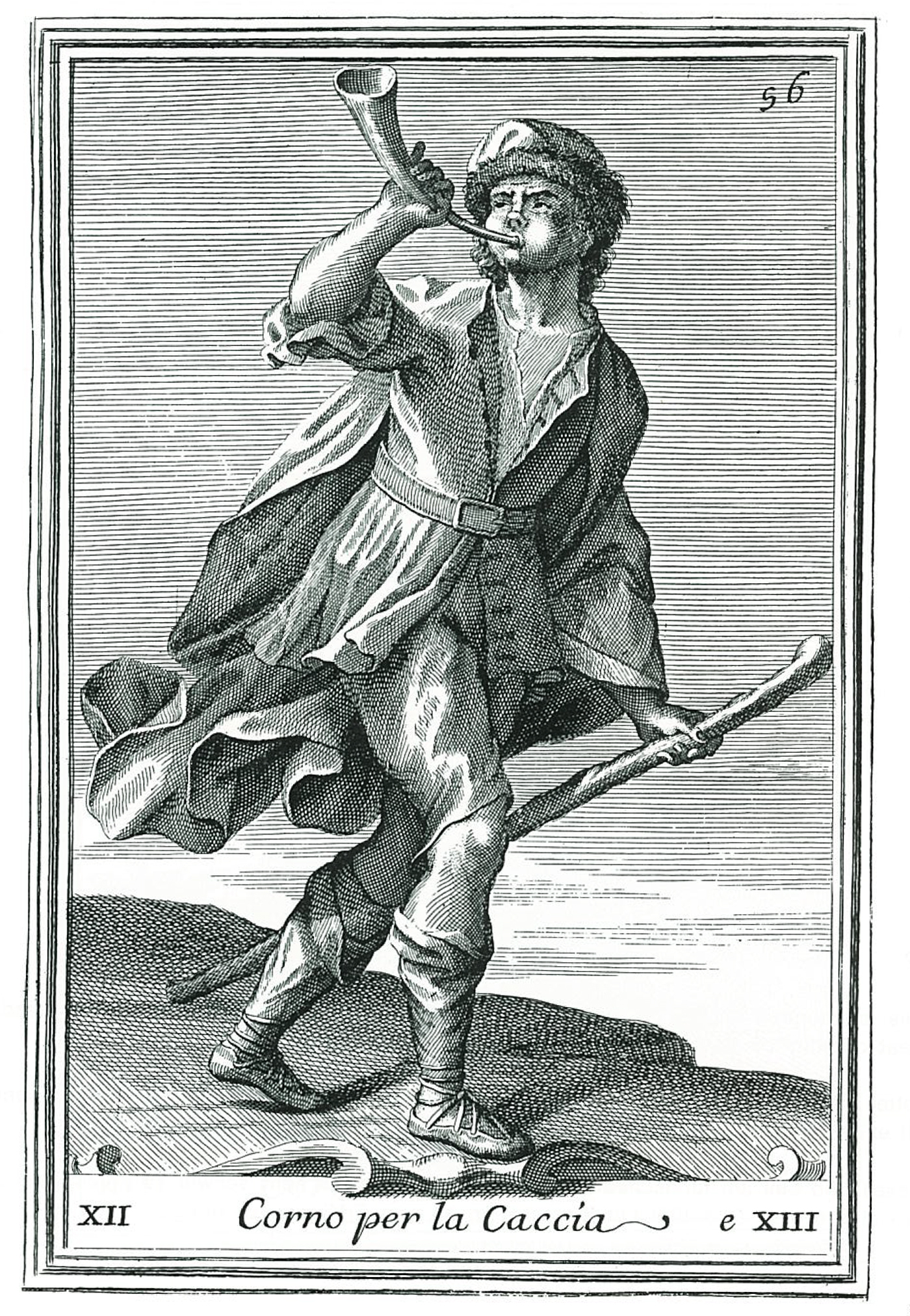
Bonanni describes this small hunting horn, of the kind used by shepherds to call their flocks, as the instrument with wh...
Bonanni describes this small hunting horn, of the kind used by shepherds to call their flocks, as the instrument with which Romulus called together the people of Rome. When made in metal it still retained the shape of its cow horn ancestor.
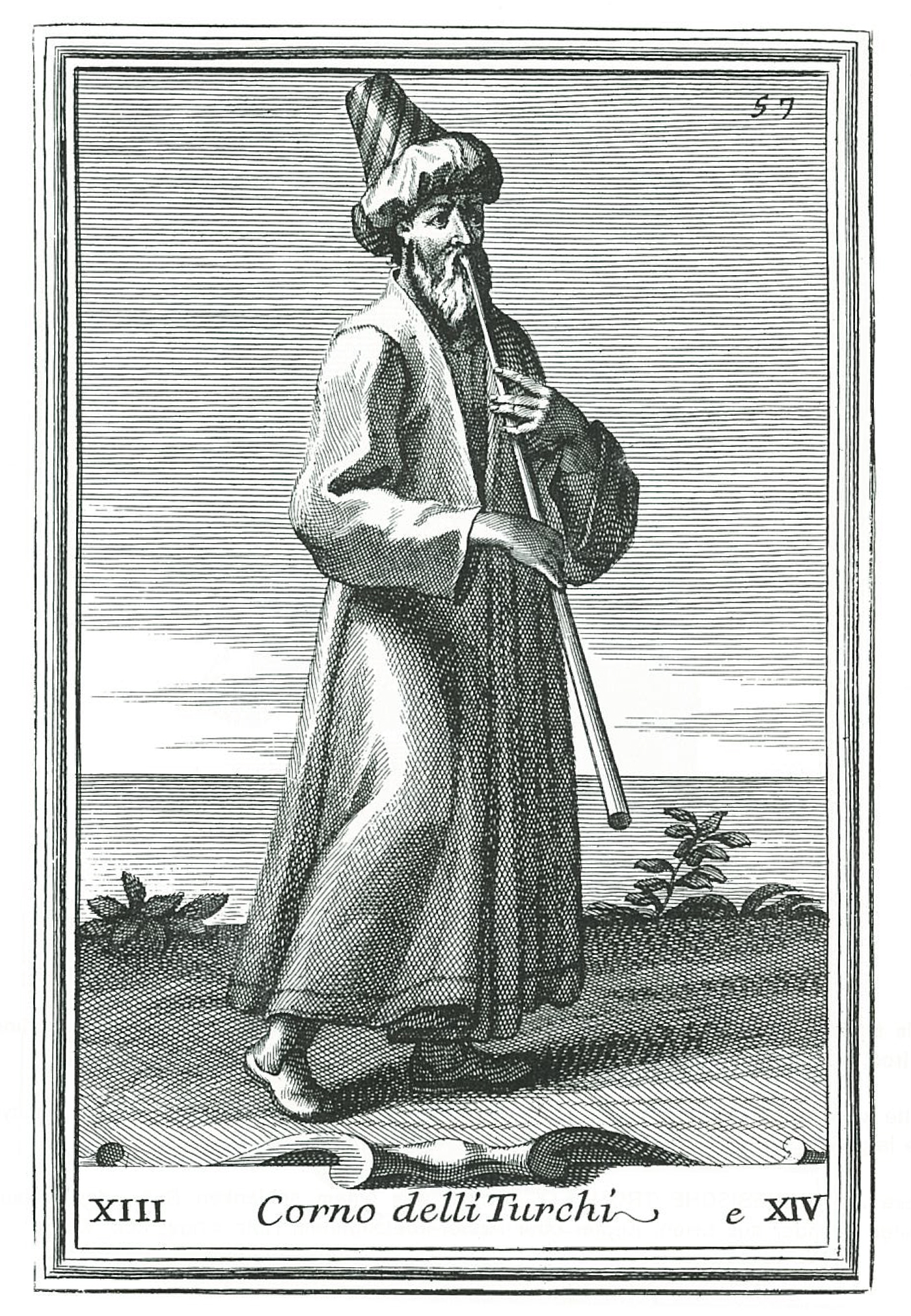
This is intended to be a Turkish instrument, very difficult to play because it «needs a great quantity of air to make it...
This is intended to be a Turkish instrument, very difficult to play because it «needs a great quantity of air to make it sound».
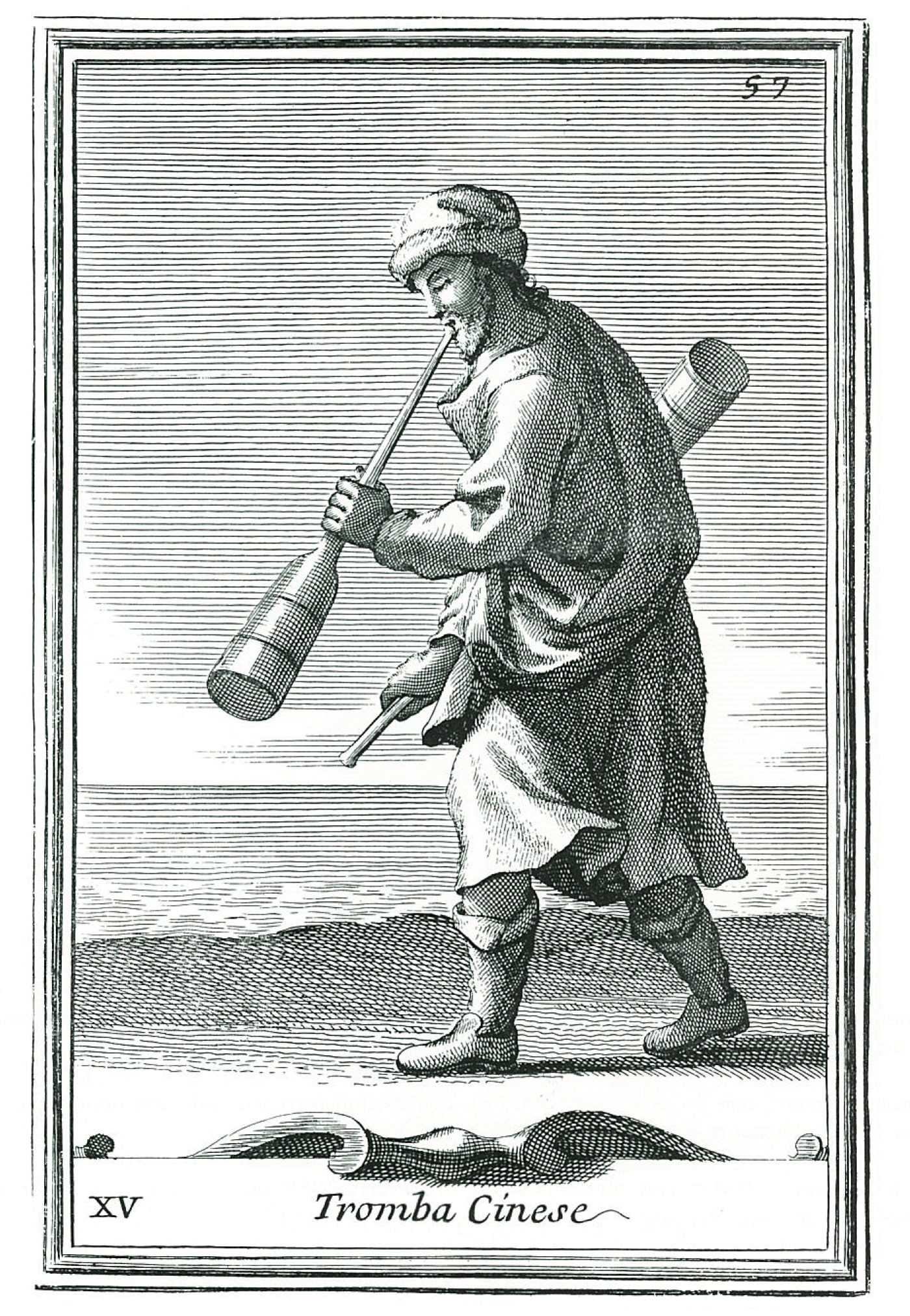
This type of Chinese trumpet consists of a slender tube inserted in a large cylinder of iron, copper or copper-covered w...
This type of Chinese trumpet consists of a slender tube inserted in a large cylinder of iron, copper or copper-covered wood.
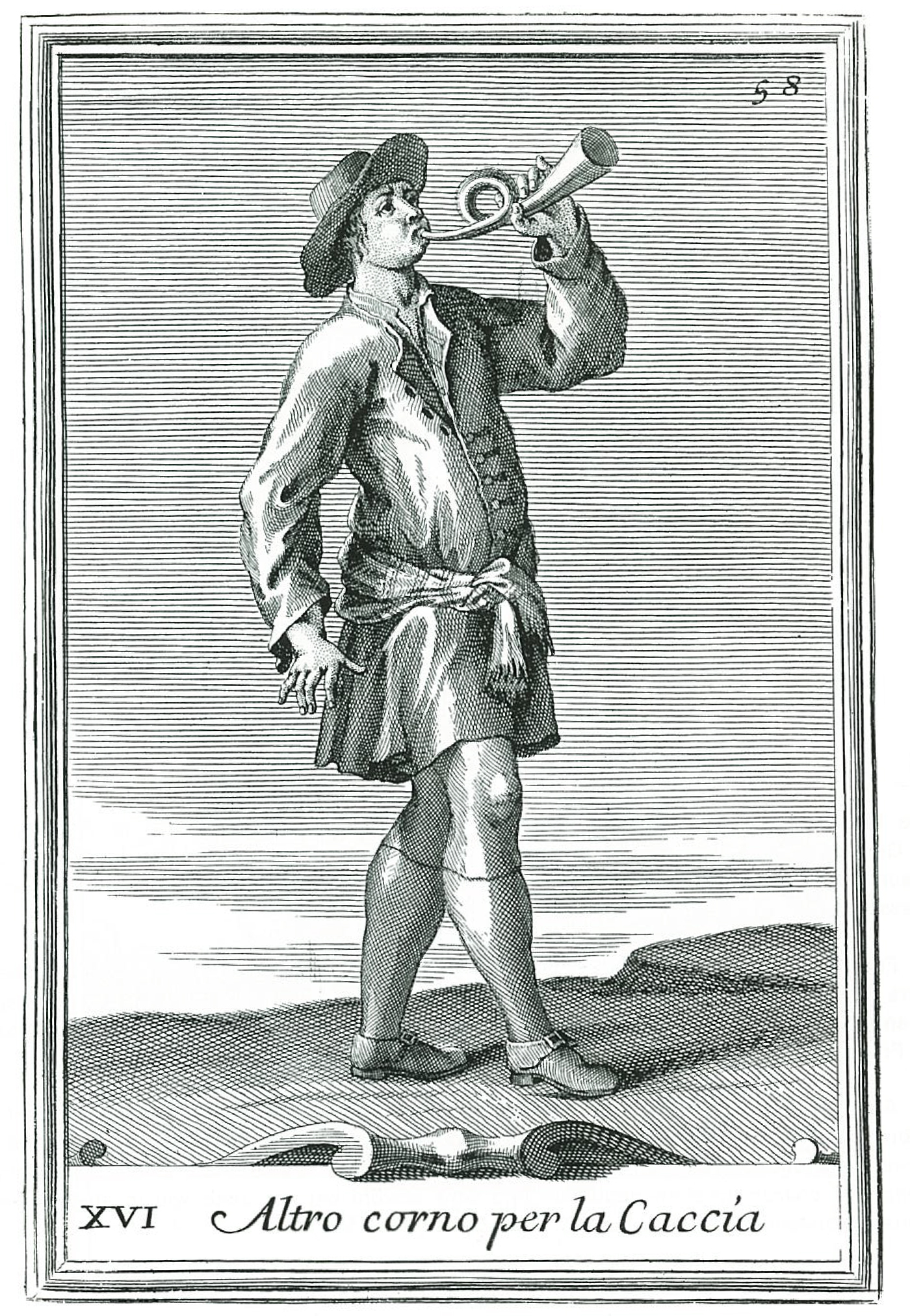
Bonanni describes the sound of this small bugle horn, used by couriers and huntsmen, as being much clearer than that of...
Bonanni describes the sound of this small bugle horn, used by couriers and huntsmen, as being much clearer than that of the old animal horn.
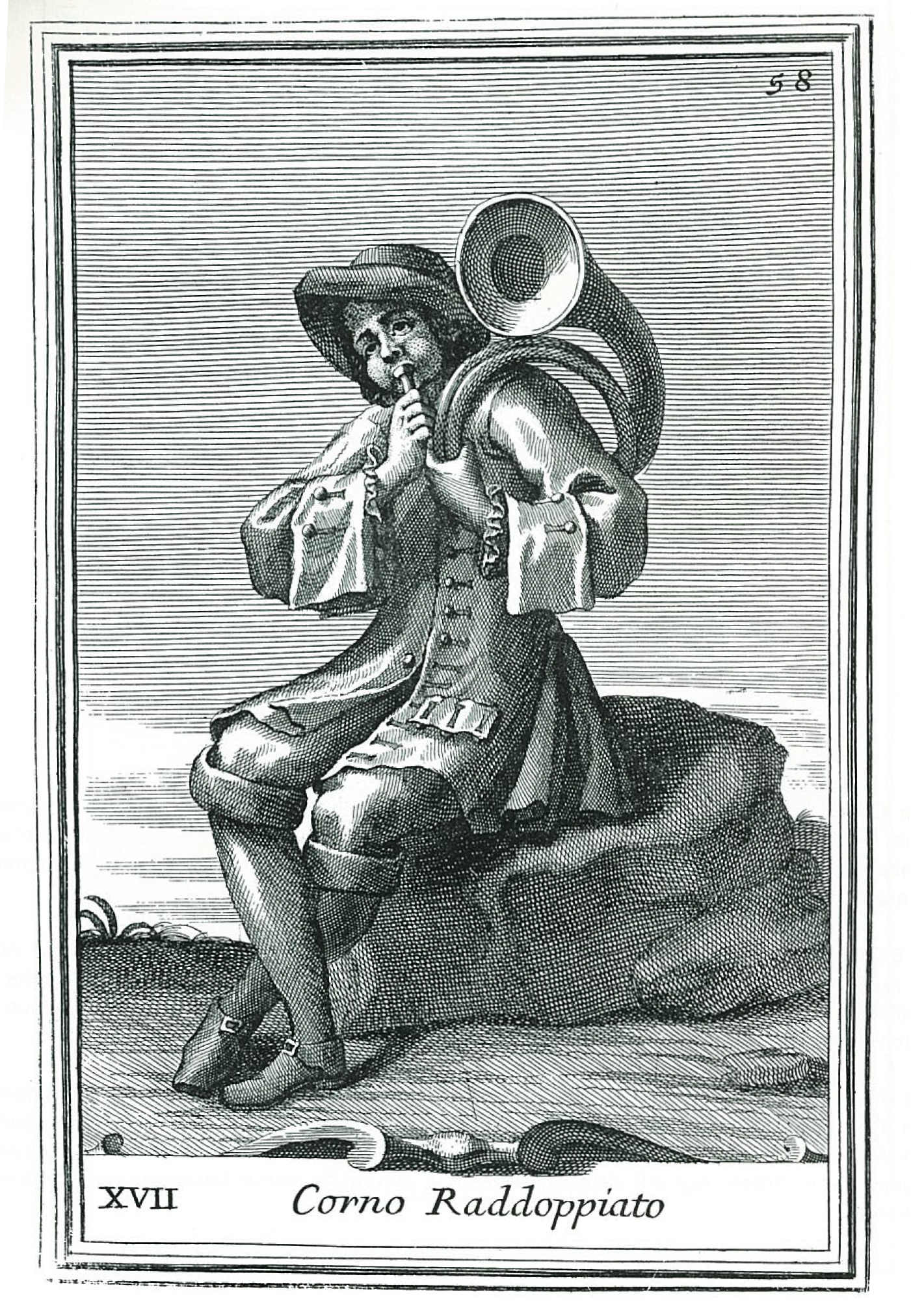
The French horn of the early 18th cent. was restricted to hunting in France, but in Germany and Bohemia it was already b...
The French horn of the early 18th cent. was restricted to hunting in France, but in Germany and Bohemia it was already being admitted to indoor use in theatre and ensemble music. The simple form shown here survives today in the French trompe de chasse used in the hunt and by Alpine regiments.
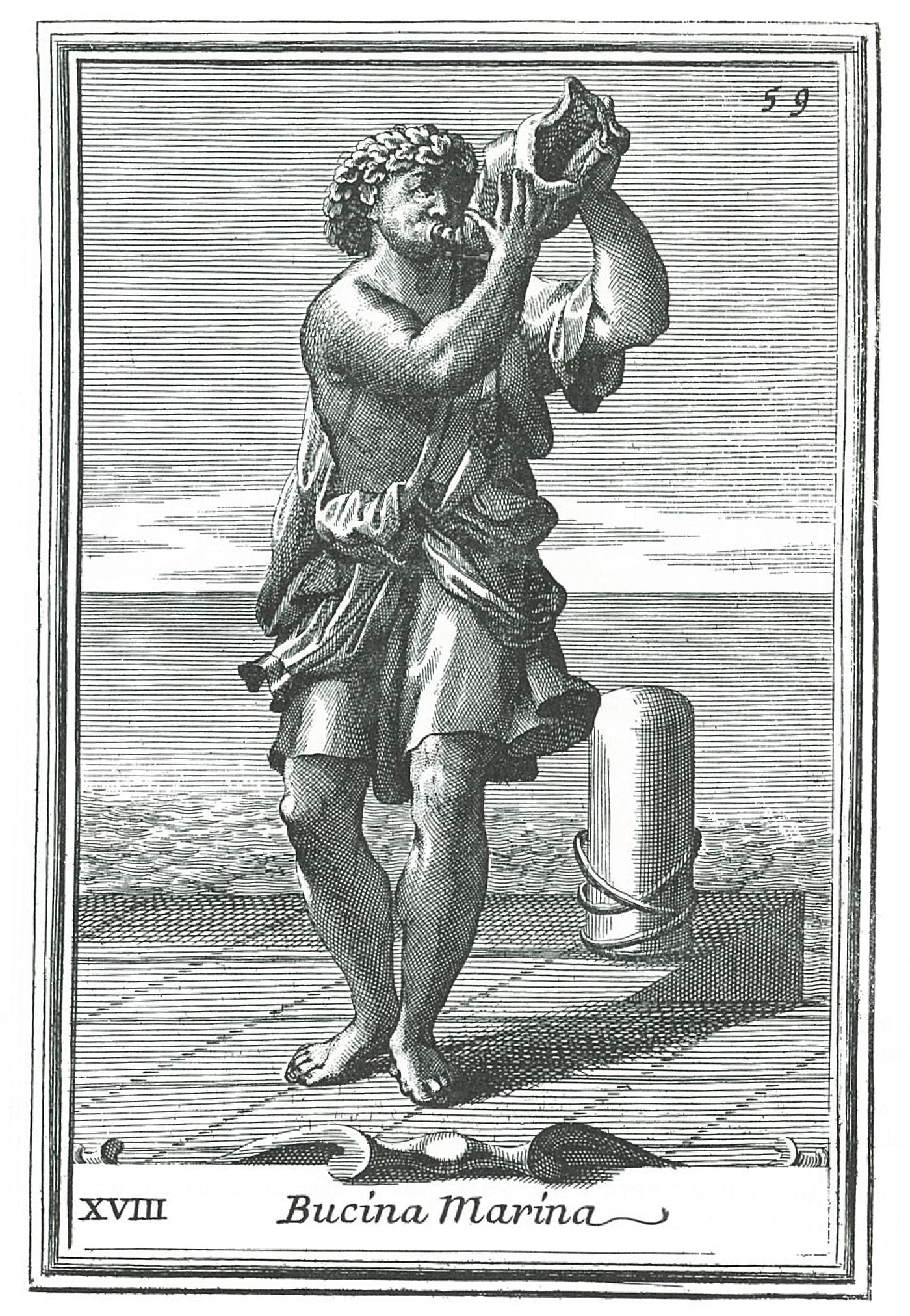
The conch shell trumpet is used by many primitive peoples and generally has a ritual or magical significance. In Europe...
The conch shell trumpet is used by many primitive peoples and generally has a ritual or magical significance. In Europe it is still used by the fish sellers of Majorca to announce their wares. Bonanni gives the Greek legend of the Triton who conquered giants with the terrifying sound of the shell trumpet.
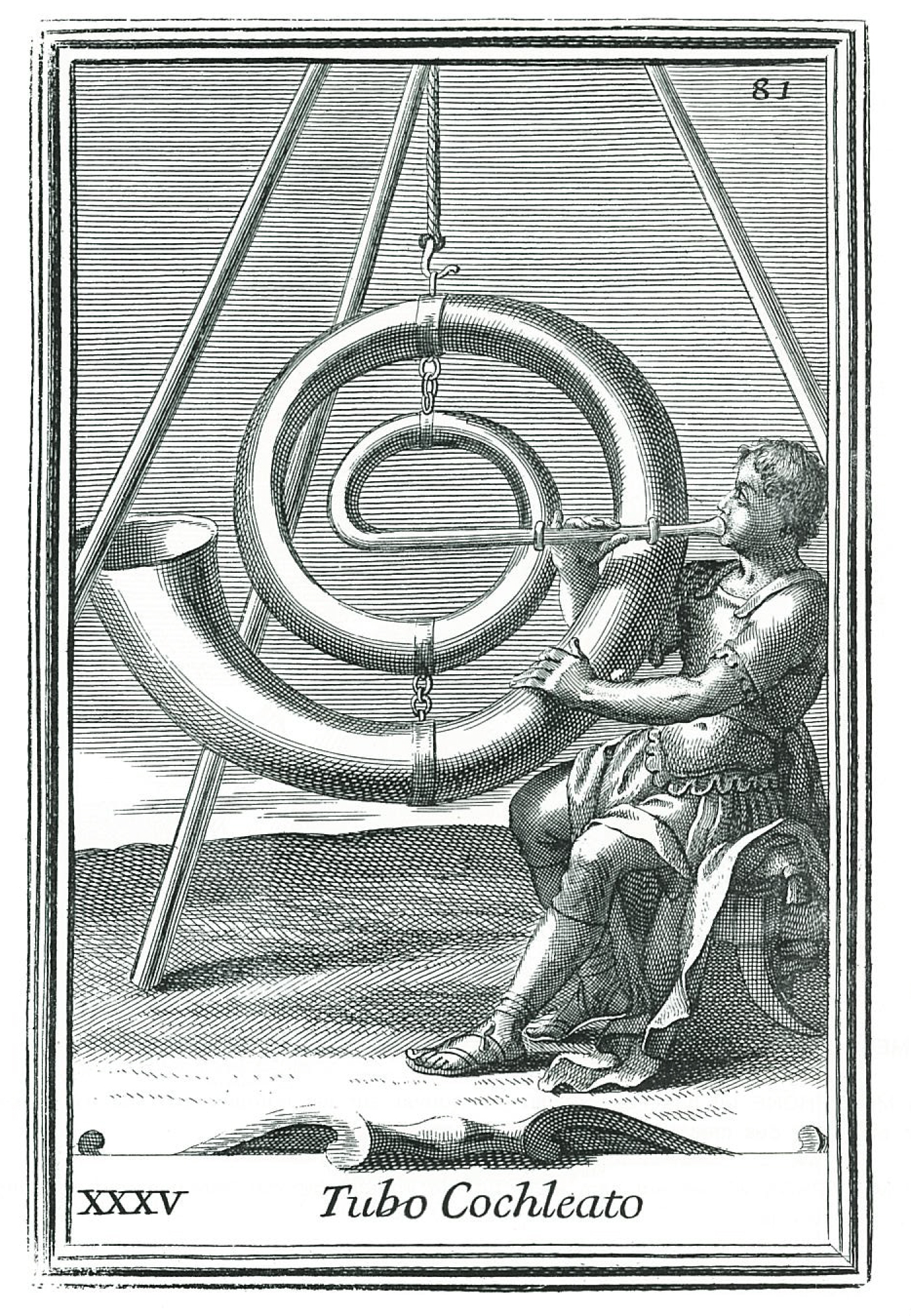
An imaginary voice amplifier. Kircher suggested that a large elliptical tube would considerably magnify the sound of the...
An imaginary voice amplifier. Kircher suggested that a large elliptical tube would considerably magnify the sound of the voice.
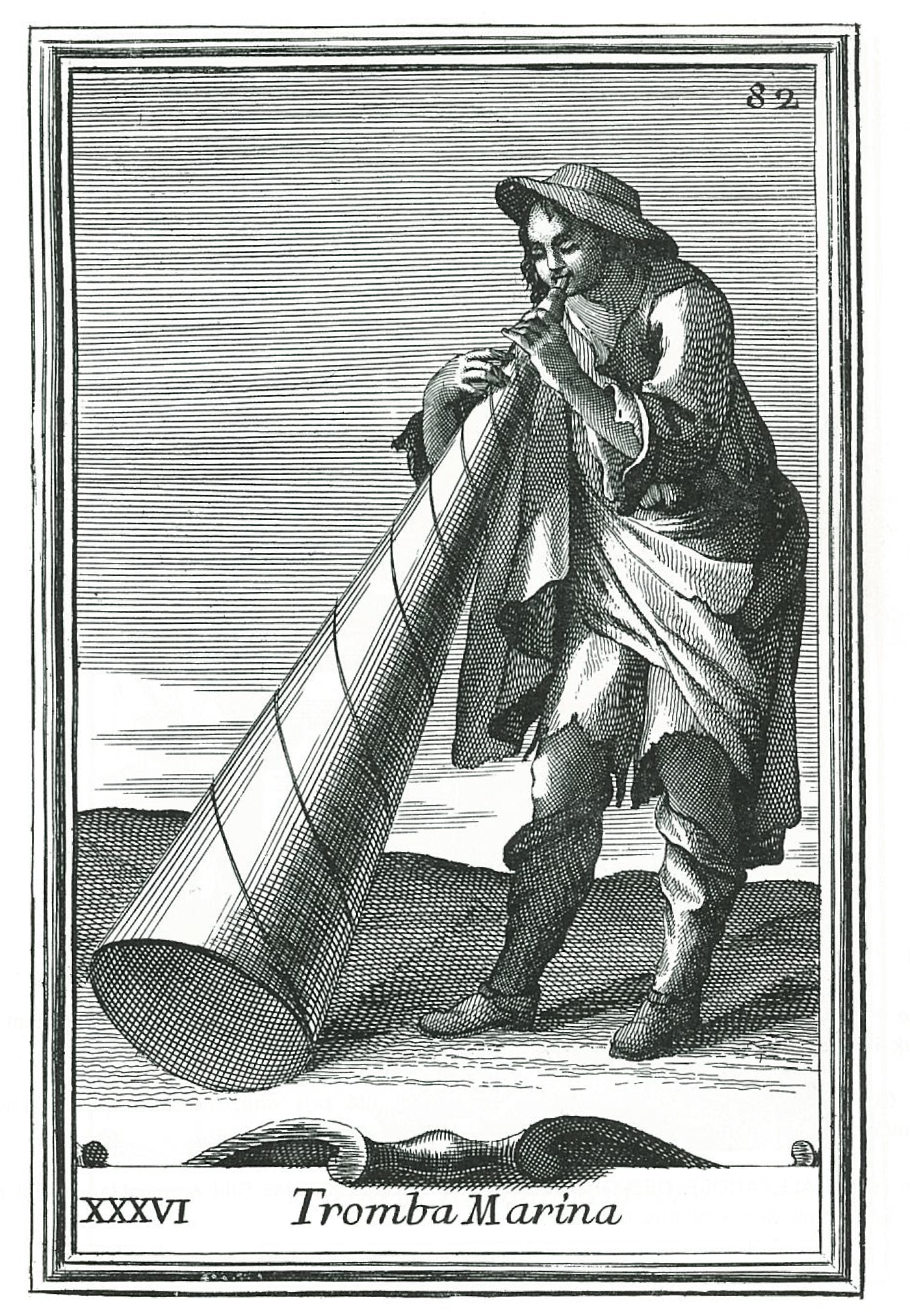
A megaphone used at sea for the transmission of orders and messages.
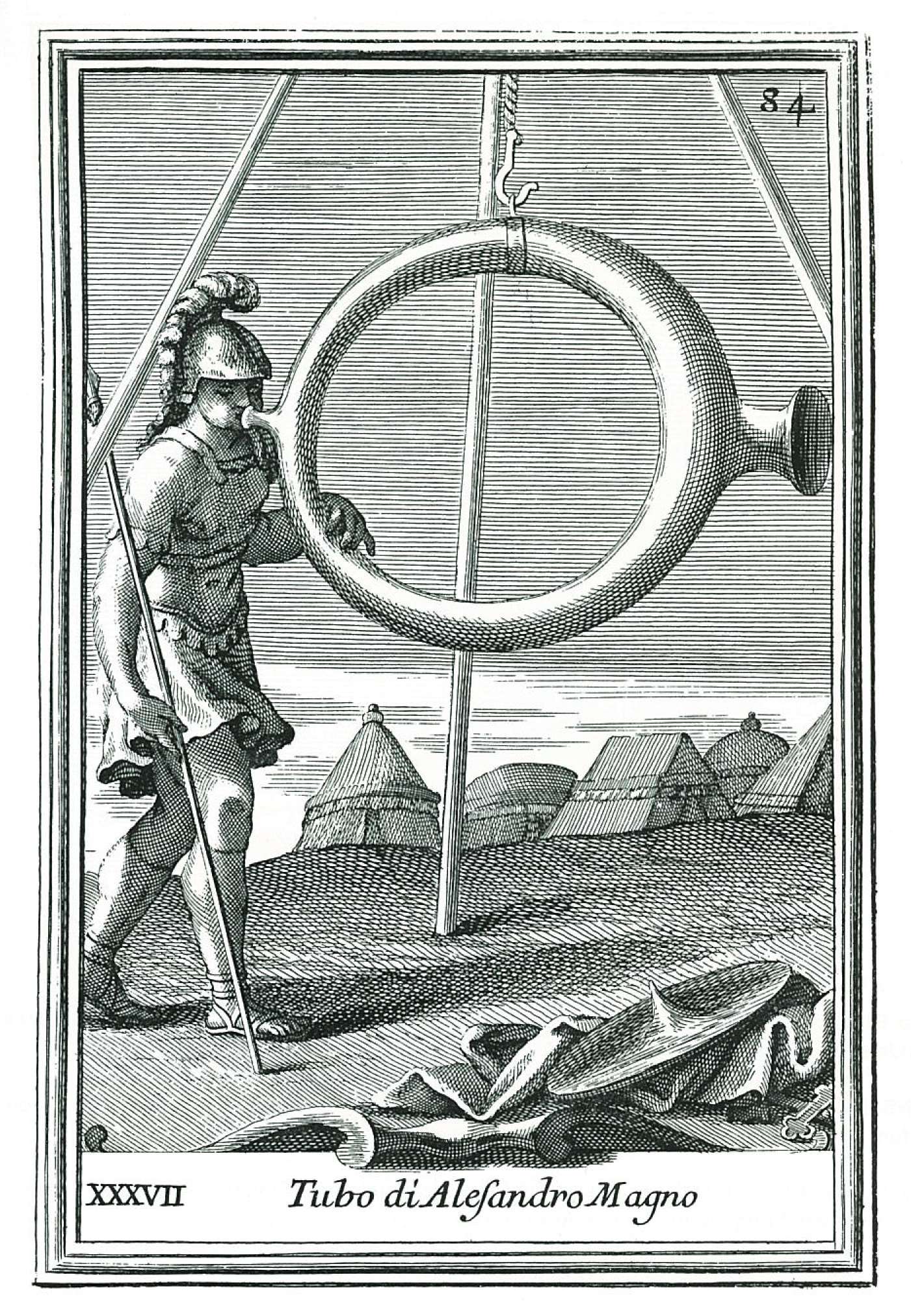
The horn of Alexander the Great is also taken from Kircher, who said that he took it from a manuscript in the Vatican Li...
The horn of Alexander the Great is also taken from Kircher, who said that he took it from a manuscript in the Vatican Library.
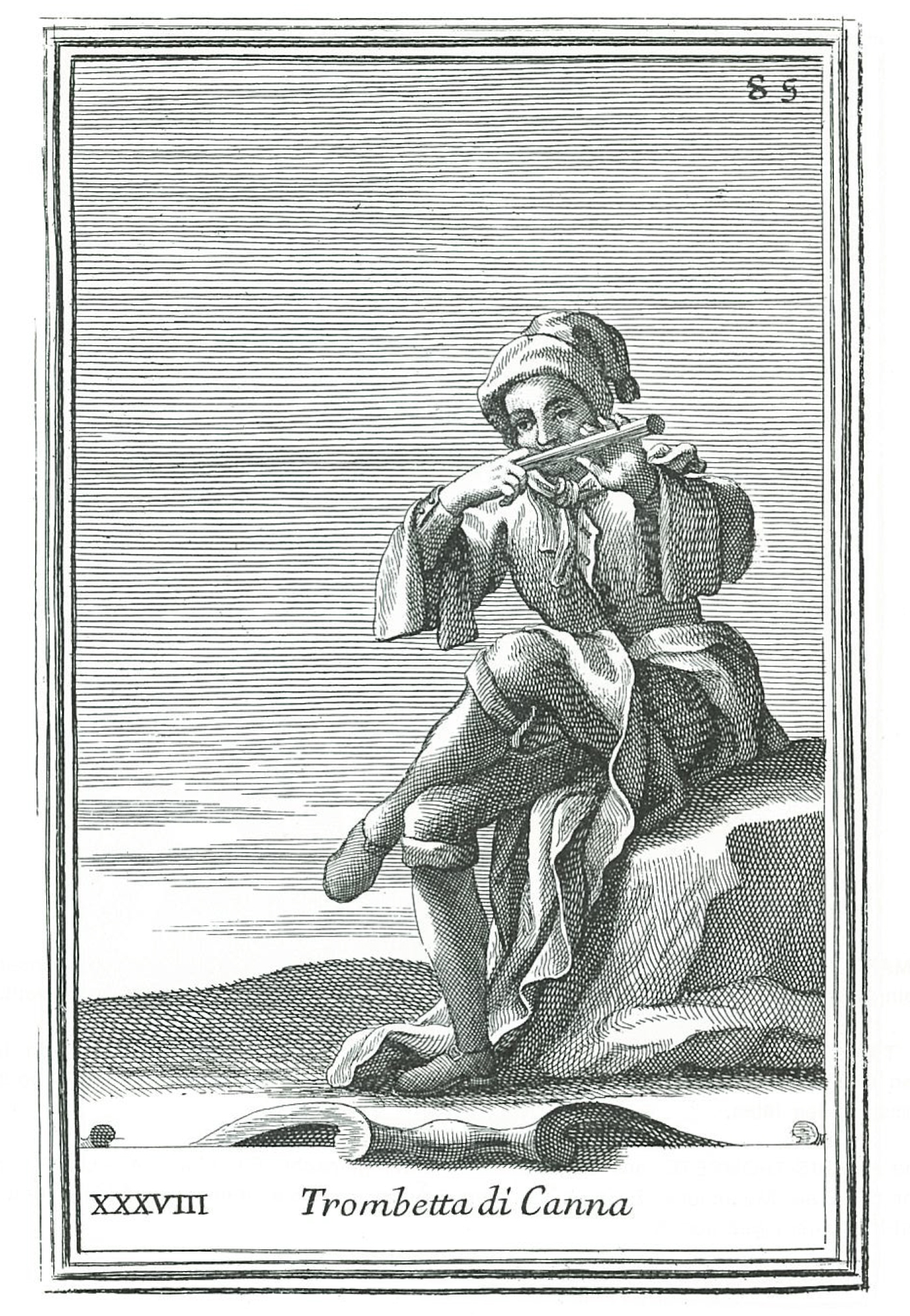
The buzzer is made of a length of split cane, which, presumably, the player buzzes as children do with a blade of grass.
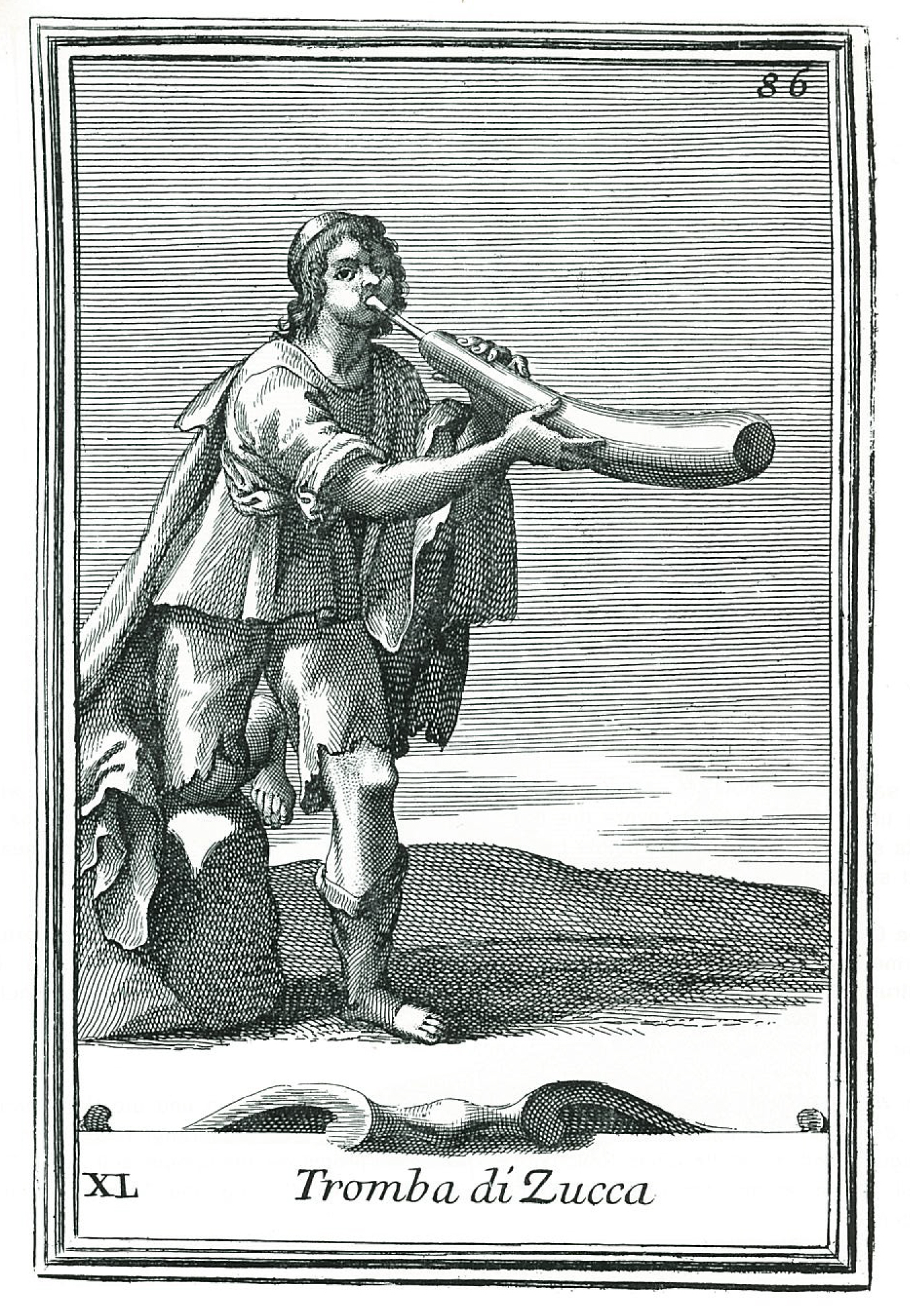
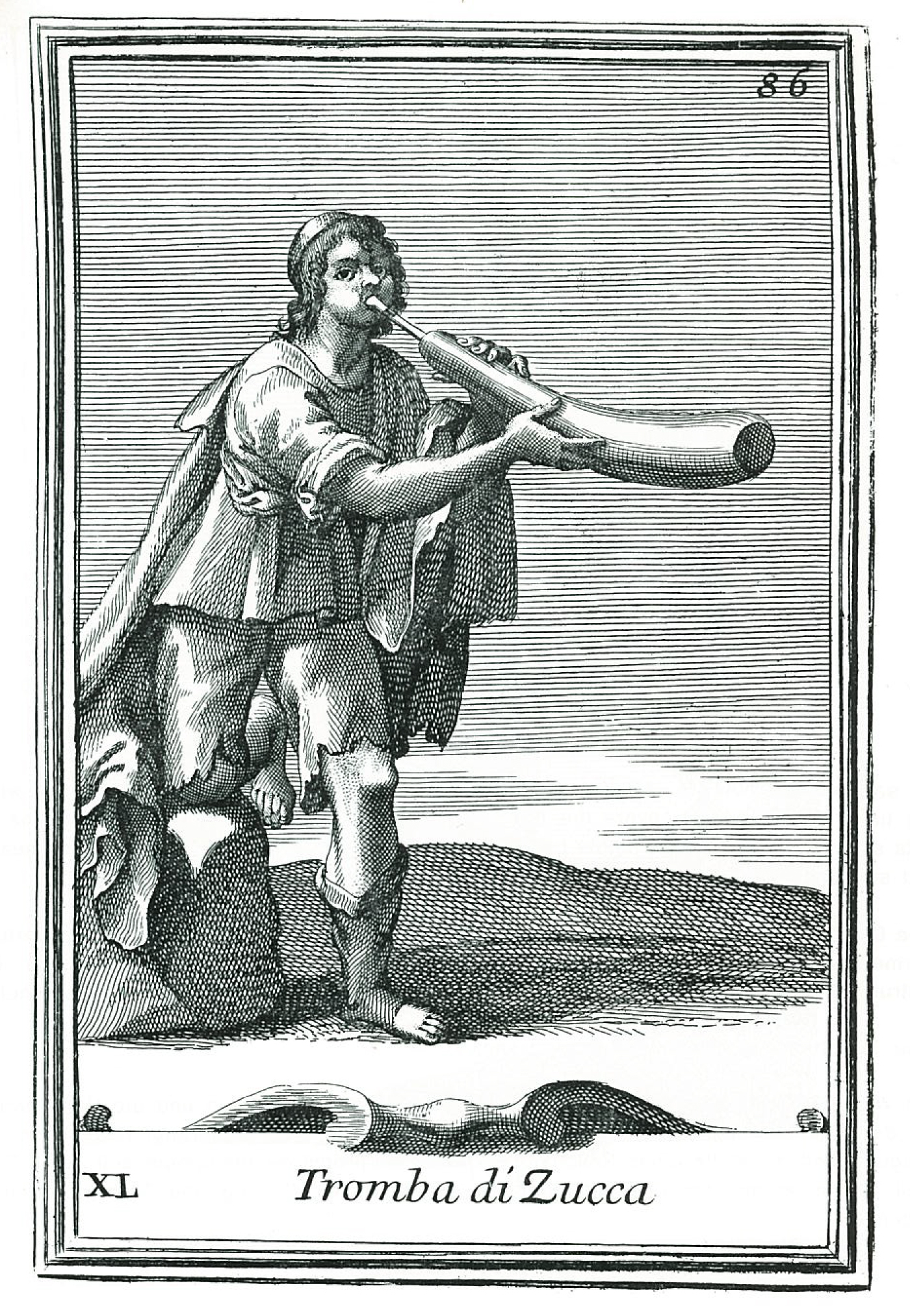
A marrow trumpet, made from a scooped out marrow (squash) into which is inserted a single-reed tube. The peasants of Gae...
A marrow trumpet, made from a scooped out marrow (squash) into which is inserted a single-reed tube. The peasants of Gaeta use it as a hunting and festival instrument.
An earthenware water jar into which the voice is pitched at the pouring spout, while the hand covers and uncovers the fi...
An earthenware water jar into which the voice is pitched at the pouring spout, while the hand covers and uncovers the filling aperture to give a change of quality. The jar acts as a resonator. This humble instrument, according to Bonanni, «makes an agreeable and stimulating accompaniment to peasant songs and dances».

Share this article

Loading…