Alison Miller (Horn)
Alison Miller
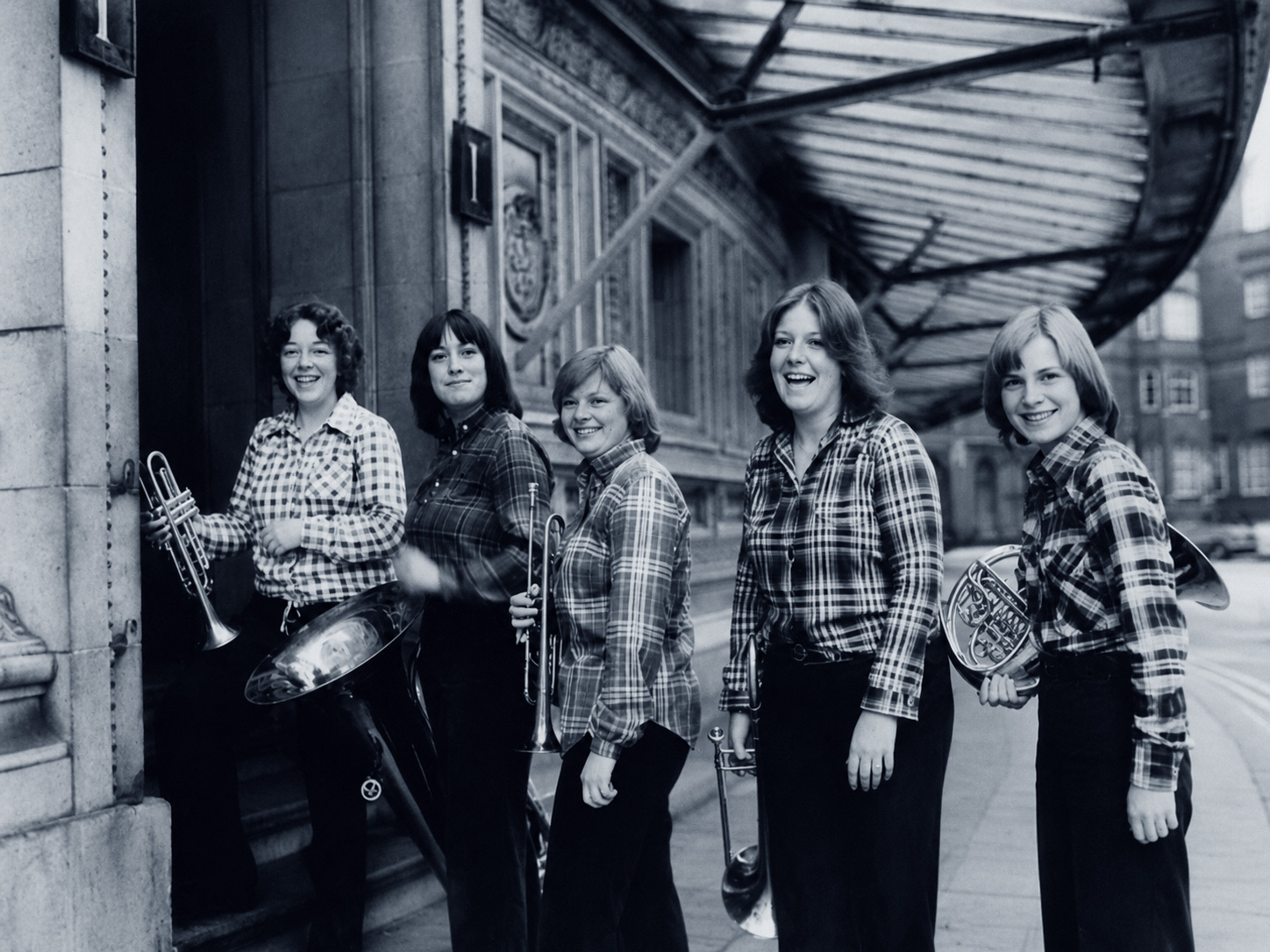
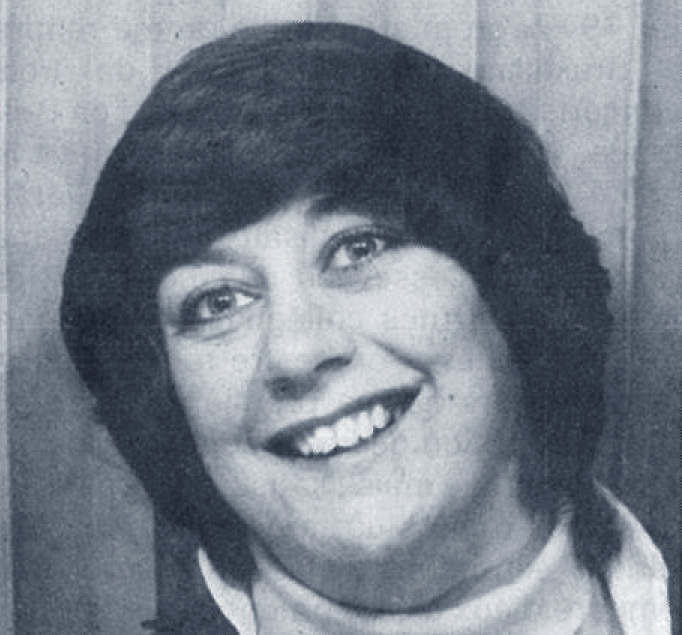
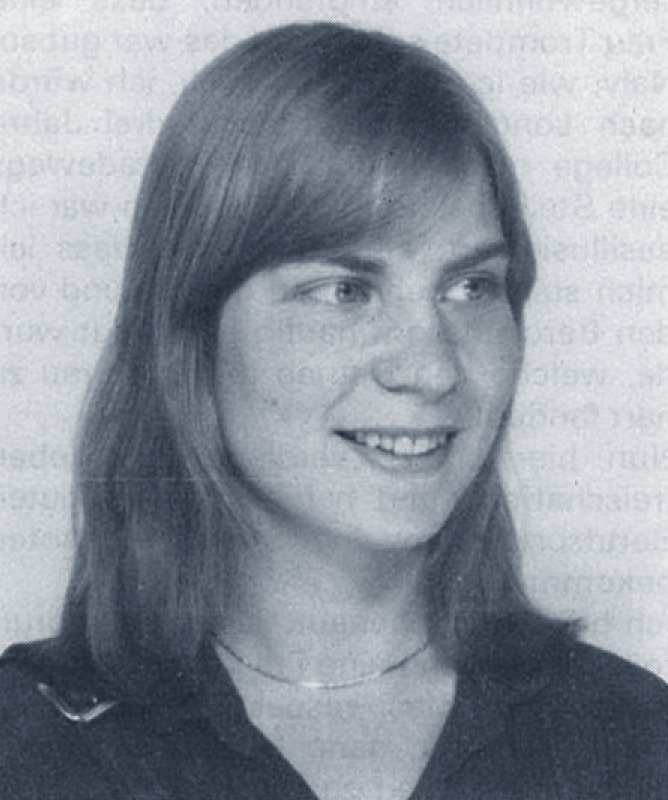
Throughout my musical education the popularity of the French Horn has been equally divided between the sexes, although one still does not find as many women playing the "heavy brass instruments". During my first year of professional work I have encountered only a handful of fellow female horn players, but the fact that nearly all of them are young hopefully indicates that we are becoming more generally accepted.
Certainly auditioning boards in this country have recently felt obliged to hear a significant number of women players, since they often constitute half the applicants and their standard of performance has, in at least one case, broken down prejudices that did exist.
I would like to say that I have never suffered any prejudice against myself as a woman. One comment that many of us meet from the moment we start to play is "how can someone so small produce a large enough sound?", yet there are plenty of slightly built male brass players.
A more serious opinion which I have heard voiced by other players (if a choice lies between a man or a woman to whom work may be offered) is that a man is more deserving since, by convention, he carries a greater financial burden. Sometimes this might be true, when a family is involved, but nowadays both members of a couple, and obviously any single person, expects to earn a living at whatever job they choose; such are the economics of present-day life.
Alison Miller (Horn)
Pat Reid (Trumpet)
Pat Reid
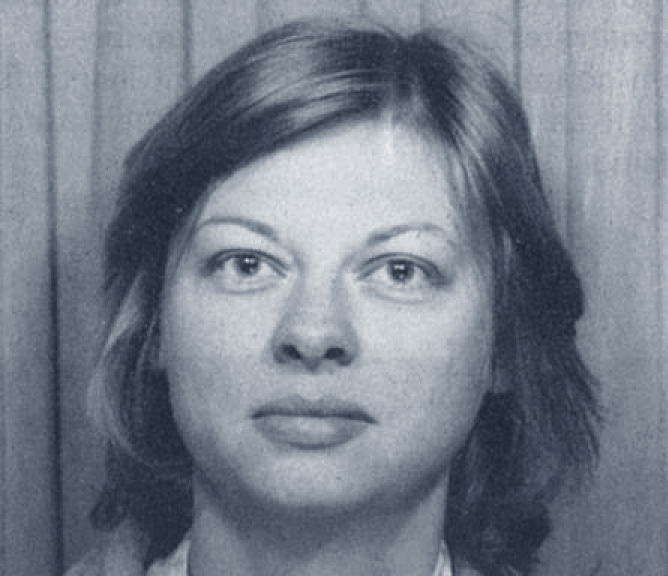
Without writing my life-history, I would like to explain that, obviously, everyone's early musical environment has coloured their thinking in later years. Therefore my father encouraged me to play the trumpet as he did, purely for self-enjoyment.
I found myself playing in brass band at school and also the local town’s brass band, both consisting of 70% women, who played in all sections, including those of the heavier instruments, for example trombone, euphonium and tuba, leading those sections and playing very well — unusual perhaps? — but I accepted this as the norm. So from the very beginning, which was a good thing, I never found playing the trumpet unusual for a woman.
Being naive, I thought I would go to college in London, do my three years, then walk straight into a job! I obviously became disillusioned when I found I had to prove myself there all the time and received a lot of discouragement from professional brass players who thought that the going would be too hard for a woman.
Well here I am earning a living free-lancing and I have been offered a job in a good professional orchestra.
I have been lucky, and yes, there is prejudice, but if you play well, and respect and get along with your fellow brass players there is nothing to prevent a woman getting along, providing she is not too ambitious.
I feel conductors are a bit nervous at seeing a woman play in the brass section, because they feel, as do most men, that we will not be reliable and be unable to match up in volume. So there is the constant pressure of having to not only be as good as the man but better.
I think it is also important not to try and be No. 1 in an orchestra, as first trumpet is a very hard job, since you are the leader of the whole brass section and are most noticeable and men in the main don't like women to be the boss.
Therefore I conclude that as long as you don't expect to be in any of the London orchestras or do session work, even though you might think you are as capable as the next man, you may survive.
I can only hope that some day, with more and more women playing brass instruments, that we might actually penetrate these hitherto taboo areas. I am content to make a pleasant living, to do it as well as I can and to keep practising.
Pat Reid (Trumpet)
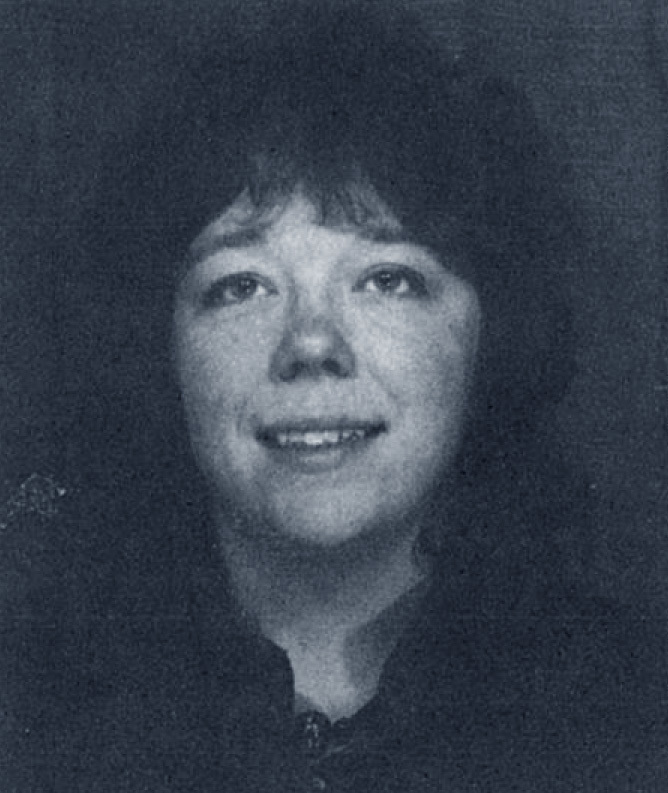
Helen Crayford (Trumpet)
Helen Crayford
It is only during the last ten years, at most, that female brass players have even been noticed by their male counterparts. Gradually their forces are growing, to the extent that nowadays they cannot be ignored, or dismissed "en bloc" as too weak, ineffectual or unsuitably constructed for such "heavy labour" as blowing a brass instrument.
The first question I am always asked, when introduced as a trumpeter, is "But how do the men treat you?", or else, "But isn't that terribly hard work?" My reply to the former is invariably, "The men treat me as another human being, as long as I treat them as such, and do not emphasise or dwell on my femininity unnecessarily".
After all, in all other branches of the arts, women are "just another person", i.e. ballet/theatre/art, why should it be different in one particular branch of classical music?
The answer to the latter question is not so clear — I have to admit that brass-playing is tough, but then so is a lot of work that many housewives do every day of their lives, perhaps carrying babies and shopping up flights of stairs, taking washing to the laundry etc. — the list is endless.
At least we are using all the breathing mechanism correctly and directing the muscles in a controlled way — in fact, all the deep breathing we do is supposed to considerably prolong life, because we never allow stale air to accumulate for long in our lungs. I know female brass players who have given birth to children, virtually without pain, because they were so accustomed to using those particular muscles in their daily work. So the fear of damaging oneself by too much blowing is completely unfounded, provided that the blowing technique is correctly learnt and applied. Incorrect blowing could give anybody a rupture — especially men!
I think that, above all, women have a positive new dimension to add to brass playing — the trumpet is no longer simply a martial instrument or ceremonial plaything — it is increasingly being used towards artistic and purely musical objectives.
Trumpet playing these days, especially with regard to twentieth-century repertoire, is not simply a case of playing louder than all the other instruments in the band, but needs sensitivity and musicianship. I think that it is in this respect that women can really score, while at the same time they have plenty of reserves of strength should it be needed.
Helen Crayford (Trumpet)
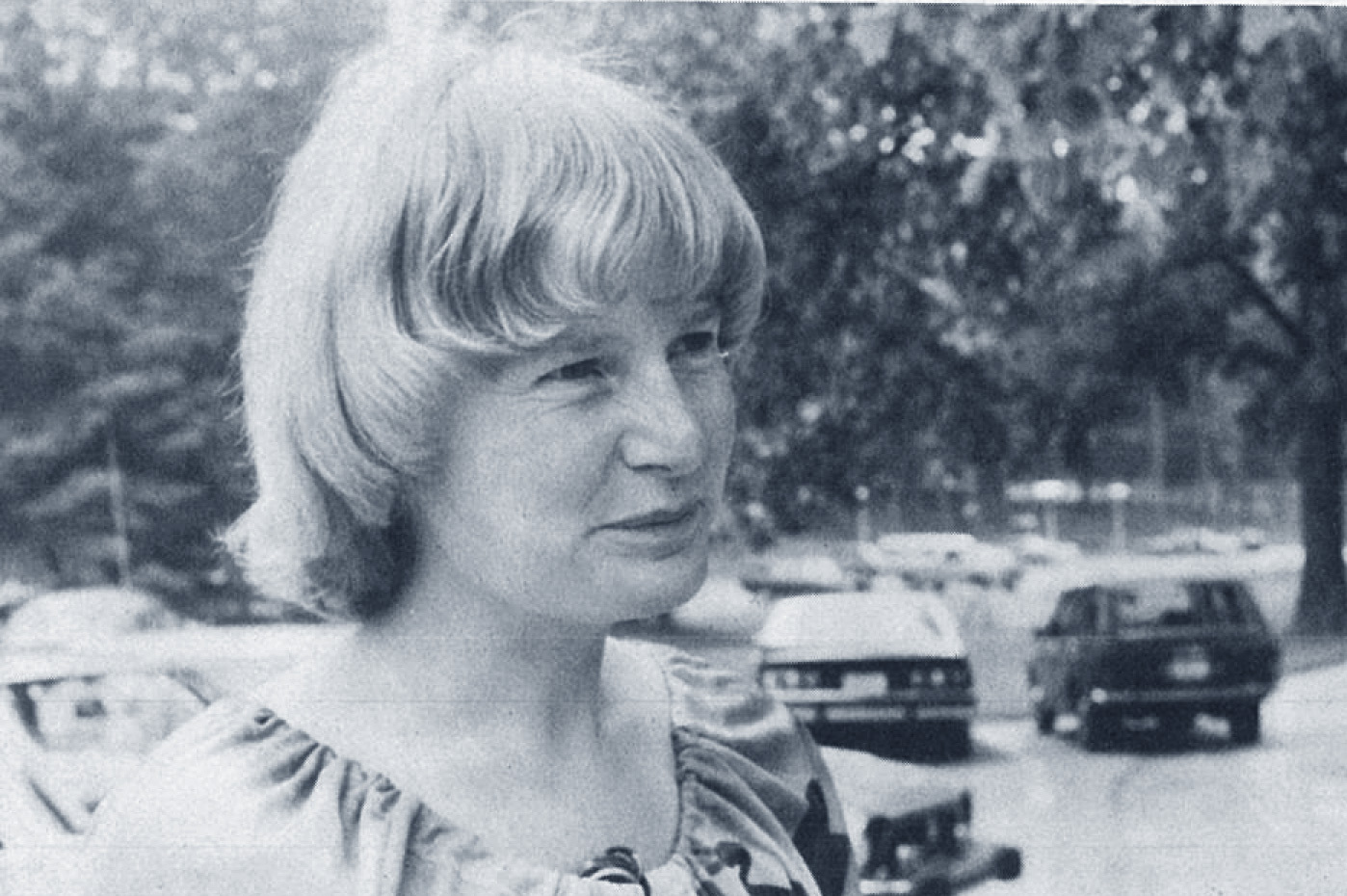
Rosemary Jenner (Trumpet)
Rosemary Jenner
"I want to play the trumpet in an orchestra" was the shock announcement I made to my parents when I was very young. This was treated mainly with amusement, as my sister and brothers were string players.
My persistent pestering met with various attempts at diversion by introduction to a recorder and even a French horn — which was sort of accepted as a possibility for a female to play. Finally my parents gave in and I was given the loan of an instrument until I proved that I really wanted to try.
Being a child I had to put up with such comments as "How can a little girl like you find enough puff to blow" but generally as I improved I got lots of encouragement.
By my final years at school I had graduated to playing in all local amateur productions of Gilbert & Sullivan and gained my introduction to Mozart and Beethoven. This experience of coping in a small orchestra situation of 1 flute, 1 clarinet, 1 bassoon, 1 trumpet and timpani playing all cues under highly incompetent conductors formed a basic and very important part of my musical education.
I loved every moment and was very keen to take the next step of going to a music college. The adults' attitude definitely changed to one of concern now. I received lots of warnings about bad conditions in theatre pits and drunk and swearing male trombone and trumpet players, but all that concerned me was getting the opportunity to get my teeth into some "proper" brass works like Tchaikowsky, Wagner and Bruckner. Could I blow loud enough after all, I wondered?
Student life was heaven playing-wise — eight orchestras a week with orchestral repertoire galore. The social side was another matter. Males greeted me with scorn and disbelief — "What, you playing trumpet!" Almost without exception they sat in the First seat and proceeded to blow the living daylights out of the music.
It so happened that I wanted to play Second and have never had any ambition for the hot seat and was quite happy to play any under part. I must admit to some self-satisfaction when I was able to balance up in loud or soft passages, thereby relieving my greatest fears, since often the lower octave requires more air anyway.
Work-wise I’m afraid pride had to be swallowed. I was ignored. Never was I given a gig in a professional orchestra and sometimes even second study trumpeters were called in in preference.
There was only one thing to do. I decided to work extra hard and try to be that much better than a man. I was still not treated seriously and felt very aware that any slight slip in playing was noted by all and sundry but any decent playing was ignored.
Eventually I began to despair of ever being accepted and reluctantly I was trying to turn my thoughts to a different career.
Luck next took a hand and I was offered a job, I suspect with the help of my teacher who was on the audition panel. It was 2nd trumpet in what I classed at the time as the lowest of the low orchestras but I jumped at it.
Apparently the man accepting the 1st trumpet job (vacant at the same time) changed his mind on learning a female would be on second but he was persuaded to give it a try. The result was a very happy year and then I moved to another orchestra in which my husband-to-be was the principal.
Only three people applied for the job and I had my year's experience as an advantage. I think the keynote to success has been mutual respect for the playing of the rest of the players in the brass section and a willingness to get on with the job as a team.
I was a full-time professional for four years but still men would say to me that they did not like having a woman in the brass section, nothing personal they would hasten to add.
I still wonder why men are ill at ease. The usual excuses that they can't relax, swear at will, that we women are distracting, or too emotional and treat work as a social occasion are to me the general complaints about having women in any section of an orchestra.
Would the solution be to have an all-female orchestra — we still have many all-male ones. I doubt if it would last after the initial curiosity value was over.
Yes I agree that women do leave to have a family but men come and go pretty frequently too, especially in the provincial orchestras.
I get the strong impression that I was "put up with" only because my playing was respected but that a man would have been preferred.
I am still called on frequently to freelance in nearby orchestras and when I announced that I was giving up playing as I felt that through lack of practice it was not of a high enough standard, I was told what a lot of rubbish I was talking, I couldn't give up playing now, whatever would they do without me — and all by whom — men trumpet players! Bless them all, I haven't had one single nasty word said to me in my seventeen years' contact with the profession, but I still can't honestly say I feel men any more willing to accept as normal a woman in their section.
As for the poor female who has ambitions to be a 1st player I think the male ego would be even more reluctant to stand by and accept a female not only in the section, but officially the boss too. I can only wish her good luck — it will be a long hard struggle all the way.
Rosemary Jenner (Trumpet)