10 min. read
Music in an American Frontier Communal Society
Aurora Colony
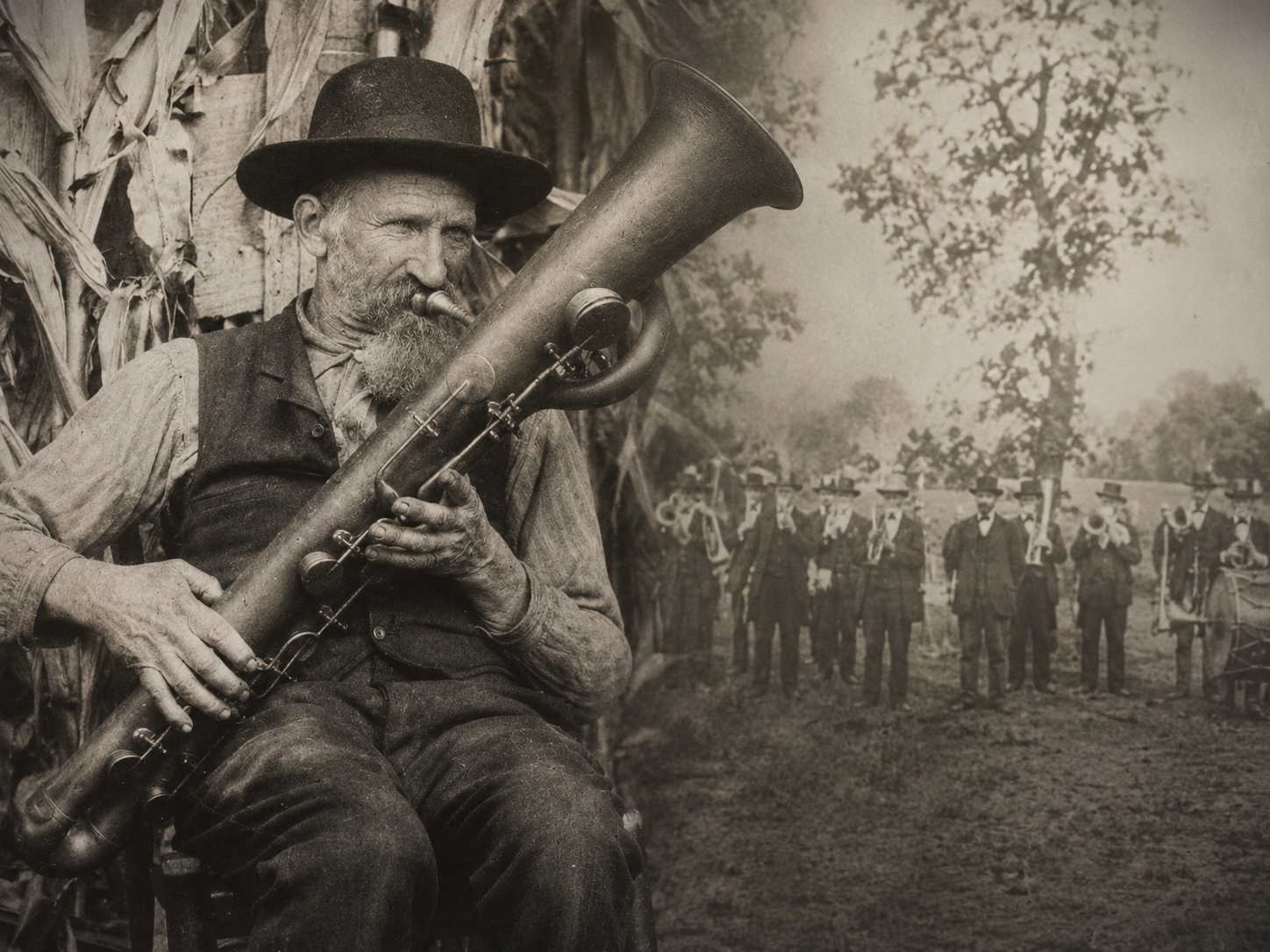
The Aurora Colony in Oregon was one of many communal societies that flourished in the United States during the nineteenth century. For three centuries America had been a haven for Europeans suffering from religious and political persecution. Political freedoms, religious toleration, and the promise of unlimited space made the United States the ideal setting for new hopes, new ideas, and a multitude of social, religious, and economic Utopias.
The earliest American communal societies drew inspiration from the Bible: "And all that believed were together, and had all things common; and sold their possessions and goods, and parted them, to all, men as every man had needs" (Acts II, v. 44-45). A second and later brand of communalism, which sought to bring social and economic equality in the face of nineteenth century liberalism and individualism, found inspiration in the philosophies of Rousseau, Saint-Simon, Fourier, Bentham, and Marx. Of the two forms of Utopias, the religious were the more numerous and generally the more successful.
Oregon's Aurora Colony was a religious society, and like many others of its kind was comprised largely of German immigrants from the Pietistic tradition. Because the Protestant Reformation had begun in the German states and so many bloody wars of religion had been fought on German soil, it was not surprising that many German immigrants came to America in search of a new environment free from princely edicts and religious intolerance.
Aurora's spiritual and temporal leader, William Keil, was a Prussian who soon after coming to the United States gave up a profitable business in order to follow his spiritual calling. "Doctor" Keil, a milliner by training but a preacher and doctor by practice, organized in 1844 a communal society in Bethel, Missouri. It was comprised of German immigrants including a number of dissatisfied individuals who had recently belonged to another communal society in Economy, Pennsylvania.
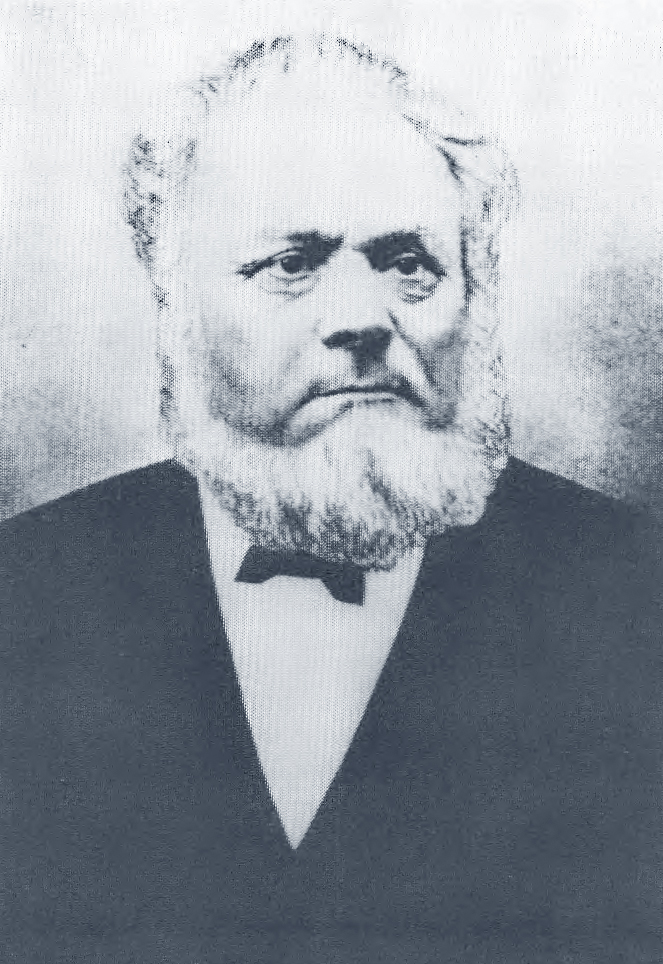
Dr. William Keil, founder and leader of the Aurora Colony (Oregon Historical Society)
By 1854 when the Bethel Colony numbered some 775 souls, Dr. Keil felt the need for renewed moral vigor and opportunities. Following a party of scouts, Keil and many of his followers came by wagon train to Washington Territory in 1855. In the following year, the search for a better site for his community brought Keil to Aurora in Oregon Territory (to become a state in 1859), where about 550 of his followers eventually migrated.
The diminished Bethel Colony and the Aurora Colony continued under the leadership of Keil until the formal dissolution of the colonies after Keil's death in 1877. The communal ideal was abandoned partly because economic communalism had become less necessary and enforceable as the community prospered and increased its contact with the outside world, and partly because Aurora lost the magnetic leadership of Keil¹.
Music played a vital role during the prosperous years of the colony and the musical activities have been admired by nearly all colony historians. Aurora had two bands, various chamber music ensembles, and several choral groups, each of which performed at a variety of colony and non-colony functions. As one historian wrote, "Music was to them both a joy and a form of worship. It would seem that almost every member was trained to play some instrument. Certainly they produced a band and an orchestra that were the pride of Oregonians"².
Brass Bulletin 34, II / 1981 pages 13–22
All content is protected by copyright © Brass Bulletin 1981–2026