6 min. read
The Trumpet and the Cornet in Jazz and Popular Music
Special jazz techniques
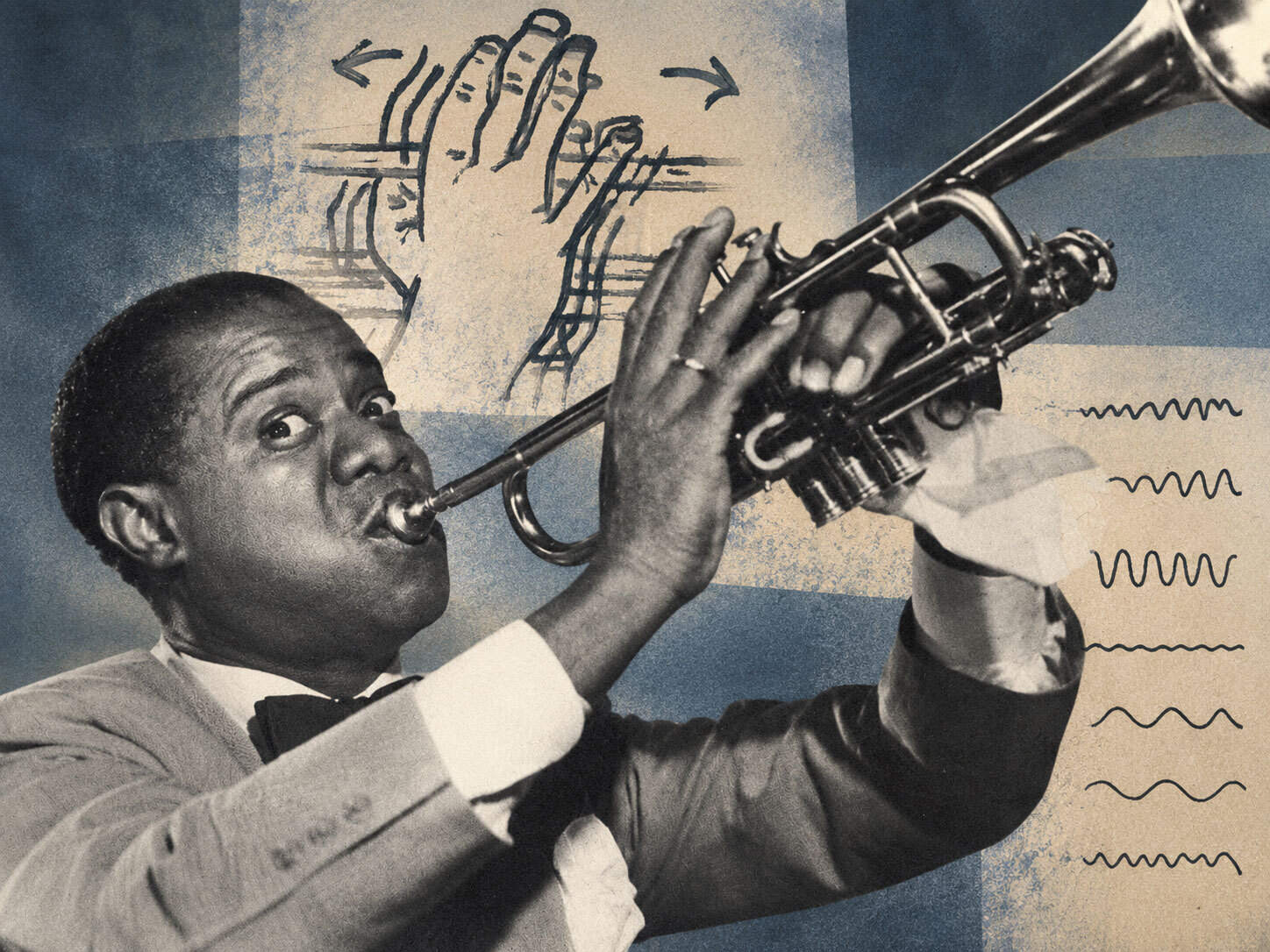
This expressive element is not peculiar to jazz but until bop it was an important ingredient. It was every soloist’s most personal distinguishing characteristic and in the early and classical periods everyone had his own speed, intensity and preference for where to use it.
Louis Armstrong’s vibrato differed in each of his three creative periods. According to Irakli the Armstrong vibrato was quite fast before the days of the Hot Five (similar to Oliver’s); then, until 1940, he played vibrato with very slight trills in the top register; after 1940 his high-register vibrato really was a trill. This vibrato helped him to phrase. His vibrato varied according to tempo; in slow tempos his very singing vibrato was a marvel. Armstrong was also an excellent illustration of one way of producing this vibrato — by shaking the instrument with the right hand. Fred Gérard, among others, advocates this method. Others, such as Edna White¹⁶, are against it, preferring a vibrato produced by “vibration of the air column”; some talented jazz players from the French younger generation use this method, like Jean-Luc Cappozzo.
Bix Beiderbecke kept the notes straight, then added a vibrato, slower than Armstrong’s, at the end. Joe Smith, on the other hand, used a constant and much more marked vibrato which Dick Sudhalter says may have been produced by a vibration of the lower jaw (or by vibration of the air column).
Sudhalter produced a table of the vibrato of eight major soloists from the “virtuoso” area¹⁹: (Fig. 5).
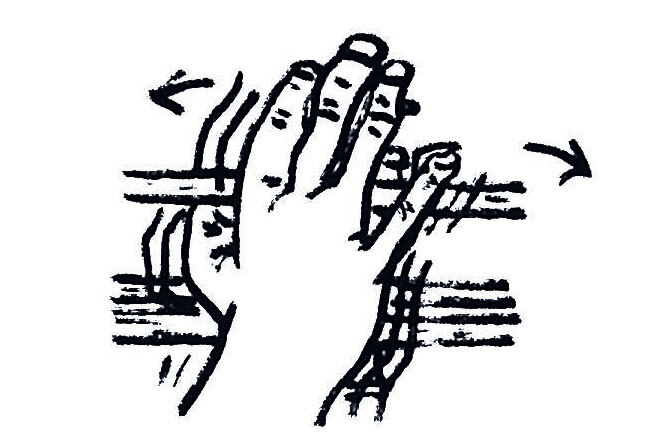
Figure 5
Vibrato according to Sudhalter
We should note that Rex Stewart’s vibrato was tighter after he had developed his half-valve technique. One particular variety is the absence of vibrato, introduced in the late forties by Gillespie and Miles Davis (at a time when vibrato was still being used by so-called “classical” players, especially in France — Raymond Sabarich, for example. It was not until Maurice André and the sixties that people began to play with little or no vibrato. The Soviets have stayed true to the vibrato, with the fabulous Timofey Dokshitser as the supreme example; watching this artist at close quarters in August 1982, while he warmed up, enabled me to see that he vibrated the lower jaw slightly). In the “modern” jazz context Clifford Brown’s playing of medium and slow-tempo themes shows a very discreet vibrato at the ends of phrases (series or recordings in France in 1953). Fast vibrato is indicated 〰. (Ex. 15).

Example 15
“Skit-dah-de-dat” — Louis Armstrong, transcr. Lee Castle (*1915)
The effects
These are, going from the simplest to the most complicated:
- du-wah
- bend, smear, dip
- drop
- half-valve, glissando
- growl, rasps
- shake
1. du-wah (Ex. 16)
Du-wah indicates the sound, produced by placing the curled fingers of the left hand (in the case of a right-handed player) in front of the bell, giving a dull du as the first sound, then opening and removing the fingers, changing the sound to wah. The signs “+” and “o” above the notes indicate “hand over the bell” and “hand away” respectively.

Example 16
2nd tp part: “Don’t get around much anymore” by Duke Ellington
2. bend, smear, dip (Ex. 17)
∪ = dip, resembling an exaggerated vibrato at the beginning of the note, stopping shortly after the attack. The bend is similar: the pitch is lowered in the middle of the duration of the note and returns to its original level, something like this, according to Yngve Nilsson (without using the valves):
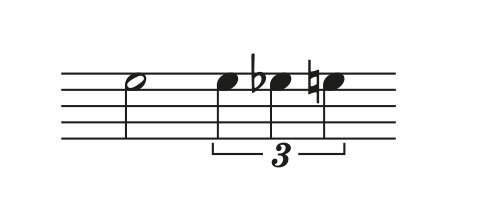
Smear is the name given to the technique of sliding the note by a semitone to give a “dirty” effect. It is used in blues and medium tempo.
Brass Bulletin 47, III / 1984 pages 39–45
All content is protected by copyright © Brass Bulletin 1984–2026