Ofrezca Brass Bulletin en su universidad, conservatorio o biblioteca Descubra el acceso institucional

6 min de lectura

The Trumpet and the Cornet in Jazz and Popular Music

Special jazz techniques

Parte 6 – Fin

Por Michel Laplace

Vibrato, half-valves, growls and shakes lead to a larger argument: jazz transformed trumpet technique, yet its contribution remained strikingly undervalued.
The Trumpet and the Cornet in Jazz and Popular Music

This expressive element is not peculiar to jazz but until bop it was an important ingredient. It was every soloist’s most personal distinguishing characteristic and in the early and classical periods everyone had his own speed, intensity and preference for where to use it.

Louis Armstrong’s vibrato differed in each of his three creative periods. According to Irakli the Armstrong vibrato was quite fast before the days of the Hot Five (similar to Oliver’s); then, until 1940, he played vibrato with very slight trills in the top register; after 1940 his high-register vibrato really was a trill. This vibrato helped him to phrase. His vibrato varied according to tempo; in slow tempos his very singing vibrato was a marvel. Armstrong was also an excellent illustration of one way of producing this vibrato — by shaking the instrument with the right hand. Fred Gérard, among others, advocates this method. Others, such as Edna White¹⁶, are against it, preferring a vibrato produced by “vibration of the air column”; some talented jazz players from the French younger generation use this method, like Jean-Luc Cappozzo.

Bix Beiderbecke kept the notes straight, then added a vibrato, slower than Armstrong’s, at the end. Joe Smith, on the other hand, used a constant and much more marked vibrato which Dick Sudhalter says may have been produced by a vibration of the lower jaw (or by vibration of the air column).

Sudhalter produced a table of the vibrato of eight major soloists from the “virtuoso” area¹⁹: (Fig. 5).
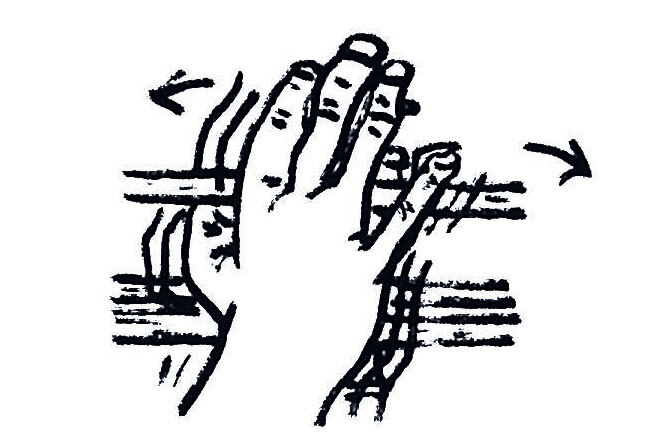
Figure 5Vibrato according to Sudhalter

Figure 5

Vibrato according to Sudhalter

We should note that Rex Stewart’s vibrato was tighter after he had developed his half-valve technique. One particular variety is the absence of vibrato, introduced in the late forties by Gillespie and Miles Davis (at a time when vibrato was still being used by so-called “classical” players, especially in France — Raymond Sabarich, for example. It was not until Maurice André and the sixties that people began to play with little or no vibrato. The Soviets have stayed true to the vibrato, with the fabulous Timofey Dokshitser as the supreme example; watching this artist at close quarters in August 1982, while he warmed up, enabled me to see that he vibrated the lower jaw slightly). In the “modern” jazz context Clifford Brown’s playing of medium and slow-tempo themes shows a very discreet vibrato at the ends of phrases (series or recordings in France in 1953). Fast vibrato is indicated 〰. (Ex. 15).

Example 15“Skit-dah-de-dat” — Louis Armstrong, transcr. Lee Castle (*1915)

Example 15

“Skit-dah-de-dat” — Louis Armstrong, transcr. Lee Castle (*1915)

The effects

These are, going from the simplest to the most complicated:

  • du-wah
  • bend, smear, dip
  • drop
  • half-valve, glissando
  • growl, rasps
  • shake

1. du-wah (Ex. 16)

Du-wah indicates the sound, produced by placing the curled fingers of the left hand (in the case of a right-handed player) in front of the bell, giving a dull du as the first sound, then opening and removing the fingers, changing the sound to wah. The signs “+” and “o” above the notes indicate “hand over the bell” and “hand away” respectively.

Example 162nd tp part: “Don’t get around much anymore” by Duke Ellington

Example 16

2nd tp part: “Don’t get around much anymore” by Duke Ellington

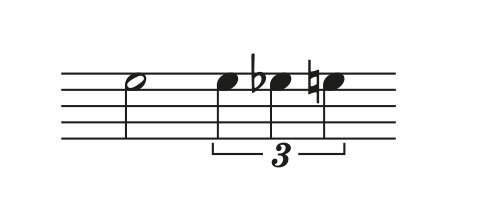
2. bend, smear, dip (Ex. 17)

∪ = dip, resembling an exaggerated vibrato at the beginning of the note, stopping shortly after the attack. The bend is similar: the pitch is lowered in the middle of the duration of the note and returns to its original level, something like this, according to Yngve Nilsson (without using the valves):
Brass Bulletin image

Smear is the name given to the technique of sliding the note by a semitone to give a “dirty” effect. It is used in blues and medium tempo.

Continue reading

Accede a la edición digital completa.

Brass Bulletin 47, III / 1984 páginas 39–45

Todo el contenido está protegido por derechos de autor © Brass Bulletin 1984–2026

Compartir este artículo

Facebook LinkedIn
Cargando…

Preguntas y respuestas

Cómo funciona la edición digital

¿Qué incluye la edición digital?

La edición digital reúne los artículos ya digitalizados como textos legibles y consultables en línea —no simplemente como escaneos o archivos PDF— junto con sus ilustraciones originales, notas, autoría, información del número y traducciones disponibles. Las sugerencias de artículos relacionados incluyen actualmente solo este material digitalizado.

¿Los artículos digitales son idénticos a los originales?

Conservamos con la mayor fidelidad posible el texto original, el idioma, las ilustraciones, los pies de imagen, las notas y el contexto editorial. La presentación se adapta para facilitar la lectura en línea y pueden corregirse errores evidentes de transcripción o escaneado. El contenido y el carácter del artículo publicado permanecen inalterados.

¿Qué idiomas están disponibles?

Brass Bulletin se publicó en inglés, francés y alemán a lo largo de toda su historia. Las traducciones al italiano y al español se añadieron a partir del número 60. Por este motivo, en los sitios italiano y español los artículos de los números 1 a 59 se muestran en inglés de forma predeterminada.

¿Con qué frecuencia se añaden nuevos artículos?

Se añaden nuevos artículos casi a diario, con aproximadamente un número completo digitalizado cada semana. El ritmo puede variar según el trabajo de preparación, tratamiento de imágenes y revisión editorial necesario.

¿Por qué no están disponibles todos los artículos en formato digital?

La colección completa de Brass Bulletin contiene 1.246 artículos publicados entre 1971 y 2003. El índice completo ya está disponible en línea y permite descubrir todos los artículos de la colección, incluidos aquellos cuyo texto íntegro todavía no ha sido digitalizado.

La digitalización comenzó en febrero de 2026. Cada artículo se prepara cuidadosamente para la lectura en línea, se revisa y se vincula con su número, sus autores, sus temas y sus ilustraciones. Al ritmo actual de digitalización, se prevé que la colección completa esté disponible en línea en febrero de 2028.

¿Por qué algunas referencias mencionan artículos que todavía no están disponibles?

Las referencias de los artículos originales se conservan aunque el material al que remiten aún no haya sido digitalizado. De este modo se mantiene intacto el contexto histórico y editorial. A medida que se incorporen más números a la edición digital, un número creciente de estas referencias conducirá a artículos que podrán leerse en línea.

¿Puedo sugerir un artículo o informar de un error de transcripción?

Sí. Si hay algún artículo que le gustaría especialmente ver digitalizado, o si detecta un posible error de transcripción o algún dato que falta, póngase en contacto con nosotros. Los comentarios de los lectores nos ayudan a mejorar la edición digital y a establecer prioridades útiles dentro del archivo.

¿Cómo puedo apoyar a Brass Bulletin?

Su apoyo ayuda a financiar la preparación, verificación y publicación en línea de la colección completa.

Suscríbase a la Edición Digital

¿Prefiere apoyarnos sin suscribirse?

Haga una donación

¿Cómo avanza la digitalización?

Estamos poniendo Brass Bulletin a disposición de los lectores en línea, artículo por artículo. Pueden leer los artículos recién digitalizados en cuanto estén listos, incluso antes de que se complete un número entero.

Consulten nuestro calendario de digitalización para descubrir las últimas novedades y las fechas estimadas de disponibilidad de los próximos números. Estas estimaciones se basan en nuestro ritmo reciente y pueden cambiar.

Busca en Brass Bulletin.