Brass Bulletin is now also available in Italian and Spanish.

6 min. read

Edna White

A Woman and a Life in the Service of the Trumpet
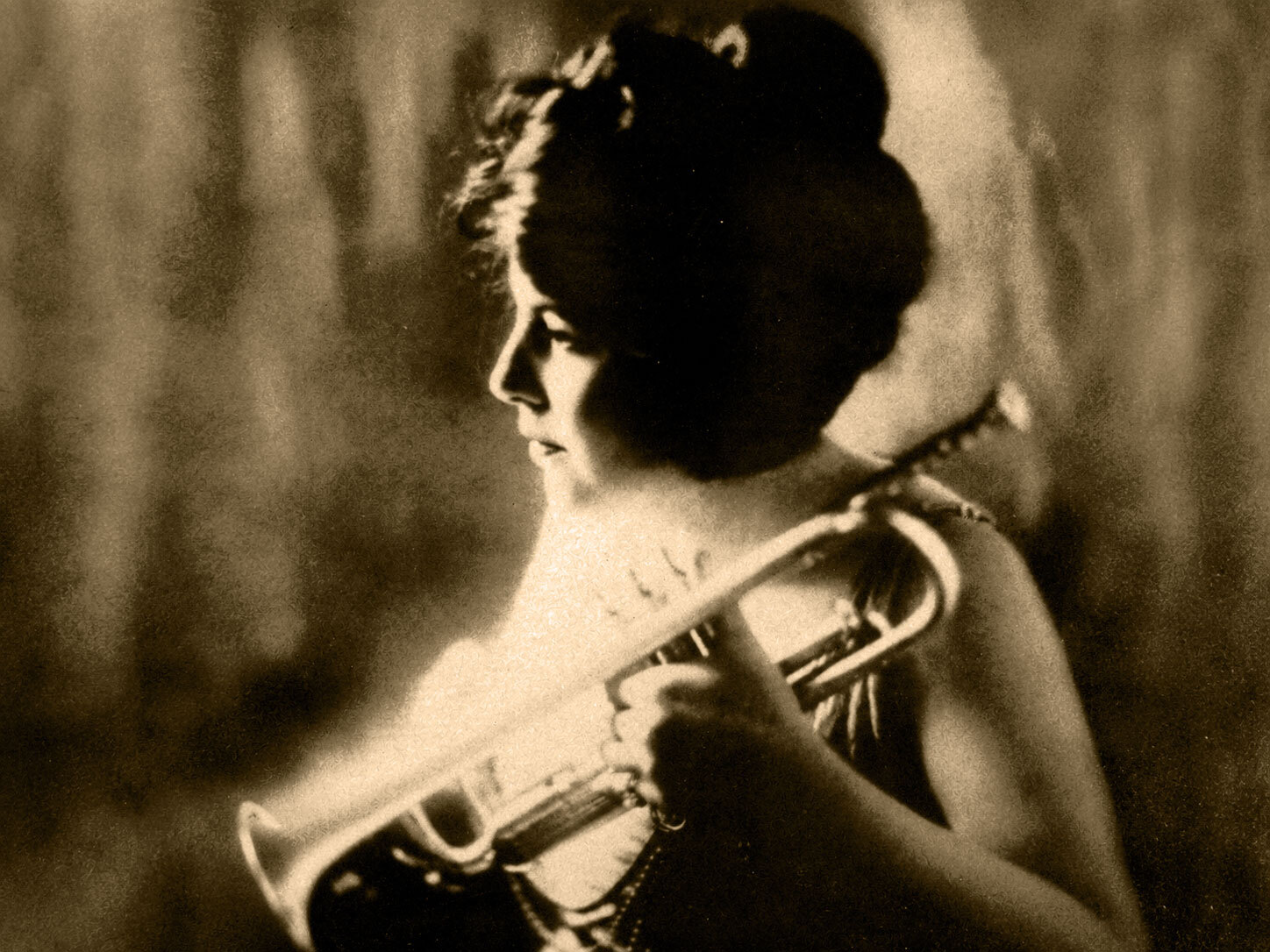
At a time when the cornet still ruled, Edna White made the trumpet a solo voice, building a career across concert halls, radio, recordings and new repertoire.
Edna White

Edna White with her trumpet – 1922 (M. Laplace collection).

Edna White, First Lady of the trumpet, has decided to retire officially from the brass world on the occasion of the second International Congress in Bloomington in June 1984. I think it is time we did homage to her.

Flora Edna White was born in Stamford, Connecticut, on 23rd October 1892, the second of seven children. Her father, Herbert John White, an amateur cornet player born in England, had wanted a son who would be able to emulate his brother Harry’s skills on that instrument but fate decided that a daughter would do the job instead. At the age of seven Edna got her first cornet, and her first lesson, from her father. Six months later she gave her first public performance in a Massachusetts church. Next she took lessons from Ann Park and then from the Belgian Adolphe Dubois,¹ a professor at the Institute of Musical Art (later to become the Juilliard School). Indeed Dr. Frank Damrosch, founder of the Institute, waived a minimum-age requirement so that this “prodigy” could enroll. Bear in mind that by 1904 Edna had already played as a “guest soloist” for Arthur Pryor at Asbury Park! Nevertheless from her first year of study (1904-05) Mr. Dubois modified her embouchure and her style; he also made her change from cornet to trumpet. She was awarded a prize in May 1907 when still only fourteen. Later she studied singing with Morini in Paris (1926). In 1907 the singer Carl Dufft came to Ocean Grove, New Jersey, to sing Handel’s “Messiah” and he was more than a little surprised to find that a young woman was to play “The Trumpet shall sound”. After the performance, of course, he was so pleased that he asked for Edna at every performance of the aria (her fee was $ 25 a concert); they played the piece about five times together.

It is interesting to note that, as she became popular, Edna White was one of the very first soloists to focus attention on the trumpet at a time when the cornet was king. From 1907 to 1912 she appeared in an all-female brass quartet (1 trumpet and 3 cornets) which soon became known as the Aida Quartet. In November 1913 she married Myron Hall Chandler and stopped working until 1915 to please him. She started the Edna White Trumpet Quartet (another all-female group), leaving it in 1916 to be replaced by Kitty Rankin (wife of the famous Ernest Williams). Strangely the group continued to use her name until 1919 when she started a new all-female quartet (2 trumpets, 2 trombones) to become known as the Gloria Trumpeters.
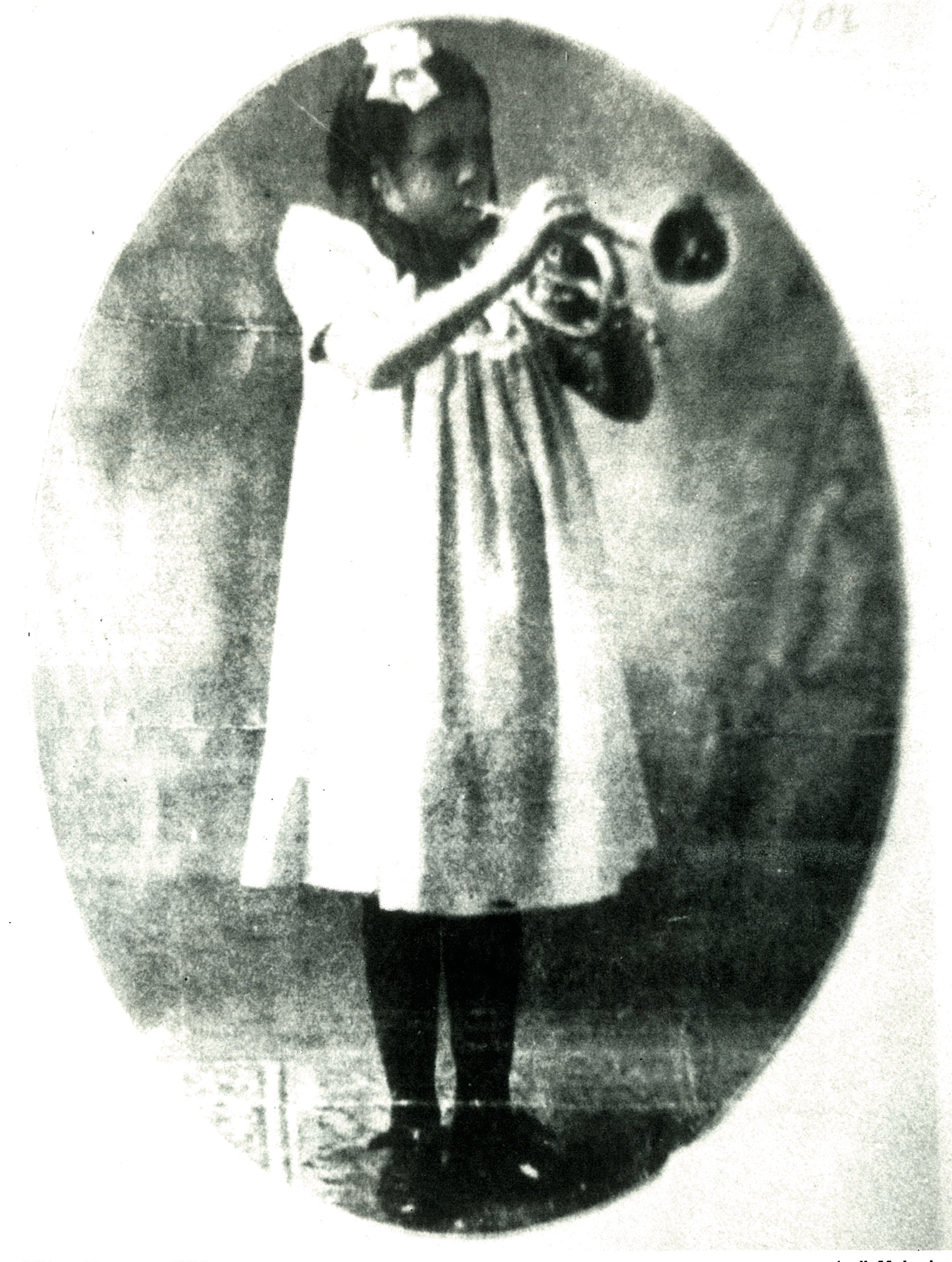
Edna White with cornet – 1902 (coll. M. Laplace).

Edna White with cornet – 1902 (coll. M. Laplace).

Continue reading

Access the full Digital Edition.

Brass Bulletin 48, IV / 1984 pages 10–16

All content is protected by copyright © Brass Bulletin 1984–2026

Share this article

Facebook LinkedIn
Loading…

Questions & Answers

How the Digital Edition works

What does the Digital Edition include?

The Digital Edition brings together the articles already digitized as searchable online texts—not simply as scans or PDF files—along with their original illustrations, notes, authorship, issue information, and available translations. Related-article suggestions currently include only this digitized material.

Are the digital articles identical to the originals?

We preserve the original text, language, illustrations, captions, footnotes, and editorial context as faithfully as possible. The presentation is adapted for comfortable online reading, and obvious transcription or scanning errors may be corrected. The substance and character of the published article remain unchanged.

Which languages are available?

Brass Bulletin was published in English, French, and German throughout its history. Italian and Spanish translations were added from issue No. 60 onward.

On the Italian and Spanish sites, articles from issues 1–59 are therefore shown in English by default.

How often are new articles added?

New articles are added almost daily, with approximately one complete issue digitized each week. The pace may vary depending on the preparation, image work, and editorial checking required.

Why aren’t all articles available digitally?

The complete Brass Bulletin collection contains 1,246 articles published between 1971 and 2003. The full index is already available online, allowing readers to discover every article in the collection, including those whose complete text has not yet been digitized.

Digitization began in February 2026. Each article is carefully prepared for online reading, checked, and connected to its issue, authors, subjects, and illustrations. At the current pace of digitization, the complete collection is expected to be available online by February 2028.

Why do some references mention articles that are not available yet?

References in the original articles are preserved even when the material they point to has not yet been digitized. This keeps the historical and editorial record intact. As more issues are added to the Digital Edition, an increasing number of these references will lead to articles that can be read online.

Can I suggest an article or report a transcription error?

Yes. If there is an article you would particularly like to see digitized, or if you notice a possible transcription error or missing detail, please contact us. Reader feedback helps us improve the Digital Edition and prioritize useful connections within the archive.

How can I support Brass Bulletin?

Your support helps fund the preparation, verification, and online publication of the complete collection.

Subscribe to the Digital Edition

Prefer to support us without subscribing?

Make a donation

Search Brass Bulletin.