Brass Bulletin is now also available in Italian and Spanish.

3 min. read

Jazz and the Horn

Tom Varner

Jazz and the Horn

Tom Varner

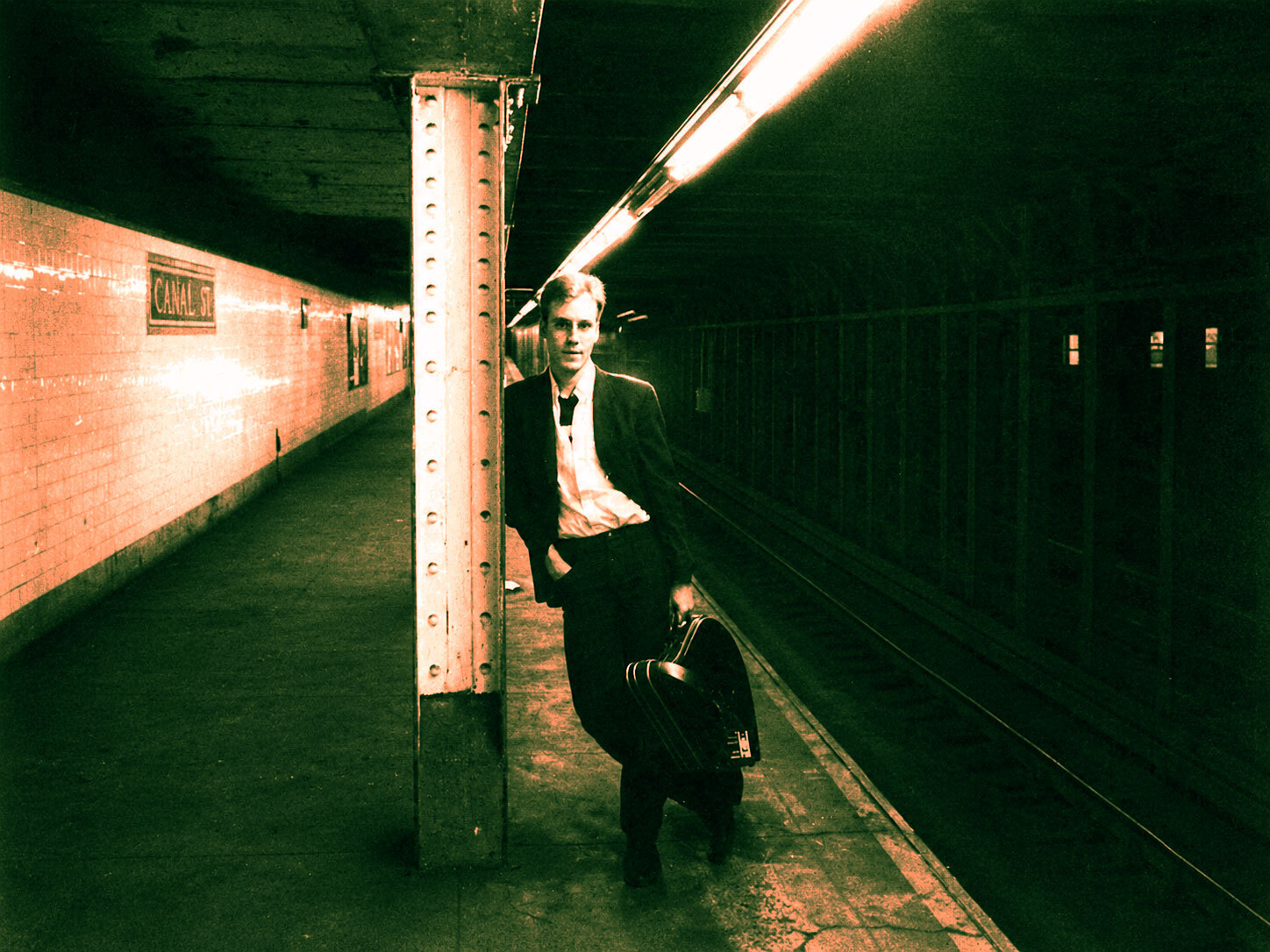
Unlike most horn players who become jazz players, Tom Varner did not cross over from the classical tradition. His interest in jazz came very early, and his horn playing has been almost entirely in the area of jazz ever since. After learning of his first LP “Tom Varner Quartet” (Soul Note SN 1011), I wrote him and asked him to discuss his experiences in playing jazz on the horn. — Jeffrey Agrell

“I’ve played the horn since I was nine years old. By high school (in New Jersey), I was playing in various regional youth orchestras, but by about 15 I began to listen to jazz. The freedom, creativity, and spontaneity of the jazz musician appealed to me much more than the idea of a professional horn player in an orchestra, but initially, I just figured, “Oh, well, I’ll never be able to do that because of my instrument.”

Meanwhile, I played trombone parts in the high school stage band (big band), and was listening almost exclusively to jazz by the time I was 17 — Miles Davis, Freddie Hubbard, Monk, and the “Fusion” music of the time (’73-’74). Slowly I began to realize that I could possibly play jazz on the horn, especially when I became aware of Julius Watkins. The summer after I graduated from high school, I worked at a record store, and as half my paycheck went back to my employer, I became acquainted more fully with the music of John Coltrane, more Miles, Ornette Colman, Charlie Parker, and many others.

At Oberlin College the following fall, I was not allowed to take private lessons with the faculty horn teacher, as I was not in the conservatory. From that point on, I decided to learn to play jazz, and that first and foremost I want to be an improviser.

The following January (’76) I met Julius Watkins and studied with him for a brief time. He was not a terribly focused teacher, but his kindness and encouragement left a lasting mark, as I look back now. We went over tunes such as “Cherokee” or “I Got Rhythm” and he explained to me his own methods of overcoming the enormous difficulties of jazz on the french horn, such as projection, articulation, getting past the “slipperyness”, etc. He showed me certain hand-in-the-bell techniques and playing in the high register to get past some of the problems.

In 1977 I transferred to the New England Conservatory, where I could take private horn lessons, be in a stronger jazz department, and live in an urban area. I studied with Peter Gordon and Thomas Newell, who was very helpful to my overall playing. Other studies were with Ran Blake, George Russell, and Jaki Byand. In Boston I began performing as a leader of a group, and after graduation, I moved to New York, where I still live three years later.

As a leader I’ve almost always led groups with no piano — just horn, saxophone, bass and drums. It is so hard for the horn to cut through drums and bass anyway, so with no piano there is a sparseness that leaves room for the horn, and it’s a sound I prefer. I think the main problem facing the jazz hornist is developing a strong yet smooth feel for swing, to get past the “choppyness” and stiffness of the instrument... When I took some lessons from the saxophonist Dave Leibman, he said, “I don’t know anything about the horn, but that’s your problem, not mine — you’ve gotta make it swing like a saxophone.” Transcribing and practicing tenor saxophone solos — Sonny Rollins and John Coltrane; also trumpet solos (eg Miles and Clifford Brown) are very helpful here. Also to learn to play lines while not tongueing any notes at all is very important — the stiffness partly comes from having to tongue the note to get clarity. Practicing all scales, modes, patterns, etc. while not tongueing helps, as does practicing with the metronome on the 2 & 4 beats help with the rhythmic feel. In case it’s of interest, I play the series N Conn 8D with a Lawson FB 114 lead pipe and a Giardinelli C12 mouthpiece. Some players prefer a triple (John Clark) or a B♭-high F (Peter Gordon).

I’m performing with my group about once a month. Even with my record out, because of being fairly unknown, young, and in New York City, it’s almost impossible to get paying jobs for my group. The studio and Broadway scene is very tight, with the economy the way it is, and it’s very hard for new players to find work. I’ve ended up just concentrating on my own music and working at jazz playing almost totally. For subsistence I work at Zabon’s three days a week baking croissants. This fall I plan to be performing in Amsterdam and Paris. Europe looks more promising for jazz playing in many ways. Also my second album on Soul Note should be out soon — a live recording, same instrumentation.

Jazz french horn is certainly a wide-open field — a long way to go for everybody. I think Julius opened the door for a lot of exploration and development, which is just starting. I’ll just keep on working, working to be a real jazz player, to show that the horn can be a “tough” front-line instrument in jazz, and to touch people with my music in this way.”

Brass Bulletin 47, III / 1984 pages 55–57

All content is protected by copyright © Brass Bulletin 1984–2026

Share this article

Facebook LinkedIn
Loading…

Questions & Answers

How the Digital Edition works

What does the Digital Edition include?

The Digital Edition brings together the articles already digitized as searchable online texts—not simply as scans or PDF files—along with their original illustrations, notes, authorship, issue information, and available translations. Related-article suggestions currently include only this digitized material.

Are the digital articles identical to the originals?

We preserve the original text, language, illustrations, captions, footnotes, and editorial context as faithfully as possible. The presentation is adapted for comfortable online reading, and obvious transcription or scanning errors may be corrected. The substance and character of the published article remain unchanged.

Which languages are available?

Brass Bulletin was published in English, French, and German throughout its history. Italian and Spanish translations were added from issue No. 60 onward.

On the Italian and Spanish sites, articles from issues 1–59 are therefore shown in English by default.

How often are new articles added?

New articles are added almost daily, with approximately one complete issue digitized each week. The pace may vary depending on the preparation, image work, and editorial checking required.

Why aren’t all articles available digitally?

The complete Brass Bulletin collection contains 1,246 articles published between 1971 and 2003. The full index is already available online, allowing readers to discover every article in the collection, including those whose complete text has not yet been digitized.

Digitization began in February 2026. Each article is carefully prepared for online reading, checked, and connected to its issue, authors, subjects, and illustrations. At the current pace of digitization, the complete collection is expected to be available online by February 2028.

Why do some references mention articles that are not available yet?

References in the original articles are preserved even when the material they point to has not yet been digitized. This keeps the historical and editorial record intact. As more issues are added to the Digital Edition, an increasing number of these references will lead to articles that can be read online.

Can I suggest an article or report a transcription error?

Yes. If there is an article you would particularly like to see digitized, or if you notice a possible transcription error or missing detail, please contact us. Reader feedback helps us improve the Digital Edition and prioritize useful connections within the archive.

How can I support Brass Bulletin?

Your support helps fund the preparation, verification, and online publication of the complete collection.

Subscribe to the Digital Edition

Prefer to support us without subscribing?

Make a donation

Search Brass Bulletin.