Explore institutional access →

4 min. read

Jazz and the Horn Series • Part 8

Dale Clevenger
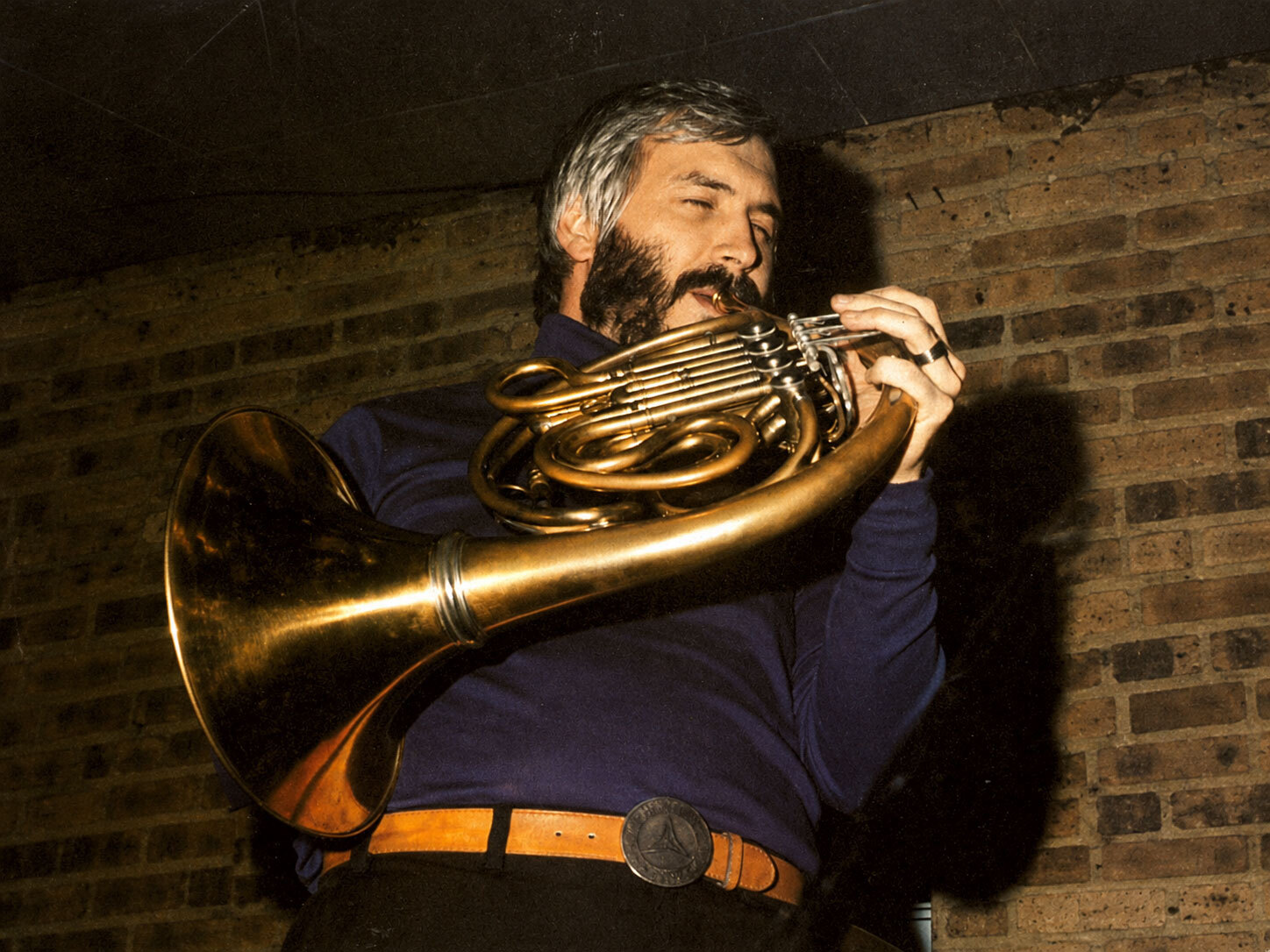
Principal horn of the Chicago Symphony Orchestra, Dale Clevenger spent his Tuesday evenings playing jazz, discovering a freedom that classical training alone could not provide.
Dale Clevenger

Dale Clevenger

We know what you're thinking: "Wait a minute. Dale Clevenger is the principal horn of the Chicago Symphony Orchestra. Why in the world are you writing about him in a series about jazz horn players". Well, we were also pretty astonished when we heard what he does on his Tuesday evenings, so we decided to ask him about it:

– How did you stray from classical horn styles into playing jazz?

The straying was over a long period of time. When I was in high school I had a buddy, Andy Hagen, who is now one of the best trumpet players in the country. I used to go over to his house and he would play along with Stan Kenton records. I just pined because I couldn't do that on horn. I didn't try to do it — I felt intimidated because he could do it. In my four years at Carnegie Tech my roommate Calvin Custer played jazz piano and jazz bass, and all the guys I was pals with were capable of playing jazz. I attempted a couple of things, but they would snicker at me and say, "Stick to classic". And I passed up the opportunity again.

I got to New York and started the long road of freelancing, and the very first job I had was the Radio City Music Hall. I saw right away that I needed to be able to swing to have the feeling to play certain rhythms. Jazz, swing, bebop, whatever, written out in the show. Once at a studio session, I was playing with Earl Chapin, a very uptempo thing that started very fast — 1-2-3-4 (sings), and I said, "Earl, I can't play that". He said, "Yeah, you can, come on. Just follow me". It brought home to me the necessity of being able to at least read jazz figures.

But I still didn't learn to improvise. Then about 1975 at the horn workshop in Muncie, Indiana, I heard a lecture by Dave Amram on improvising. He said, "First of all, get it out of your mind that you have to improvise only 32nd notes. You can improvise whole notes. And then half notes. Then quarter notes. Then eighths, then 16ths, and then 32nd notes." I got to thinking about it, and I finally became convinced that yes, at the age of 35 I could start improvising jazz.

Then one day Cy Tauf (of the jazz group Eras) came by, and I said, "Where are you going?" and he said, "I'm going to play some jazz. Come on over". I said, "Ok". And I sat in with them. That was nine years ago. We play everything from Dixieland, blues, swing, bebop, ballads, to 70's and 80's rock. Jazz of all eras. Bobby Lewis and George Beam on trumpet, Cy Tauf on bass trumpet (trombone), plus bass, drums, and piano, and usually a reed — sax or clarinet. They allowed me to come and by osmosis learn the tunes, learn the rhythms, learn the feel, do a lot of imitating, and actually get out there and do it, improvise. And make a lot of mistakes. But after nine years I can hold my own on certain kinds of music which I feel very comfortable with and know very well — the melody, the harmony changes. I can play almost any kind of blues.

Continue reading

Access the full Digital Edition.

Brass Bulletin 54, II / 1986 pages 104–107

All content is protected by copyright © Brass Bulletin 1986–2026

Share this article

Facebook LinkedIn
Loading…

Questions & Answers

How the Digital Edition works

What does the Digital Edition include?

The Digital Edition brings together the articles already digitized as searchable online texts—not simply as scans or PDF files—along with their original illustrations, notes, authorship, issue information, and available translations. Related-article suggestions currently include only this digitized material.

Are the digital articles identical to the originals?

We preserve the original text, language, illustrations, captions, footnotes, and editorial context as faithfully as possible. The presentation is adapted for comfortable online reading, and obvious transcription or scanning errors may be corrected. The substance and character of the published article remain unchanged.

Which languages are available?

Brass Bulletin was published in English, French, and German throughout its history. Italian and Spanish translations were added from issue No. 60 onward.

On the Italian and Spanish sites, articles from issues 1–59 are therefore shown in English by default.

How often are new articles added?

New articles are added almost daily, with approximately one complete issue digitized each week. The pace may vary depending on the preparation, image work, and editorial checking required.

Why aren’t all articles available digitally?

The complete Brass Bulletin collection contains 1,246 articles published between 1971 and 2003. The full index is already available online, allowing readers to discover every article in the collection, including those whose complete text has not yet been digitized.

Digitization began in February 2026. Each article is carefully prepared for online reading, checked, and connected to its issue, authors, subjects, and illustrations. At the current pace of digitization, the complete collection is expected to be available online by February 2028.

Why do some references mention articles that are not available yet?

References in the original articles are preserved even when the material they point to has not yet been digitized. This keeps the historical and editorial record intact. As more issues are added to the Digital Edition, an increasing number of these references will lead to articles that can be read online.

Can I suggest an article or report a transcription error?

Yes. If there is an article you would particularly like to see digitized, or if you notice a possible transcription error or missing detail, please contact us. Reader feedback helps us improve the Digital Edition and prioritize useful connections within the archive.

How can I support Brass Bulletin?

Your support helps fund the preparation, verification, and online publication of the complete collection.

Subscribe to the Digital Edition

Prefer to support us without subscribing?

Make a donation

How is the digitization progressing?

We’re gradually making the Brass Bulletin available online, article by article. You can read newly digitized articles as soon as they’re ready, even before an entire issue is complete.

Visit our Digitization Roadmap to browse recent additions and see estimated availability for upcoming issues. These estimates follow our recent pace and may change.

Search Brass Bulletin.