Explore institutional access →

5 min. read

Jazz and the Horn Series • Part 6

Peter Gordon
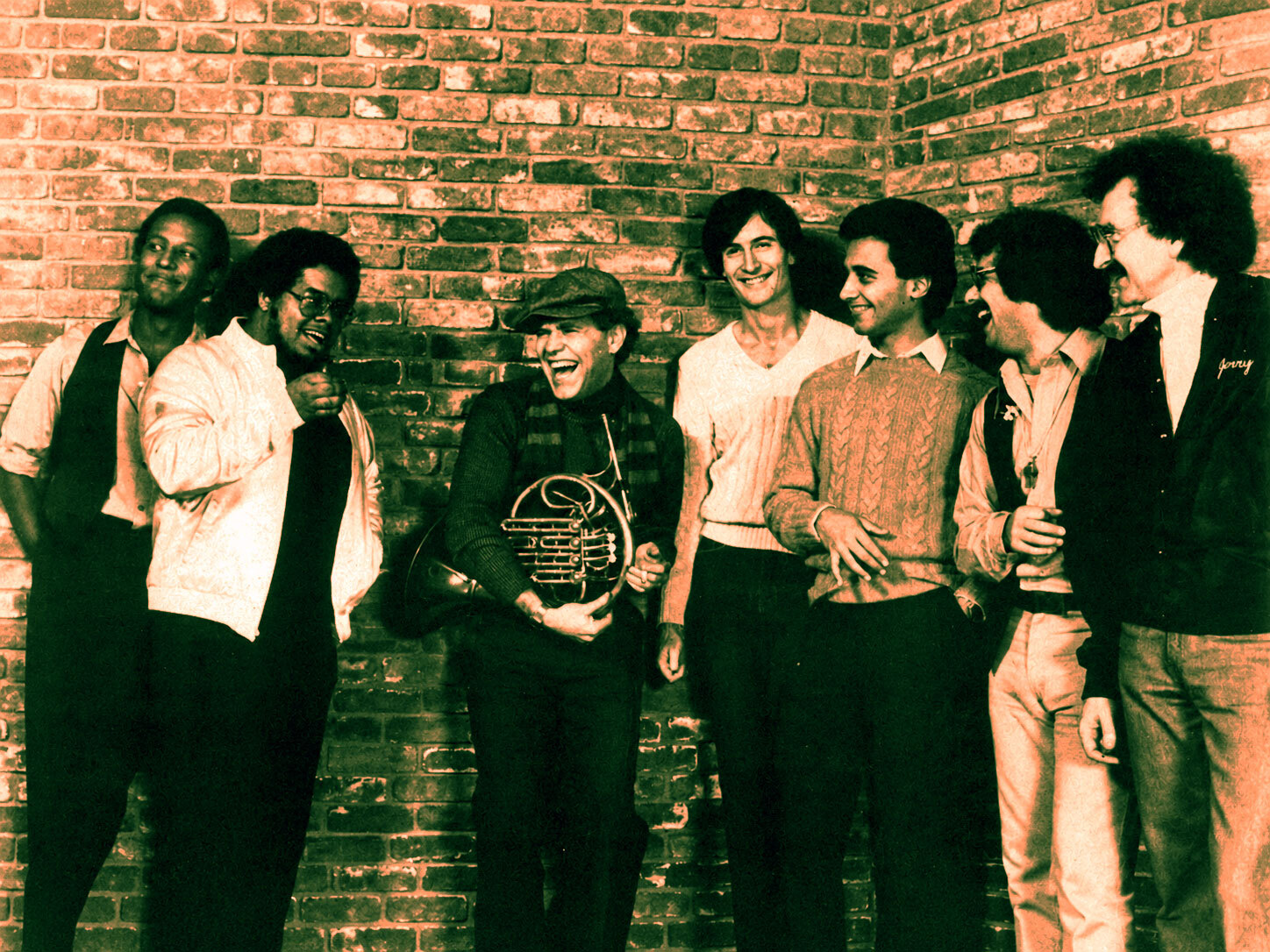
Classically trained but drawn elsewhere, Peter Gordon made the horn at home in jazz, studios and popular music without abandoning its orchestral foundations.
Peter Gordon

“The french horn can be a popular instrument, and it sounds good as a popular instrument.”

Like that of most horn players, Peter Gordon’s musical training was firmly rooted in the classical tradition. He is among the few horn players, however, whose interests and talents have led him to do most of his professional horn playing in jazz and popular music.

“I come from a musical family,” he says, understating the case. His father is a violist with the Detroit Symphony, his mother an opera singer and voice teacher, and at one time he had 16 relatives in the NBC Symphony. His parents started him on piano at the age of four and violin at six. At fourteen, thinking he might be drafted into the army in a few years, he decided to switch to a wind instrument, the better to be able to serve his time in a band.

Of all the instruments, the french horn looked and sounded the most beautiful, and it looked like it would be easy. But I was wrong, it wasn’t easy. By the time I found that out, it was too late...”

As it turned out, he didn’t get drafted, and he went to Indiana University to study horn with Philip Farkas for four years. After graduation he played first horn with the Toledo Symphony (1967-68), and then joined the Philadelphia Chamber Symphony. It folded a short time later, so he went to try his luck in the big time: New York. After playing for some months for various opera and ballet companies, he landed a job at the Metropolitan Opera. However, after three years,

I had a revelation: if I was going to stay in the Met I was going to die musically, I was going to give up music. It was terrible. The conditions were terrible, the people in the orchestra hated music. It was just so depressing. I decided that if I really wanted to stay in music, I had to quit the Met. I did, and my first job after that was Blood, Sweat and Tears. Previous to this, I had been playing off and on with small jazz groups: the Neophonic Orchestra, Brownie’s Revenge, Dancer’s Inferno. Dave Bargeron, who I knew from the studio, suggested that I take over when Tom Malone left. So I auditioned for BS&T and they liked my playing. After three months of touring with them, I joined Gil Evans’ band and Eddie Paul Harry’s band, and I played with them for several years. Also at this time I was doing studio work, Broadway, and occasionally a pick-up orchestral job here and there, but nothing steady. After quitting the Met in ’73 I did exclusively popular music for two years. But so many people wanted me for so many different gigs, I started spreading myself so thin that I didn’t know what I wanted to do. I got so dizzy that I lost sight of what was really important and I didn’t know where I was going.

Continue reading

Access the full Digital Edition.

Brass Bulletin 50, II / 1985 pages 31–34

All content is protected by copyright © Brass Bulletin 1985–2026

Share this article

Facebook LinkedIn
Loading…

Questions & Answers

How the Digital Edition works

What does the Digital Edition include?

The Digital Edition brings together the articles already digitized as searchable online texts—not simply as scans or PDF files—along with their original illustrations, notes, authorship, issue information, and available translations. Related-article suggestions currently include only this digitized material.

Are the digital articles identical to the originals?

We preserve the original text, language, illustrations, captions, footnotes, and editorial context as faithfully as possible. The presentation is adapted for comfortable online reading, and obvious transcription or scanning errors may be corrected. The substance and character of the published article remain unchanged.

Which languages are available?

Brass Bulletin was published in English, French, and German throughout its history. Italian and Spanish translations were added from issue No. 60 onward.

On the Italian and Spanish sites, articles from issues 1–59 are therefore shown in English by default.

How often are new articles added?

New articles are added almost daily, with approximately one complete issue digitized each week. The pace may vary depending on the preparation, image work, and editorial checking required.

Why aren’t all articles available digitally?

The complete Brass Bulletin collection contains 1,246 articles published between 1971 and 2003. The full index is already available online, allowing readers to discover every article in the collection, including those whose complete text has not yet been digitized.

Digitization began in February 2026. Each article is carefully prepared for online reading, checked, and connected to its issue, authors, subjects, and illustrations. At the current pace of digitization, the complete collection is expected to be available online by February 2028.

Why do some references mention articles that are not available yet?

References in the original articles are preserved even when the material they point to has not yet been digitized. This keeps the historical and editorial record intact. As more issues are added to the Digital Edition, an increasing number of these references will lead to articles that can be read online.

Can I suggest an article or report a transcription error?

Yes. If there is an article you would particularly like to see digitized, or if you notice a possible transcription error or missing detail, please contact us. Reader feedback helps us improve the Digital Edition and prioritize useful connections within the archive.

How can I support Brass Bulletin?

Your support helps fund the preparation, verification, and online publication of the complete collection.

Subscribe to the Digital Edition

Prefer to support us without subscribing?

Make a donation

How is the digitization progressing?

We’re gradually making the Brass Bulletin available online, article by article. You can read newly digitized articles as soon as they’re ready, even before an entire issue is complete.

Visit our Digitization Roadmap to browse recent additions and see estimated availability for upcoming issues. These estimates follow our recent pace and may change.

Search Brass Bulletin.