5 min. read
Jazz and the Horn
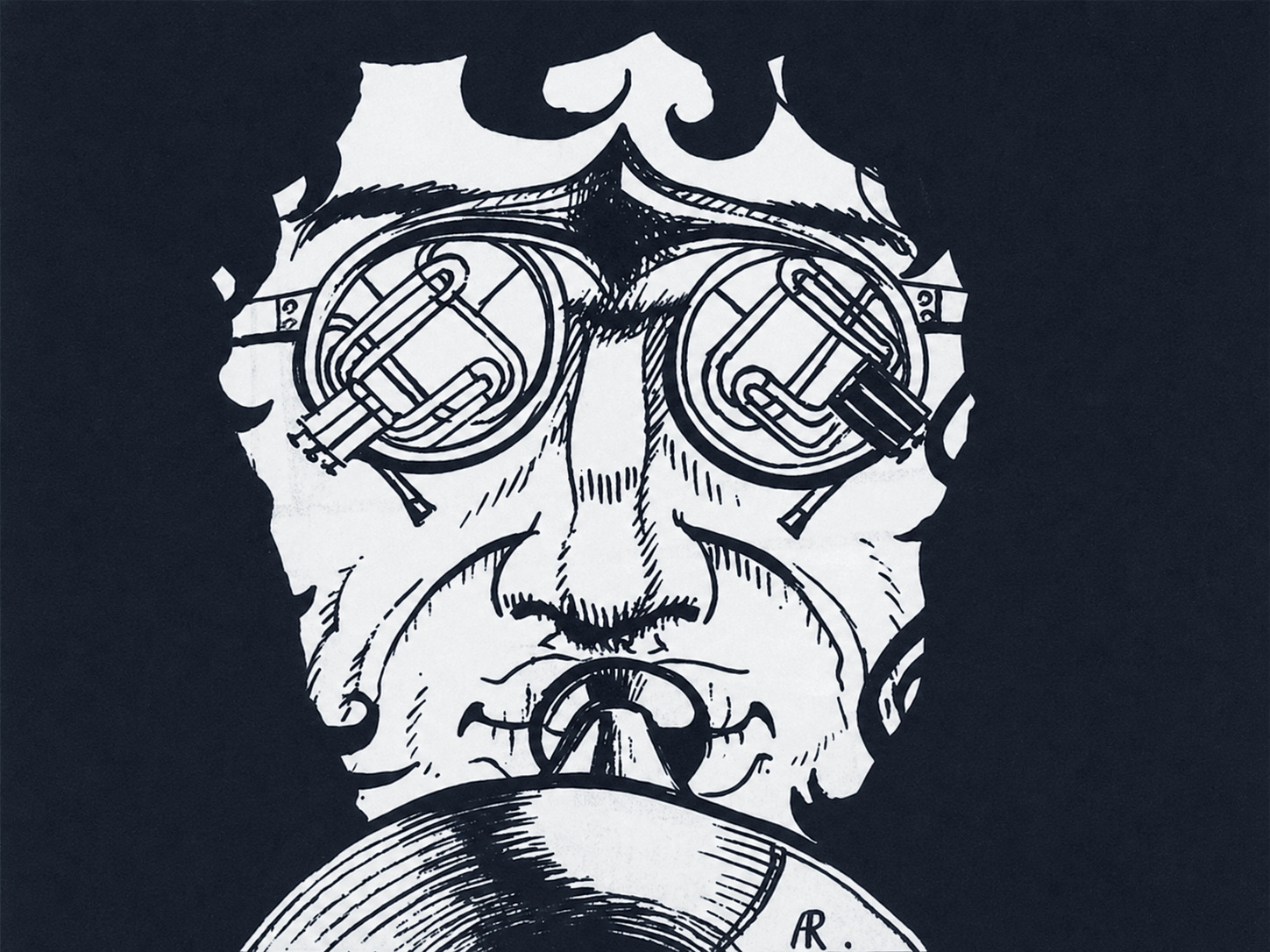
The title itself seems to be a contradiction in terms. What, play jazz (improvisation?!) on this most classical of the brass instruments? Are not the golden mellow tone and slow technique just the opposite of the rough tone and agile technique of traditional jazz instruments? Well, yes and no. Curtiss Blake, of Anchorage Alaska, has compiled a discography of jazz horn playing (which will appear in the Horn Call in the Records column of C. Leuba) in which he lists over 250 records on which the playing of over 100 different horn players may be heard. On some of them, the hornist is the featured player; on most the player is part of a larger ensemble. So: it can be, and has been done. Let's have a look.
On page 16 of A Pictorial History of Jazz by Orrin Keepnews and Bill Grauer is a photograph of the Fate Marable band that played on the riverboat S. S. President in 1918. The line-up is replete with famous names: Louis Armstrong, trumpet; Baby Dodds, drums; Johnny St Cyr, banjo; Pops Foster, bass; and there in the middle is Dave Jones holding a mellophone which looks much like a horn with piston valves which are fingered by the right instead of the left hand. In another picture of the band a year later, there are two mellophones on display, along with the traditional instruments of the early jazz band. The photo of the 1922 Friars Society Orchestra of Chicago shows a single B♭ horn in front of trumpet player Paul Mares.
It is difficult to know to what extent and in what way the horns were put to use — often these publicity photos liked to show as many instruments as possible (also indicating how much doubling a player was expected to do). Doc Cook exhibits his 1923 Dreamland Orchestra with twice as many instruments as musicians, including two banjos, a sousaphone, every kind of saxophone and clarinet, and both a mellophone and a single B♭ horn. The Moulin Rouge Syncopators display the usual instruments plus tympani, a horn, a mandolin, and three megaphones.
The occasional appearances of the horn notwithstanding, the use of the horn in early jazz was infrequent for those very reasons noted at the beginning: the clumsy technique and the sonorous mellow tone. The requirements of the jazz band would have to change if the horn was to find a place in jazz. And they did.
In early jazz, one learned to play without a teacher or written music, just ceaseless practice, listening to recordings, and picking up tips from older players. But beginning in the 1930s, not all musicians coming to jazz were only self taught, as a result of the significant expansion in wind music after World War I. Many of the members of military bands of World War I returned to found community bands. Almost every school founded a band, if only to play at sports contests. The war had also given many instrument companies the opportunity for expansion with so many military bands needing instruments. After the war they sent representatives (as in the musical Music Man) to towns and cities and schools to begin band programs and thus keep up the demand.
By the 1930s, American high school band programs were turning out thousands of players on instruments of the jazz band, but whose training was mainly in the European tradition. It was inevitable that some of those players would turn to jazz and begin applying European forms and technique to jazz. There had been earlier attempts to create a "symphonic jazz" (e. g. Scott Joplin, Paul Whiteman, George Gershwin), but there were only isolated experiments in this direction until the 1940s when the trend became widespread.
Stan Kenton is one example of the new influence of the European tradition on the swing bands of the 1940s. His band first achieved national success with Artistry in Rhythm, a tune based on a theme from Ravel's Daphne and Chloe. The Kenton arrangements are notable for their increased complexity, richer voicing, and scoring for large ensembles. Woody Herman was another bandleader of the 1940s who favored complicated arrangements using European techniques and devices. In 1946 Stravinsky wrote Ebony Concerto for him.
Perhaps the first band to use horns on a regular basis was that of Claude Thornhill, who had studied at the Cincinnati Conservatory and at the Curtis Institute of Music. By 1946 the band was playing a commercially successful mixture of classical, pop and jazz styles, unusual in the emphasis on the rich sound of the ensemble rather than on its ability to swing. The influence of the Impressionists is clear. To quote Gil Evans, Thornhill's principal arranger:
Brass Bulletin 40, IV / 1982 pages 41–45
All content is protected by copyright © Brass Bulletin 1982–2026