Ofrezca Brass Bulletin en su universidad, conservatorio o biblioteca Descubra el acceso institucional

3 min de lectura

Jazz and the Horn

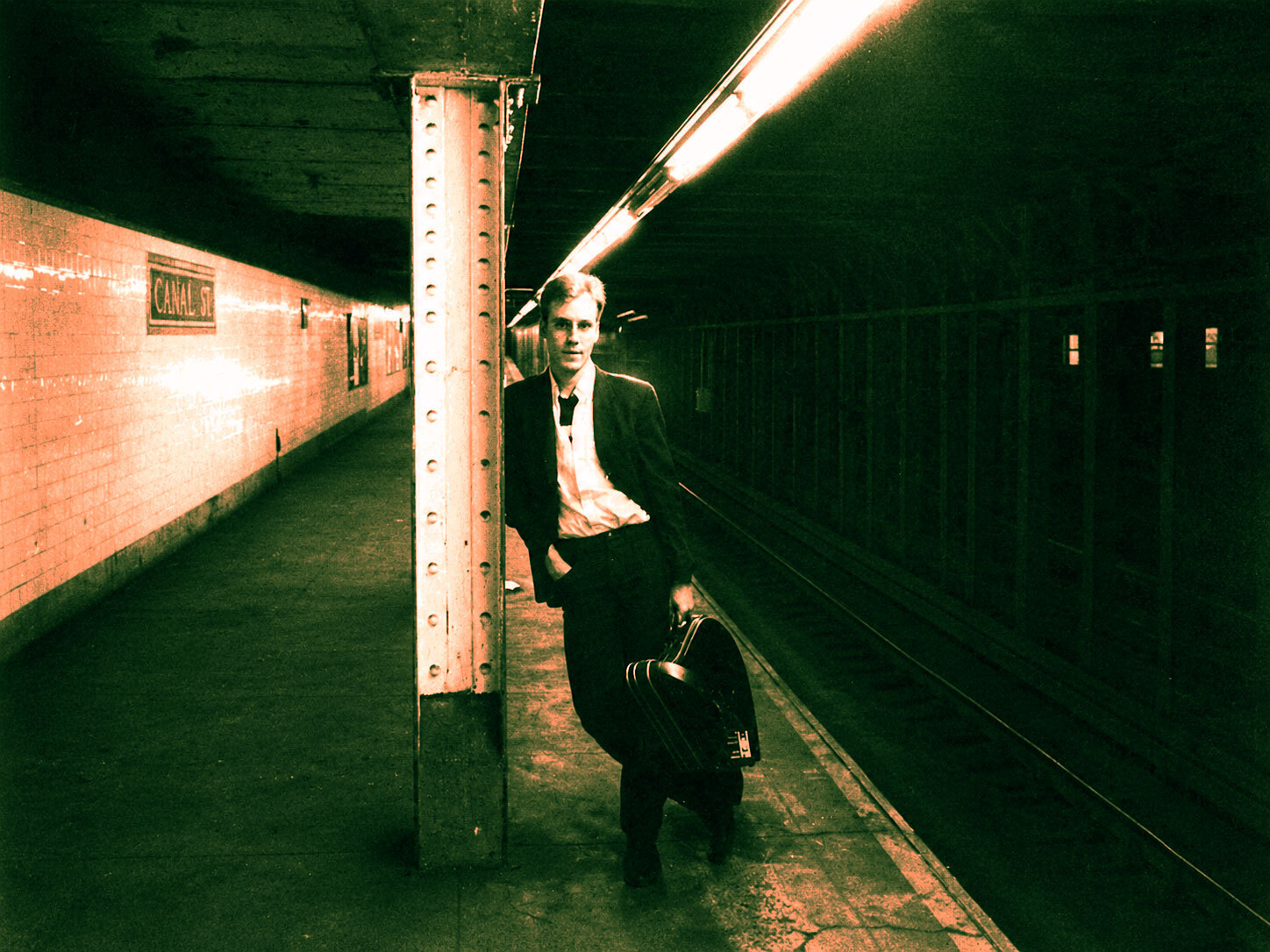
Tom Varner

Parte 5

Por Jeffrey Agrell

Jazz and the Horn

Tom Varner

Unlike most horn players who become jazz players, Tom Varner did not cross over from the classical tradition. His interest in jazz came very early, and his horn playing has been almost entirely in the area of jazz ever since. After learning of his first LP “Tom Varner Quartet” (Soul Note SN 1011), I wrote him and asked him to discuss his experiences in playing jazz on the horn. — Jeffrey Agrell

“I’ve played the horn since I was nine years old. By high school (in New Jersey), I was playing in various regional youth orchestras, but by about 15 I began to listen to jazz. The freedom, creativity, and spontaneity of the jazz musician appealed to me much more than the idea of a professional horn player in an orchestra, but initially, I just figured, “Oh, well, I’ll never be able to do that because of my instrument.”

Meanwhile, I played trombone parts in the high school stage band (big band), and was listening almost exclusively to jazz by the time I was 17 — Miles Davis, Freddie Hubbard, Monk, and the “Fusion” music of the time (’73-’74). Slowly I began to realize that I could possibly play jazz on the horn, especially when I became aware of Julius Watkins. The summer after I graduated from high school, I worked at a record store, and as half my paycheck went back to my employer, I became acquainted more fully with the music of John Coltrane, more Miles, Ornette Colman, Charlie Parker, and many others.

At Oberlin College the following fall, I was not allowed to take private lessons with the faculty horn teacher, as I was not in the conservatory. From that point on, I decided to learn to play jazz, and that first and foremost I want to be an improviser.

The following January (’76) I met Julius Watkins and studied with him for a brief time. He was not a terribly focused teacher, but his kindness and encouragement left a lasting mark, as I look back now. We went over tunes such as “Cherokee” or “I Got Rhythm” and he explained to me his own methods of overcoming the enormous difficulties of jazz on the french horn, such as projection, articulation, getting past the “slipperyness”, etc. He showed me certain hand-in-the-bell techniques and playing in the high register to get past some of the problems.

In 1977 I transferred to the New England Conservatory, where I could take private horn lessons, be in a stronger jazz department, and live in an urban area. I studied with Peter Gordon and Thomas Newell, who was very helpful to my overall playing. Other studies were with Ran Blake, George Russell, and Jaki Byand. In Boston I began performing as a leader of a group, and after graduation, I moved to New York, where I still live three years later.

As a leader I’ve almost always led groups with no piano — just horn, saxophone, bass and drums. It is so hard for the horn to cut through drums and bass anyway, so with no piano there is a sparseness that leaves room for the horn, and it’s a sound I prefer. I think the main problem facing the jazz hornist is developing a strong yet smooth feel for swing, to get past the “choppyness” and stiffness of the instrument... When I took some lessons from the saxophonist Dave Leibman, he said, “I don’t know anything about the horn, but that’s your problem, not mine — you’ve gotta make it swing like a saxophone.” Transcribing and practicing tenor saxophone solos — Sonny Rollins and John Coltrane; also trumpet solos (eg Miles and Clifford Brown) are very helpful here. Also to learn to play lines while not tongueing any notes at all is very important — the stiffness partly comes from having to tongue the note to get clarity. Practicing all scales, modes, patterns, etc. while not tongueing helps, as does practicing with the metronome on the 2 & 4 beats help with the rhythmic feel. In case it’s of interest, I play the series N Conn 8D with a Lawson FB 114 lead pipe and a Giardinelli C12 mouthpiece. Some players prefer a triple (John Clark) or a B♭-high F (Peter Gordon).

I’m performing with my group about once a month. Even with my record out, because of being fairly unknown, young, and in New York City, it’s almost impossible to get paying jobs for my group. The studio and Broadway scene is very tight, with the economy the way it is, and it’s very hard for new players to find work. I’ve ended up just concentrating on my own music and working at jazz playing almost totally. For subsistence I work at Zabon’s three days a week baking croissants. This fall I plan to be performing in Amsterdam and Paris. Europe looks more promising for jazz playing in many ways. Also my second album on Soul Note should be out soon — a live recording, same instrumentation.

Jazz french horn is certainly a wide-open field — a long way to go for everybody. I think Julius opened the door for a lot of exploration and development, which is just starting. I’ll just keep on working, working to be a real jazz player, to show that the horn can be a “tough” front-line instrument in jazz, and to touch people with my music in this way.”

Brass Bulletin 47, III / 1984 páginas 55–57

Todo el contenido está protegido por derechos de autor © Brass Bulletin 1984–2026

Compartir este artículo

Facebook LinkedIn
Cargando…

Preguntas y respuestas

Cómo funciona la edición digital

¿Qué incluye la edición digital?

La edición digital reúne los artículos ya digitalizados como textos legibles y consultables en línea —no simplemente como escaneos o archivos PDF— junto con sus ilustraciones originales, notas, autoría, información del número y traducciones disponibles. Las sugerencias de artículos relacionados incluyen actualmente solo este material digitalizado.

¿Los artículos digitales son idénticos a los originales?

Conservamos con la mayor fidelidad posible el texto original, el idioma, las ilustraciones, los pies de imagen, las notas y el contexto editorial. La presentación se adapta para facilitar la lectura en línea y pueden corregirse errores evidentes de transcripción o escaneado. El contenido y el carácter del artículo publicado permanecen inalterados.

¿Qué idiomas están disponibles?

Brass Bulletin se publicó en inglés, francés y alemán a lo largo de toda su historia. Las traducciones al italiano y al español se añadieron a partir del número 60. Por este motivo, en los sitios italiano y español los artículos de los números 1 a 59 se muestran en inglés de forma predeterminada.

¿Con qué frecuencia se añaden nuevos artículos?

Se añaden nuevos artículos casi a diario, con aproximadamente un número completo digitalizado cada semana. El ritmo puede variar según el trabajo de preparación, tratamiento de imágenes y revisión editorial necesario.

¿Por qué no están disponibles todos los artículos en formato digital?

La colección completa de Brass Bulletin contiene 1.246 artículos publicados entre 1971 y 2003. El índice completo ya está disponible en línea y permite descubrir todos los artículos de la colección, incluidos aquellos cuyo texto íntegro todavía no ha sido digitalizado.

La digitalización comenzó en febrero de 2026. Cada artículo se prepara cuidadosamente para la lectura en línea, se revisa y se vincula con su número, sus autores, sus temas y sus ilustraciones. Al ritmo actual de digitalización, se prevé que la colección completa esté disponible en línea en febrero de 2028.

¿Por qué algunas referencias mencionan artículos que todavía no están disponibles?

Las referencias de los artículos originales se conservan aunque el material al que remiten aún no haya sido digitalizado. De este modo se mantiene intacto el contexto histórico y editorial. A medida que se incorporen más números a la edición digital, un número creciente de estas referencias conducirá a artículos que podrán leerse en línea.

¿Puedo sugerir un artículo o informar de un error de transcripción?

Sí. Si hay algún artículo que le gustaría especialmente ver digitalizado, o si detecta un posible error de transcripción o algún dato que falta, póngase en contacto con nosotros. Los comentarios de los lectores nos ayudan a mejorar la edición digital y a establecer prioridades útiles dentro del archivo.

¿Cómo puedo apoyar a Brass Bulletin?

Su apoyo ayuda a financiar la preparación, verificación y publicación en línea de la colección completa.

Suscríbase a la Edición Digital

¿Prefiere apoyarnos sin suscribirse?

Haga una donación

¿Cómo avanza la digitalización?

Estamos poniendo Brass Bulletin a disposición de los lectores en línea, artículo por artículo. Pueden leer los artículos recién digitalizados en cuanto estén listos, incluso antes de que se complete un número entero.

Consulten nuestro calendario de digitalización para descubrir las últimas novedades y las fechas estimadas de disponibilidad de los próximos números. Estas estimaciones se basan en nuestro ritmo reciente y pueden cambiar.

Busca en Brass Bulletin.