3 min. read
Jazz and the Horn Series • Part 4
Thomas Bacon
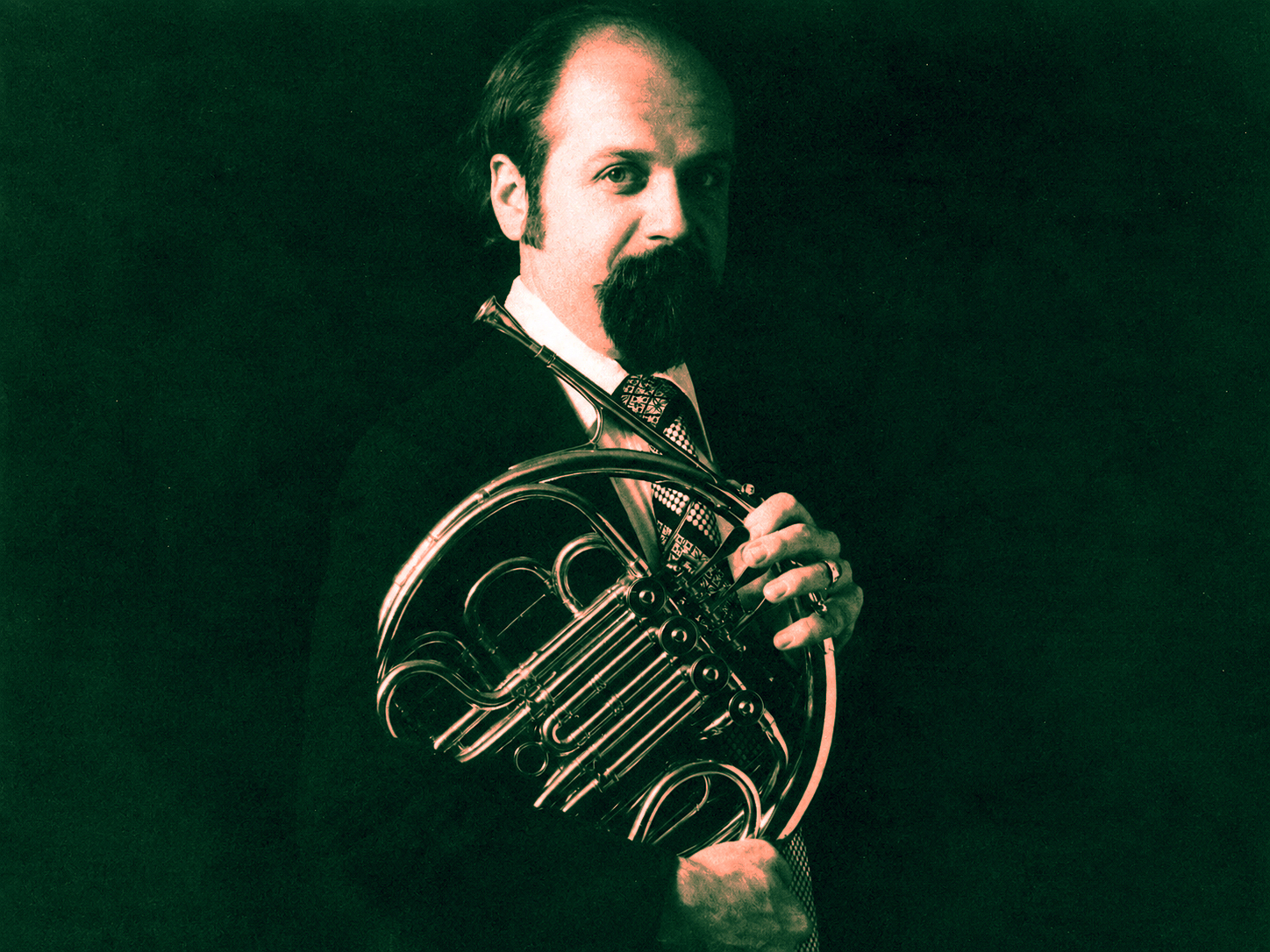
Thomas Bacon
At the age of 36, Thomas Bacon has already had 17 years of professional experience as principal horn for the Syracuse Symphony, Detroit Symphony, Berlin Radio Symphony, and Houston Symphony orchestras, plus much activity as a teacher, recitalist, and soloist. Of interest to us as part of this series is his experience in the early 1970’s as a member of Metamorphosis, a jazz-rock group formed by eight members of the Detroit Symphony. He wrote an article about this experience for “Brass & Percussion” in 1973, and the following is taken from the article:
“[Concerning the playing of both classical and jazz-rock music] my involvement with one has increased my understanding for the other. One genre provides what the other does not.
As a performer, the symphony orchestra offers a discipline that demands the utmost of musical expression, technical proficiency and attentiveness to the minutest details, a discipline that makes you play beautifully even if you feel ugly. But a time comes when one wants freedom — freedom from the printed page and composer’s instructions, freedom from having other people (conductors are people, you know) impose their musical desires upon you, freedom to create instead of re-create, freedom to take another chorus if you feel good (try that in Tchaikovsky’s Fifth and see what happens), freedom to let someone else take it if you don’t (try that sometime, too!), freedom to let it all hang out. There’s more though; rock as well as classical can be intellectual or visceral, profound or inane, stimulating or boring. Any emotion that is experienced in one can be experienced with the other if the stylistic crossover can be successfully negotiated.
That can be a problem though. For years, rock music has been ignored, if not actually discouraged by most music educators. When I got into rock I was immediately caught up in a swirl of riffs, licks, blues notes, changes, rhythmic patterns, etc., that were never more than alluded to in music school. Having studied music for years, but not being able to play a note when told to improvise, I never felt so stupid in my life. But how do you improvise? ‘I dunno man, like, just do it, play what you feel.’ I didn’t feel much, so I didn’t play much. But I did listen a lot — records, rock-concerts, “underground” radio. And pretty soon I did begin to feel it, and understand it, and even enjoy it. But the greatest thrill came when I was actually able to play it; when I could shake myself loose from the classical bonds that had shackled my musical being from the beginning and enjoy my new found freedom. (Certainly not to denigrate my first love, classical music or the discipline required to perform it, but I know a few horn players that are so disciplined that they are impeccable, yet lifeless and the only time you are aware of them is not because they’ve played well but because they’ve missed a note.)
Brass Bulletin 45, I / 1984 pages 34–37
All content is protected by copyright © Brass Bulletin 1984–2026