Discoveries for brass players, once a month. Join our free newsletter →

3 min. read

This article is free.

Editorial

In Recognition of the Philip Jones Brass Ensemble

Editorial

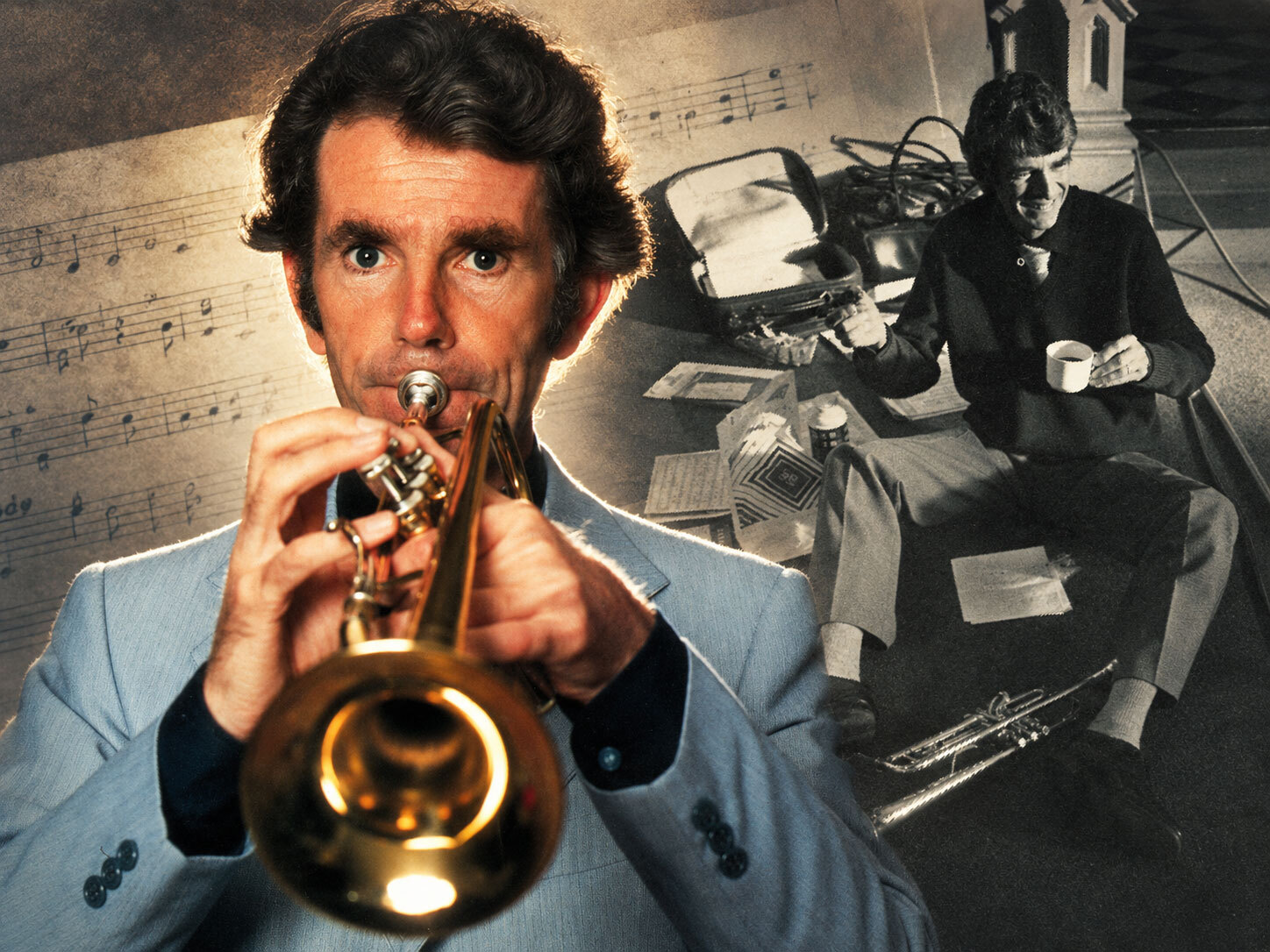
Philip Jones

And so Philip Jones ends his career as a trumpeter, handing over at the same time the leadership of his prestigious ensemble, the Philip Jones Brass Ensemble, like a real virtuoso, at the height of his glory, his success and his skill.

That is the powerful image which will stay in the history of 20th century music.

The Odyssey of the PJBE¹ has been superbly recreated by Donna McDonald, a Canadian writer living in London, with copious illustrations. Such an extraordinary adventure deserved at least this much recognition.

Philip Jones’ influence has been discernable, even decisive, in the spectacular development which has taken place in brass players’ involvement with chamber music in the second half of this century.

His clear conception of the palette of tone colours and his determination to establish a style and quality comparable to those in strings have enabled him to introduce our instruments to a wide audience.

Philip is a pioneer who has had the rare opportunity of seeing his work completed and the wisdom to hand over to the younger generation² at the right moment (“As soon as I felt I couldn’t demonstrate everything to the younger players with my trumpet, I decided to stop playing...”).

This is not a complete retirement (at 58 that would be rather early!). He has responsibilities in teaching (he is director of the wind department at the Guildhall School of Music in London), in arts administration (member of the British Arts Council) and in publishing (his Just Brass collection with Chester, already very sizeable, will grow still further). The freedom which leaving the PJBE gives him will, finally, enable him ”... to travel all round the world, visit friends, give lessons and lectures etc.”

A friend and supporter of BRASS BULLETIN from the outset, Philip fully deserves our unusual step of dedicating the cover of this issue to him in recognition of his extraordinary contribution to the advancement of brass in the music world.

Mastery on the platform

The exceptional standard of the candidates at international competitions these last few years shows it clearly: the average level of technical abilities among brass players has never been so high in this century. Competition organisers and juries have noticed it too for they keep raising the stakes. This is a vicious circle for the younger generation of musicians, who also, of course, benefit from having quite exceptional access to training. There are good teachers in every country; today teaching material incorporates sure and valid scientific knowledge; masterclasses promote exchanges and confrontations of ideas and establish serious criteria for comparison.

It is true that brass players as a group have never seemed so close to a mastery comparable with that of other instrumentalists or of singers, whose maturity as soloists is part of a tradition already almost two centuries old.

There remains a weak point: the attitude on the platform, whether before an audience or before a jury.

Few brass players have the courage to take their place on the platform and seize their audience’s attention. Very often the audience feels the player’s physical clumsiness (the “awkward schoolboy”) to be a handicap and cannot concentrate in depth and in comfort on the music.

This attitude of self-control on the platform is a knack which must be learnt. Singers have learned it thanks to their theatrical roles, others thanks to the richness of a repertoire which has accustomed them over the centuries to walking on to a platform with confidence. Above all avoid playing against the audience. Play openly with them and tell them a convincing musical story by playing — and playing with — the acoustics of the hall.

A “liberation movement” seems to be developing among the ensembles, begun by the PJBE twenty years ago and gathering momentum — and sometimes verging on tastelessness — with the great brass ensembles of our time: Canadian Brass, Guy Touvron, Concert Arban, Rekkenze, Budapest, etc. This “movement” includes a theatrical or theatricalised attitude, usually by means of humour, physical stunts, amusing musical allusions etc.

It is sometimes a little clumsy, sometimes grotesque, yet often elegant and refined.

I have the impression that brass players are going about things this way in order to overcome the tension of the concert platform and to feel the bonds which unite them with the audience and that the aim of this movement is to gain enough confidence and freedom for the musical utterance to acquire a declamatory dramatic intensity which is frank and convincing.

Sound and private life

To all those for whom the world in which we live is a subject of inexhaustible curiosity I cannot help but recommend a quite exceptional document published by the Parliamentary Assembly of the Council of Europe (Document no. 5458) in Strasbourg in 1985 with the title of “Sound and private life”³.

Merely reading the headings in the list of contents will make it clear that this is a document worthy of the greatest interest, one which challenges us musicians forcefully and justly on our cultural standing:

  1. Introduction (Presentation of the symposium on sound and private life held in Cork, Ireland, from 14th to 16th May 1985);
  2. Developments 2.1 Evolution of society and the family group. 2.2 Transformation of the acoustic landscape. 2.3 Evolution of communications phenomena. 2.4 Consequences
  3. Role of education
  4. Control of the acoustic environment
  5. Effect on health 5.1 Damage done 5.2 Prevention 5.3 Beneficial use of music
  6. Manipulation [an extraordinary debate!]
  7. Contemporary music
  8. Conclusion.

”...At a time when the future of young people is being debated at various levels, both national and international, the opportunity must be seized to sensitise governments to the problems of the harmonious integration of the individual into the acoustic environment of the year 2000.”

Food for thought!


¹ Donna McDonald: “The Odyssey of the Philip Jones Brass Ensemble” (Bulle, Switzerland, BIM, 1986). ISBN 2-88039-006-0, 160p., black and white illustrations, 18 colour photographs. In English.

² In the course of the last three years the PJBE has undergone an exceptional rejuvenation of unprecedented quality. These lads, promoted by Philip Jones, are taking the torch and going out to acquire their own identity. The PJBE has, accordingly, been renamed the London Brass Soloists (information and administration: Roger Harvey, 61 Crescent Road, New Barnet, EN4 9RD, Great Britain. ☎ 01 441 1345).

³ Report of the Cultural and Education Commission, available in French or English from: Conseil d’Europe, BP 431 R 6, F-67006 Strasbourg Cedex. ☎ 88-61 49 61. Tx 870943.

Brass Bulletin 55, III / 1986 pages 3–5

All content is protected by copyright © Brass Bulletin 1986–2026

Share this article

Facebook LinkedIn
Loading…

Questions & Answers

How the Digital Edition works

What does the Digital Edition include?

The Digital Edition brings together the articles already digitized as searchable online texts—not simply as scans or PDF files—along with their original illustrations, notes, authorship, issue information, and available translations. Related-article suggestions currently include only this digitized material.

Are the digital articles identical to the originals?

We preserve the original text, language, illustrations, captions, footnotes, and editorial context as faithfully as possible. The presentation is adapted for comfortable online reading, and obvious transcription or scanning errors may be corrected. The substance and character of the published article remain unchanged.

Which languages are available?

Brass Bulletin was published in English, French, and German throughout its history. Italian and Spanish translations were added from issue No. 60 onward.

On the Italian and Spanish sites, articles from issues 1–59 are therefore shown in English by default.

How often are new articles added?

New articles are added almost daily, with approximately one complete issue digitized each week. The pace may vary depending on the preparation, image work, and editorial checking required.

Why aren’t all articles available digitally?

The complete Brass Bulletin collection contains 1,246 articles published between 1971 and 2003. The full index is already available online, allowing readers to discover every article in the collection, including those whose complete text has not yet been digitized.

Digitization began in February 2026. Each article is carefully prepared for online reading, checked, and connected to its issue, authors, subjects, and illustrations. At the current pace of digitization, the complete collection is expected to be available online by February 2028.

Why do some references mention articles that are not available yet?

References in the original articles are preserved even when the material they point to has not yet been digitized. This keeps the historical and editorial record intact. As more issues are added to the Digital Edition, an increasing number of these references will lead to articles that can be read online.

Can I suggest an article or report a transcription error?

Yes. If there is an article you would particularly like to see digitized, or if you notice a possible transcription error or missing detail, please contact us. Reader feedback helps us improve the Digital Edition and prioritize useful connections within the archive.

How can I support Brass Bulletin?

Your support helps fund the preparation, verification, and online publication of the complete collection.

Subscribe to the Digital Edition

Prefer to support us without subscribing?

Make a donation

How is the digitization progressing?

We’re gradually making the Brass Bulletin available online, article by article. You can read newly digitized articles as soon as they’re ready, even before an entire issue is complete.

Visit our Digitization Roadmap to browse recent additions and see estimated availability for upcoming issues. These estimates follow our recent pace and may change.

Search Brass Bulletin.