Explore institutional access Explore institutional access

4 min. read

The trombone in Jazz and Popular Music

The trombone in Jazz and Popular Music

A certain amount of bemoaning is heard in symphonic camps re the ‘cheapening’ effect of the jazz trombonist, but the franker members of the classical contingency admit — nay, insist — that the technical advances of the jazz player have brought symphonic players to their toes, have made modern composers score more rigorously with greater reliance on the trombonist’s technical facilities.’

(Hope Stoddard: “The Trombone in Our Orchestras” in International Musician, November 1948).

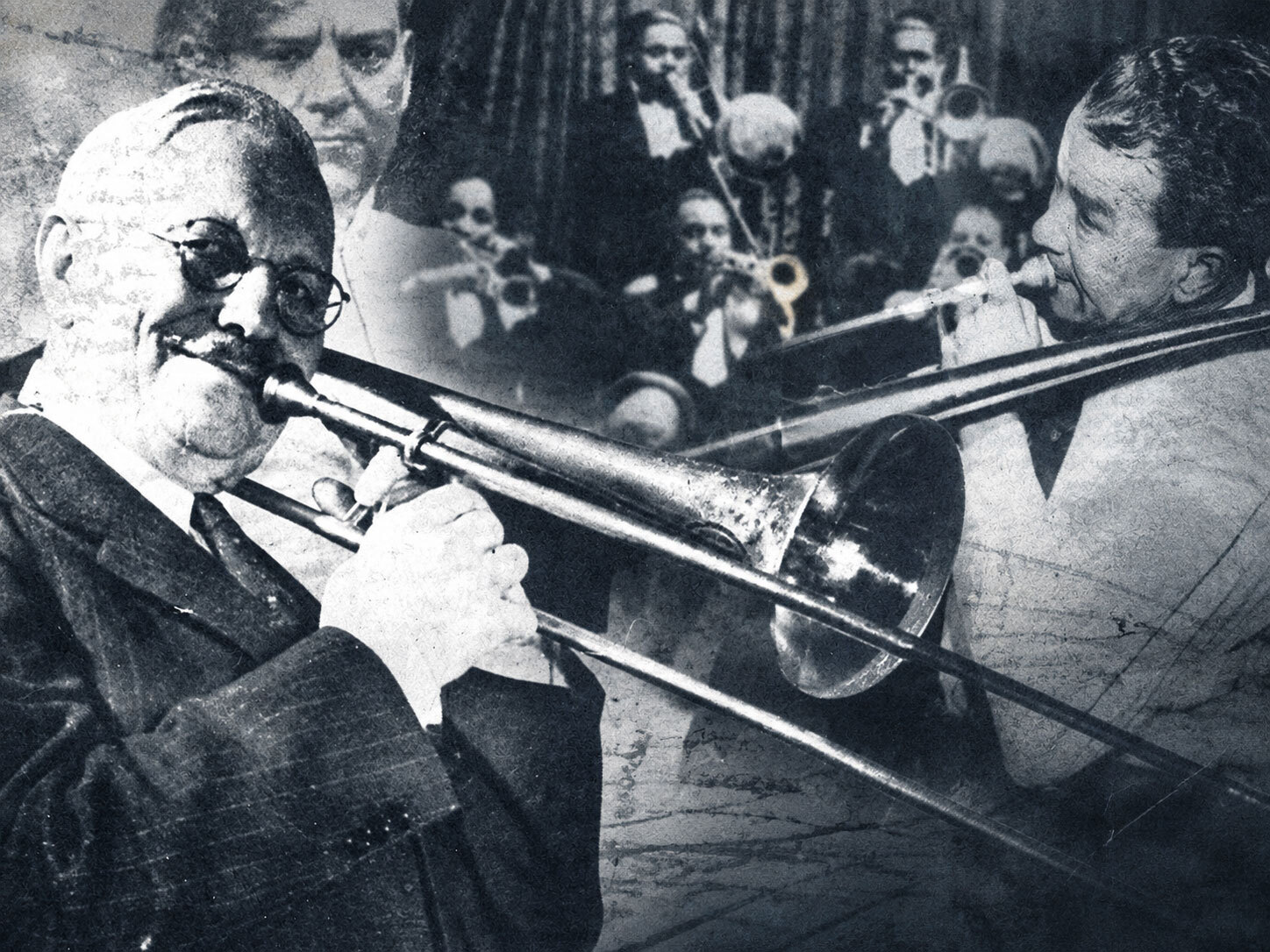
This technical advance by jazz trombonists, discernible until the 1950s, arose primarily in the classical jazz period. The generalities of the musical genre evolution are the same as for the trumpet. A historical peculiarity of the trombone, for better or for worse, is its kinship with the trumpet (consider the etymology of the word). This kinship had many technical consequences on the so-called ‘‘symphonic’’ style and, equally, had a positive influence in the area we are considering. Although the big names of the late 19th and early 20th centuries no doubt allowed themselves some technical flights of fancy, they were nonetheless excessively bound by military-type criteria which led them to ‘‘attack’’ (not an over-violent term) every note staccato as in cavalry trumpet calls. The first exception to this rule in France was Henri Couillaud (1878-1955). Indeed his very ‘‘vocal’’ conception of playing took him out of the mainstream of the other pioneers. Was this a coincidence? He started in his father’s dance band in Clichy at the end of the 19th century. We do not know whether he recorded solos with the Garde Républicaine, which would have made him France’s answer to Arthur Pryor in the Sousa Band.

To some extent the first stylists were the stars of the big concert bands. Already good musicians (trained in the piano or more often the violin or cello), they took up the trombone — sometimes teaching themselves, which enabled them to find a new style, free of the accepted pedagogical influences. The first soloists ‘‘by positive emulation’’ adopted the cornet repertoire. The result was that Leo Zimmermann could play more than four octaves and that Pryor, as well as having a similar range, could play pedals with considerable volume. This progress, made in the interests of solo playing, is probably due to the ‘‘super legato’’ technique described by Gardell Simons. The Briton Frederick Innes, a violinist at first, taught himself the trombone and, while in Gilmore’s Band and after 1880, found unaided a way of playing the “Whirlwind Polka” in the style of the cornet player and composer Jules Levy Sr., in the same manner and with the same ease. In publicity for his music tutor dating from 1922 Innes describes himself as the father of the modern trombone:

Even the present ‘jazzing’, laughing and similar effects resulted from Innes’ discovery of the possibilities of the instrument.

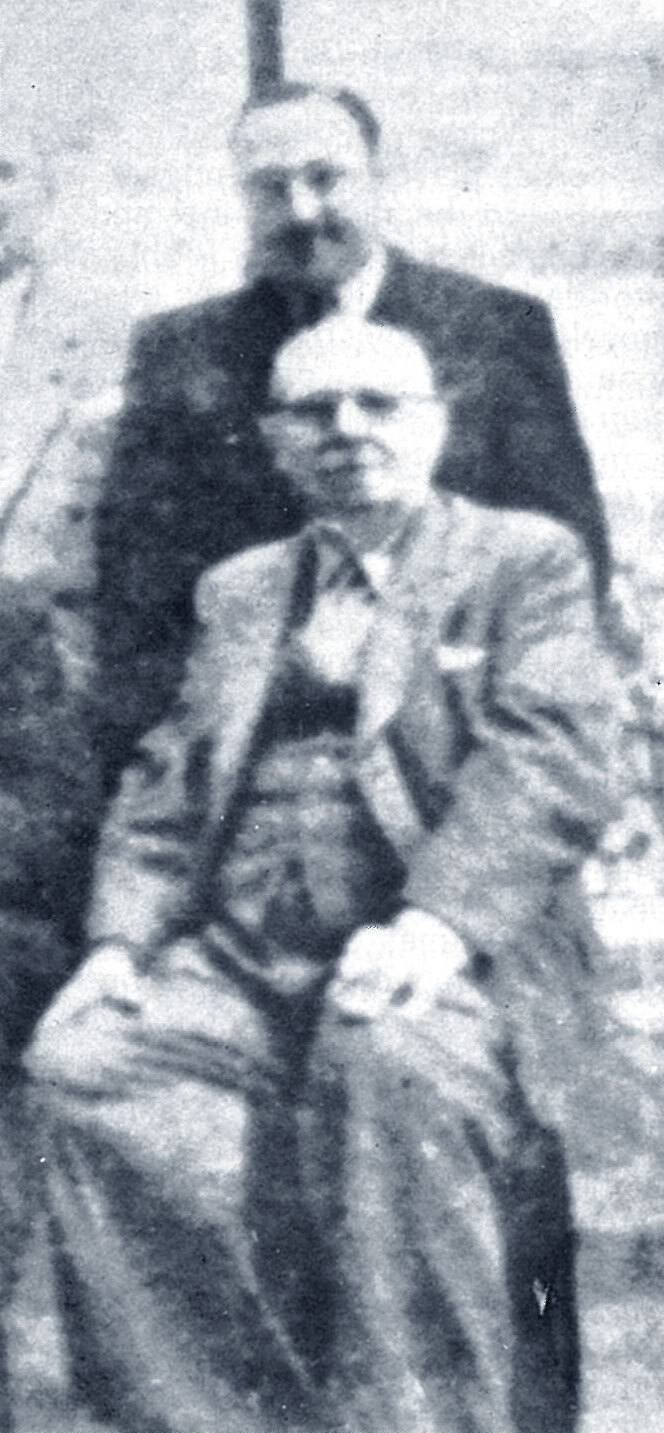
Henri Couillaud (1st row) ca. 1944-19492nd row: Christian Devémy, horn player (Doc. D. Liagre)

Henri Couillaud (1st row) ca. 1944-1949
2nd row: Christian Devémy, horn player (Doc. D. Liagre)

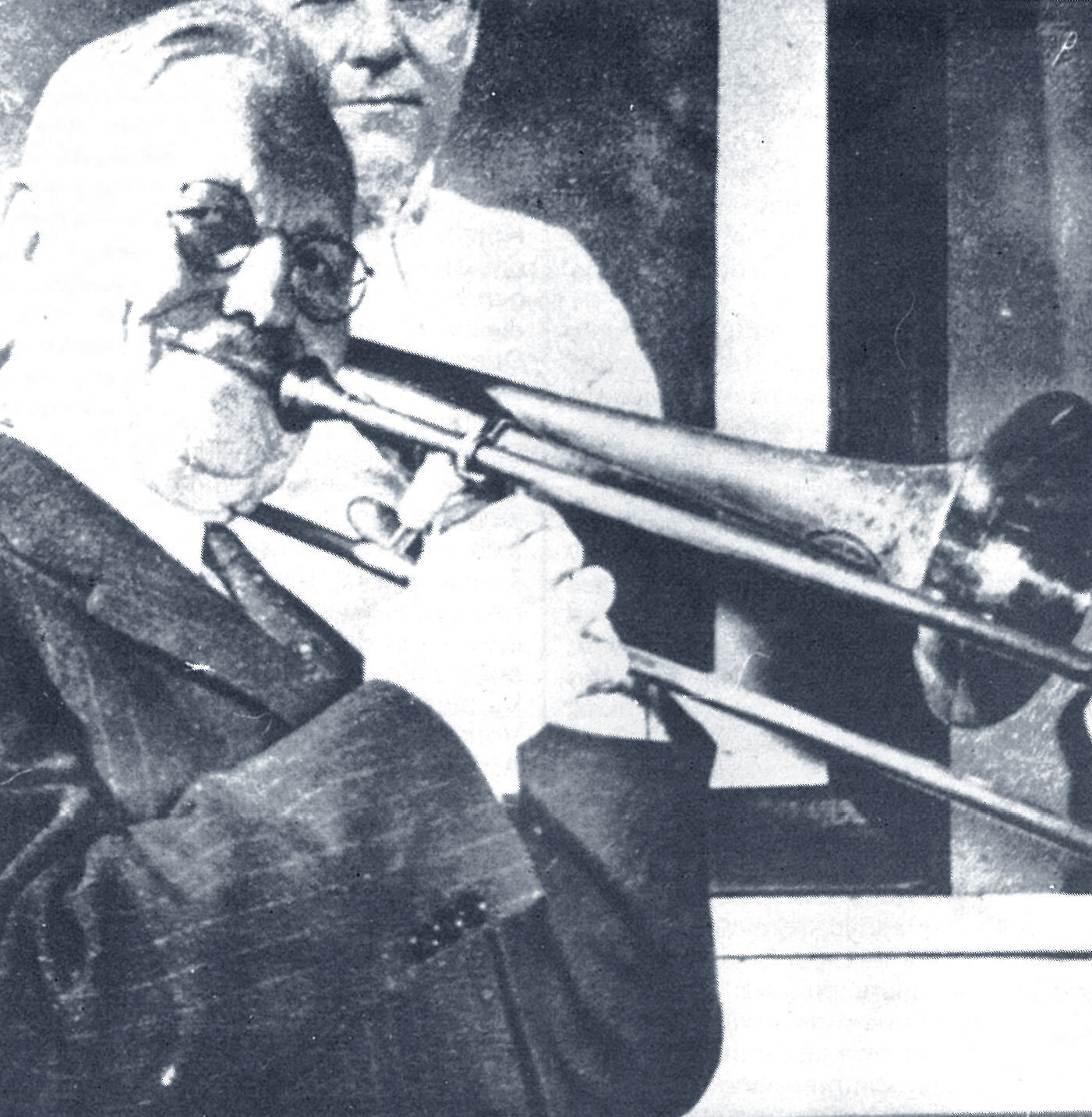
Arthur Pryor(Doc. of the late Gleen Bridge)

Arthur Pryor
(Doc. of the late Gleen Bridge)

The concert bands in fact, very popular at this time, sometimes played for dances (like Sousa at the Waldorf Astoria Hotel), including one-steps, two-steps and waltzes in their repertoire. There is plenty of evidence that in New Orleans around 1897, on the other hand, the little creole bands were playing primarily mazurkas, schottisches, polkas, quadrilles and marches and very few ‘‘slow drags’’, ragtimes and one-steps (or at any rate these were not played until late in the evening for the younger dancers). Gradually the proportion of the various types of dances was reversed so that in 1910 only one quadrille remained, at midnight, for the older people present. Thus we may speculate that those who played jazz as it was born were not far removed from the privileged whites who left the earliest recordings, notably Leo Zimmermann and Arthur Pryor. Pryor was recording in the ‘‘tailgate’’ style from 1908 (“Georgia Sunset Cakewalk” by J.B. Lampé, master B-6438-2).

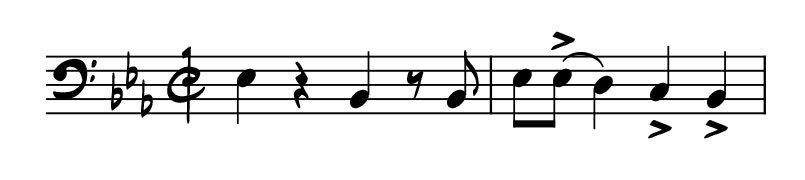
Ex. 1Tailgate (Leo Arnaud, 1975)

Ex. 1
Tailgate (Leo Arnaud, 1975)

The trombone players of New Orleans did not invent this procedure, therefore, even if Kid Ory (1886-1973) was a good match for Pryor in his mastery of these broad glissandos (Ex. 1). Ory’s west-coast record of 1922 containing “Ory’s Creole Trombone” is important historical evidence on tailgate playing but it is only a gimmick, not a technical revolution. When Ory re-recorded the number in 1927 with Louis Armstrong’s Hot Five, the difference was noticeable: the trombone phrasing is rigid alongside the trumpet’s flexible agility. The technical standards of the New Orleans jazzmen and the symphonic players of the time seem to have been close, with the same preference for detached playing. Note that the tailgate style did not become established immediately as in New Orleans the valve trombone held out for a long time. Baptiste Delisle (c. 1870-?) was the first to opt for the tenor slide trombone, around 1895. These were narrow-bore instruments of course. Besides Ory the other New Orleans pioneers were Alvin ‘‘Zue’’ Robertson (1891-1943), Roy Palmer (1892-1964) and Preston Jackson (1904-1983). Some of Palmer’s recordings from 1929 seem to indicate that he was moving away from the tailgate style towards flexible, agile playing. His pupil Preston Jackson evolved in the same way although his “Trombone Man”, recorded under his own name in 1926, remains archaic in conception. In broader playing, like the classical players of the time, these pioneers have a tendency to ‘‘declaim’’ (Honoré Dutrey, etc.).
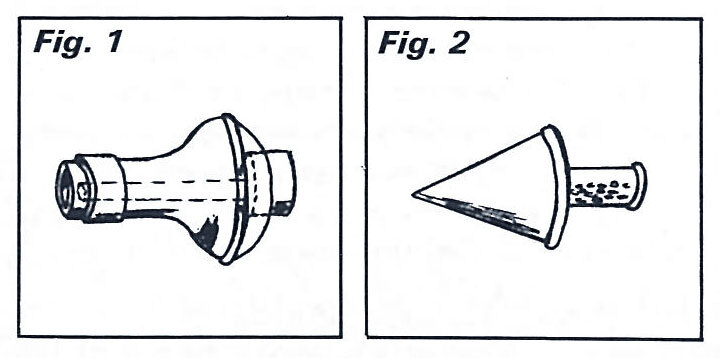
Fig. 1 & Fig. 2

Fig. 1 & Fig. 2

In addition to his role as leader of the New Orleans style, Kid Ory was also a skilful user of mutes. He used a harmon (fig. 1; larger than those of today) in “Deep Henderson” and “Too Bad” and a derby in “Wa-wa-wa”, all recorded with King Oliver in 1926. The British trombonist Keith Nichols² has, by means of a diagram (fig. 2), drawn attention to a mute invented by Ory in the twenties (but which he did not use until his second career, during the revival). Ory also used the straight mute, beloved of Charlie Green in New York. Along with Joe ‘‘Tricky Sam’’ Nanton, (1904-1946), Green was one of the first black masters, apart from the New Orleans players who had moved to Chicago. Nanton manipulated the plunger mute with skill of a Bubber Miley; he played very well in tune, even with the plunger very close to the bell, because he corrected with the slide.
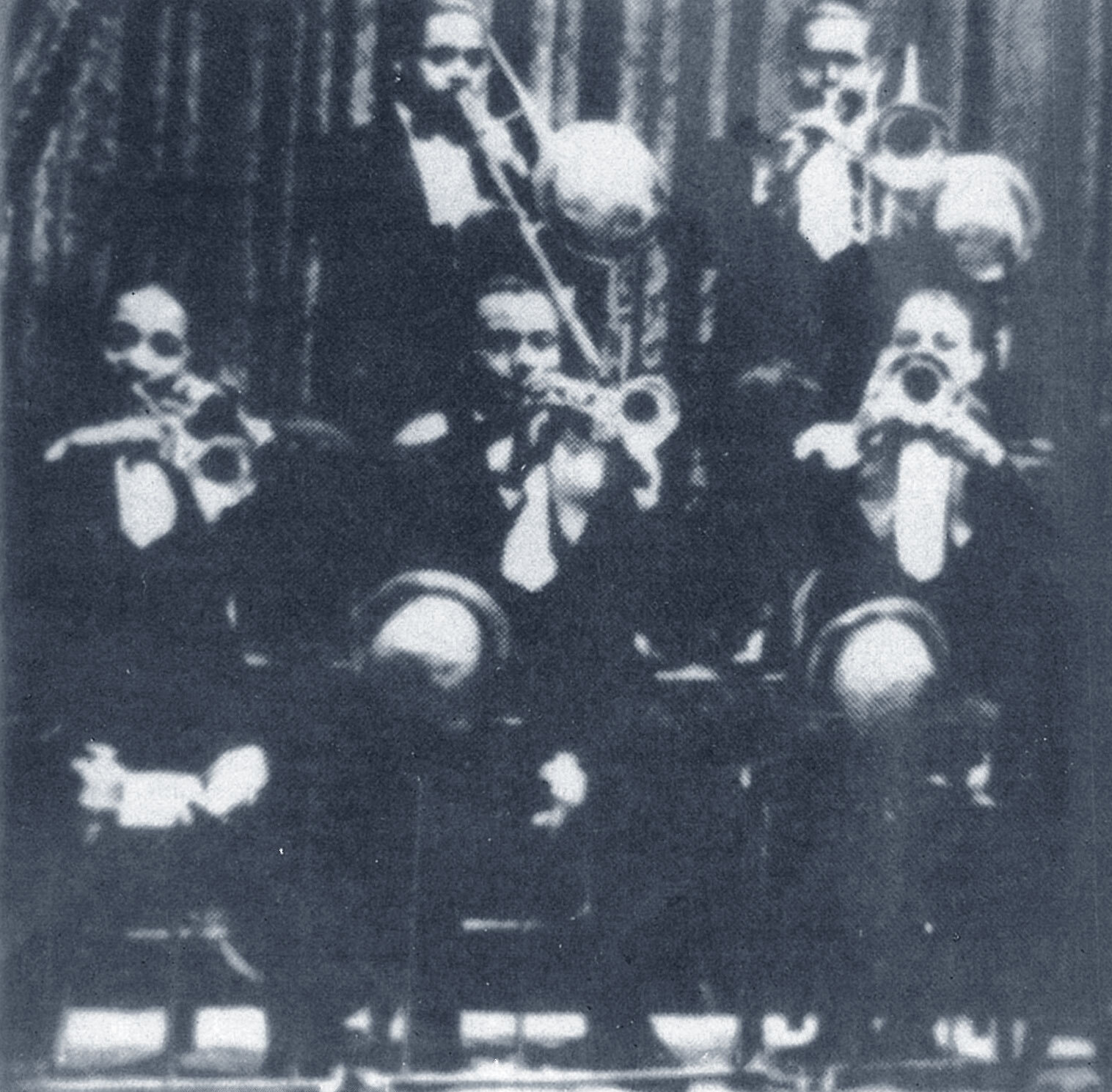
Brass section of Duke Ellington’s orchestra around 1929.➜ Freddy Jenkins (tp, playing left hand), Joe Nanton † (tbl), Co...

Brass section of Duke Ellington’s orchestra around 1929.
➜ Freddy Jenkins (tp, playing left hand), Joe Nanton † (tbl), Cootie Williams, Juan Tizol † (valve trombone). See use of “Derby” mutes. (Coll. M. Laplace)

Among the whites in Chicago Carroll Martin (1887-1939) is like a pivot between the big concert-band virtuoso style and the nascent dance-band style; he played for Isham Jones from 1920 to 1925. It was at this time that the slide was really liberated, in both New York and Paris. The white Miff Mole (1898-1961), a pupil of Charles Randall, established himself after 1922 in the Original Memphis Five as the father of the modern trombone. His flexible legato playing with a flattering sound was already a model of the type. At the same time Léo Arnaud-Vauchant (*1904) was already well known in France; he appeared at the “Boeuf sur le toit” in 1924 playing trumpet parts on the trombone. In 1926 Guy Paquinet played with him in the band of the Belgian saxophonist Paul Gazon. Léo had an advanced technique which served a virile style while Guy, with his flexible playing and warm sound, seduced his listener like a Tommy Dorsey.
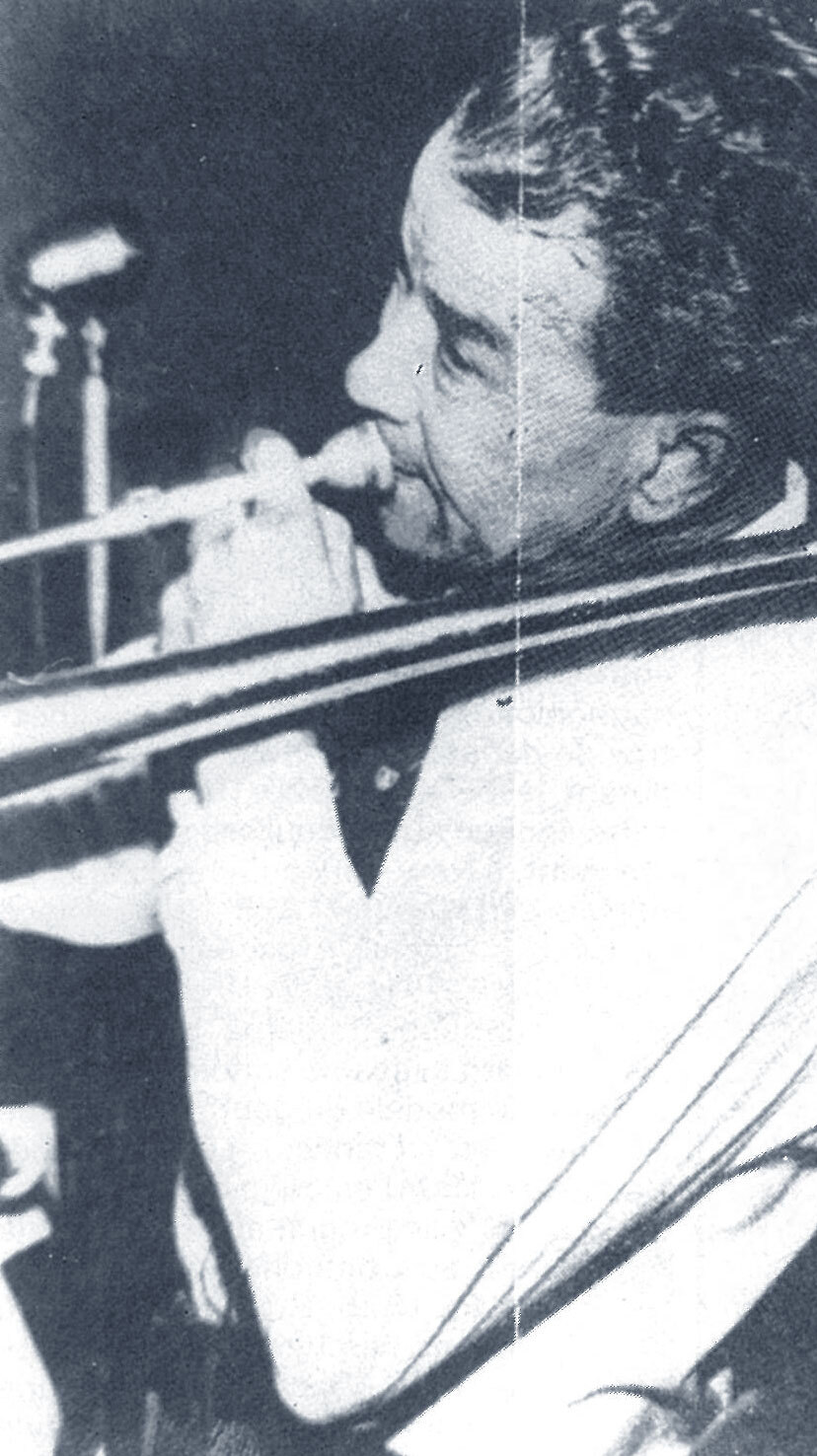
«Kid» Ory. Photo Decca Record Co.

«Kid» Ory. Photo Decca Record Co.

Dorsey himself began to record a lot from 1924 onwards. The age of the bandstand virtuosos was still quite recent and the reciprocal influences could still be observed. Guy Paquinet told me he decided to take up the trombone (he had been a violinist) after hearing a certain Mr. Robert, soloist with the 31st Infantry Regiment, playing a solo from “Carmen” in the Luxembourg Gardens in Paris. According to the pianist Itzy Riskin, Simone Mantia played alongside Tommy Dorsey on a job with the trumpet player Benjamin A. Rolfe and later declared, ‘‘I am so impressed with this Dorsey fellow — his tone, his style, his whole approach to trombone playing.’’ (in “Metronome Music Co.”).

As we end this chapter, it does not seem that jazz, at this early date, was the trombone’s point of departure towards an innovative style. It had little standing as a soloist. At the same time the big names in the concert bands and the first white dance bands, thanks to their solo responsibilities, were discovering the benefits of legato — a good omen for the future.

Notes

¹ “Laughing” surely refers to “Make that trombone laugh”, recorded by Harry Raderman in 1922 for Edison.

² Keith Nichols: ‘Muted Brass’ in “Storyville” 30, 1970.

Brass Bulletin 50, II / 1985 pages 36–40

All content is protected by copyright © Brass Bulletin 1985–2026

Share this article

Facebook LinkedIn
Loading…

Questions & Answers

How the Digital Edition works

What does the Digital Edition include?

The Digital Edition brings together the articles already digitized as searchable online texts—not simply as scans or PDF files—along with their original illustrations, notes, authorship, issue information, and available translations. Related-article suggestions currently include only this digitized material.

Are the digital articles identical to the originals?

We preserve the original text, language, illustrations, captions, footnotes, and editorial context as faithfully as possible. The presentation is adapted for comfortable online reading, and obvious transcription or scanning errors may be corrected. The substance and character of the published article remain unchanged.

Which languages are available?

Brass Bulletin was published in English, French, and German throughout its history. Italian and Spanish translations were added from issue No. 60 onward.

On the Italian and Spanish sites, articles from issues 1–59 are therefore shown in English by default.

How often are new articles added?

New articles are added almost daily, with approximately one complete issue digitized each week. The pace may vary depending on the preparation, image work, and editorial checking required.

Why aren’t all articles available digitally?

The complete Brass Bulletin collection contains 1,246 articles published between 1971 and 2003. The full index is already available online, allowing readers to discover every article in the collection, including those whose complete text has not yet been digitized.

Digitization began in February 2026. Each article is carefully prepared for online reading, checked, and connected to its issue, authors, subjects, and illustrations. At the current pace of digitization, the complete collection is expected to be available online by February 2028.

Why do some references mention articles that are not available yet?

References in the original articles are preserved even when the material they point to has not yet been digitized. This keeps the historical and editorial record intact. As more issues are added to the Digital Edition, an increasing number of these references will lead to articles that can be read online.

Can I suggest an article or report a transcription error?

Yes. If there is an article you would particularly like to see digitized, or if you notice a possible transcription error or missing detail, please contact us. Reader feedback helps us improve the Digital Edition and prioritize useful connections within the archive.

How can I support Brass Bulletin?

Your support helps fund the preparation, verification, and online publication of the complete collection.

Subscribe to the Digital Edition

Prefer to support us without subscribing?

Make a donation

Search Brass Bulletin.