Explore institutional access Explore institutional access

4 min. read

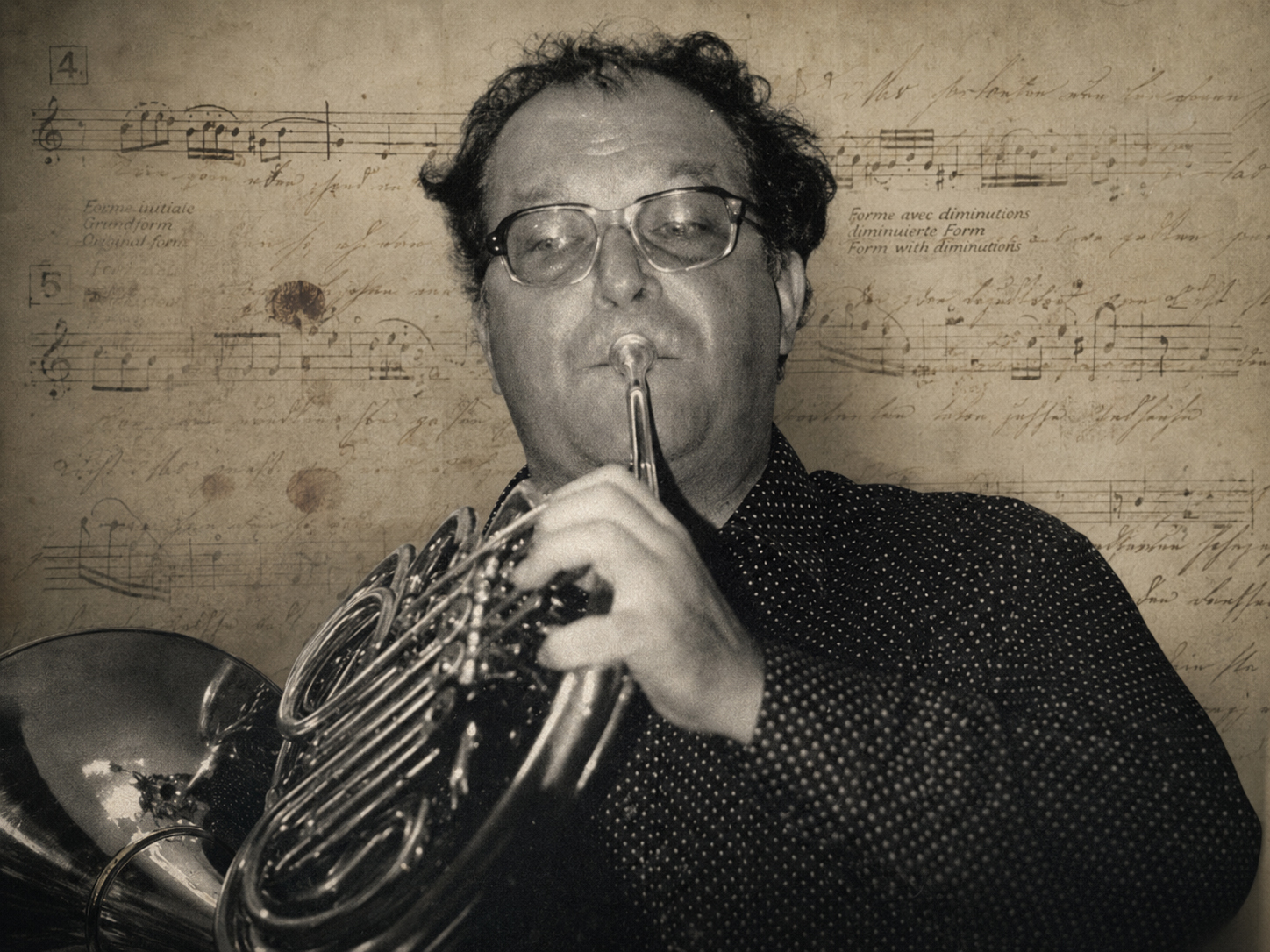
Ornaments in 18th-century Horn Concertos?

Deliberate divisions

Part 3

By Peter Damm

Improvisation, articulation and ornament were once inseparable: Peter Damm recovers an 18th-century horn practice later narrowed by increasingly precise notation.
Ornaments in 18th-century Horn Concertos?

Peter Damm

“Deliberate divisions” are not notated, as befits their improvisational character. Customary forms of ornamentation for commonly occurring intervals have come down to us from the 17th and 18th century textbooks. These may be used as models and as aids to improvisation. Increasing precision in the writing out and marking of music consigned this art to oblivion. Some vestiges remain in classical works, however, as in the form of variations, cadences, figurations and coloraturas. Here are examples of written out diminutions from the first movement of the concerto in E♭ major, K. 417, by W.A. Mozart:
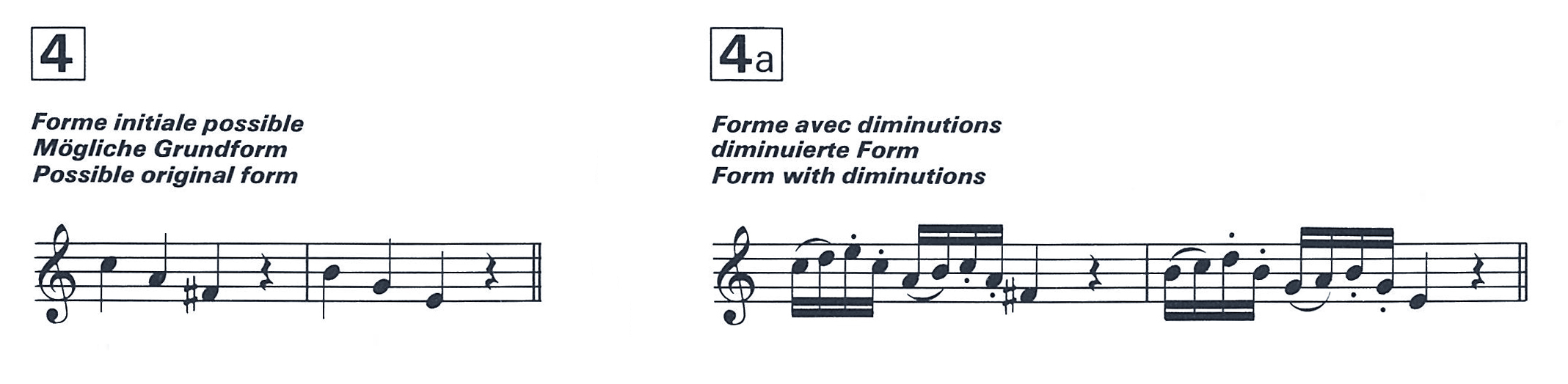
Brass Bulletin image

and from the first movement of the concerto in E♭ major by Anton Rösler-Rosetti:
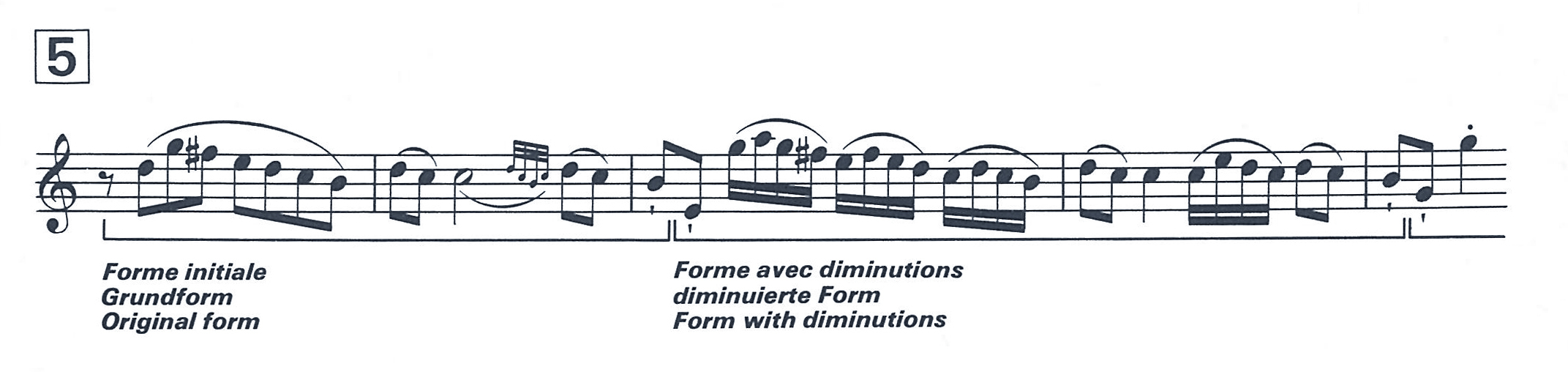
Brass Bulletin image

Eduard Melkus divides the “deliberate divisions” into two groups: a. rhythmic alterations; b. melodic alterations.²⁷ Both occur in combination.

Rhythmic alterations are: 1. division of a single note value into smaller note values (the oldest form of this is repetition of a note, including tremolo on strings, flutter-tonguing on wind instruments and the so-called Haue of clarino players); 2. rubato; 3. syncopation; 4. “sigh” (the note in question being played late, preceded by an expressive rest); 5. the filling up of rests with melodic alterations.

The six groups of melodic alterations include all the forms of “essential ornaments” already mentioned as well as the search for consonant notes above or below, which requires a good knowledge of the rules of composition. To the fifth group belong melodic connections between two notes of the original melody by means of portamento, fast diatonic connecting notes (tirata) or a slow diatonic or chromatic passage. The sixth group includes the “passages”, various combinations including tirata and Nachschlag, tirata with the third above, Pralltriller etc. This systematisation of free ornamentation by Eduard Melkus from Vienna gives a survey of the many possibilities of figurations and passages.

“Deliberate divisions” in free improvisation also include cadenzas — cadences “while the accompaniment remains silent” — at appropriate points. Quantz considers that, on a wind instrument, these should “be such, that they may be played in a single breath”.²⁸ Our horn concertos contain only one opportunity for a cadenza: the second movement of the concerto of Peter Johann Fick.

As already mentioned, varying types of articulation are also ornaments. They highlight the emotional content of the music in a most emphatic way.

The works of the early masters very seldom give articulation markings for the musicians of the day had the freedom (and the knowledge!) to decide on these for themselves according to the mood of the music. The fact that this is not recognised today may be ascertained by listening to many recordings of pre-classical horn concertos where detached tonguing is used throughout, even in Adagio movements. (I would like to point out that even Mozart, in his horn concertos, gave the soloist a free hand to ornament with articulations!)

Continue reading

Access the full Digital Edition.

Brass Bulletin 44, IV / 1983 pages 48–52

All content is protected by copyright © Brass Bulletin 1983–2026

Share this article

Facebook LinkedIn
Loading…

Questions & Answers

How the Digital Edition works

What does the Digital Edition include?

The Digital Edition brings together the articles already digitized as searchable online texts—not simply as scans or PDF files—along with their original illustrations, notes, authorship, issue information, and available translations. Related-article suggestions currently include only this digitized material.

Are the digital articles identical to the originals?

We preserve the original text, language, illustrations, captions, footnotes, and editorial context as faithfully as possible. The presentation is adapted for comfortable online reading, and obvious transcription or scanning errors may be corrected. The substance and character of the published article remain unchanged.

Which languages are available?

Brass Bulletin was published in English, French, and German throughout its history. Italian and Spanish translations were added from issue No. 60 onward.

On the Italian and Spanish sites, articles from issues 1–59 are therefore shown in English by default.

How often are new articles added?

New articles are added almost daily, with approximately one complete issue digitized each week. The pace may vary depending on the preparation, image work, and editorial checking required.

Why aren’t all articles available digitally?

The complete Brass Bulletin collection contains 1,246 articles published between 1971 and 2003. The full index is already available online, allowing readers to discover every article in the collection, including those whose complete text has not yet been digitized.

Digitization began in February 2026. Each article is carefully prepared for online reading, checked, and connected to its issue, authors, subjects, and illustrations. At the current pace of digitization, the complete collection is expected to be available online by February 2028.

Why do some references mention articles that are not available yet?

References in the original articles are preserved even when the material they point to has not yet been digitized. This keeps the historical and editorial record intact. As more issues are added to the Digital Edition, an increasing number of these references will lead to articles that can be read online.

Can I suggest an article or report a transcription error?

Yes. If there is an article you would particularly like to see digitized, or if you notice a possible transcription error or missing detail, please contact us. Reader feedback helps us improve the Digital Edition and prioritize useful connections within the archive.

How can I support Brass Bulletin?

Your support helps fund the preparation, verification, and online publication of the complete collection.

Subscribe to the Digital Edition

Prefer to support us without subscribing?

Make a donation

Search Brass Bulletin.