4 min di lettura
Ornaments in 18th-century Horn Concertos?
Deliberate divisions
Di Peter Damm
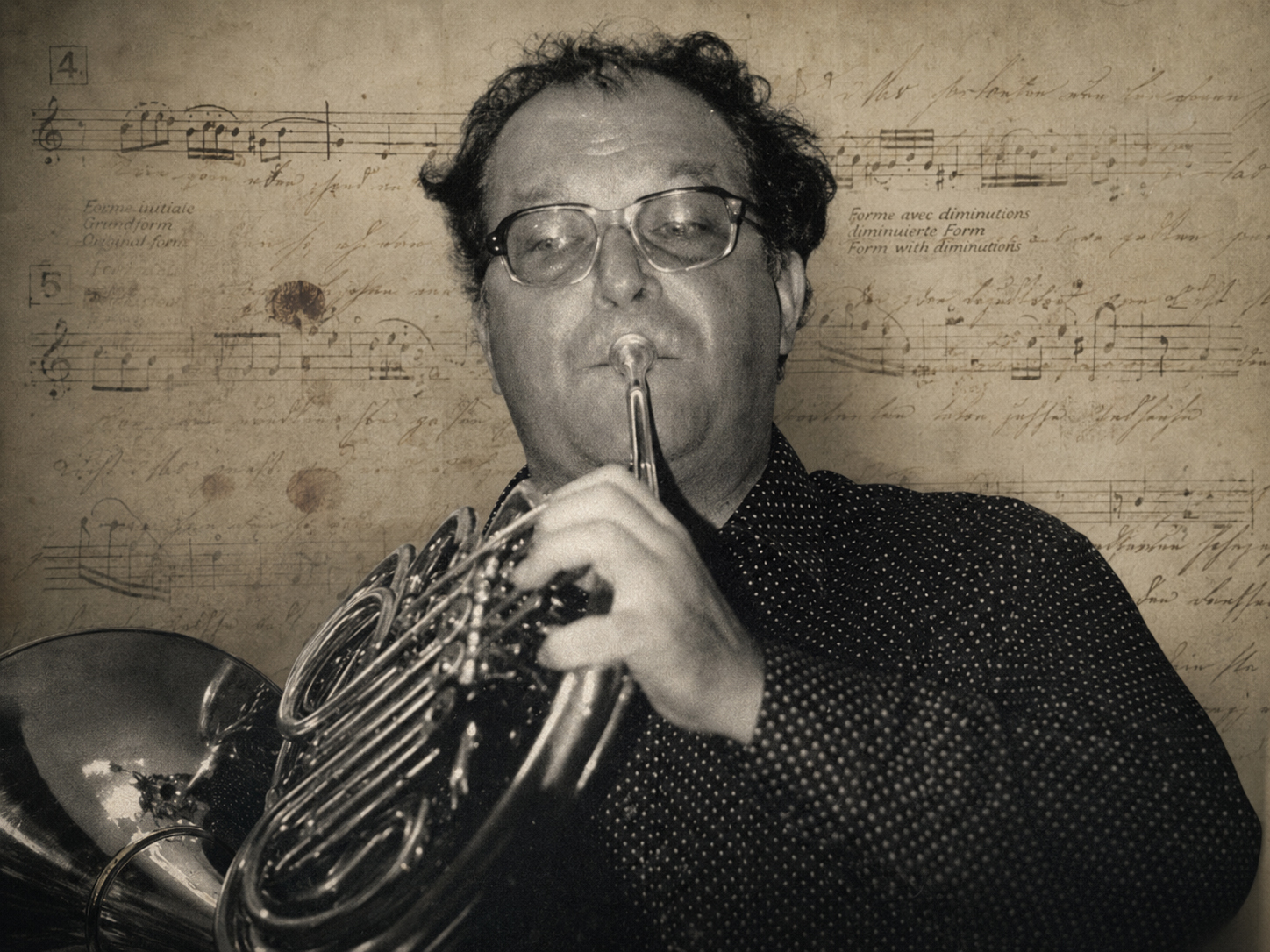
Peter Damm
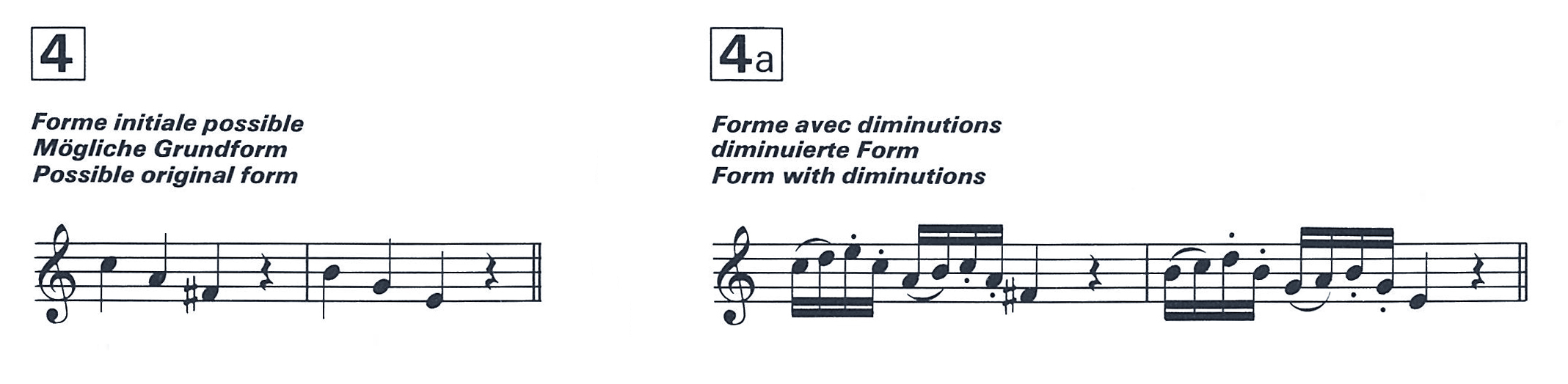
“Deliberate divisions” are not notated, as befits their improvisational character. Customary forms of ornamentation for commonly occurring intervals have come down to us from the 17th and 18th century textbooks. These may be used as models and as aids to improvisation. Increasing precision in the writing out and marking of music consigned this art to oblivion. Some vestiges remain in classical works, however, as in the form of variations, cadences, figurations and coloraturas. Here are examples of written out diminutions from the first movement of the concerto in E♭ major, K. 417, by W.A. Mozart:
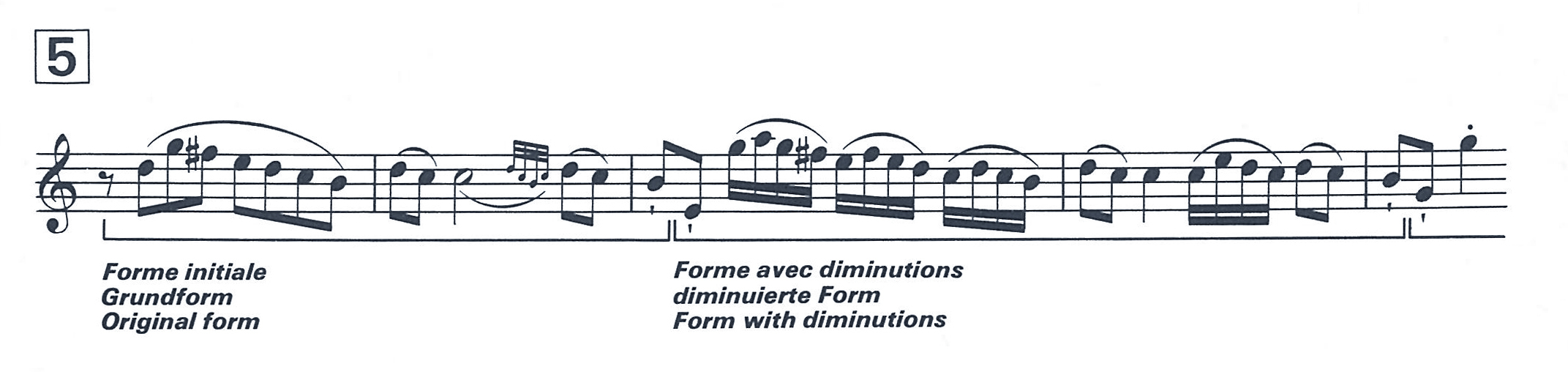
and from the first movement of the concerto in E♭ major by Anton Rösler-Rosetti:
Eduard Melkus divides the “deliberate divisions” into two groups: a. rhythmic alterations; b. melodic alterations.²⁷ Both occur in combination.
Rhythmic alterations are: 1. division of a single note value into smaller note values (the oldest form of this is repetition of a note, including tremolo on strings, flutter-tonguing on wind instruments and the so-called Haue of clarino players); 2. rubato; 3. syncopation; 4. “sigh” (the note in question being played late, preceded by an expressive rest); 5. the filling up of rests with melodic alterations.
The six groups of melodic alterations include all the forms of “essential ornaments” already mentioned as well as the search for consonant notes above or below, which requires a good knowledge of the rules of composition. To the fifth group belong melodic connections between two notes of the original melody by means of portamento, fast diatonic connecting notes (tirata) or a slow diatonic or chromatic passage. The sixth group includes the “passages”, various combinations including tirata and Nachschlag, tirata with the third above, Pralltriller etc. This systematisation of free ornamentation by Eduard Melkus from Vienna gives a survey of the many possibilities of figurations and passages.
“Deliberate divisions” in free improvisation also include cadenzas — cadences “while the accompaniment remains silent” — at appropriate points. Quantz considers that, on a wind instrument, these should “be such, that they may be played in a single breath”.²⁸ Our horn concertos contain only one opportunity for a cadenza: the second movement of the concerto of Peter Johann Fick.
As already mentioned, varying types of articulation are also ornaments. They highlight the emotional content of the music in a most emphatic way.
The works of the early masters very seldom give articulation markings for the musicians of the day had the freedom (and the knowledge!) to decide on these for themselves according to the mood of the music. The fact that this is not recognised today may be ascertained by listening to many recordings of pre-classical horn concertos where detached tonguing is used throughout, even in Adagio movements. (I would like to point out that even Mozart, in his horn concertos, gave the soloist a free hand to ornament with articulations!)
Brass Bulletin 44, IV / 1983 pagine 48–52
Tutti i contenuti sono protetti dal diritto d’autore © Brass Bulletin 1983–2026