3 min. read
Handel Horn Duo located in South America
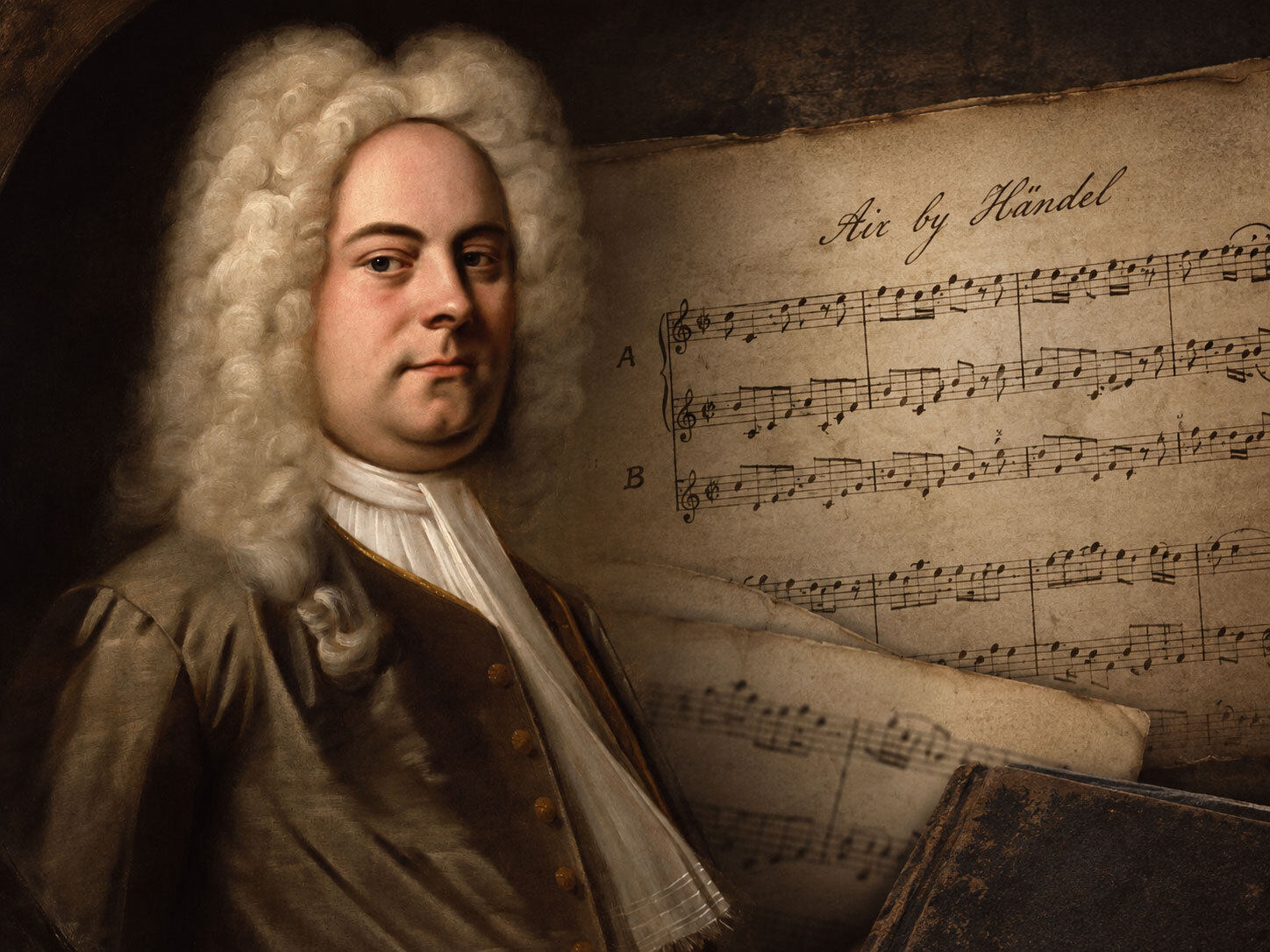
In 1981 the second volume of the “Moravian Brass Duet Book” for trumpets or horns was published.¹ The music contained in this and in the first volume² had been sent to the United States from Herrnhut, Bohemia, arriving in Salem, North Carolina on October 26, 1785. Those familiar with this collection know that the first 42 numbers are chorales with German texts and that they are followed by 140 duets proper, many of them minuets and marches. At the end are 20 miscellaneous pieces, some with German titles and some with English ones.
The last three pieces (Nos. 18-20 of the miscellaneous ones) come from an otherwise unspecified “French Horn Instructor”, according to a note in the original manuscript. Since the upper part of these three pieces was missing due to a lack to the last pages of the upper part-book, it was necessary to locate that tutor. As Stephen L. Glover and I stated in our preface, our inquiry with some of the most noted specialists for early horn music resulted only in negative replies. The most helpful person was Kurt Janetzky, who possesses some loose leaves — probably from the missing “Instructor” — containing our Nos. 18 and 19 but lacking both a title-page and our No. 20.³ Glover and I finally went to press, printing the surviving 15 measures of the second horn part of No. 20 in the hope that someday the missing tutor would be discovered and the duet — which is called an “Air by Handel” and stated to be on page 28 of the “French Horn Instructor” — completed.
It was during one of my summer courses at the Palace of Mateus in northern Portugal that fortuitous chance played the long-sought tutor into my hands. One of my colleagues — Pedro Rodriguez, who is horn instructor at the Lisbon Conservatory — had received photocopies of an old tutor from a South American pupil. One day he showed it to me, not even realizing that I was particularly interested in horn music. On a whim, I idly turned to page 28 of the photocopies which Rodriguez had brought me. Imagine my surprise and joy when I discovered the missing piece intact! I am including it here so that all brass players may share in the discovery. (Wrong notes in the U.S. source are marked with an x. Furthermore, in the tutor, the last note in bar 13, first part, is e′′ rather than d′′.)
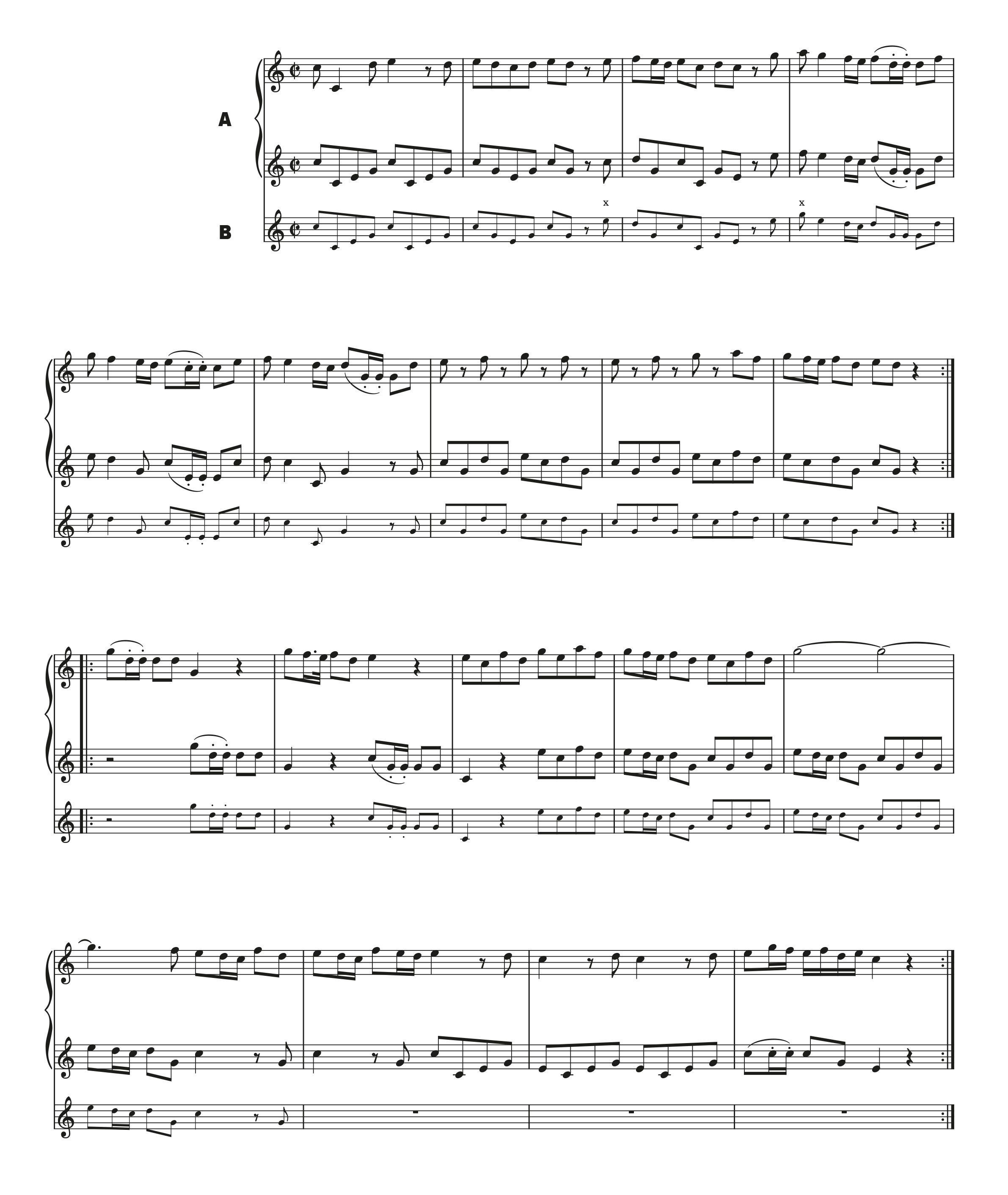
Example 1
Air by Handel
A = New instructions for the Horn
B = Fragment of 2nd part preserved in the Moravian Music Archives, Winston-Salem, N. Carolina
Music Example No. 1
As far as the “French Horn Instructor” itself is concerned, Glover and I had supposed it to be one of several known to musicologists: either “The Compleat Tutor for the French Horn” (London, Simpson, c. 1746, also London, Thompson, c. 1756), or “Instructions for the French Horn” (“Apollo’s Delight” or “The Muses Delight”, Liverpool 1757). However, it is none of these. A complete transcription of the title-page reads as follows:
New Instructions/for the FRENCH HORN,/Containing,/The most modern and best methods for Learners to Blow,/To which are Added,/all the Hunting notes, and a Collection of Tunes, Marches, Minuets, &c./purposely adapted for that Instrument by an Eminent Performer./Pr[ice] 1/6./LONDON,/Printed & sold by Longman & Broderip N°. 26, Cheapside, Where may be had,/French Horns of all sizes, Concert Horns, Trumpets, &c. likewise/all kinds of Wind Instruments, Music Books, Pieces, &c.
Brass Bulletin 49, I / 1985 pages 41–44
All content is protected by copyright © Brass Bulletin 1985–2026