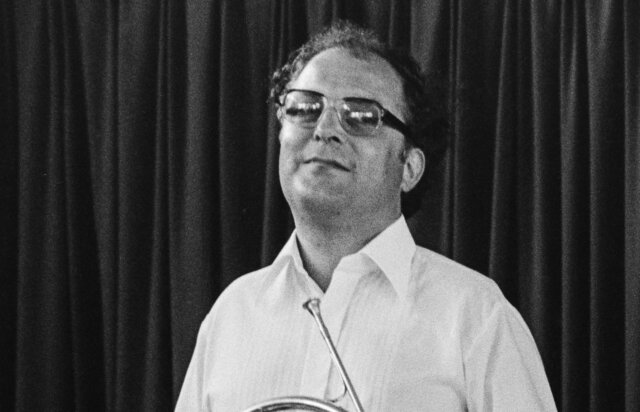
Peter Damm
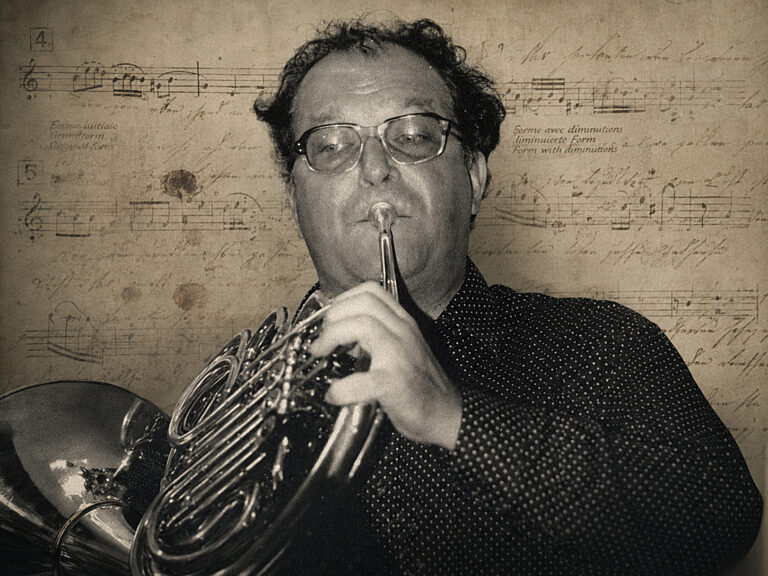
Peter Damm is a German horn player, teacher and researcher whose career brought together orchestral playing, solo performance and a sustained interest in the history and performance practice of the horn. Born in Meiningen, Thuringia, in 1937, Damm began his musical education on the violin before taking up the horn…
Read biography
Peter Damm is a German horn player, teacher and researcher whose career brought together orchestral playing, solo performance and a sustained interest in the history and performance practice of the horn.
Born in Meiningen, Thuringia, in 1937, Damm began his musical education on the violin before taking up the horn with Franz Nauber. He subsequently studied with Karl Biehlig at the Hochschule für Musik in Weimar. His professional orchestral career began in Gera, and in 1959 he became solo horn of the Leipzig Gewandhaus Orchestra. Ten years later he joined the Sächsische Staatskapelle Dresden as solo horn, remaining with the orchestra until 2002. On his retirement, the Staatskapelle appointed him an honorary member.
Alongside his orchestral work, Damm developed an extensive career as a soloist and chamber musician, appearing throughout Europe as well as in the Americas and Japan. His repertoire extended from eighteenth-century music to contemporary works, including first performances, while his recordings documented both the standard horn repertoire and his long association with the Dresden orchestral tradition.
Richard Strauss occupied a particularly important place in his performing and scholarly work. Damm first performed Strauss’s First Horn Concerto in 1957 and eventually played the work 157 times, the last of these performances taking place in Osaka in 2000. His work on Strauss went beyond performance: he also undertook research into the composer’s music for horn, bringing together practical experience and the study of sources and performance questions.
That combination of performance and research became an important feature of Damm’s work more broadly. He prepared editions of major works in the horn repertoire and devoted particular attention to questions of historical performance practice, articulation, ornamentation and the development of the instrument. His approach was that of a player examining historical evidence in order to understand how the music might have been conceived and performed.
This aspect of his work is particularly well represented in Brass Bulletin. Across fifteen contributions, Damm examined subjects ranging from articulation in Mozart’s horn concertos to eighteenth-century ornamentation and the history of the horn. His two-part survey 300 Years of the Horn explored the instrument’s development and the Dresden court tradition, while a later three-part study investigated the corne da caccia part in Bach’s B minor Mass and its possible connection with Gottfried Reiche. He also wrote about the Staatskapelle Dresden, horn playing in the German Democratic Republic and his former teacher Karl Biehlig.
Teaching formed another major part of Damm’s career. He taught for many years at the Hochschule für Musik Carl Maria von Weber in Dresden and gave masterclasses, seminars and workshops in Europe, Japan and North America. His pedagogical work, like his publications and editions, grew out of the close relationship between orchestral experience, technical understanding and historical study that marked his career.
Damm was also closely involved with the International Instrumental Competition in Markneukirchen, serving as its president for many years, and became an honorary member of the International Horn Society. His career was recognized through a number of competition prizes and professional distinctions, beginning with international competitions in Moscow, Munich and Prague during the early years of his professional life.
Peter Damm’s contribution to the horn extends well beyond his long tenure in two of Germany’s major orchestras. Through performance, teaching, editions, recordings and historical research, he helped connect the living orchestral tradition of the instrument with a deeper investigation of its repertoire and history. His writings for Brass Bulletin provide an especially clear record of that combination of practical musicianship and historical curiosity.
15 Articles by Peter Damm
Brass Bulletin 14 - 2 / 1976
Damm, Peter
Why pretend to be Mozart?
Reply to Bernhard Krol
Should a cadenza imitate Mozart? Peter Damm argues for stylistic fidelity without imitation—at the heart of a debate with Bernhard Krol.
pp. 13–15
Brass Bulletin No 14 · 1976
Repertoire· Interpretation· Ornaments
Brass Bulletin 22 - 2 / 1978
Damm, Peter
On the question of articulation in the horn concertos by W. A. Mozart
How should Mozart really sound? Peter Damm questions traditional editions and reveals how articulation—often missing—must be rebuilt through style, listening, and musical judgment.
pp. 19–25
Brass Bulletin No 22 · 1978
Horn· Repertoire· Technique· Articulation· Interpretation
Brass Bulletin 31 - 3 / 1980
Damm, Peter
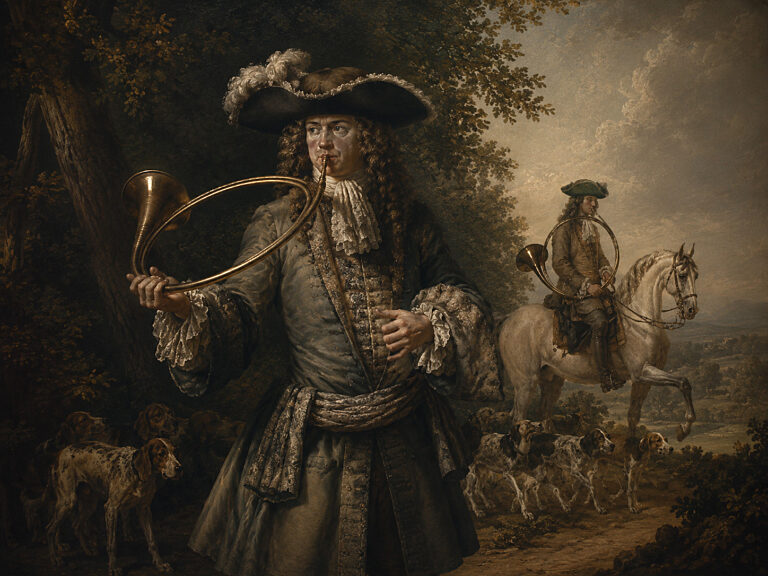
300 Years of the Horn
1680-1980, an attempted survey
From Versailles to Bohemia, hunting horns enter orchestral life through makers, players, early works and the Austro-Bohemian tradition.
pp. 19–33
Brass Bulletin No 31 · 1980
Horn· History· Equipment· Historical instruments· Instrument making
Brass Bulletin 32 - 4 / 1980
Damm, Peter
300 Years of the Horn
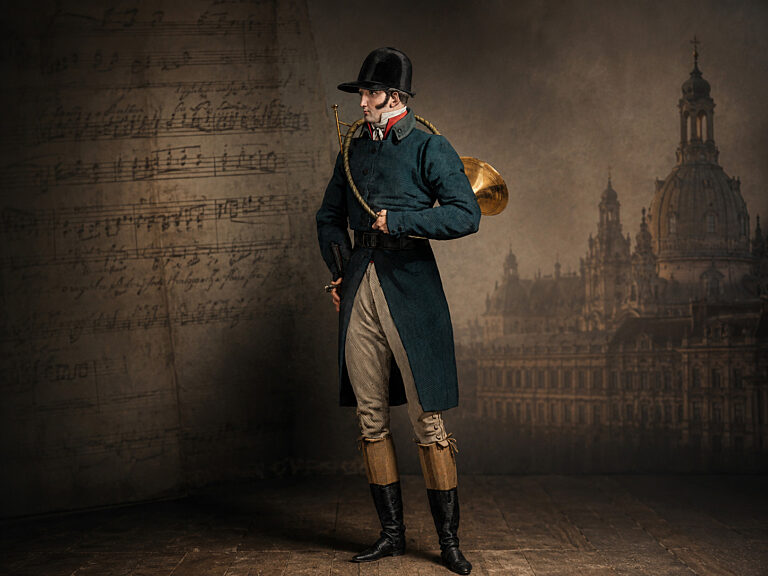
in the Dresden Court Orchestra
From Dresden’s court musicians to Hampel’s hand-horn technique, virtuoso players and court repertoire shaped a decisive shift in horn playing and orchestral writing.
pp. 19–41
Brass Bulletin No 32 · 1980
Horn· History· Equipment· Historical instruments· Orchestral playing
Brass Bulletin 42 - 2 / 1983
Damm, Peter
Ornaments in 18th-century Horn Concertos?
Performance once depended as much on informed invention as on written notes, and early horn concertos still carry that forgotten freedom in plain sight.
pp. 12–15
Brass Bulletin No 42 · 1983
Horn· Repertoire· History· Ornaments· Interpretation
Brass Bulletin 43 - 3 / 1983
Damm, Peter
Ornaments in 18th-century Horn Concertos?
Essential ornaments
Natural horn technique left little room for excess: Peter Damm sets 18th-century ornamentation against the practical limits of range, style and notation.
pp. 34–43
Brass Bulletin No 43 · 1983
Horn· Repertoire· History· Ornaments· Interpretation
Brass Bulletin 44 - 4 / 1983
Damm, Peter
Ornaments in 18th-century Horn Concertos?
Deliberate divisions
Improvisation, articulation and ornament were once inseparable: Peter Damm recovers an 18th-century horn practice later narrowed by increasingly precise notation.
pp. 48–52
Brass Bulletin No 44 · 1983
Horn· History· Repertoire· Ornaments· Improvisation
Brass Bulletin 45 - 1 / 1984
Damm, Peter
Ornaments in 18th-century Horn Concertos?
Changes and modifications of tempo
Tempo, dynamics and cadenzas expose how much an 18th-century horn concerto once depended on choices that modern notation and instruments can easily obscure.
pp. 46–54
Brass Bulletin No 45 · 1984
Horn· History· Repertoire· Ornaments· Interpretation
Brass Bulletin 56 - 4 / 1986
Damm, Peter
Did Bach write the "corne da caccia" part in the B minor Mass for Gottfried Reiche?
pp. 61–73
Brass Bulletin No 56 · 1986
Horn· History· Repertoire· Historical instruments
Brass Bulletin 57 - 1 / 1987
Damm, Peter
Did Bach write the "corne da caccia" part in the B minor Mass for Gottfried Reiche?
pp. 67–79
Brass Bulletin No 57 · 1987
Horn· History· Repertoire· Historical instruments
Brass Bulletin 58 - 2 / 1987
Damm, Peter
Did Bach write the "corne da caccia" part in the B minor Mass for Gottfried Reiche?
pp. 63–69
Brass Bulletin No 58 · 1987
Horn· History· Repertoire· Historical instruments
Brass Bulletin 60 - 4 / 1987
Damm, Peter
The horn in the G.R.D, A chat with Peter Damm
Special GDR
pp. 33–37
Brass Bulletin No 60 · 1987
Horn· History
Brass Bulletin 71 - 3 / 1990
Damm, Peter
Rules for the road
pp. 48–51
Brass Bulletin No 71 · 1990
Health· Orchestral playing
Brass Bulletin 72 - 4 / 1990
Damm, Peter
Staatskapelle of Dresden
Long Orchestral tradition
pp. 52–54
Brass Bulletin No 72 · 1990
Report· History
Brass Bulletin 102 - 2 / 1998
Damm, Peter
Karl Biehlig, the horn is mourning
pp. 85–88
Brass Bulletin No 102 · 1998
Horn· Encounters