Ofrezca Brass Bulletin en su universidad, conservatorio o biblioteca Descubra el acceso institucional

4 min de lectura

Ornaments in 18th-century Horn Concertos?

Deliberate divisions

Parte 3

Por Peter Damm

Improvisation, articulation and ornament were once inseparable: Peter Damm recovers an 18th-century horn practice later narrowed by increasingly precise notation.
Ornaments in 18th-century Horn Concertos?

Peter Damm

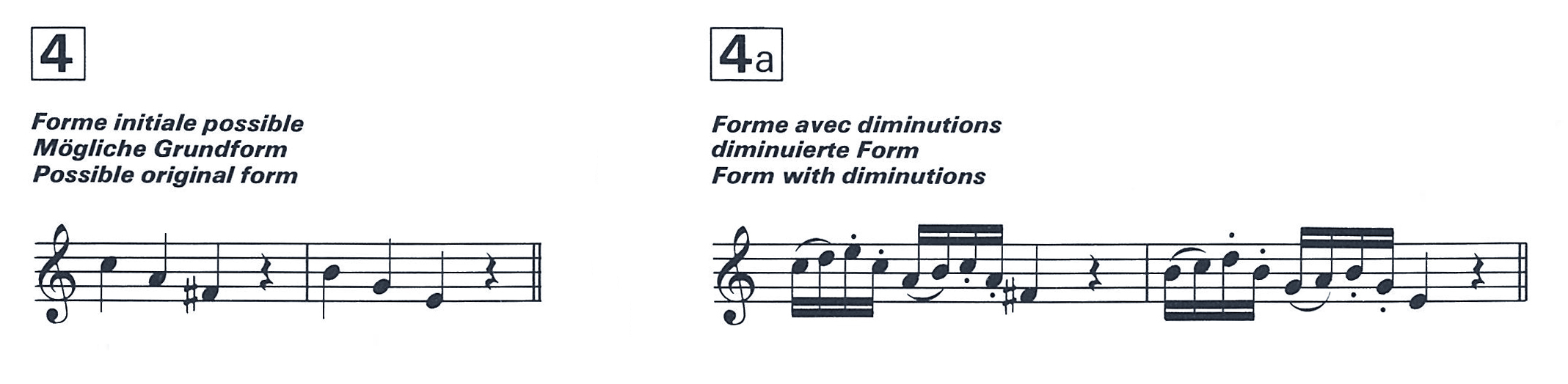
“Deliberate divisions” are not notated, as befits their improvisational character. Customary forms of ornamentation for commonly occurring intervals have come down to us from the 17th and 18th century textbooks. These may be used as models and as aids to improvisation. Increasing precision in the writing out and marking of music consigned this art to oblivion. Some vestiges remain in classical works, however, as in the form of variations, cadences, figurations and coloraturas. Here are examples of written out diminutions from the first movement of the concerto in E♭ major, K. 417, by W.A. Mozart:
Brass Bulletin image

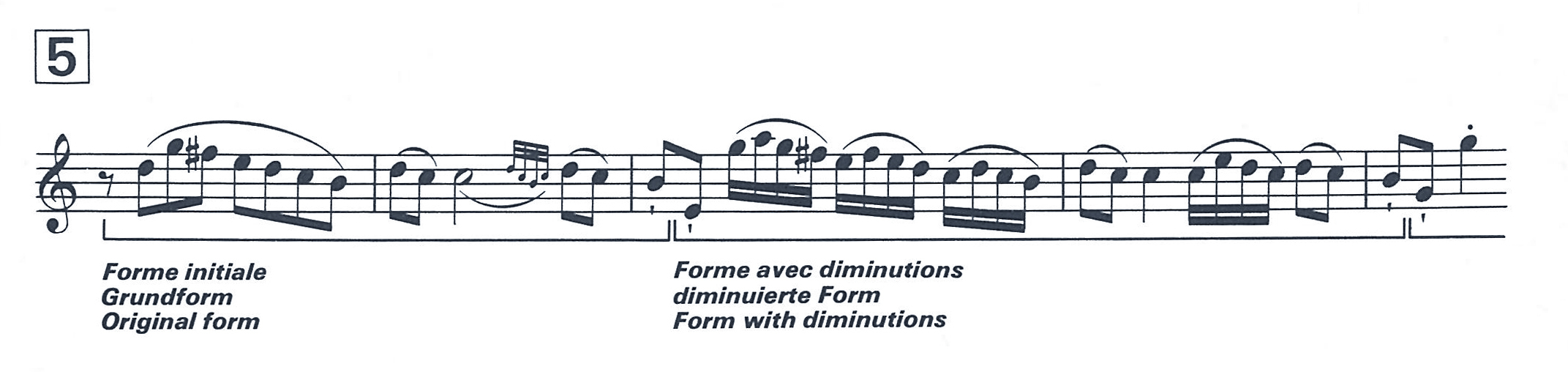
and from the first movement of the concerto in E♭ major by Anton Rösler-Rosetti:
Brass Bulletin image

Eduard Melkus divides the “deliberate divisions” into two groups: a. rhythmic alterations; b. melodic alterations.²⁷ Both occur in combination.

Rhythmic alterations are: 1. division of a single note value into smaller note values (the oldest form of this is repetition of a note, including tremolo on strings, flutter-tonguing on wind instruments and the so-called Haue of clarino players); 2. rubato; 3. syncopation; 4. “sigh” (the note in question being played late, preceded by an expressive rest); 5. the filling up of rests with melodic alterations.

The six groups of melodic alterations include all the forms of “essential ornaments” already mentioned as well as the search for consonant notes above or below, which requires a good knowledge of the rules of composition. To the fifth group belong melodic connections between two notes of the original melody by means of portamento, fast diatonic connecting notes (tirata) or a slow diatonic or chromatic passage. The sixth group includes the “passages”, various combinations including tirata and Nachschlag, tirata with the third above, Pralltriller etc. This systematisation of free ornamentation by Eduard Melkus from Vienna gives a survey of the many possibilities of figurations and passages.

“Deliberate divisions” in free improvisation also include cadenzas — cadences “while the accompaniment remains silent” — at appropriate points. Quantz considers that, on a wind instrument, these should “be such, that they may be played in a single breath”.²⁸ Our horn concertos contain only one opportunity for a cadenza: the second movement of the concerto of Peter Johann Fick.

As already mentioned, varying types of articulation are also ornaments. They highlight the emotional content of the music in a most emphatic way.

The works of the early masters very seldom give articulation markings for the musicians of the day had the freedom (and the knowledge!) to decide on these for themselves according to the mood of the music. The fact that this is not recognised today may be ascertained by listening to many recordings of pre-classical horn concertos where detached tonguing is used throughout, even in Adagio movements. (I would like to point out that even Mozart, in his horn concertos, gave the soloist a free hand to ornament with articulations!)

Continue reading

Accede a la edición digital completa.

Brass Bulletin 44, IV / 1983 páginas 48–52

Todo el contenido está protegido por derechos de autor © Brass Bulletin 1983–2026

Compartir este artículo

Facebook LinkedIn
Cargando…

Preguntas y respuestas

Cómo funciona la edición digital

¿Qué incluye la edición digital?

La edición digital reúne los artículos ya digitalizados como textos legibles y consultables en línea —no simplemente como escaneos o archivos PDF— junto con sus ilustraciones originales, notas, autoría, información del número y traducciones disponibles. Las sugerencias de artículos relacionados incluyen actualmente solo este material digitalizado.

¿Los artículos digitales son idénticos a los originales?

Conservamos con la mayor fidelidad posible el texto original, el idioma, las ilustraciones, los pies de imagen, las notas y el contexto editorial. La presentación se adapta para facilitar la lectura en línea y pueden corregirse errores evidentes de transcripción o escaneado. El contenido y el carácter del artículo publicado permanecen inalterados.

¿Qué idiomas están disponibles?

Brass Bulletin se publicó en inglés, francés y alemán a lo largo de toda su historia. Las traducciones al italiano y al español se añadieron a partir del número 60. Por este motivo, en los sitios italiano y español los artículos de los números 1 a 59 se muestran en inglés de forma predeterminada.

¿Con qué frecuencia se añaden nuevos artículos?

Se añaden nuevos artículos casi a diario, con aproximadamente un número completo digitalizado cada semana. El ritmo puede variar según el trabajo de preparación, tratamiento de imágenes y revisión editorial necesario.

¿Por qué no están disponibles todos los artículos en formato digital?

La colección completa de Brass Bulletin contiene 1.246 artículos publicados entre 1971 y 2003. El índice completo ya está disponible en línea y permite descubrir todos los artículos de la colección, incluidos aquellos cuyo texto íntegro todavía no ha sido digitalizado.

La digitalización comenzó en febrero de 2026. Cada artículo se prepara cuidadosamente para la lectura en línea, se revisa y se vincula con su número, sus autores, sus temas y sus ilustraciones. Al ritmo actual de digitalización, se prevé que la colección completa esté disponible en línea en febrero de 2028.

¿Por qué algunas referencias mencionan artículos que todavía no están disponibles?

Las referencias de los artículos originales se conservan aunque el material al que remiten aún no haya sido digitalizado. De este modo se mantiene intacto el contexto histórico y editorial. A medida que se incorporen más números a la edición digital, un número creciente de estas referencias conducirá a artículos que podrán leerse en línea.

¿Puedo sugerir un artículo o informar de un error de transcripción?

Sí. Si hay algún artículo que le gustaría especialmente ver digitalizado, o si detecta un posible error de transcripción o algún dato que falta, póngase en contacto con nosotros. Los comentarios de los lectores nos ayudan a mejorar la edición digital y a establecer prioridades útiles dentro del archivo.

¿Cómo puedo apoyar a Brass Bulletin?

Su apoyo ayuda a financiar la preparación, verificación y publicación en línea de la colección completa.

Suscríbase a la Edición Digital

¿Prefiere apoyarnos sin suscribirse?

Haga una donación

¿Cómo avanza la digitalización?

Estamos poniendo Brass Bulletin a disposición de los lectores en línea, artículo por artículo. Pueden leer los artículos recién digitalizados en cuanto estén listos, incluso antes de que se complete un número entero.

Consulten nuestro calendario de digitalización para descubrir las últimas novedades y las fechas estimadas de disponibilidad de los próximos números. Estas estimaciones se basan en nuestro ritmo reciente y pueden cambiar.

Busca en Brass Bulletin.