8 min. read
The Leningrad School of Horn Playing
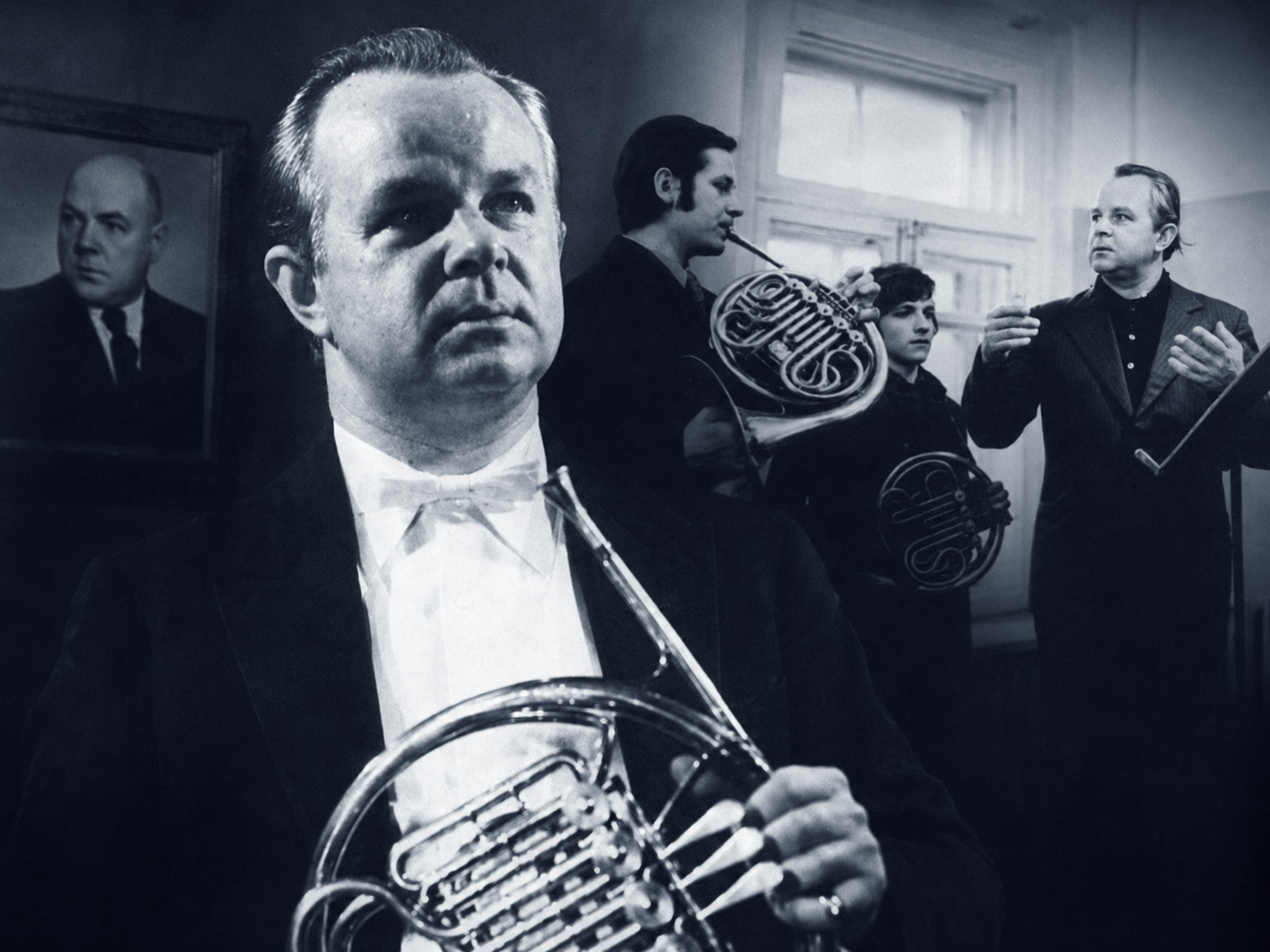
A new cultural center was established in Russia with the birth of St. Petersburg in 1703. St. Petersburg remained closely related to her sister city, Moscow, the original capital, which developed as an important commercial centre, upheld the great Bolshoi Theatre, and carried on its fine tradition in the dramatic arts.
The rôle of the arts in Russia at this time was changing and acquiring a new, more active and prestigious position. Aristocrats already involved in the arts continued their support of theatres and chamber orchestras. The Royal Court at St. Petersburg housed the Court "Kapella" which provided a musical training ground through the use of some traditional though unsystematic Russian methods. Many talented foreign artists and students at the Court "Kapella" helped to influence and develop the internationally recognized Russian style as we know it today.
The Conservatory at St. Petersburg — the first in Russia — was founded in 1862 and so the earliest stages of the Russian School of horn playing which is known in Leningrad today, had begun.
The continuation follows the emergence of the horn class in St. Petersburg through Homilius, Tamm, and the Buyanovskij lineage shaping the Leningrad tradition.
Brass Bulletin 27, III / 1979 pages 45–50
All content is protected by copyright © Brass Bulletin 1979–2026