4 min. read
This article is for subscribers.
Empire Brass Quintet
The road to success
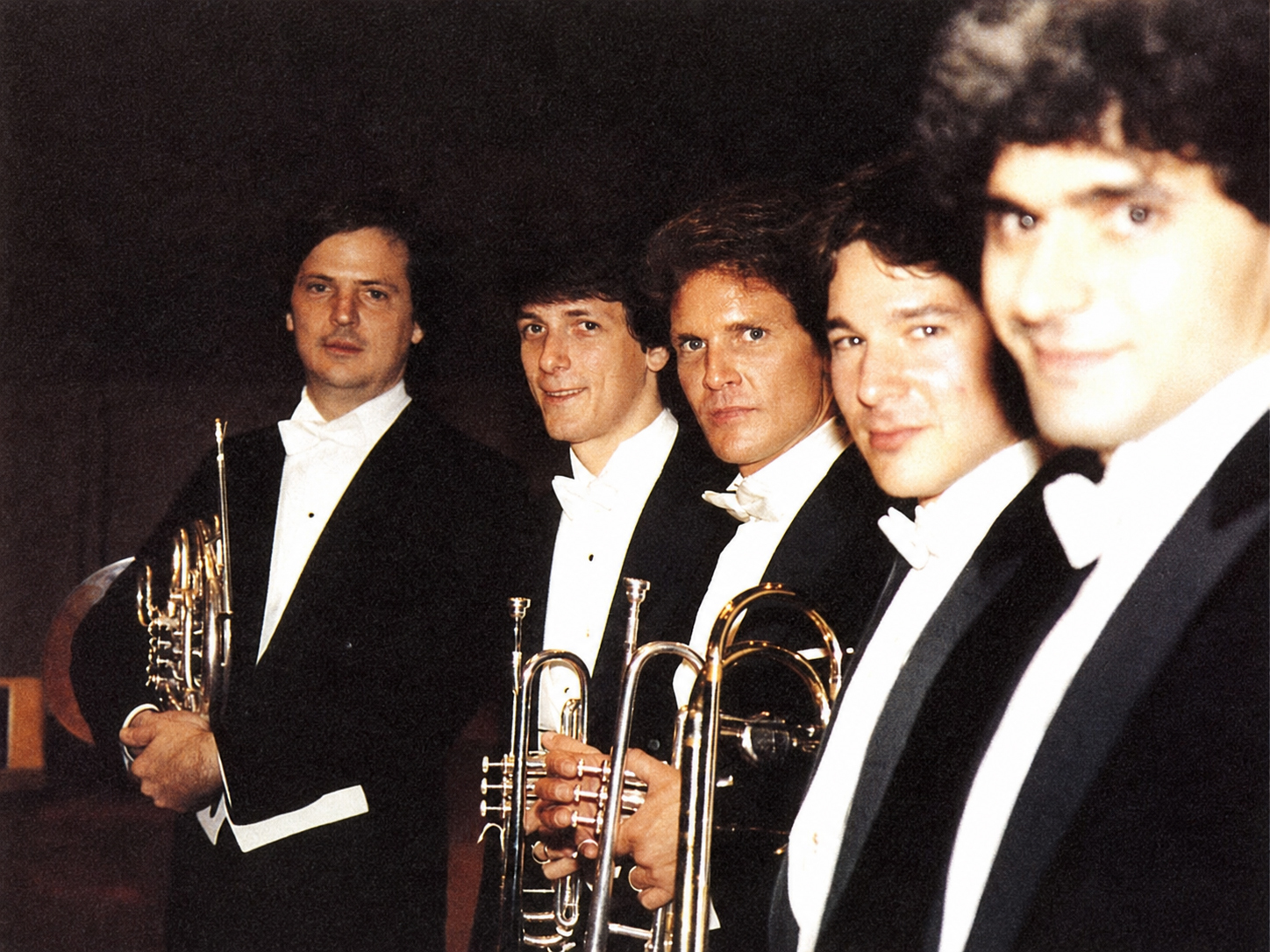
Martin Hackleman, Jeffrey Curnow, Rolf Smedvig, Scott A. Hartman, J. Samuel Pilafian
Tuesday 3rd November 1987, 8.30 pm. Main hall of the Zurich Tonhalle.¹ First of a series of 15 concerts across Europe. Five superb musicians — dashing, and with a commanding presence — walk on to the platform to confront a high-class, big-concert audience.
The Empire Brass Quintet immediately won over its audience, leading it to the source of pleasure, emotion and escape. The works, chosen with taste, led magically to communication, presence, the spirit of the concert. The whole hall soon succumbed to the charm of the grace (control and abandonment to the pleasure of playing) radiating from these five artists. We forget that they are playing trumpet, horn, trombone or tuba, so compact is the sound structure, so vocal the utterance. The audience was not wrong. After two entrancing hours, without interruption and without weak spots, a murmur of gratitude and long, enthusiastic applause greeted the five exceptional musicians.
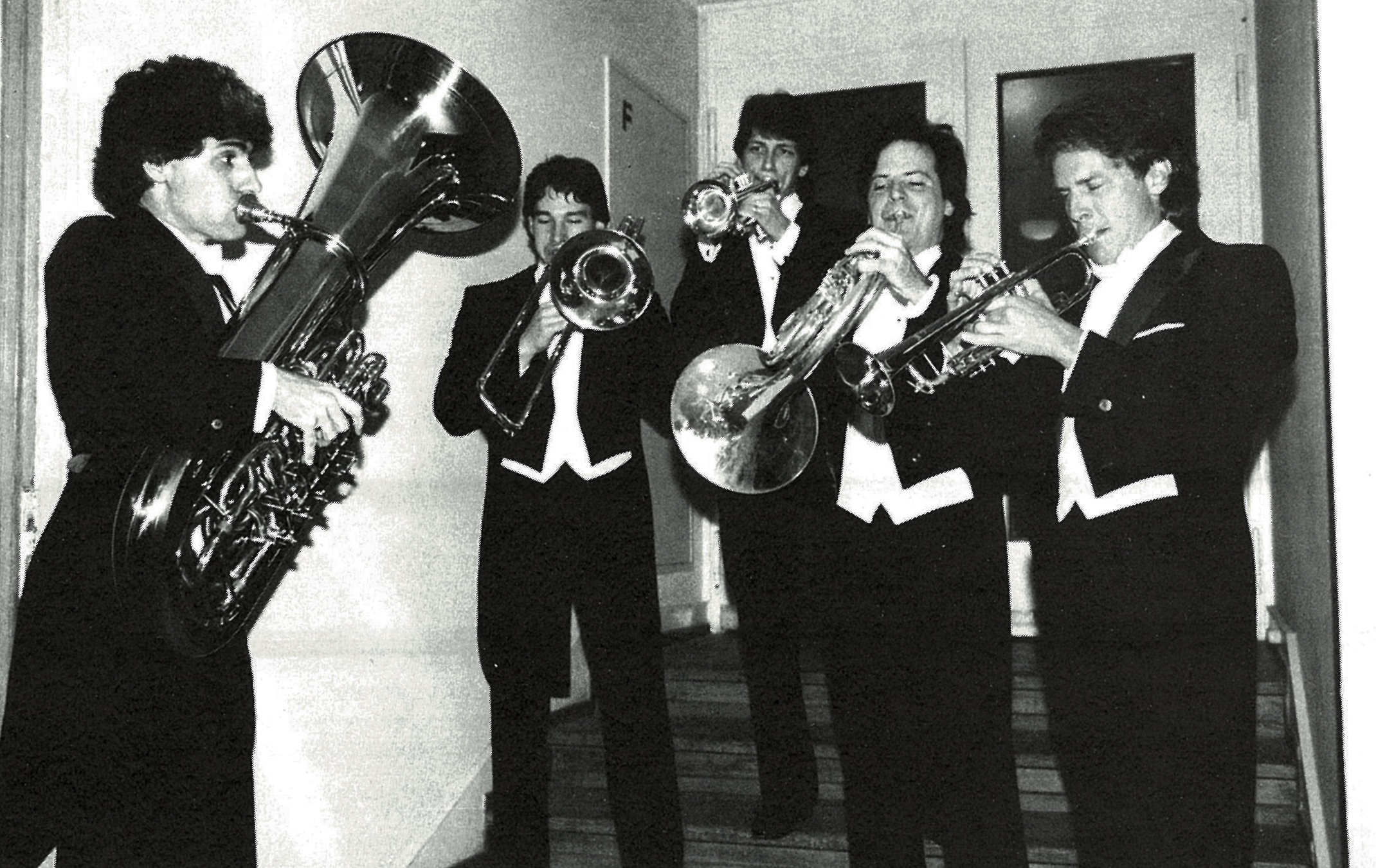
Final tuning before taking the platform
Skill on the platform
The EBQ’s behaviour on the platform is exemplary: sober and efficient, aiming basically to achieve acoustic control and to throw the instrumentation into relief. The five musicians played for two hours standing up, the better to distill for their listeners the multi-dimensional subtleties of the sound picture. One example: in an arrangement of an extract from a cantata by J.S. Bach the horn and the trombone, facing the audience at the very front of the platform, played the grave cantus firmus at a gentle mp (but with enormous “presence”) while the other three musicians, slightly in the background, embellished and set off the polyphonic accompaniment. The group constantly uses this kind of musical “perspective”. It is in order to have this spatial freedom that the quintet plays its programme from memory, so to speak (free of music stands and of fixed places), an accomplishment in itself! But note that this changing of position is well rehearsed and causes no distraction. The attitude of the individual performers on the platform is also “free”, in a perfectly balanced way (striking a balance between rigidity and sprawling relaxation).
It is no exaggeration to say that, on the platform, the members of the EBQ have about them the aura of very great soloists and that they thus contribute to establishing brass music in the public taste.
The history of the Empire Brass Quintet, founded approximately fifteen years ago, is linked with its members’ friendship, ambition, iron will and talent.
A few current figures
- approx. 120 concerts a year
- 25 records¹
- a repertoire of 300 works² (of which about fifty were written specially for them)
- Quintet in residence (teaching) at the University of Boston
- Summer seminars every year in Tanglewood (USA)
¹ Those which have not been deleted are available from Editions Bim, CH-1630 Bulle/Switzerland
² A large collection “Empire Brass Quintet Concert Programme” is in preparation at Editions Bim, CH-1630 Bulle/Switzerland, and is due to appear in 1989.
Who are they?
Rolf Smedvig is a founder member, and the leader, of the EBQ. Born in Seattle (USA), he began as a trumpeter in the symphony orchestra there, before furthering his studies in Boston, where he was for a time solo trumpet at the famous Boston Symphony and Boston Pops. Today, in addition to his quintet activities, he is developing a career as an orchestral conductor and a soloist (about 30 concerts a year). His talent as a trumpeter places him among the very great soloists.
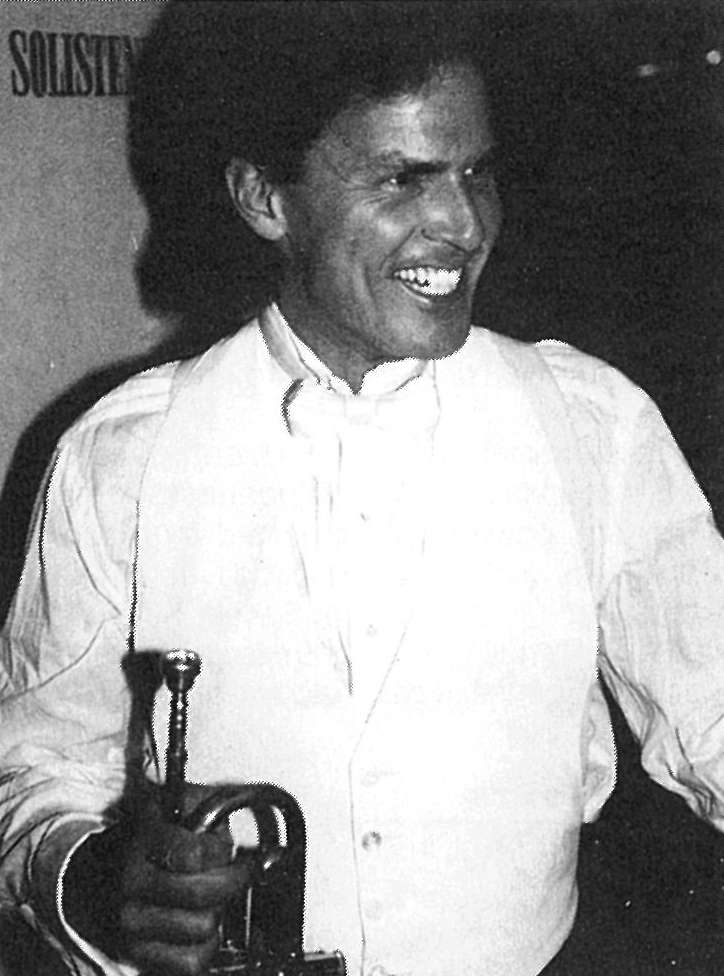
Rolf Smedvig
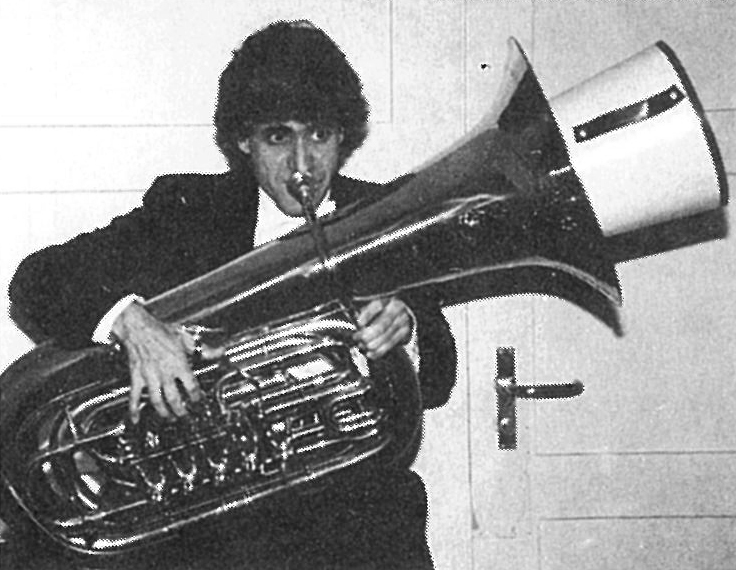
J. Samuel Pilafian
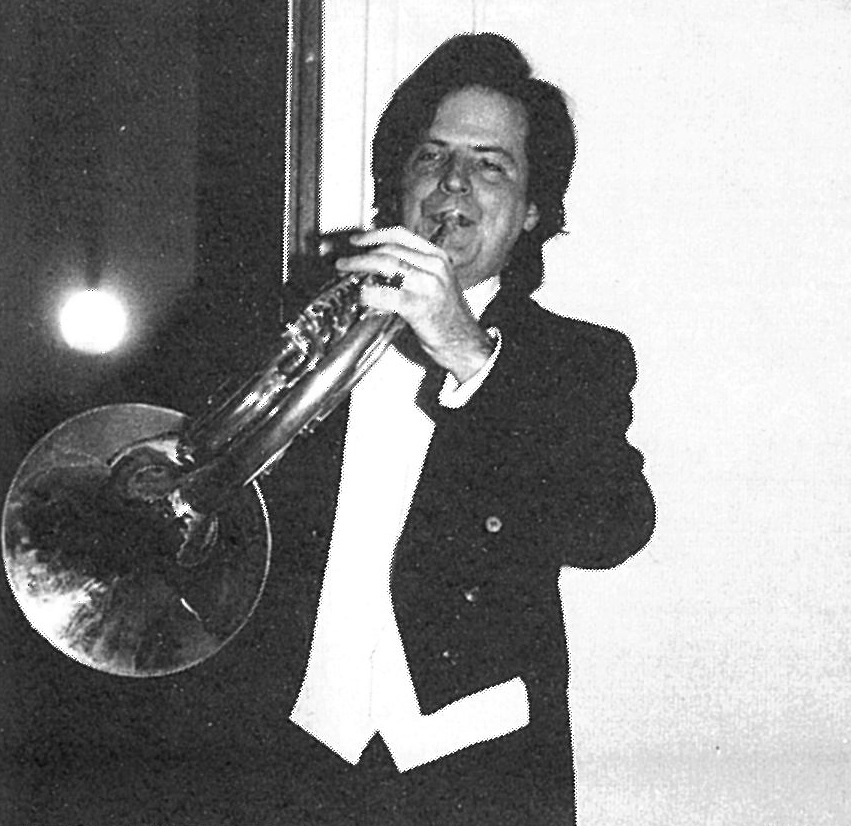
Martin Hackleman
Jeffrey Curnow joined the quintet in August 1987 but, thanks to his enormous technical resources and profound musical instinct, his integration is complete. In any case he works hand-in-glove with Smedvig. A native of Easton, Pennsylvania, he is a pupil of Seymour Rosenblatt (Temple University). He has belonged to the New York Trumpet Ensemble and the Eastern and Wichita Brass Ensembles.
This article is for subscribers.
CHF 5.00 per month · Cancel auto-renewal anytime.
Enjoy unlimited access to all digitized Brass Bulletin articles.
Brass Bulletin 61, I / 1988 pages 30–36
All content is protected by copyright © Brass Bulletin 1988–2026