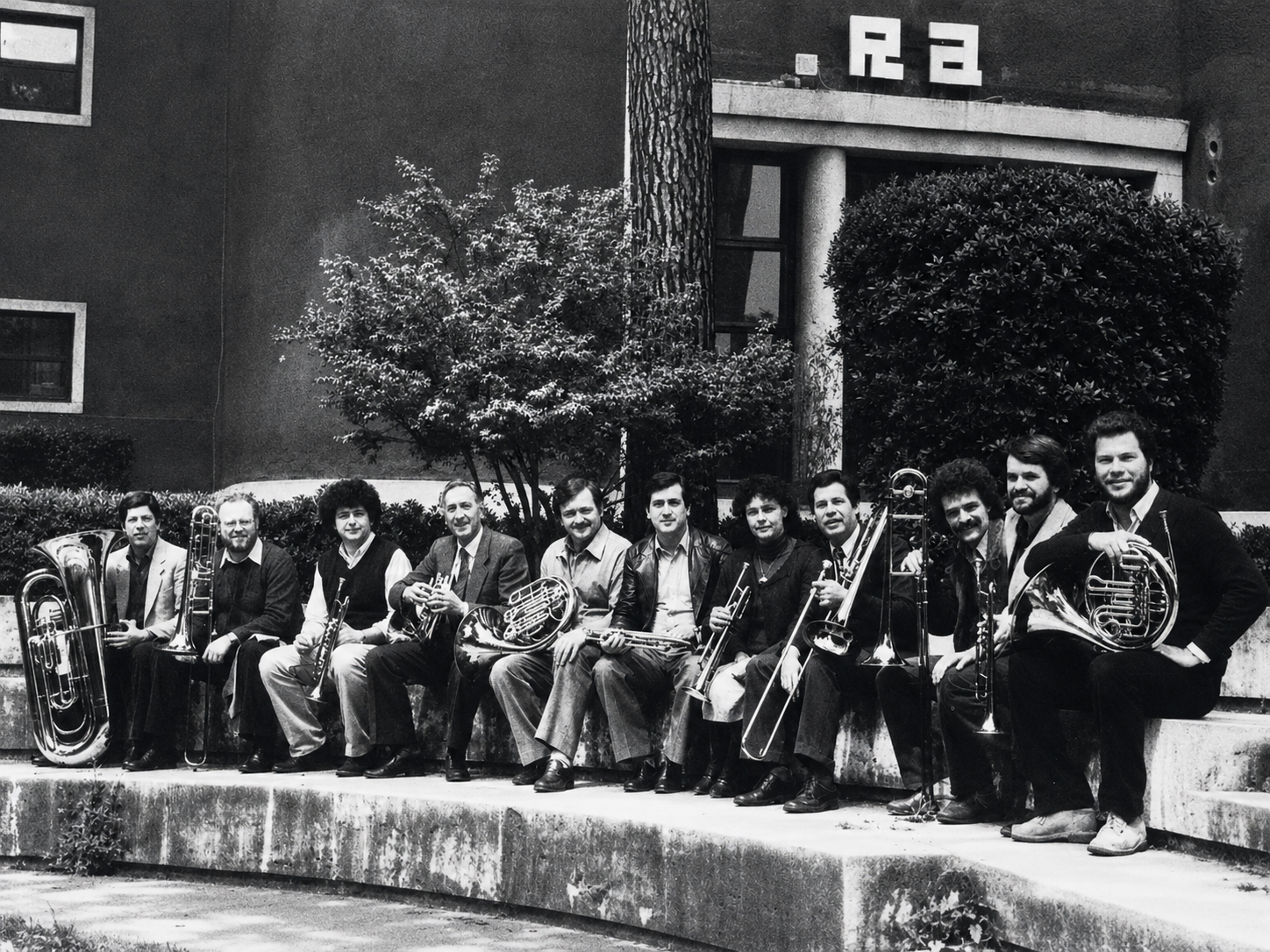
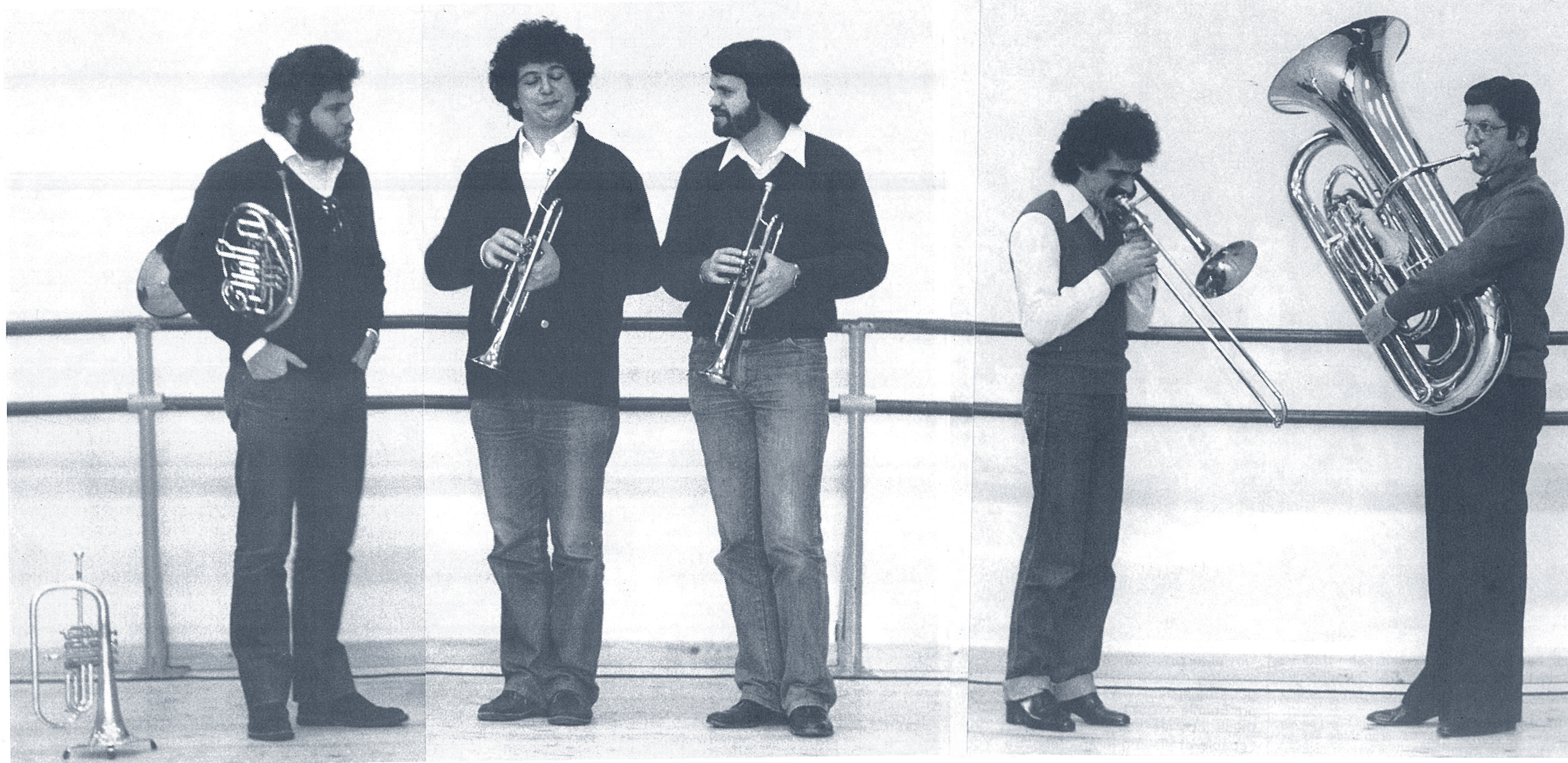
The David Short Brass Quintet. Stefano Aprile, Massimo Bartoletti, David Short, Renzo Brocculi, Carlo Ingrati.
Stefano Aprile: Ten years ago musicians in Italy used to earn about the same as a general. Today they get about the same as a captain. Our purchasing power is dropping more and more. It is impossible to live in Rome on an orchestral salary alone. I myself am in a privileged position: I come from Rome and so I have the advantage of being able to live in the family home. But anyone coming from elsewhere to join the orchestra faces serious financial difficulties. He has to do extra work, give private lessons, teach in a school, do chamber music etc. There isn’t much of the day.
Massimo Bartoletti⁴: I am a typical case too. I play in the orchestra and I teach but it would be impossible for me to live on either one alone. You have to realise that our highest cultural authorities have dreamt up “solutions” which defy common sense and may even prove to be the last straw for all professional musical life in Italy: in order to increase the number of jobs they intend quite simply to ban musicians from holding orchestral and teaching jobs concurrently. We will all end up broke. Our unions are powerless and badly organised. They can’t even obtain basic salary readjustments.
Renzo Brocculi⁵: [with a broad smile] My story is quite simple. I only have to give you my weekly timetable: I work at the RAI orchestra from Tuesday evening to Saturday evening; on Saturday night I go home to Cesena, 350 kilometres from Rome; Sunday is devoted to my family; on Monday I teach at the conservatoire in Pesaro, 70 kilometres from there; I leave Pesaro around midday on Tuesday to be in Rome for the 8 p.m. rehearsal... and start all over again!
What will a musician earn in the RAI Symphony Orchestra in Rome in 1983? (Monthly)
- on recruitment (1st player, principal): approx. 800 000 lire (approx. $ 500.00)
- after 30 years’ service: approx. 1 300 000 lire (approx. $ 840.00)
- 2nd player, sub-principal: approx. 700 000 lire (approx. $ 400.00)
We can see that life is not easy for these musicians, yet they are happy, enthusiastic, and good company. They are still artists and their staple diet is still the music which is in their blood. They all work incredibly hard to keep themselves going. That’s one way to stay healthy! The “incompetent authorities” are lucky to have in their charge musicians for whom music is more important than social tranquillity and wellbeing.
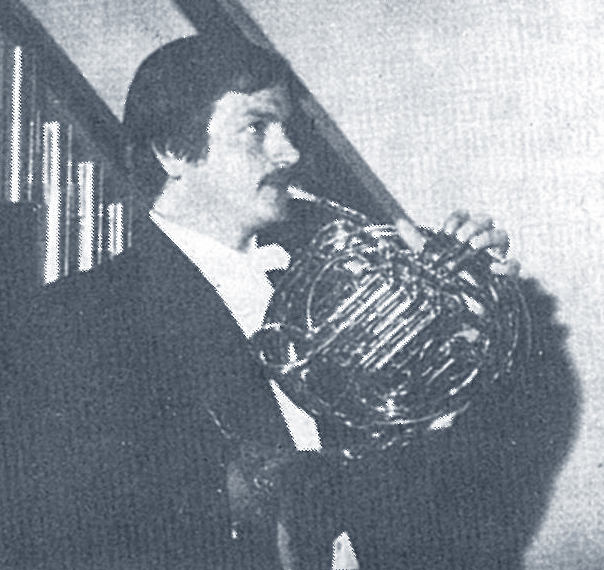
Luciano Giuliani
Luciano Giuliani is such a good horn player it’s just not fair. He has the perfect combination of exceptional technique and real musicality. He was born in Forli in 1945. He received his diploma at the age of eighteen at the G.B. Martini Conservatoire in Bologna. He won many national competitions for solo horn jobs: La Scala in Milan, Rome Opera Theatre. He is currently solo horn at the RAI Symphony Orchestra and teaches at the Santa Cecilia Conservatoire in Rome.
New Polyphonic Trumpet Ensemble
This new trumpet ensemble is made up entirely of promising young Italian trumpet players who have studied with maestro Sandro Verzari, the group’s director, who is also 1st trumpet with the Rome Symphony Orchestra (RAI).
Their common musical background provides the ensemble with an impressively homogeneous sound, essential to any group of this type. By offering programs that include music from the 16th to the 19th centuries, the New Polyphonic Trumpet Ensemble hopes to change the all too common misconception of the trumpet as an essentially military rather than musical instrument.
Having been received enthusiastically by audiences and the press in various regions of Italy, this group is presently preparing its first commercial recording which should be available by the end of the year.
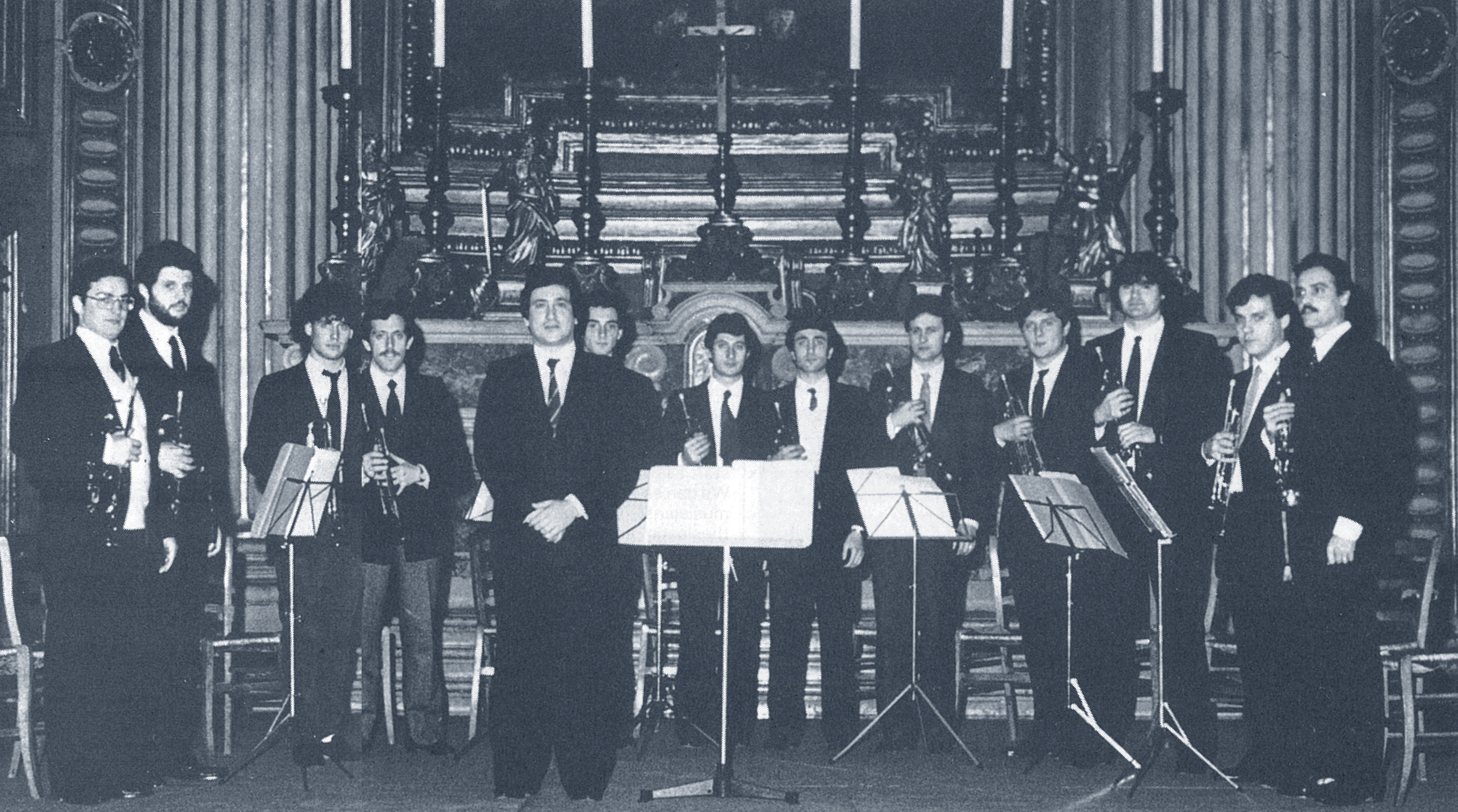
The New Polyphonic Trumpet Ensemble — Rome. Mauro Marcaccio, Patrizio Felici, Guido Pezzotti, Mario Colombi, Sandro Chicarella, Giuseppe Mascali, Roberto Pietrolini, Loreto Cardarelli, Giovanni de Cillis, Gianluca Impei, Marco Boncompagni, Carlo A. Campana. Direttore: Sandro Verzari.
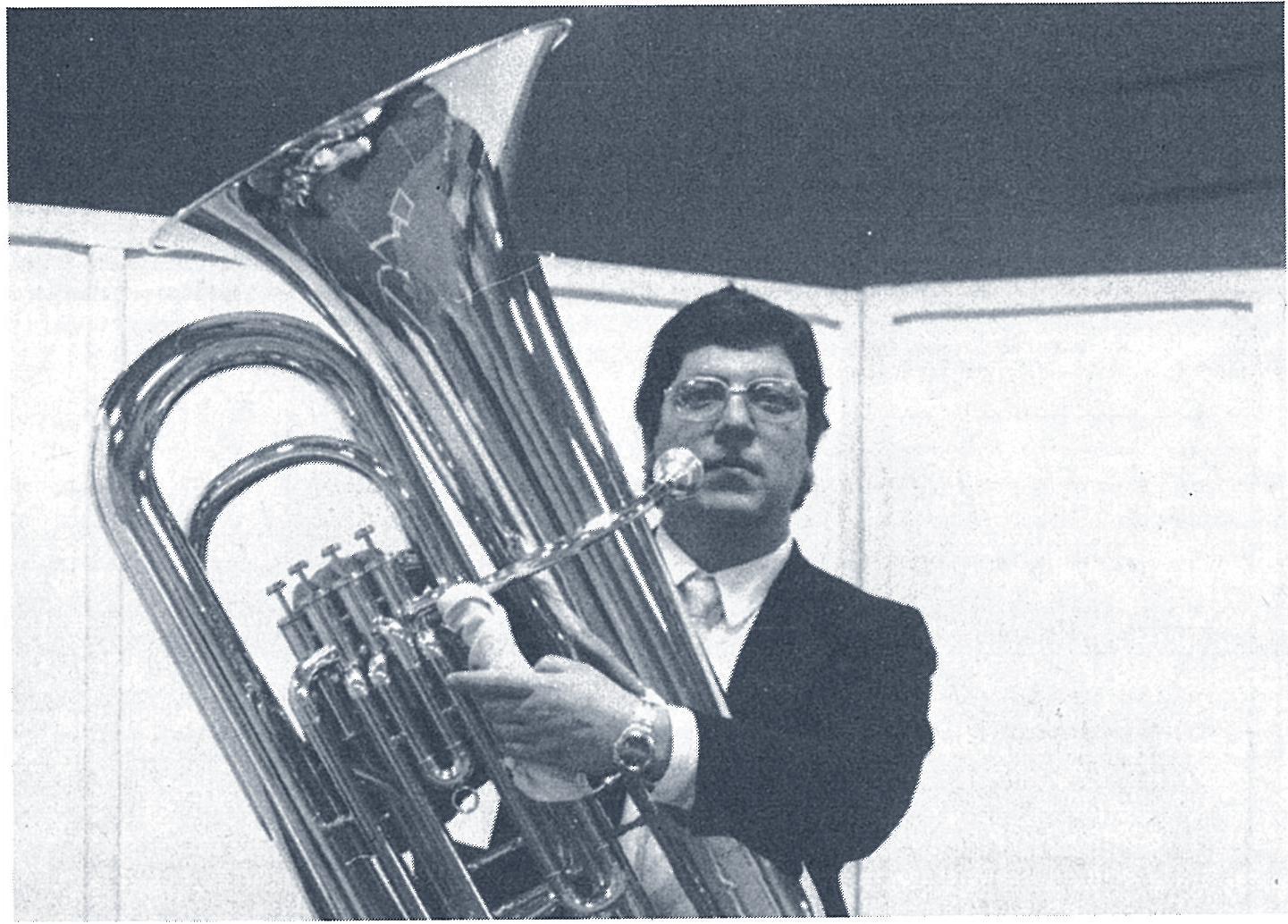
Carlo Ingrati
Carlo Ingrati was born in Falciano in 1947 and studied with Professor R. Citro. He is a member of the RAI orchestra in Rome and of the David Short Brass Quintet. He is in great demand in the City’s recording studios.