Brass Bulletin is now also available in Italian and Spanish.

1 min. read

Special Hungary

Barcs 1984

First International Brass Ensemble Competition

Barcs 1984

It takes great determination to gather musicians from every country together for a seminar and international brass ensemble competition in a small isolated Hungarian town near the Yugoslav border.

Vendel Bauer, director of the Barcs music school, is the founder and organiser of this first meeting.

It was a success, appreciated by all the participants and recognised by the highest Hungarian musical authorities (who sent a large delegation) and by the town of Barcs, which gave great administrative and financial help.

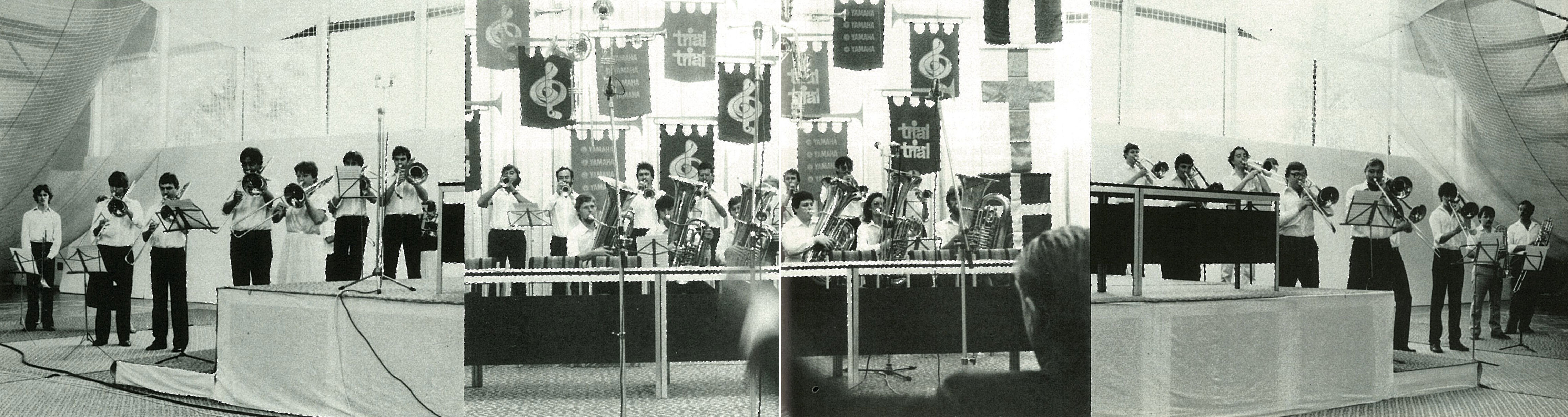
Twenty-four ensembles from eighteen countries appeared on the stage of a brand-new sports hall transformed for the occasion into a concert hall.

Barcs, a young town and until recently a simple farming village, had put on its Sunday best to greet its guests. Enthusiasm and friendliness overcame those few problems we encountered (the hotel system still has teething troubles). The excellent food and (remarkable!) local wines contributed greatly to making our stay enjoyable.

The superiority of the host country’s ensembles was clear (and logical — Hungary is systematically developing brass chamber music). It is a pity that the jury did not give places in the final round to the amazing Moscow Conservatoire quintet, coached by Leonid Chumov, or to the Gabrieli Quintet from Karlsruhe (run by the Friedrich brothers) whose musical and refined playing was quite out of the ordinary.

The final result (see box) is not, however, the most important element of these musical tournaments. The standard of all participants made clear how much the younger generation of brass musicians is accomplishing. After the competition was over one realised that brass players have gone a long way towards a mastery of chamber music such as has existed among strings players, for example, for a long time.

By developing an interesting repertoire, by establishing fruitful contacts with composers and, above all, by performing ever more sensitive and discriminating chamber music, brass players will discover an enormous cultural outlet — and a not inconsiderable source of profit. Well done, Barcs, for this pioneer work¹ — we’ll meet again in 1986 (1-14 August, with, a.o. Philip Jones) for the second edition!

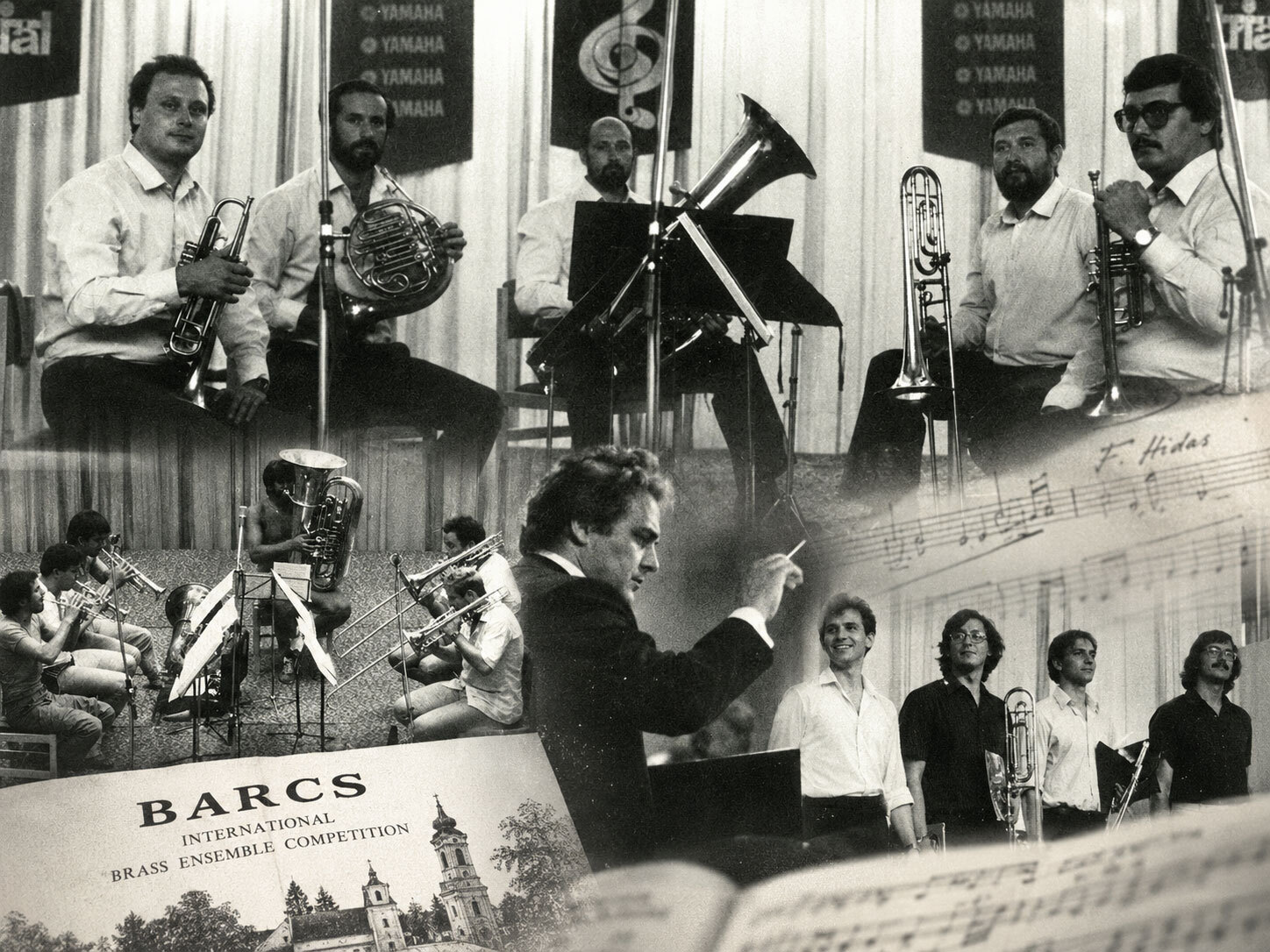
Frigyes Varasdy conducting the overture fanfare specially written by the Hungarian composer Frigyes Hidas.

Frigyes Varasdy conducting the overture fanfare specially written by the Hungarian composer Frigyes Hidas.

Competition results

1st prize:
Brass Quintet of the Budapest Opera Orchestra
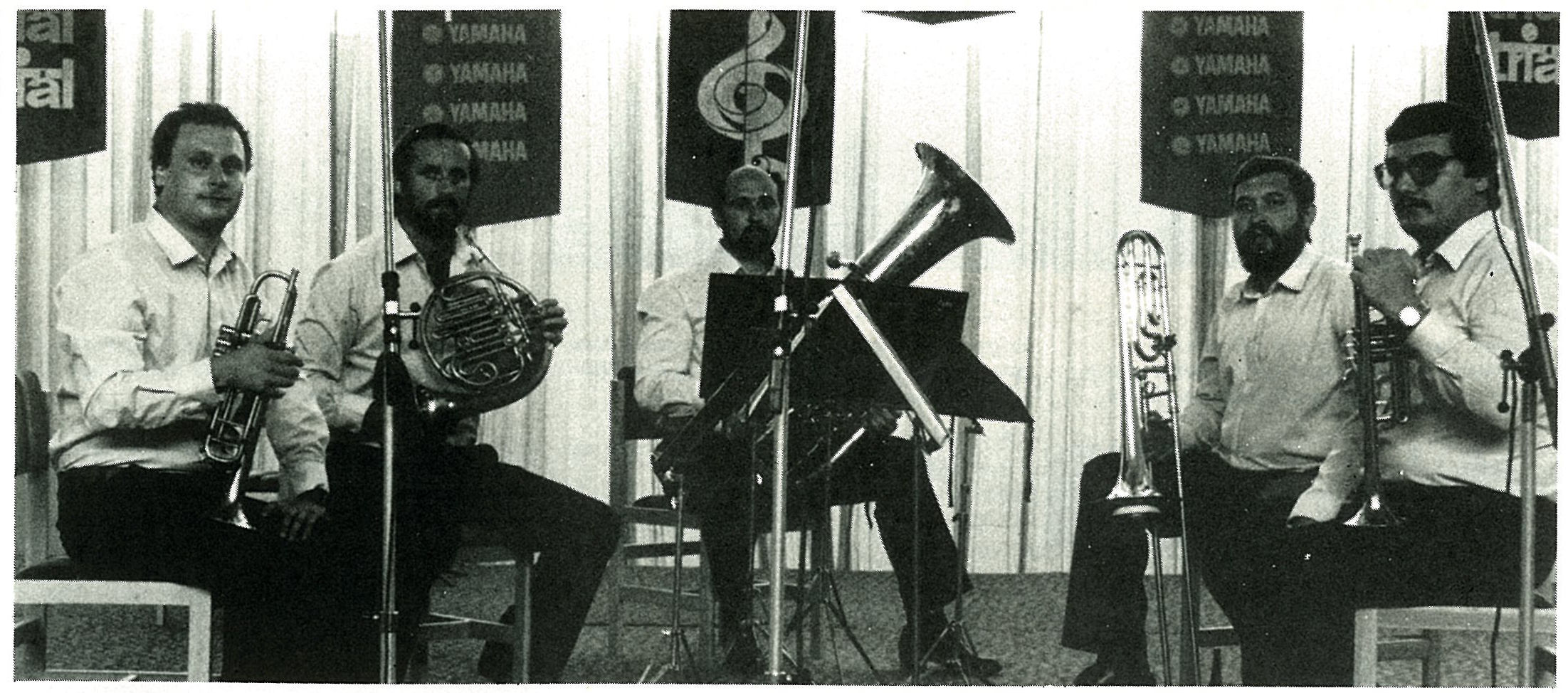
1st prize in Barcs: Budapest Opera Brass Quintet. Unquestionable mastery and impressive power.

1st prize in Barcs: Budapest Opera Brass Quintet. Unquestionable mastery and impressive power.

2nd prize:
Horn Quartet of the Budapest Music Academy
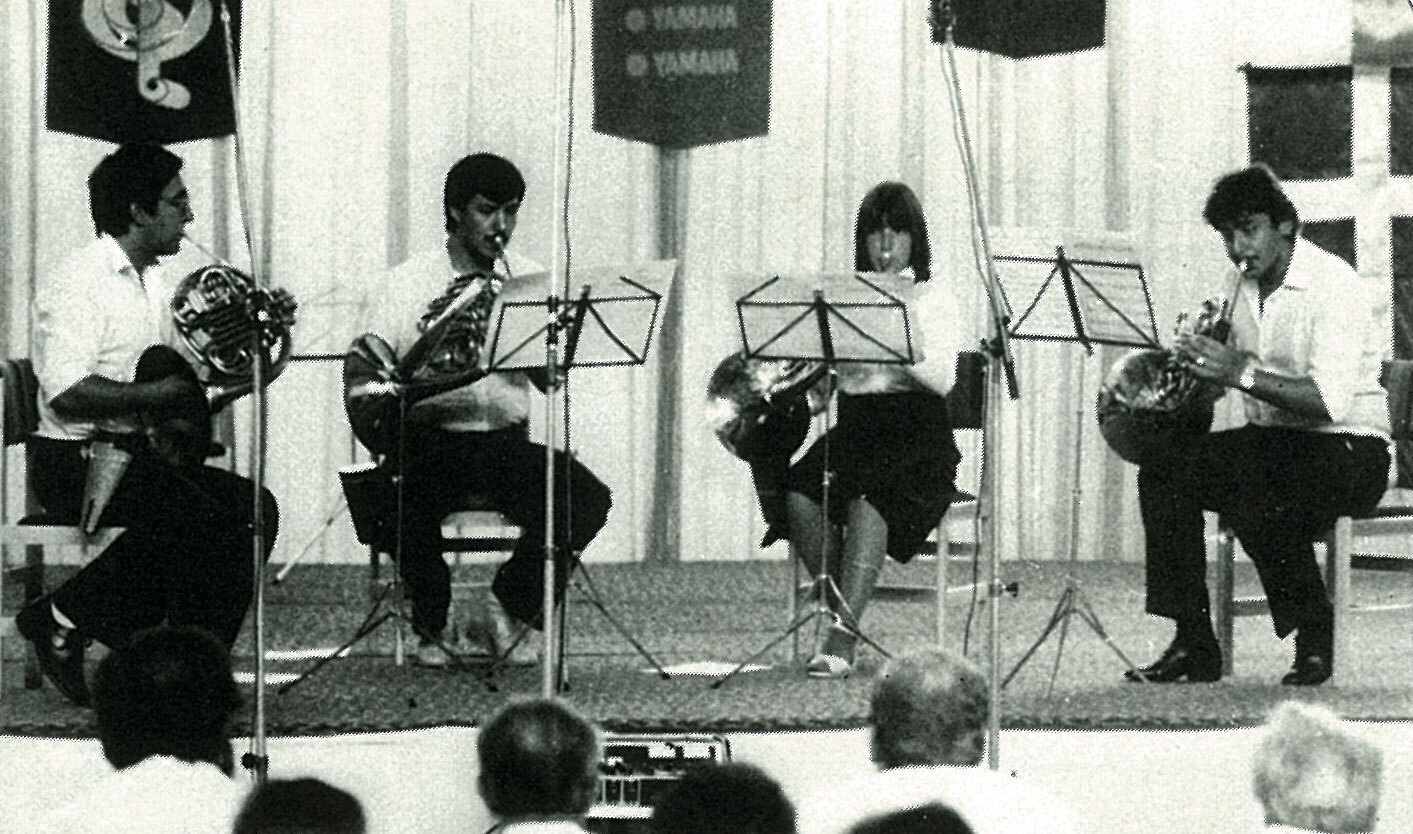
Hornquartet of the Budapest Music Academy — 2nd Prize.Tamas Csurgo, Laszlo Kreka, Eniko Fojto, Zoltan Varga.

Hornquartet of the Budapest Music Academy — 2nd Prize.
Tamas Csurgo, Laszlo Kreka, Eniko Fojto, Zoltan Varga.

3rd prize:
Brass Sextet of the Budapest Music Academy
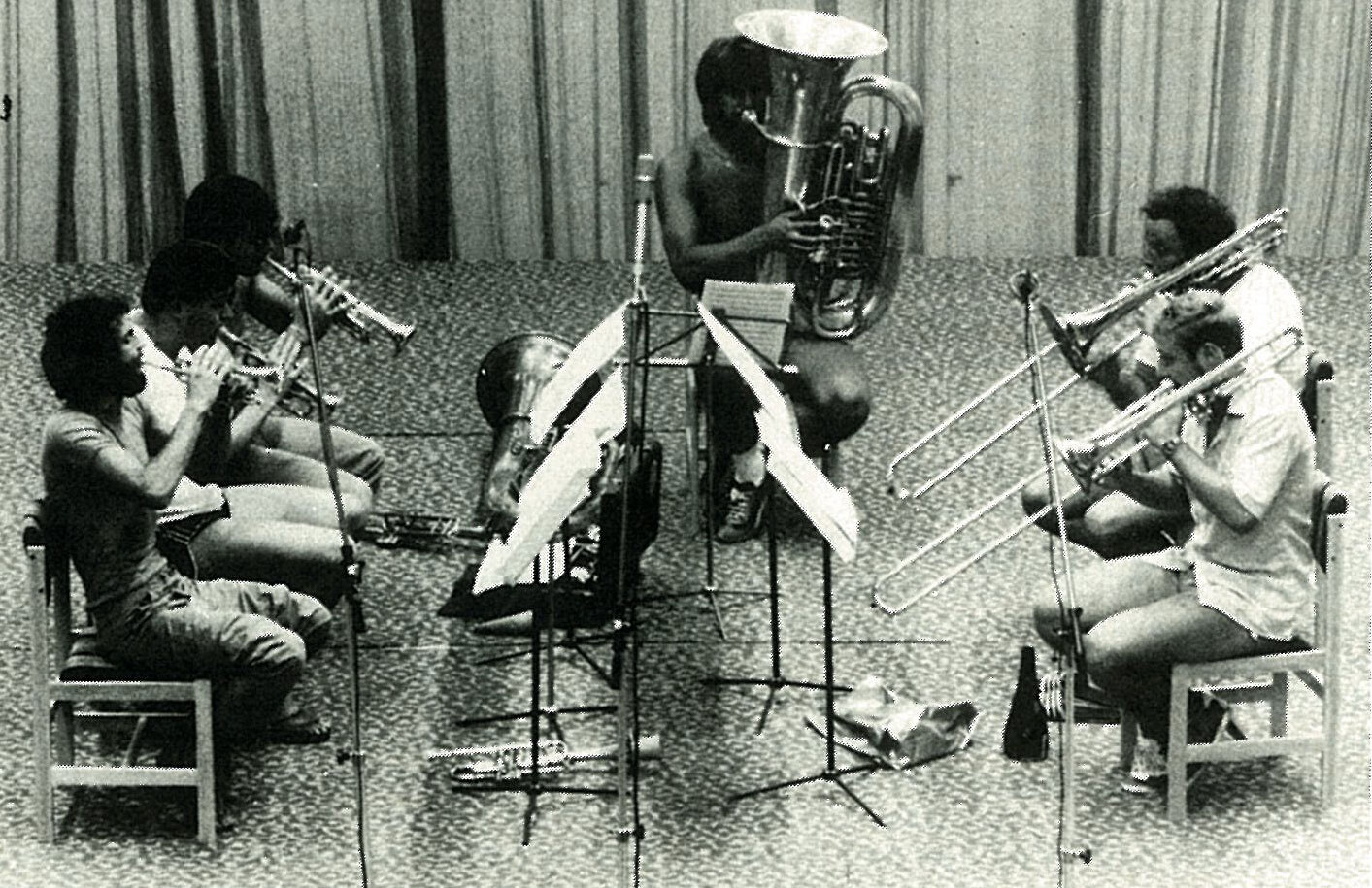
Brass Sextet of the Budapest Music Academy — 3rd Prize.Istvan Ujvari, Tibor Kiraly, Zoltan Bauer, Zoltan Horvath, Istvan...

Brass Sextet of the Budapest Music Academy — 3rd Prize.
Istvan Ujvari, Tibor Kiraly, Zoltan Bauer, Zoltan Horvath, Istvan Venekei, Ferenc Koczias.

Brass Ensemble Seminar

The seminar has two different forms: the national seminar (which takes place every year) for Hungarian ensembles, and the international seminar (to take place every second year). Distinguished teachers are present at both. The study time is interspersed with concerts. This year we heard the Leipzig Horn Quartet, the Guy Touvron Brass Quintet (dazzling), the Budapest Modern Brass Ensemble, the Vienna Horn Society Ensemble and the Budapest Brass Quintet (incredible virtuosity).
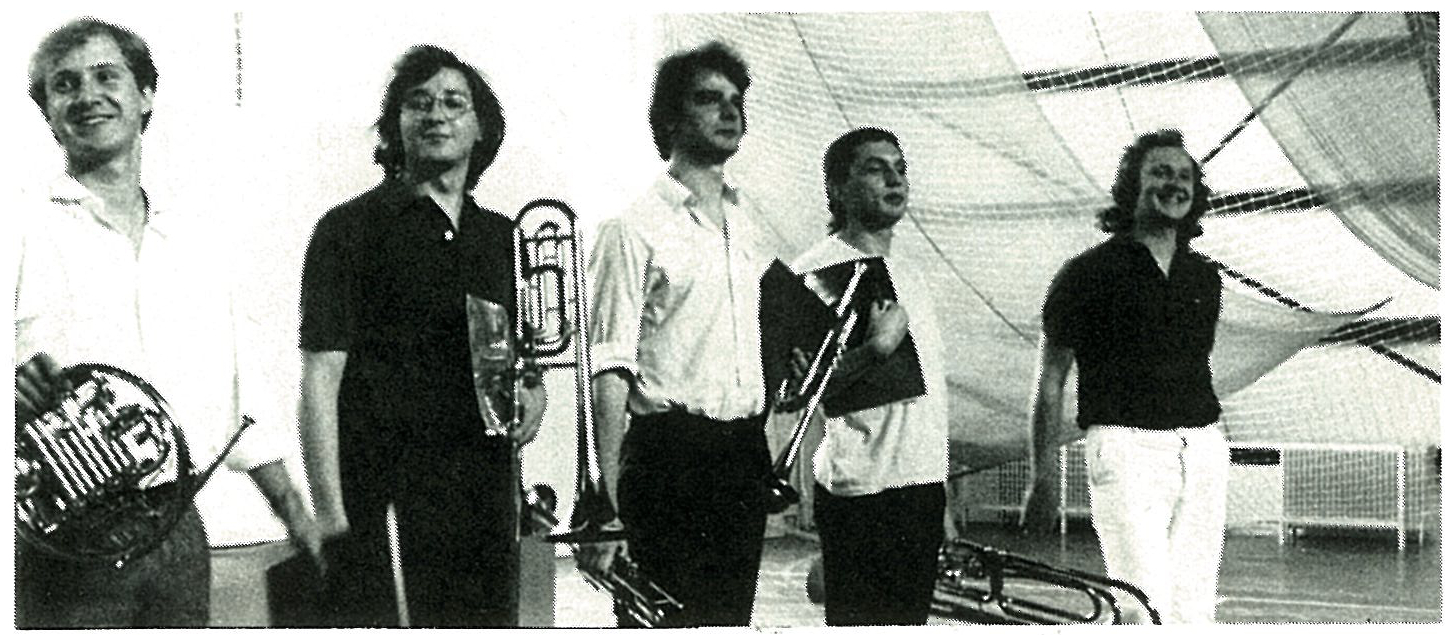
Karlsruhe Gabrieli Quintet. We will have more to say about them! Rare and subtle musical refinement.
Karlsruhe Gabrieli Quintet. We will have more to say about them! Rare and subtle musical refinement.

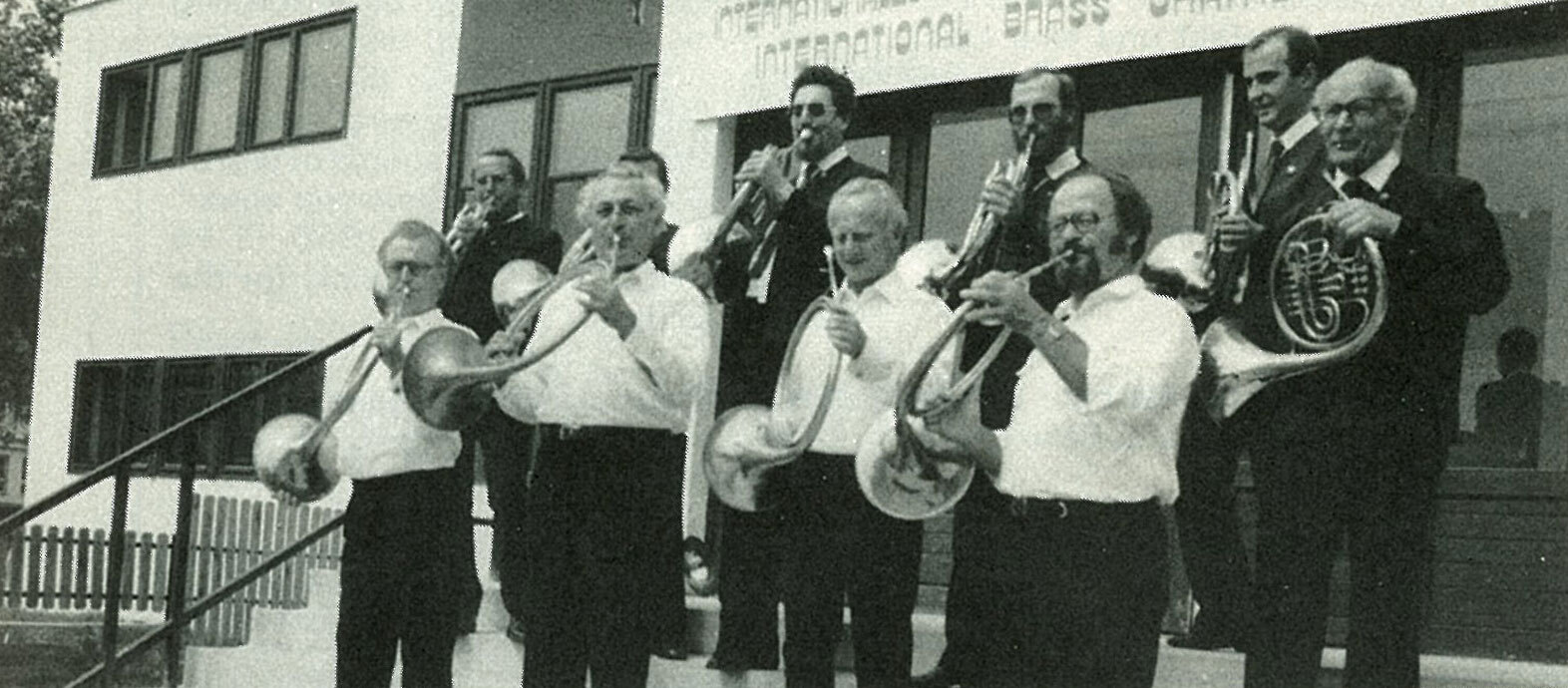
Leipzig Horn Quartet + Wiener Waldhornverein.
Leipzig Horn Quartet + Wiener Waldhornverein.

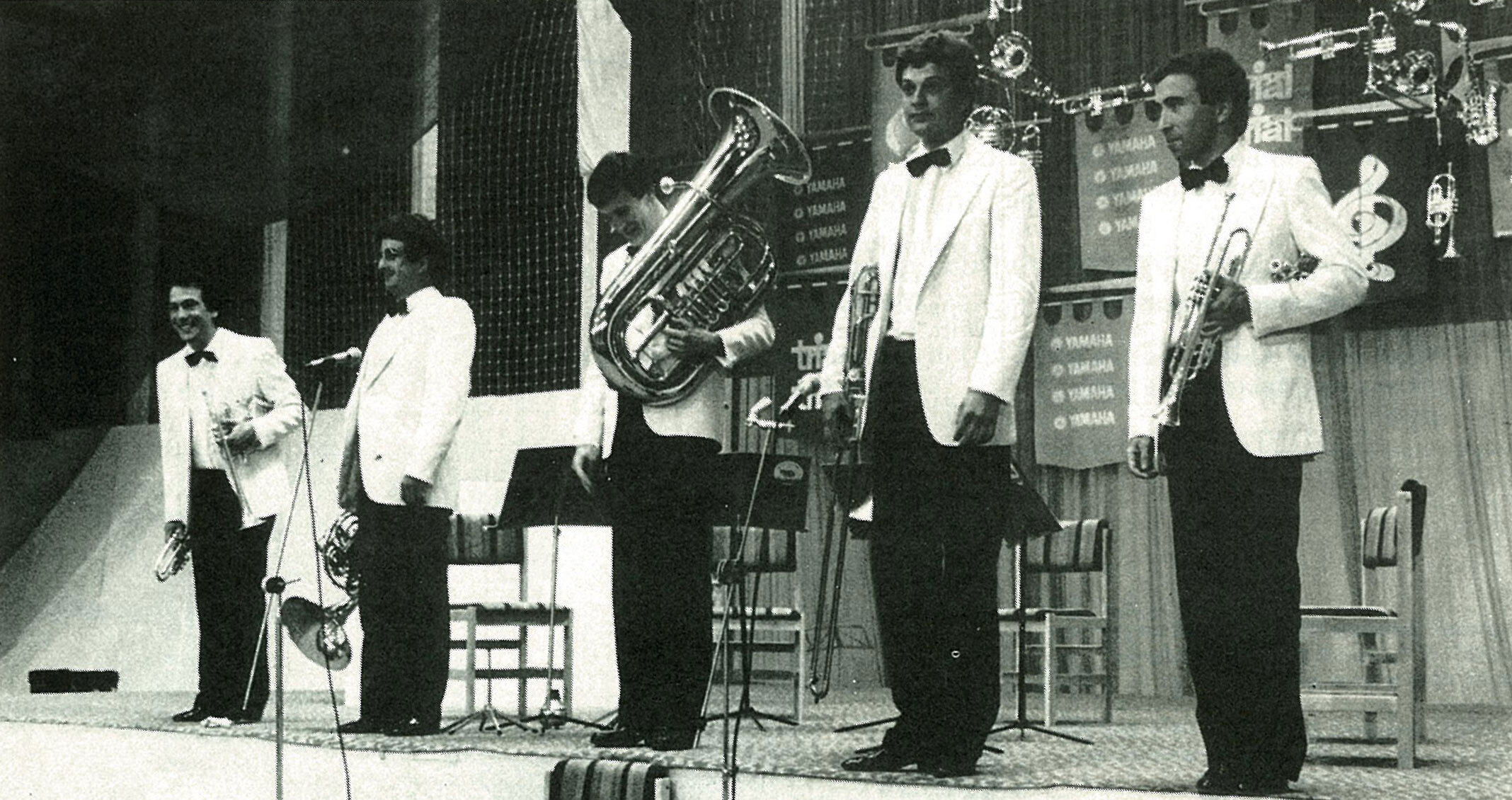
Triumph for the Guy Touvron Brass Quintet.
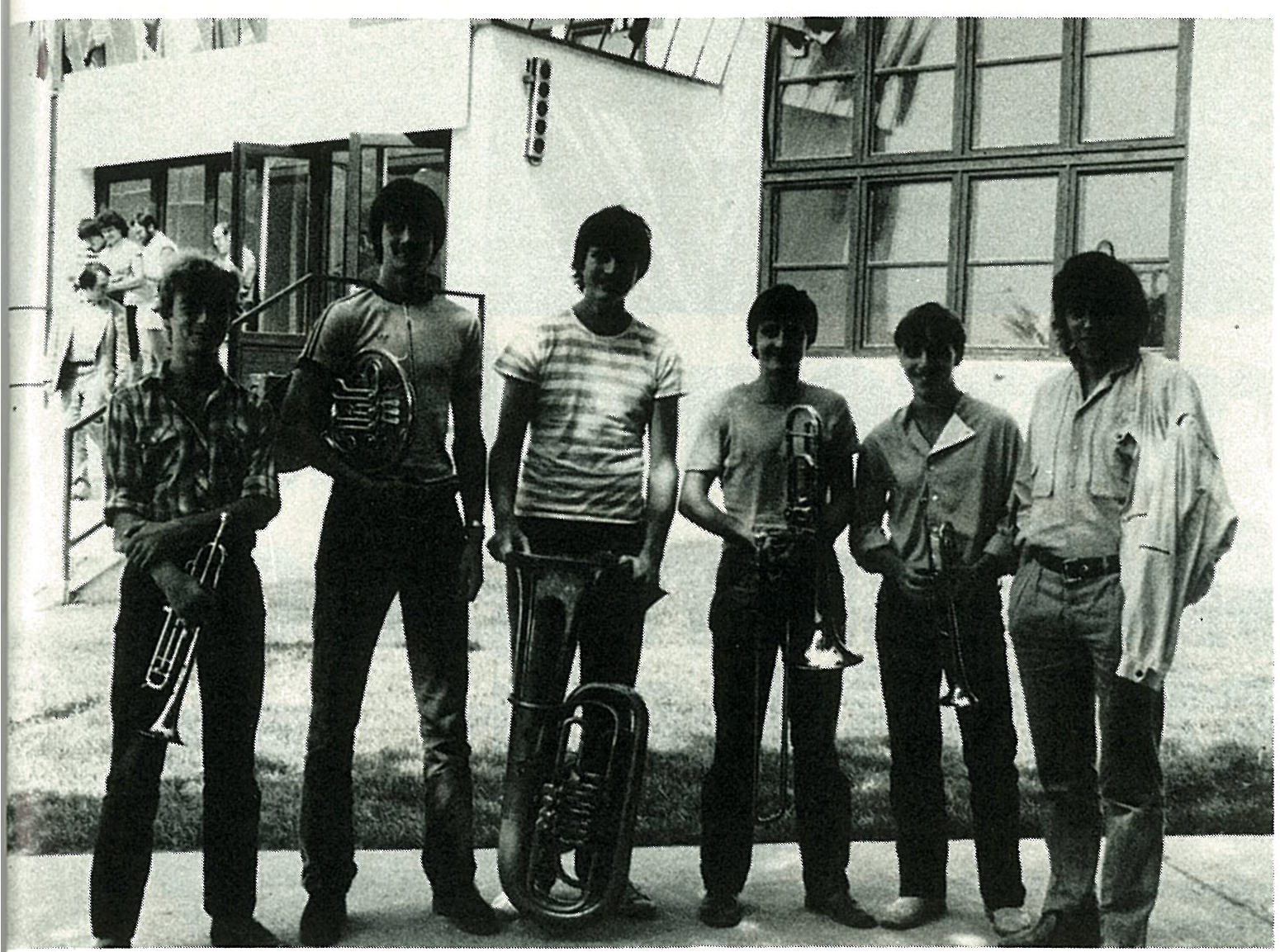
Triumph for the Guy Touvron Brass Quintet.

Chamber music is superbly organised in Hungary. This is the Budapest Brass Quintet III (with Istvan Farkas, trombonist i...

Chamber music is superbly organised in Hungary. This is the Budapest Brass Quintet III (with Istvan Farkas, trombonist in the Budapest Brass Quintet, their teacher) which made a great impression in Barcs.
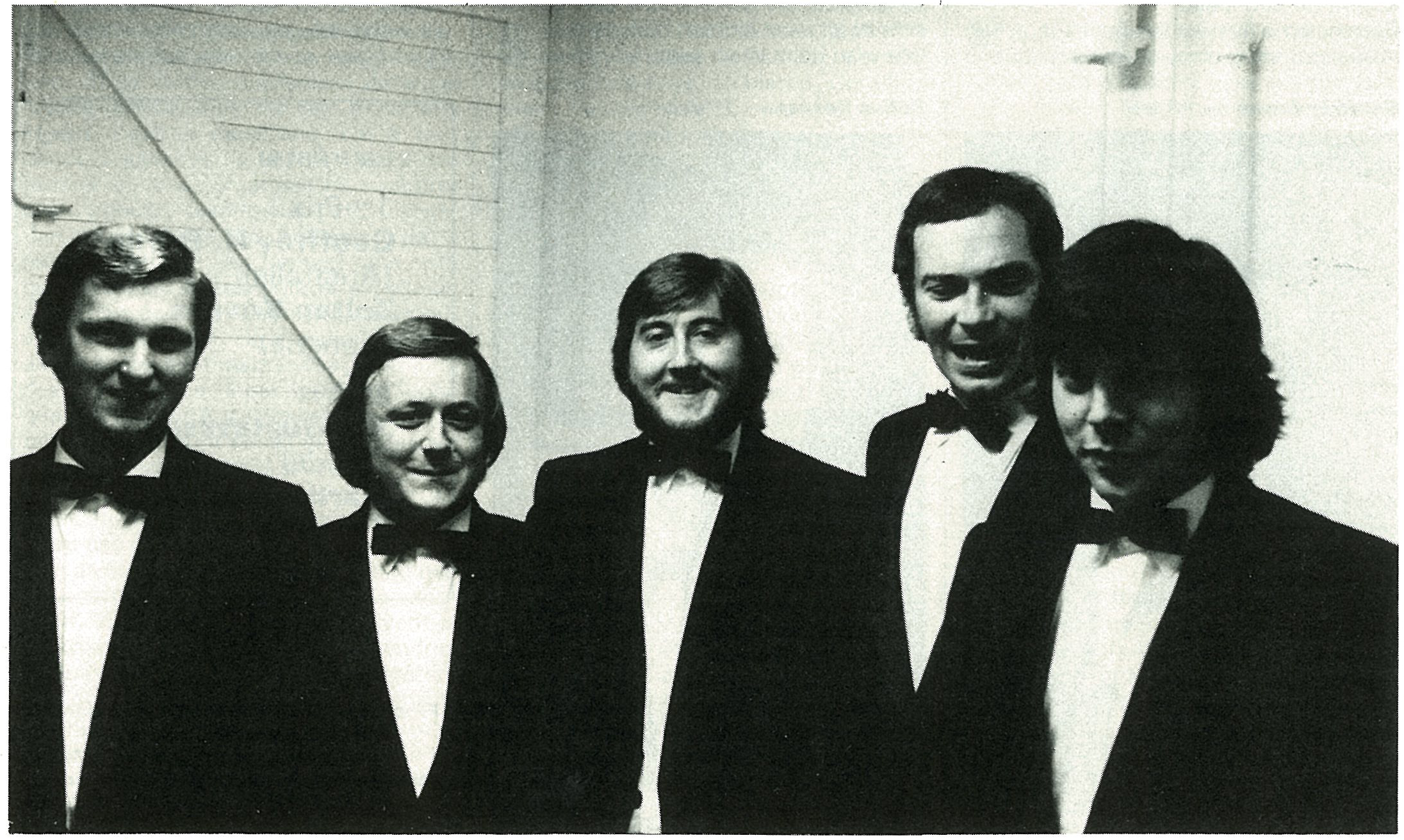
The Budapest Brass Quintet, winners of the International “Maurice André” Competition in Paris in 1979. Now that they are...

The Budapest Brass Quintet, winners of the International “Maurice André” Competition in Paris in 1979. Now that they are famous they are handing on their experience to others. This photograph shows them after their gala concert in Barcs, where their virtuosity took the audience’s breath away!

¹ A Paris, en 1979, Maurice André avait lui aussi lancé un concours d’ensembles parallèle à celui de la trompette lors du Concours international qui porta son nom. C’était une première au niveau professionnel. Ce fut d’ailleurs de Quintette «Renaissance», aujourd’hui très connu sous le nom de «Quintette de cuivres de Budapest», qui obtint le Premier prix.

Brass Bulletin 48, IV / 1984 pages 24–29

All content is protected by copyright © Brass Bulletin 1984–2026

Share this article

Facebook LinkedIn
Loading…

Questions & Answers

How the Digital Edition works

What does the Digital Edition include?

The Digital Edition brings together the articles already digitized as searchable online texts—not simply as scans or PDF files—along with their original illustrations, notes, authorship, issue information, and available translations. Related-article suggestions currently include only this digitized material.

Are the digital articles identical to the originals?

We preserve the original text, language, illustrations, captions, footnotes, and editorial context as faithfully as possible. The presentation is adapted for comfortable online reading, and obvious transcription or scanning errors may be corrected. The substance and character of the published article remain unchanged.

Which languages are available?

Brass Bulletin was published in English, French, and German throughout its history. Italian and Spanish translations were added from issue No. 60 onward.

On the Italian and Spanish sites, articles from issues 1–59 are therefore shown in English by default.

How often are new articles added?

New articles are added almost daily, with approximately one complete issue digitized each week. The pace may vary depending on the preparation, image work, and editorial checking required.

Why aren’t all articles available digitally?

The complete Brass Bulletin collection contains 1,246 articles published between 1971 and 2003. The full index is already available online, allowing readers to discover every article in the collection, including those whose complete text has not yet been digitized.

Digitization began in February 2026. Each article is carefully prepared for online reading, checked, and connected to its issue, authors, subjects, and illustrations. At the current pace of digitization, the complete collection is expected to be available online by February 2028.

Why do some references mention articles that are not available yet?

References in the original articles are preserved even when the material they point to has not yet been digitized. This keeps the historical and editorial record intact. As more issues are added to the Digital Edition, an increasing number of these references will lead to articles that can be read online.

Can I suggest an article or report a transcription error?

Yes. If there is an article you would particularly like to see digitized, or if you notice a possible transcription error or missing detail, please contact us. Reader feedback helps us improve the Digital Edition and prioritize useful connections within the archive.

How can I support Brass Bulletin?

Your support helps fund the preparation, verification, and online publication of the complete collection.

Subscribe to the Digital Edition

Prefer to support us without subscribing?

Make a donation

Search Brass Bulletin.