10 min. read
This article is for subscribers.
Part 3
How and why I became a musician
By Edouard Gros
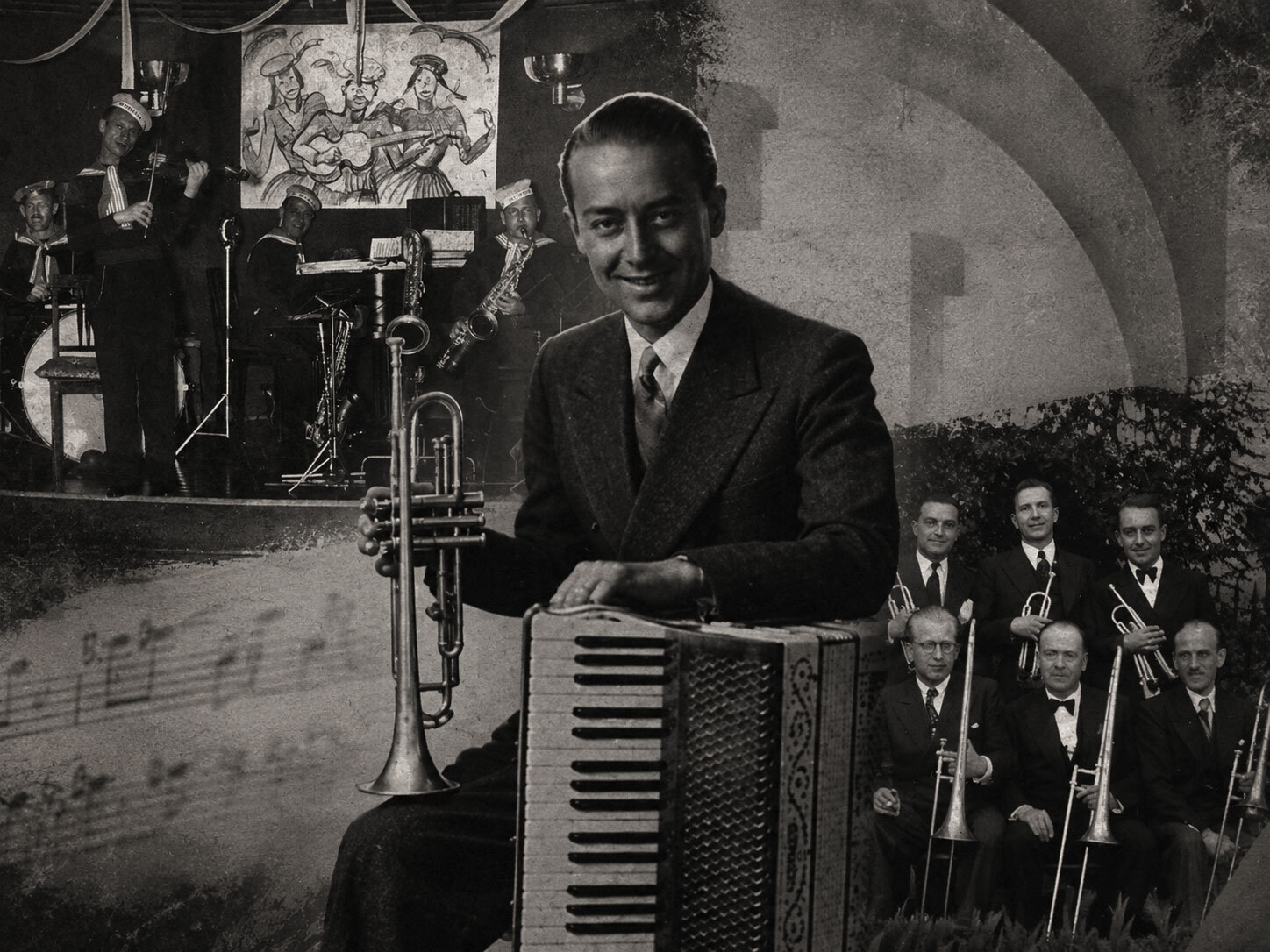
Edouard Gros
Edouard Gros has not only been an exceptional tuba player. Since issue no. 50 of BRASS BULLETIN he has also been displaying his talent as a storyteller. In his rich and colourful style he tells us not only about his memories but also about the life of a musician in the first half of this century, an account which is of more than purely musicological interest.
Yes, “Getting by” is the name for it. The life of a cinema, restaurant or hotel musician was going to become more and more uncertain. The year was 1930 and I was twenty. Strangely enough, it was as I finished my basic training in the army that I really noticed the enormous changes which were about to upset the profession. In the canteen, every mealtime, powerful loudspeakers deafened us with the latest fashionable tunes from the successful films of the day. Two or three times a day we were bombarded with extracts from “Two Hearts in Three-Four” and with “We’ll gather lilac in the spring again”. These tunes were from films with sound tracks, which were showing in cinemas which had just got rid of their orchestras. That reminded me of a certain recent meeting of the union I have already mentioned, a meeting in the course of which a cinema orchestra conductor attracted the ridicule, sarcasm and catcalls of the musicians present by claiming that we would have to defend our own interests, that not one cinema in America still employed an orchestra and that, mark my words, films with music would soon become talking films. The session ended in utter confusion with everyone convinced that only a madman could have thought up such nonsense. Remember that Lindbergh had only just crossed the Atlantic, there was little or no radio and no television so that, as a result, not everyone knew what was going on in America. Unfortunately the musician in question was called Mitninsky and was probably Russian; some of his fellow musicians regarded him as a revolutionary, happy to spread alarm and despondency among the ranks of honest unionised musicians.
It was therefore thanks to, or because of these army canteen hits that I suddenly became aware of the truth of this perspicacious fellow’s predictions and warnings — his only mistake being to believe that the intervention of some union or other could stop the whirlwind evolution of technology.
Furthermore, during the few leaves we got from this basic training camp a group of us would sometimes go to Zurich, to a place where there was music, and there, to my consternation, I could see that it was no longer enough to be a good musician but that, to survive and adapt to the audience’s new taste, you also had to entertain them, amuse them, put on shows — in other words, to be mime, singer and clown as well.
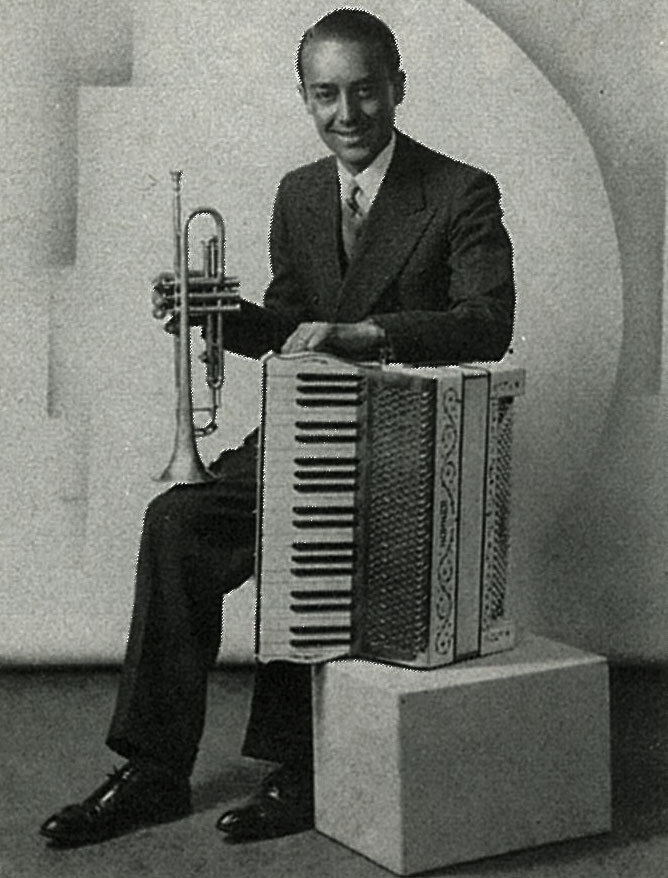
Edouard Gros
Since all the symphony orchestras were penniless, and so offering only the most limited opportunities, the cinema had no orchestras, I had no talent as an “entertainer” and felt little inclination to teach, should I, for Heaven’s sake, decide that Dad was right and have a look at the civil service?
Scarcely had I been let out of this camp, where we seemed to have learned nothing but how to defend our inestimable neutrality, than chance came to my aid in my moment of indecision. By sheer luck I met a conductor who was having great success at the luxury hotels in St. Moritz where the last representatives of the great international nobility were squandering what remained of their sometimes enormous fortunes. This conductor was especially good in jazz and knew how to get good people around him. He asked me point-blank how I was getting on in the music business and was surprised that I was spending so much time on the bass, this instrument that no-one wanted any more to do with and that, in his view, was of no use except in tangos!
"What you absolutely have to learn”, he told me, “if you really want to earn your living in this business, and earn it well, is the trumpet.”
It is true that the good jazz players were coming back from the hotels in St. Moritz and Gstaad with a fortune in their pockets and that the trumpet players were in the greatest demand. This idea of his stuck in my mind and was to be very useful to me later.
This article is for subscribers.
CHF 5.00 per month · Cancel auto-renewal anytime.
Enjoy unlimited access to all digitized Brass Bulletin articles.
Brass Bulletin 52, IV / 1985 pages 39–46
All content is protected by copyright © Brass Bulletin 1985–2026