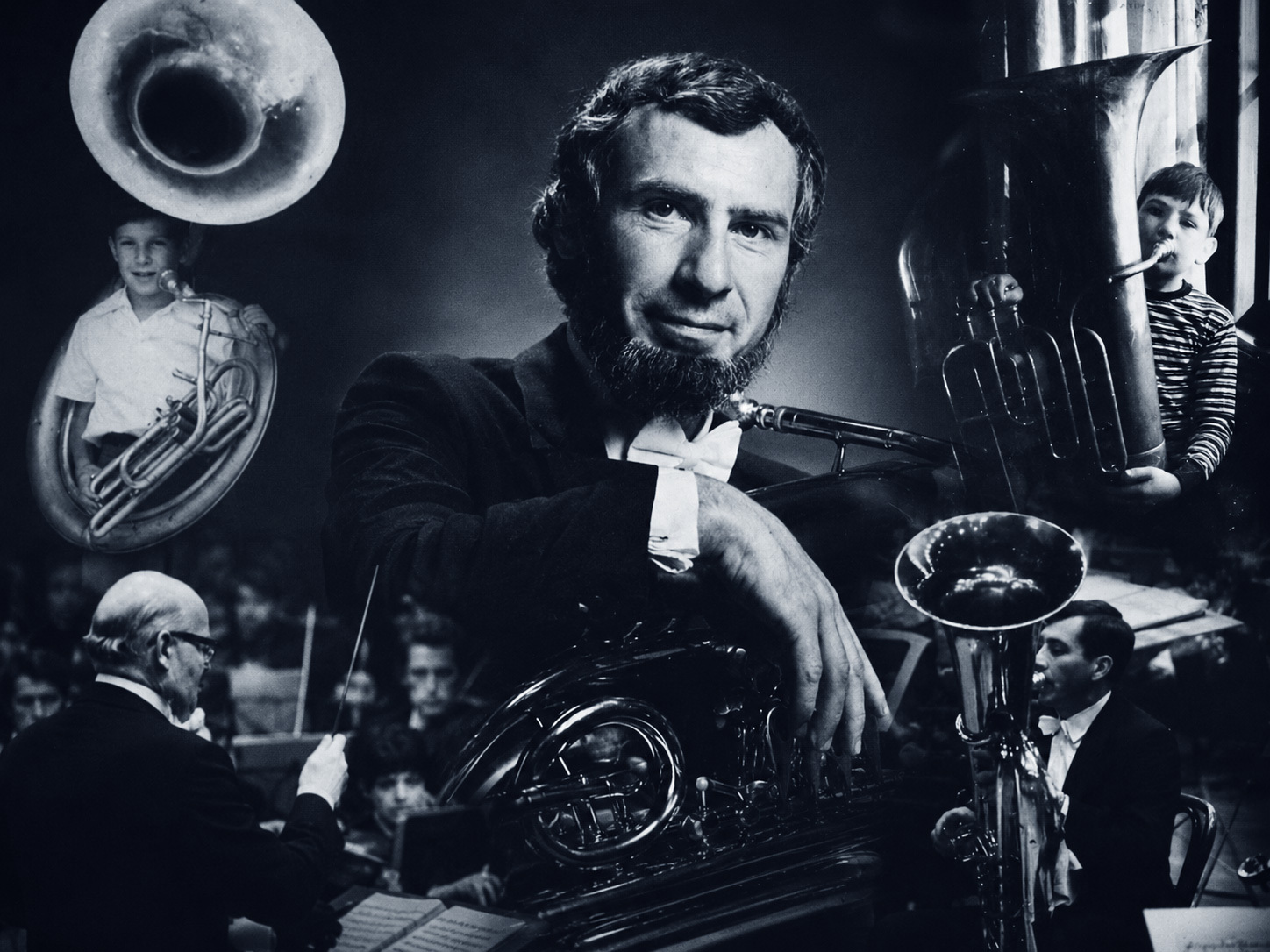
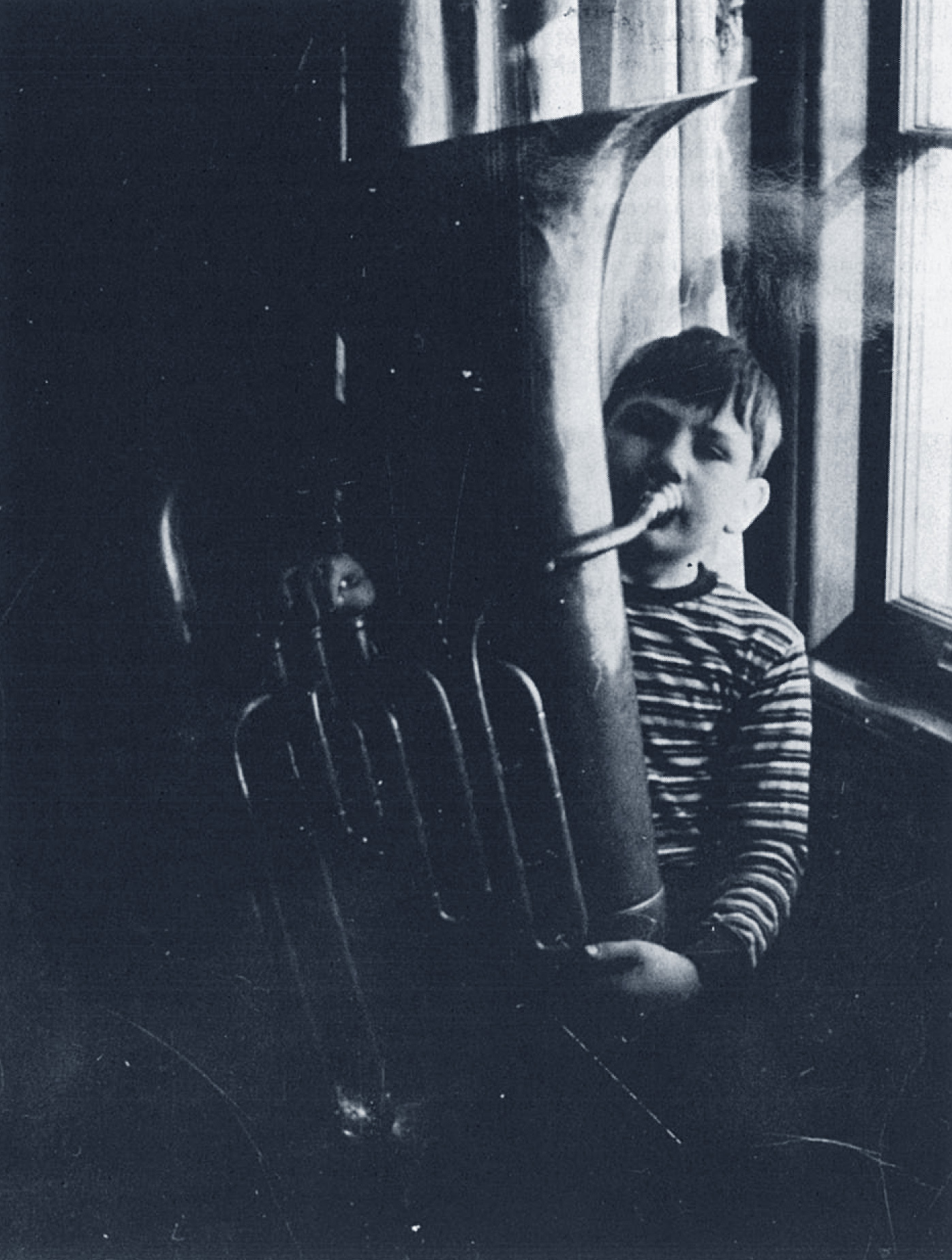
Ronald Bishop playing the tuba at the age of 8
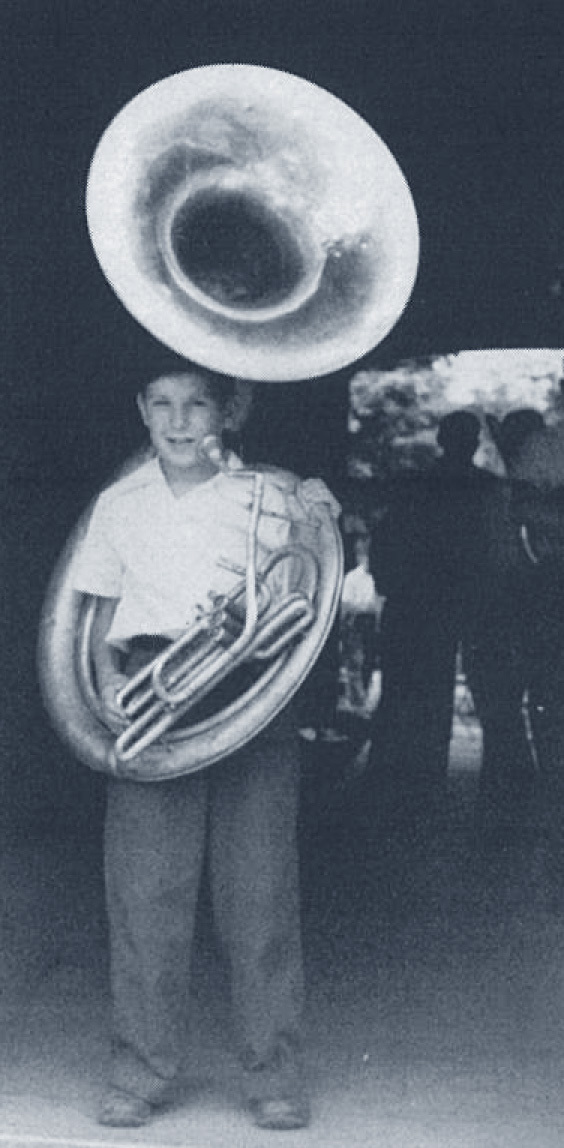
Ronald Bishop with sousaphone (age 11)
To play with the trombone section was a thrill for me. It also provided Szell with an excellent opportunity to hear how I fit in: did my attacks and releases sound like the others? Was my intonation satisfactory and, if there was a problem, did I adjust quickly and correctly? Did I match their dynamic?
With the bass trombone I played excerpts from Prokofiev's Romeo and Juliet, the same composer's fifth symphony and the B major promenade from Pictures at an Exhibition by Moussorgsky. Ed Anderson, who had arranged the audition, had been bass trombonist in the Buffalo Philharmonic with Josef Krips when I played there for three seasons before going to the San Francisco Symphony and Opera Orchestra. To play octaves again with him on that resonant stage into that empty hall was and still is a privilege.
I was alone on stage again and I played the following excerpts: Symphonic Metamorphoses, 2nd movement, Hindemith • Petrushka, Peasant with Bear, Stravinsky • Don Juan, Strauss • Till Eulenspiegel, Strauss • Ein Heldenleben, Strauss • Symphony in d minor, Franck • Symphonies 7, 8, Bruckner • An American in Paris, Gershwin • Resonances, Chavez • Benvenuto Cellini, Overture, Berlioz.
And I recall I also played something from the Bruckner Ninth and a few years later I recorded the Eighth with Szell and the Cleveland Orchestra.
Louis Lane, who at that time was Szell's Assistant Conductor, had me play the solo from An American in Paris as he was responsible for Pops Concerts among his other duties.
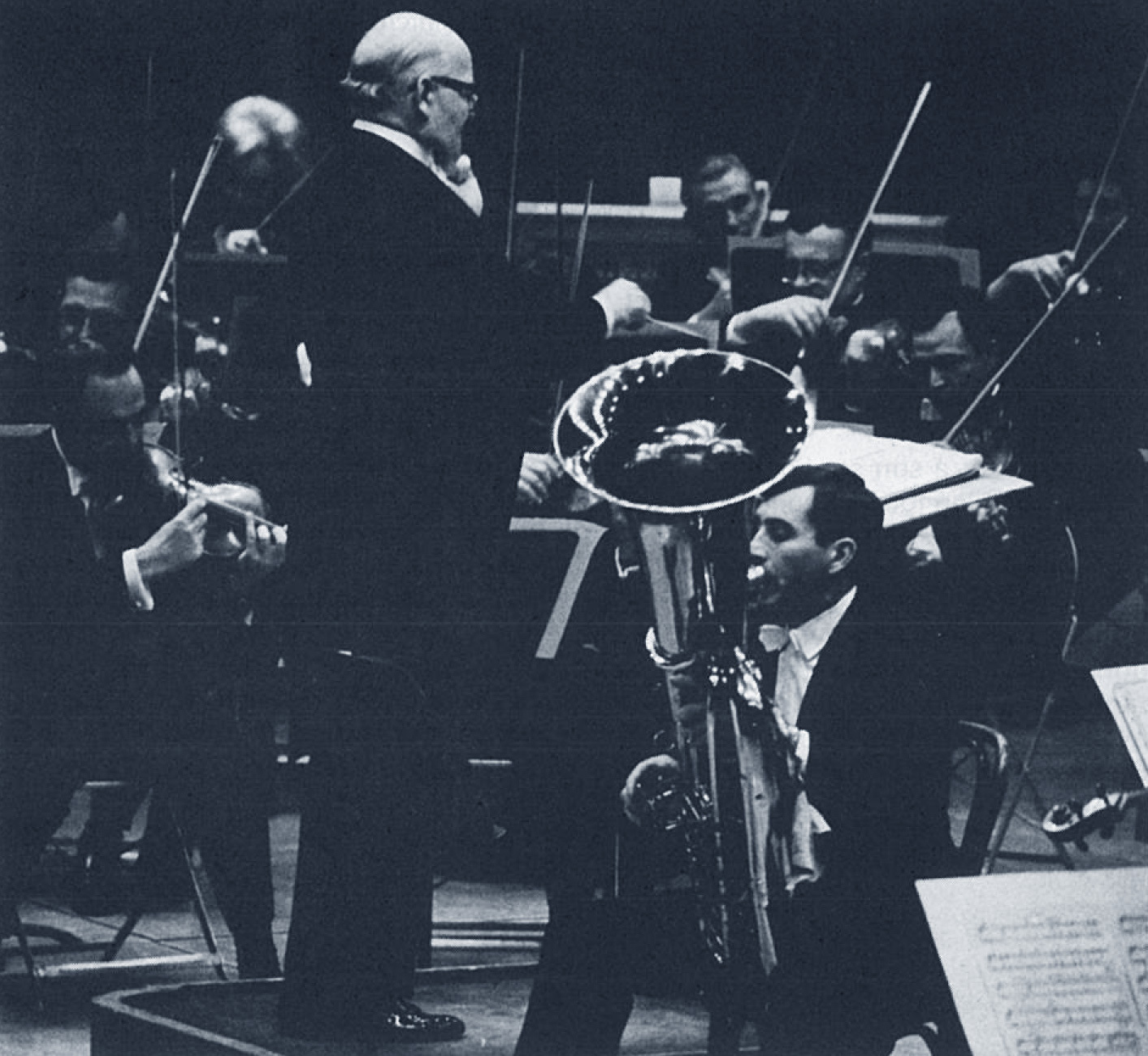
Ronald Bishop playing the Vaughan Williams Tuba Concerto with the San Francisco Symphony, Josef Krips conducting (1965)
Mr. Lane also conducted Resonances by Chavez for me and Szell, who was out in the hall listening, asked me to play the section again but louder. The passage was a half note triplet and whole note figure in fortissimo at a very slow tempo. I played it louder the second time and I thought it was pretty loud in that lively hall. Again he asked if I could play it louder still!
I was a bit surprised by this as Szell always kept the brasses "down at a reasonable dynamic level" which of course was a good start for achieving the incredible balance which was his hallmark. I was close to having to "zortch" in order to play any louder and I explained that I would have to break the phrase and maybe even take a breath in the middle of a whole note due to the dynamic and tempo. He said he understood and that it would be all right to do that.
He never again had me play as loudly for him. About two years after my audition he commented that the volume I was able to produce was amazing! (Although he never used it, I suppose he just wanted to know it was there in case he needed it.)
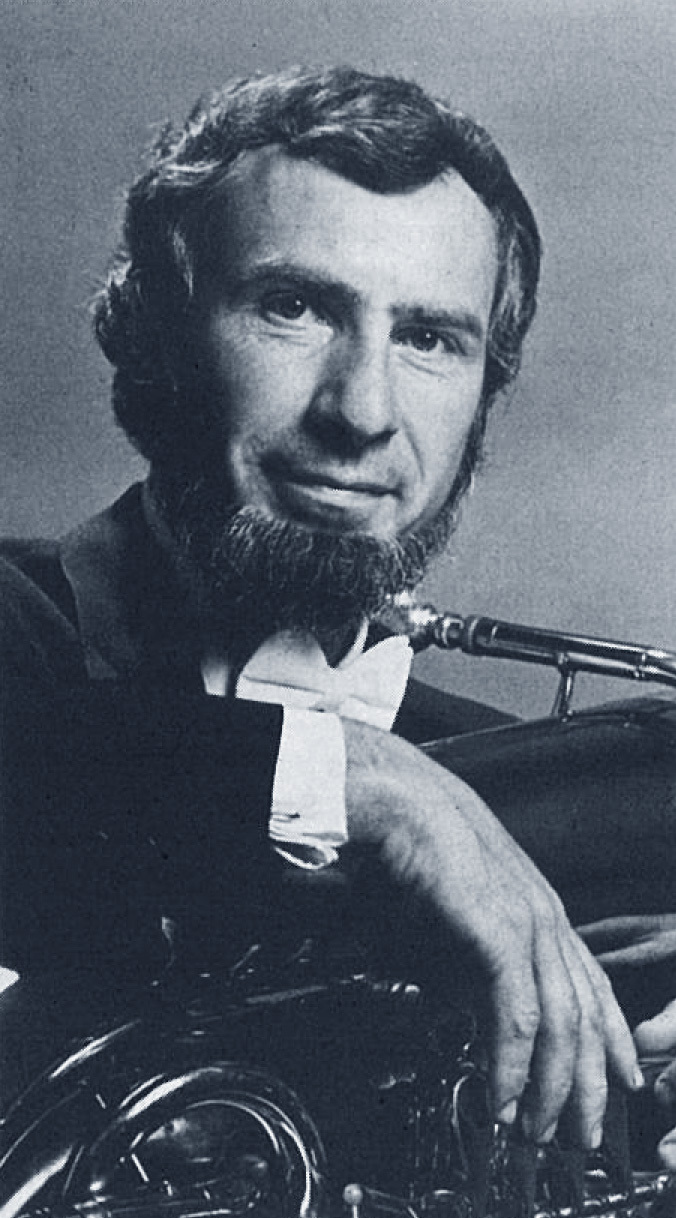
Ronald Bishop (1979)
The next piece was Tannhäuser and, as I had just finished several performances of it with the San Francisco Opera, I did not expect any surprises. At the time I was unaware that there are two versions of the work: "Dresden" and "Paris", so the F-sharp above the staff in the Venusberg Music did come as a bit of a surprise.
I felt I had won the audition by this time but Szell wanted me to play the Benvenuto Cellini overture by Berlioz as it was the last thing on the music stand. Somewhere I played a wrong note. Szell asked me the key of my tuba and I told him CC. He then told me that the note I had missed should have been fingered with the first valve — he was right!
As we walked up to his studio he told me that I had played very well and that he wanted to offer me a contract.
I asked if I could phone my wife in California and discuss it with her and he said that I had twenty minutes to do so and if I didn't want the job he had a man waiting who did.
I took the job!